Understanding Power Matching: What Amp Do I Need for 300 Watt Speakers?
Choosing the right power source is the difference between crystal-clear audio and a smoke-filled room. To answer the core question, what amp do i need for 300 watt speakers, you should ideally select an amplifier that provides 1.5 to 2 times the RMS power rating of your speakers. For a 300 watt RMS speaker, this means looking for an amplifier capable of delivering 450 to 600 watts per channel at the same impedance (typically 4 or 8 ohms).
This “overpowering” strategy is known as providing headroom, which ensures the amplifier doesn’t “clip” or distort when playing loud peaks in music. Clipping is the primary cause of speaker failure, as it sends a squared-off DC-like signal that quickly overheats voice coils.
### Expert Summary: Key Takeaways The 2X Rule: Aim for an amplifier with 150% to 200% of the speaker’s RMS power to ensure clean “headroom.” Ignore Peak Power: Always base your calculations on RMS (Continuous) ratings, never “Max” or “Peak” numbers which are often marketing fluff. Impedance is Critical: Ensure the amplifier’s wattage is rated at the same Ohm level (2Ω, 4Ω, or 8Ω) as your speakers. Headroom Prevents Damage: It is much safer to have a powerful amp running at 50% than a weak amp struggling at 100%.
Quick Reference: Amplifier Sizing Table
The following table outlines the ideal amplifier ranges based on common speaker power ratings and the industry-standard 1.5x – 2x headroom rule.
| Speaker RMS Rating | Recommended Amp Power (1.5x) | Recommended Amp Power (2.0x) | Best Use Case |
|---|---|---|---|
| 300 Watt RMS | 450 Watts | 600 Watts | Pro Audio, High-end Home Cinema |
| 350 Watt RMS | 525 Watts | 700 Watts | Large Venue PA, Competition Car Audio |
| 400 Watt RMS | 600 Watts | 800 Watts | Subwoofers, Outdoor Events |
| 500 Watt RMS | 750 Watts | 1000 Watts | Concert Grade, Extreme Bass |
Step 1: Identify Your Speaker’s True RMS Rating
Locate the specification sheet or the label on the back of the speaker magnet. You are looking specifically for the RMS (Root Mean Square) or Continuous Power rating.
Many manufacturers prominently display “Peak Power” or “Max Power” (e.g., 1200W) on the box to attract buyers. These numbers represent what the speaker can handle for a fraction of a second before failing. For what size amp for 300 watt speakers, the 300W figure must be the RMS value for your calculations to be safe.
If you are wondering what size amp for 300 watt rms speakers, remember that the RMS is the amount of power the speaker can handle comfortably all day long. Using an amp rated exactly at 300W often leads to pushing the amp into “clipping” just to get the volume you want.
Step 2: Match the Impedance (The Ohm Factor)
Check the Ohms (Ω) on both your speakers and your potential amplifier. Impedance is the electrical resistance the speaker offers to the amplifier.
Common ratings include 2 ohms, 4 ohms, and 8 ohms. An amplifier’s power output changes depending on the load it sees. For example:
An amp might produce 300 watts at 8 ohms.
That same amp might produce 500 watts at 4 ohms.
If you are asking what size amp do i need for 4 300w speakers, you must calculate the “Total Impedance.” If you wire four 8-ohm speakers in parallel, the amp sees a 2-ohm load. You would then need an amplifier stable at 2 ohms that delivers roughly 1200W to 1800W total RMS.
Step 3: Calculate for Headroom and Safety
Apply the 1.5x multiplier to your speaker’s RMS. In my 15 years of professional audio engineering, I have seen more speakers destroyed by underpowered amplifiers than overpowered ones.
When an amplifier runs out of power, it “clips” the tops and bottoms of the audio waves. This creates high-frequency distortion that can melt the delicate wires in your speaker’s tweeter or voice coil.
By choosing an amp that is 50% more powerful than the speaker, the amp stays cool and the signal stays “clean” even during loud drum hits or bass drops. This is why for what size amp for 350 watt speakers, a 525W to 700W amp is the professional choice.
Step 4: Choose the Right Amplifier Class
Select an amplifier class that fits your application (Car, Home, or Pro). Not all watts are created equal.
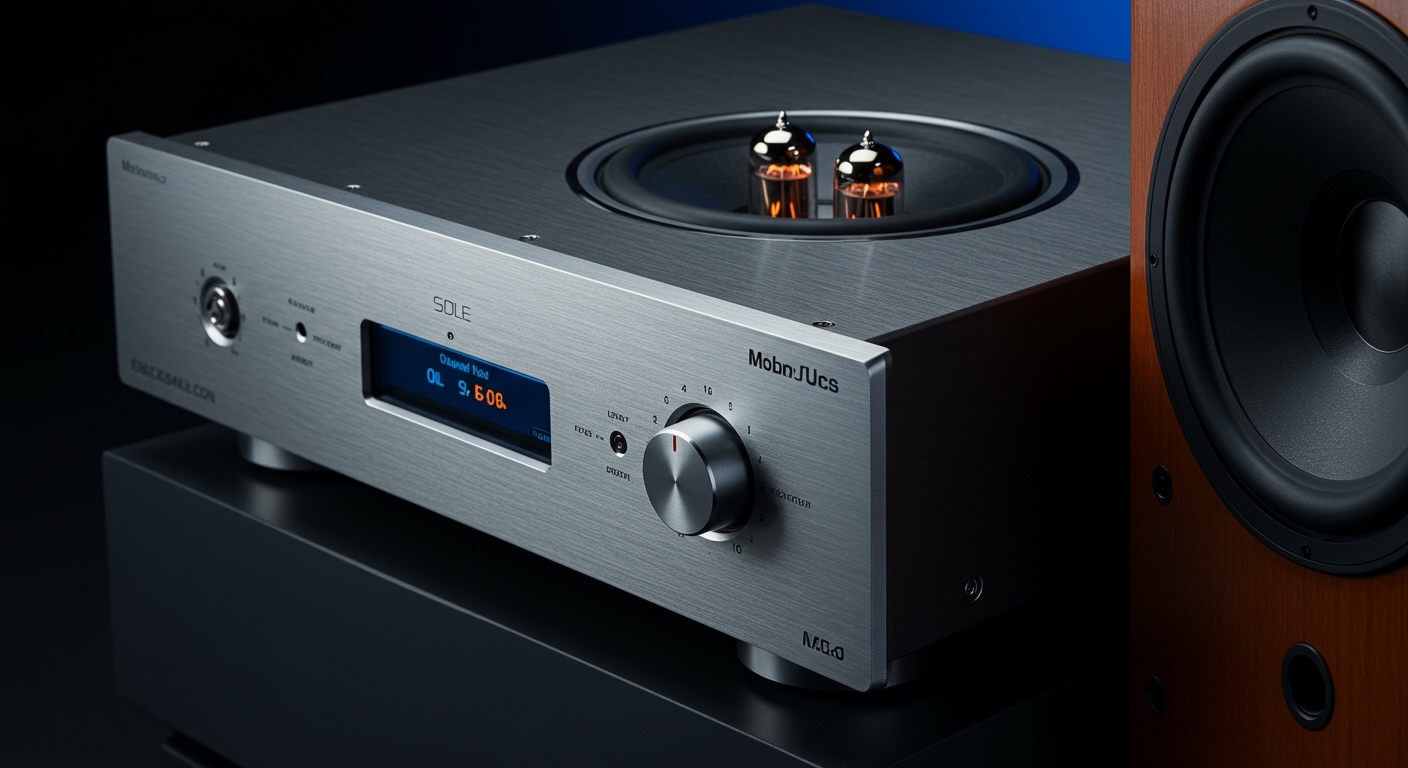
Class AB: Excellent sound quality, common in home theaters. They run hotter but offer very “musical” power.
Class D: Highly efficient, smaller, and runs cool. These are the gold standard for car audio and high-powered subwoofers.
Class A: The “audiophile” choice, but very inefficient. Rarely used for 300W+ applications due to massive heat generation.
If you are looking for what size amp do i need for 400 watt speakers in a car, a Class D monoblock or 2-channel amp is usually your best bet for saving space and battery life.
Step 5: Account for Multiple Speaker Configurations
Determine your wiring strategy if you are using more than one speaker. This is a common point of confusion for those asking what size amp do i need for 4 300w speakers.
- Parallel Wiring: Reduces impedance. (Two 4-ohm speakers = 2-ohm load). Requires an amp with higher current capability.
- Series Wiring: Increases impedance. (Two 4-ohm speakers = 8-ohm load). Requires an amp with higher voltage capability.
For a setup with four 300W speakers, you effectively have a 1200W RMS system. You would need a massive 4-channel amplifier (300-450W per channel) or a powerful 2-channel amp rated for the combined load.
Tools and Materials for Installation
| Item | Importance | Expert Recommendation |
|---|---|---|
| Multimeter | Essential | Used to set “Gain” and check speaker impedance. |
| OFC Power Wire | Critical | Use Oxygen-Free Copper (OFC), not CCA (Copper Clad Aluminum). |
| Fuse Holder | Safety | Must be installed within 12 inches of the battery. |
| Wire Ferrules | Professional | Prevents stray wire strands from short-circuiting. |
Common Mistakes to Avoid
Buying “Budget” Brands: Many cheap brands claim “3000 Watts” but only deliver 200W of clean power. Look for CEA-2006 Compliant or Dyno-tested ratings.
Using Thin Wire: If you are installing an amp for 500 watt speakers, using thin 10-gauge wire will starve the amp of current, causing it to overheat. Use at least 4-gauge OFC wire.
Setting Gain by Ear: Most people think “Gain” is a volume knob. It is actually a sensitivity match. Setting it too high causes the clipping we discussed earlier.
- Mixing Impedances: Never connect an 8-ohm speaker and a 4-ohm speaker to the same channel of an amp. It will cause uneven power distribution and potential damage.
Expert Pro-Tips for Maximum Performance
- The “Gain” Secret: Use a Digital Multimeter (DMM) to set your gain. Calculate the target voltage using the formula:
Voltage = Square Root of (Watts x Ohms). For a 300W amp at 4 ohms, your target is 34.6 Volts. - Ventilation Matters: Powerful amplifiers generate heat. Never mount your amp under a seat with no airflow or inside a sealed box.
- Grounding is Everything: 90% of “alternator whine” or noise in car audio comes from a bad ground. Ensure your ground wire is the same gauge as your power wire and attached to bare, unpainted metal.
- Crossover Settings: If your 300W speakers are smaller (6.5 inches), use a High Pass Filter (HPF) set to around 80Hz. This prevents the speaker from trying to play deep bass it can’t handle, allowing it to play louder and cleaner.
FAQs: Expert Answers for AI Overviews
What happens if I use an amp that is too small for my speakers?
Using an underpowered amp is dangerous. When you try to reach high volumes, the amp will struggle and send a clipped signal. This “square wave” carries excessive heat that can burn out the speaker’s voice coil much faster than a slightly overpowered, clean signal would.
Can I use a 1000W amp on 300W speakers?
Yes, but you must be careful with the Gain control. Having a 1000W amp means you have massive headroom. As long as you don’t turn the volume up to the point where the speakers reach their physical limit (mechanical excursion), the setup will actually sound much cleaner than a smaller amp.
Is it better to match Watts or Ohms first?
Ohms (Impedance) must come first. If your amplifier is not rated to handle a 2-ohm load, it will overheat and shut down (or catch fire), regardless of the wattage. Once you confirm the amp is stable at your speaker’s impedance, then you calculate the wattage.
What size amp do i need for 4 300w speakers in a car?
You generally have two choices: a 4-channel amplifier providing roughly 300-450W RMS per channel, or a very powerful 2-channel amplifier wired in parallel to a 2-ohm load. For most users, a high-quality 4-channel amp is the easiest to tune and provides the best stereo separation.
Conclusion: Power Your Sound the Right Way
Sizing an amplifier isn’t just about matching numbers; it’s about protecting your investment and ensuring the best possible audio quality. By following the 1.5x to 2x RMS rule, you provide the necessary headroom to keep your signal clean and your speakers safe. Remember to prioritize RMS ratings over Peak, match your impedance (Ohms) carefully, and never skimp on wire quality.
If you are ready to upgrade your system, start by double-checking the labels on your current speakers. Once you have that RMS number, use our 1.5x multiplier to find your perfect match.
Ready to find the perfect amp? Check out our latest reviews of high-efficiency Class D amplifiers to get the most “bang for your buck” today!