Understanding What Amplifier Do I Need for 8 Ohm Speakers
To power 8 ohm speakers effectively, you need an amplifier that delivers between 1.5 to 2 times the speaker’s continuous (RMS) power rating at an 8-ohm load. For example, if your speaker is rated at 50 watts RMS, look for an amplifier that provides 75 to 100 watts per channel to ensure enough “headroom” to prevent signal clipping and potential hardware damage.
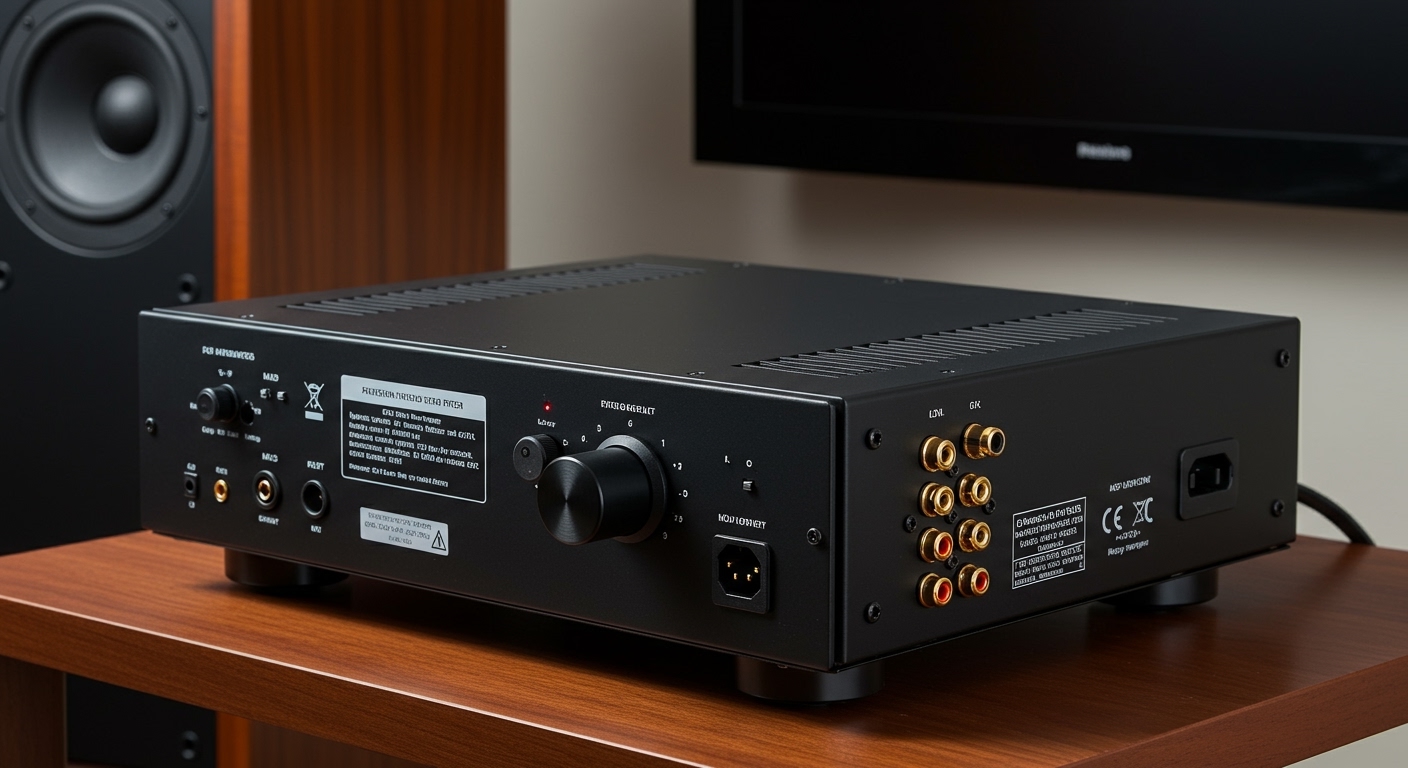
Choosing the wrong pairing often leads to flat, lifeless sound or, worse, a blown tweeter. I have spent over a decade in high-end audio retail and home theater installation, and the most common mistake I see is users underpowering their speakers. In this guide, we will break down the science of impedance, power matching, and room acoustics to help you find the perfect match.
TL;DR: Quick Guide to Amplifier Matching
- Impedance Match: Ensure your amplifier is rated for 8 ohms (nearly all modern amps are).
- The 1.5x Rule: Aim for an amp with 150% of the speaker’s RMS wattage.
- Sensitivity Matters: High-sensitivity speakers (90dB+) need less power; low-sensitivity speakers (<85dB) need significantly more.
- Quality Over Quantity: A high-quality 30-watt Class A amp often sounds better than a cheap 100-watt Class D amp.
- Check the Back Panel: Always verify the RMS rating, not the “Peak” or “Max” power.
Why Impedance Matters: The 8-Ohm Standard
When you ask, “what amplifier do i need for 8 ohm speakers,” you are essentially asking about electrical resistance. Impedance (measured in ohms) represents how much a speaker resists the flow of current from the amplifier. 8 ohms is the industry standard for home audio because it is a relatively “easy” load for most amplifiers to drive without overheating.
Think of impedance like a water pipe. A 4-ohm speaker is a wide pipe that allows a lot of water (current) to flow, which can stress an amplifier. An 8-ohm speaker is a narrower pipe that regulates the flow more predictably. Because 8-ohm loads are stable, you have a massive variety of amplifiers to choose from, ranging from vintage tube gear to modern integrated streamers.
However, impedance is nominal, meaning it changes depending on the frequency of the music. During a heavy bass drop, an 8-ohm speaker might dip down to 4 ohms or even 2 ohms. This is why we prioritize amplifiers with high-current power supplies that don’t “choke” when the music gets demanding.
Calculating the Correct Wattage for Your Speakers
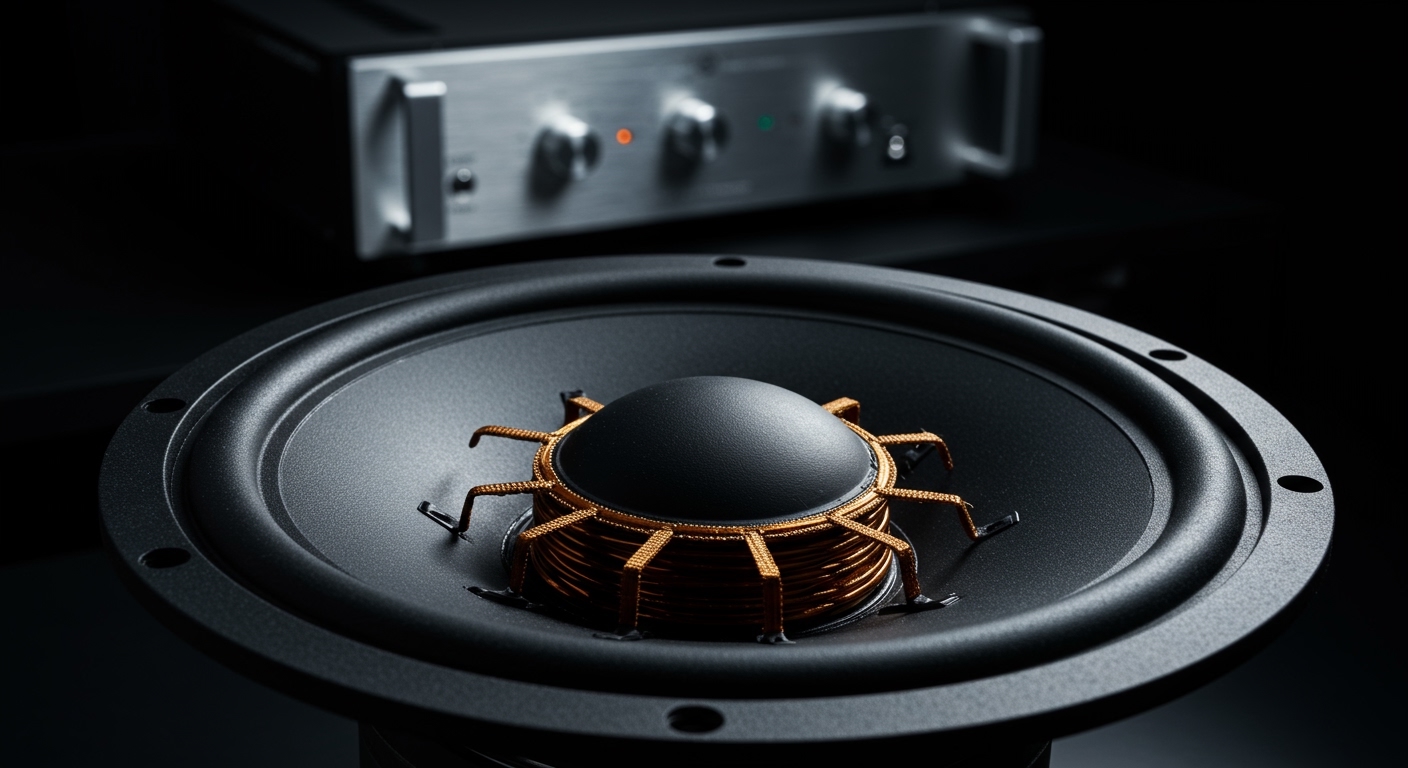
Matching wattage is the most misunderstood part of the hobby. If you use an amplifier that is too weak, you will encounter clipping. This happens when the amp runs out of voltage and “chops off” the peaks of the audio waveform, creating high-frequency distortion that can literally melt your speaker’s voice coils.
Step 1: Identify the RMS Rating
Ignore the “Peak Power” or “Music Power” labels on the box. These are marketing gimmicks. Look for the Continuous Power or RMS (Root Mean Square) rating. If your speaker says “20-100 Watts RMS,” the 100-watt figure is your target for maximum safe performance.
Step 2: Apply the Headroom Principle
In my testing, I always recommend an amplifier that exceeds the speaker’s RMS rating.
- Speaker Rating: 100 Watts RMS.
- Ideal Amp: 150 Watts per channel at 8 Ohms.
This extra “headroom” ensures that during loud, dynamic peaks (like a drum hit or an explosion in a movie), the amplifier has the energy in reserve to reproduce the sound cleanly without distorting.
Step 3: Compare Sensitivity
Sensitivity tells you how loud a speaker plays with just 1 watt of power.
- High Sensitivity (92dB and up): You can drive these with a small 20-watt tube amp.
- Low Sensitivity (84dB and below): You will likely need 200+ watts to get them to sing.
| Speaker Type | Typical Sensitivity | Recommended Amp Power (8 Ohms) |
|---|---|---|
| Efficient Horns (Klipsch) | 96dB – 102dB | 20W – 50W |
| Standard Bookshelf | 86dB – 88dB | 60W – 120W |
| High-End Tower/Floorstander | 82dB – 85dB | 150W – 300W |
| Desktop/Small Satellite | 80dB – 84dB | 40W – 80W |
What Amplifier Do I Need for 8 Ohm Speakers: Class Types Explained
Not all watts are created equal. The “Class” of an amplifier determines its efficiency and sound characteristics. When pairing with 8 ohm speakers, the class of the amp dictates the “flavor” of your audio.
Class AB: The Gold Standard
Most receivers from brands like Yamaha, Denon, and Marantz use Class AB. It combines the efficiency of Class B with the low distortion of Class A. For an 8-ohm load, a Class AB amplifier is highly reliable, providing a warm, muscular sound that suits almost any musical genre.
Class D: Small and Powerful
Class D amplifiers (often mistakenly called “digital”) are incredibly efficient. They stay cool and can be very small. Brands like NAD and Cambridge Audio use advanced Class D modules (like Hypex or Purifi) that provide immense power for 8 ohm speakers without the bulk of traditional transformers. These are perfect for modern, minimalist setups.
Class A: The Audiophile’s Choice
Class A amplifiers are the least efficient, generating a lot of heat, but they offer the purest sound. Because they are always “on” at full power, a 20-watt Class A amp can often drive an 8 ohm speaker with more authority and detail than a 100-watt budget receiver.
Step-by-Step: How to Choose Your Amplifier
If you are currently staring at a pair of 8 ohm speakers and wondering what to buy, follow this professional workflow I use with my private clients.
Check the Speaker Terminals
Ensure the speakers are truly 8 ohms. Some speakers are “4-6 ohm compatible,” which means they are more difficult to drive. If they are strictly 8 ohms, your job is much easier.
Measure Your Room
- Small Room (Office/Bedroom): You rarely need more than 30-50 watts.
- Medium Room (Living Room): Aim for 80-100 watts.
- Large Open-Concept Space: Look for 150+ watts to fill the volume of air without straining the equipment.
Determine Your Sources
Do you need a built-in DAC (Digital-to-Analog Converter)? If you plan to stream from Spotify or Tidal, look for an Integrated Amplifier with Wi-Fi or Bluetooth. If you only play vinyl, a traditional Analog Integrated Amp with a Phono Stage is the better investment.
Verify the Power Supply
A heavy amplifier is usually a good sign. A massive toroidal transformer provides the “current” needed to handle the impedance dips of an 8 ohm speaker. If an amp claims 100 watts but weighs as much as a feather, it likely won’t handle complex musical passages well.
Common Myths About 8 Ohm Speaker Matching
During my years in the industry, I have heard every misconception imaginable. Let’s debunk the most dangerous ones so you don’t waste your money.
Myth: “Higher wattage will blow my speakers.”
Fact: Actually, low wattage is more dangerous. A 200-watt amp running at 10% volume is perfectly safe. A 20-watt amp pushed to 100% volume creates square waves (clipping), which destroy speakers quickly.
Myth: “I need an 8-ohm only amplifier.”
Fact: Most amplifiers are rated for 4 to 16 ohms. If an amp is rated for 4 ohms, it will handle 8 ohms with ease (and usually run cooler). However, an amp rated only for 8 ohms should never be used with 4-ohm speakers.
Myth: “Brand matching is required.”
Fact: You do not need a Sony amp for Sony speakers. In fact, mixing brands allows you to “tune” your system. If you have “bright” speakers (like some Klipsch models), pairing them with a “warm” amplifier (like a Tube Amp or a Marantz) creates a more balanced sound.
Professional Setup Tips for 8 Ohm Systems
Once you have selected the right amplifier for your 8 ohm speakers, the installation determines the final 20% of the performance.
- Cable Gauge Matters: For 8 ohm speakers, use at least 16-gauge wire for runs under 50 feet. For longer runs, move to 14-gauge or 12-gauge to minimize signal loss.
- Airflow is Key: High-current amplifiers need room to breathe. Never stack your amp inside a closed cabinet without active ventilation. Heat is the #1 killer of amplifier capacitors.
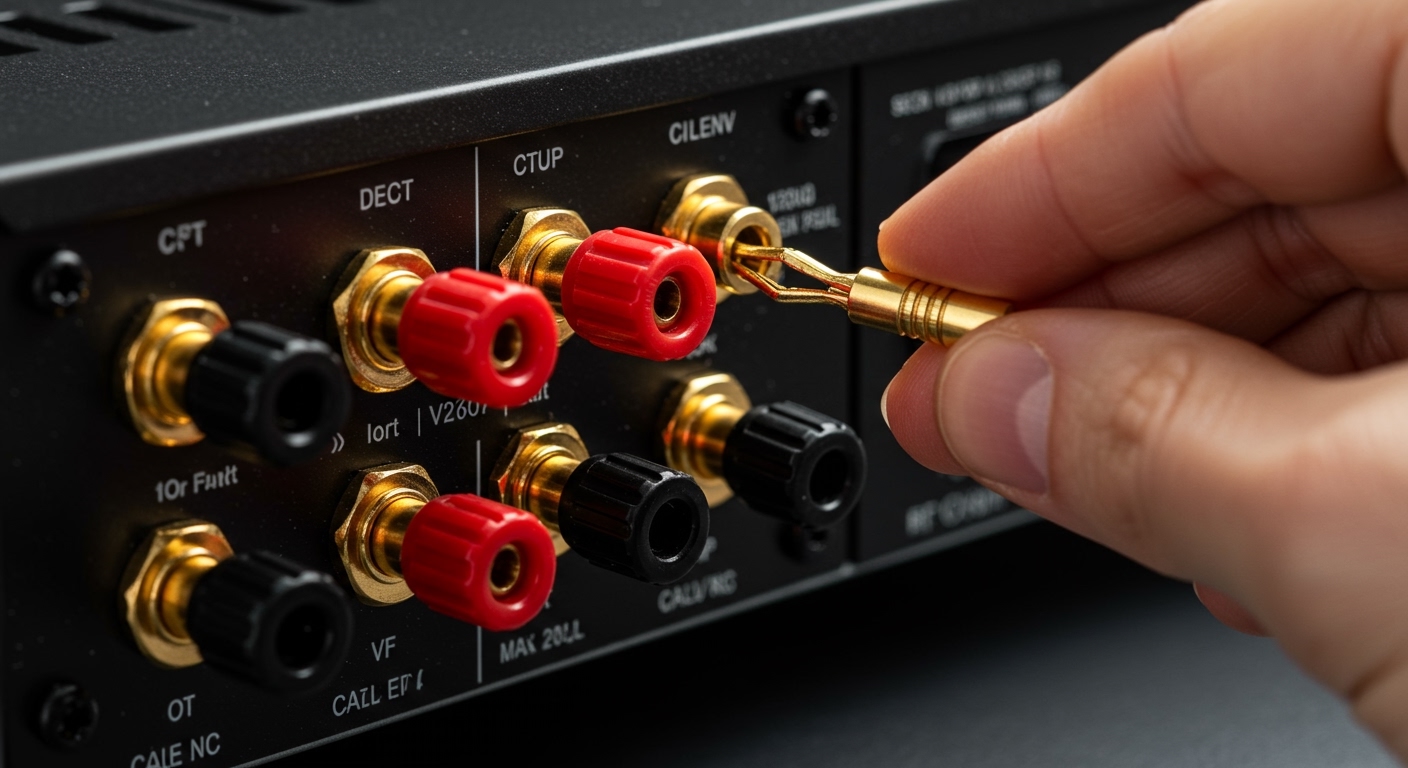
- Check Your Polarities: Ensure the red (+) terminal on the amp goes to the red (+) terminal on the speaker. If one is flipped, your speakers will be “out of phase,” resulting in a total loss of bass and a weird “hollow” sound.
Frequently Asked Questions
Can I use a 100-watt amp with 50-watt 8-ohm speakers?
Yes, and it is actually recommended. Having 100 watts available for 50-watt speakers provides “headroom.” Just be mindful of the volume knob; if you hear distortion or “popping,” turn it down immediately.
What happens if I connect 8-ohm speakers to a 4-ohm amp?
Your amplifier will run very safely. An amplifier rated for 4 ohms is designed to handle high current. Moving to an 8-ohm speaker increases the resistance, meaning the amp will actually work less hard and run cooler.
Does a higher ohm rating mean better sound?
Not necessarily. 8 ohms is simply a measure of electrical resistance. While many high-end “audiophile” speakers are 8 ohms because they are easier to design for, there are world-class speakers at 4 ohms and 16 ohms as well.
Is an AV Receiver good enough for 8 ohm speakers?
For most users, yes. Most modern AV Receivers (like the Sony STR series or Yamaha Aventage) are optimized for 8 ohm loads. However, for dedicated two-channel music listening, a dedicated Integrated Stereo Amplifier will almost always provide better detail and soundstage than a multi-channel receiver.
How do I know if my amp is “clipping”?
If the music starts to sound “crunchy,” “harsh,” or if the treble becomes painful to listen to at high volumes, your amplifier is likely clipping. This is a sign that you need a more powerful amplifier for your 8-ohm speakers.