What Are 6 3/4 Speakers? An Expert Installer’s Guide
Staring at a list of car speaker sizes can feel like reading a secret code. You see 6.5″, 6×9″, and then the one that causes the most confusion: 6 3/4″. If you’re upgrading the audio in a GM or Chrysler vehicle, you’ve likely run into this oddball size and wondered if it’s a typo. It’s not, and understanding the subtle difference is crucial for a hassle-free installation.
As a car audio professional with over a decade of experience in the install bay, I’ve seen firsthand how this specific size trips people up. The key isn’t the cone size—it’s all about the mounting holes. This guide will demystify what 6 3/4 speakers are, how they differ from the more common 6.5″ size, and how to choose the right ones for your car without wasting time and money.
Key Takeaways (TL;DR)
- Definition: A 6 3/4 inch speaker is a specific car speaker size primarily defined by its mounting screw pattern, not just its cone diameter. It features a slightly larger frame and wider-spaced mounting tabs than a standard 6.5″ speaker.
- Main Difference: The cone size is often identical to a 6.5″ speaker. The critical difference is the larger mounting frame designed to fit the specific factory openings in certain vehicles.
- Common Use: This size is most frequently found as the original equipment (OEM) speaker in vehicles manufactured by General Motors (GM), Chrysler, Dodge, and Jeep.
- Interchangeability: Many modern 6.5″ speakers are now designed with “multi-fit” or “universal” mounting tabs that allow them to fit directly into a 6 3/4″ opening without adapters. However, you must always verify this before purchasing.
Understanding What 6 3/4 Speakers Really Are
A 6 3/4 inch speaker is a car audio driver with a cone diameter that is virtually identical to a 6.5-inch speaker. The “6 3/4” designation refers almost exclusively to the mounting configuration of the speaker’s frame, also known as the “basket.”
These speakers were designed with oversized mounting tabs or “ears” that are spaced farther apart. This was done to match the non-standard mounting holes used by automakers like General Motors and Chrysler for many years. Think of it less as a different cone size and more as a specialized mounting bracket built directly into the speaker frame.
In my experience, the most common point of failure for a DIY install is buying a standard 6.5″ speaker for a GM vehicle and realizing the screw holes don’t line up. This is the exact problem the 6 3/4″ size was made to solve.
3/4 Speakers vs. 6.5 Speakers: A Detailed Comparison
At a glance, these two speakers look nearly identical. However, the small differences in their frames are what matter for installation. The good news for consumers is that the audio industry has adapted. Many reputable brands now produce 6.5″ speakers with multiple sets of screw holes on their mounting tabs, making them compatible with both standards.
Here’s a table breaking down the key differences I check for in the shop:
| Feature | 6 3/4″ Speaker | Standard 6.5″ Speaker | Expert Insight |
|---|---|---|---|
| Primary Use | OEM fit for GM, Chrysler, Dodge, Jeep | Universal standard for most other cars | Always verify your car’s specific needs. |
| Mounting Frame | Larger diameter with wider-spaced tabs | Standardized, smaller frame diameter | This is the most critical difference for fitment. |
| Cone Size | ~6.5 inches | ~6.5 inches | Performance is not determined by the frame size. |
| Installation | Direct fit in specific OEM locations | May require an adapter bracket for 6 3/4″ holes | Many modern 6.5″ speakers are now multi-fit. |
Pro Tip: I’ve found that brands like JL Audio, Kicker, and Rockford Fosgate are excellent at designing their 6.5″ speaker lines with multi-fit mounting patterns. They often include slotted or extra screw holes specifically to accommodate the wider 6 3/4″ pattern, eliminating the need for a separate adapter.
How to Confirm if You Need 6 3/4 Speakers
Before you add anything to your cart, you need to be 100% certain of the size your vehicle requires. Guessing is a recipe for frustration. Follow these steps to get it right the first time.
Step 1: Use an Online Vehicle Fitment Guide
The easiest starting point is a reliable online database.
- Navigate to a trusted car audio retailer’s website (like Crutchfield or Sonic Electronix).
- Find their “Outfit My Car” or “What Fits My Vehicle?” tool.
- Enter your car’s year, make, and model.
- The tool will generate a report listing the exact speaker sizes for your front doors, rear doors, and dashboard.
If the guide specifies 6 3/4″, you have your answer. If it lists 6.5″, it will often include a note indicating if an adapter is needed, which also confirms the original was likely a 6 3/4″ size.
Step 2: The Foolproof Method—Physically Measure
While online guides are incredibly accurate, I always trust my own eyes. On older or less common vehicles, physically measuring is the only way to be certain.
- Remove the door panel to access the factory speaker.
- Unscrew and remove the speaker.
- Measure the mounting holes. Use a tape measure to measure the distance diagonally from the center of one screw hole to the center of the opposite screw hole. A typical 6 3/4″ speaker will have a diagonal mounting hole distance of around 6.7 to 6.9 inches.
- Measure the cutout diameter. This is the size of the actual hole in the door’s sheet metal. It will typically be just over 5.5 inches for this speaker class.
This hands-on check leaves no room for error. You’ll know exactly what you’re working with.
Pro Tips for Installing 6 3/4 Speakers
Once you have the right speakers, a successful installation comes down to a few key details. Here are some tips I’ve learned from thousands of installs.
Tip 1: Always Check Mounting Depth
The diameter is only half the battle. Mounting depth is the distance from the speaker’s mounting flange to the back of its magnet.
- The Problem: If your new speaker is too deep, the magnet can hit the window track or the window glass itself when it’s rolled down. I once had a customer who installed his own speakers, only to shatter his driver-side window the first time he used it.
- The Solution: Measure the depth of your factory speaker and compare it to the specs of the new speaker. Leave at least a 1/4 inch of clearance for safety.
Tip 2: Use a Wiring Harness Adapter
Never cut your car’s factory wiring! Splicing wires can void warranties and lead to poor connections.
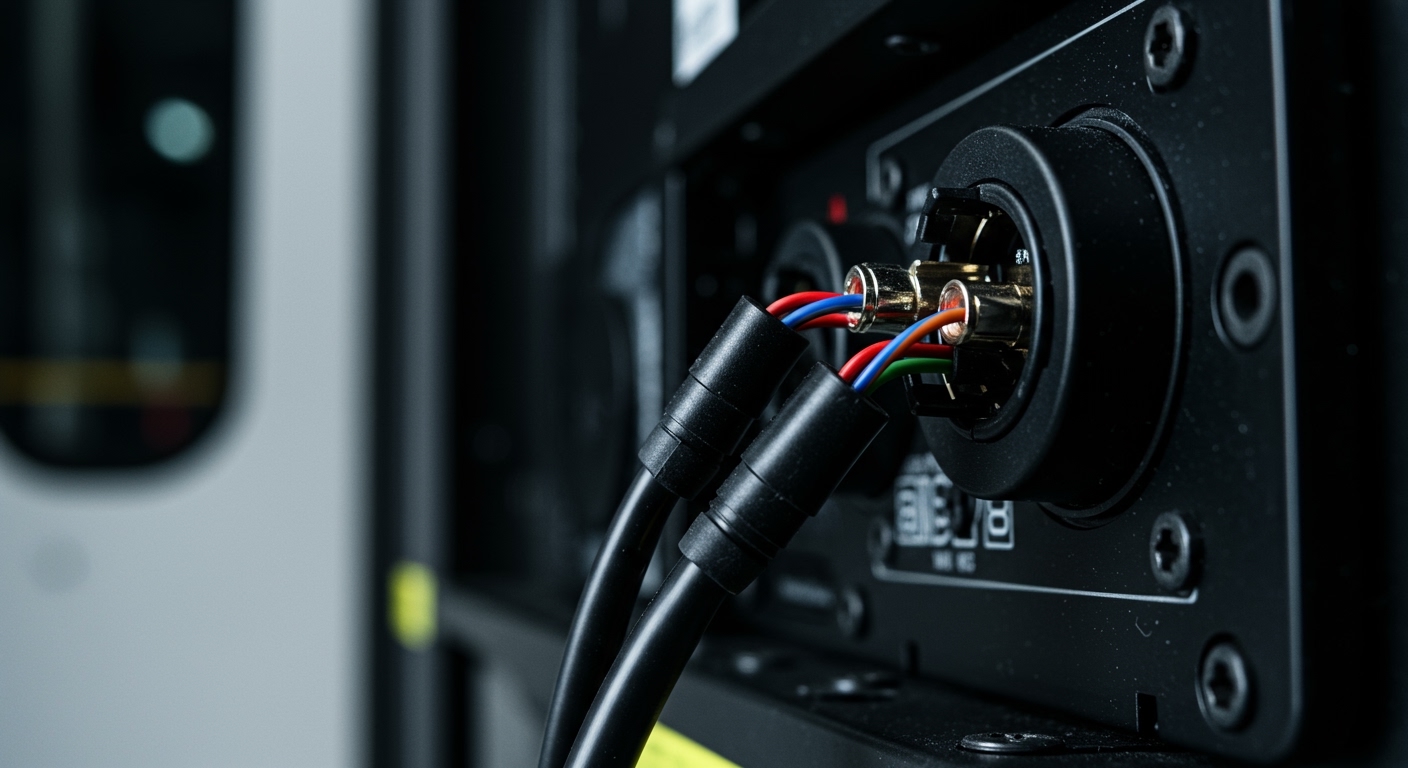
- What it is: A speaker wiring harness adapter is a small plug-and-play connector. One end clips into your car’s factory speaker plug, and the other end has simple spade connectors that slide onto your new speaker’s terminals.
- Why it’s essential: It makes the electrical connection foolproof, reversible, and ensures a solid, reliable signal path. They are inexpensive and save a massive headache.
Tip 3: Invest in Sound Treatment
Want to make your new speakers sound twice as good? Add a little sound treatment while the door panel is off.
- Speaker Rings: These are foam rings that install around the front of the speaker, creating a seal against the back of the door panel. This prevents sound from getting trapped in the door and channels it directly into the cabin.
- Sound Deadening Mats: Applying a small square of a product like Dynamat or Kilmat to the metal panel directly behind the speaker reduces vibrations and rattles. This simple step dramatically improves mid-bass response and clarity.
Key Specifications to Look for When Buying
Not all speakers are created equal. Once you’ve confirmed the size, look at these key performance metrics to match the speakers to your audio system.
- Power Handling (RMS): This is the most important power rating. RMS (Root Mean Square) power is the amount of continuous power a speaker can handle safely. Match this to the RMS output of your head unit or amplifier. Ignore the “Peak Power” rating—it’s mostly marketing.
- Sensitivity: Measured in decibels (dB), this tells you how efficiently a speaker converts power into sound. If you’re using a factory or low-powered aftermarket stereo (under 20 watts RMS per channel), look for a high sensitivity rating (90 dB or higher). This will allow the speakers to play loudly without needing a lot of power.
- Frequency Response: This is the range of sounds the speaker can reproduce, measured in Hertz (Hz). A wider range is generally better, but what’s more important is how it fits with the rest of your system (e.g., if you have a subwoofer to handle the low bass).
- Impedance: Measured in Ohms (Ω), this is the speaker’s electrical resistance. The vast majority of car audio speakers are 4 ohms. Ensure your new speakers match the impedance your amplifier or stereo is designed to handle.
Frequently Asked Questions (FAQ) about 6 3/4 Speakers
Will 6.5 speakers fit in a 6 3/4 hole?
Yes, in most cases. Many modern 6.5″ speakers are designed with multi-fit mounting tabs that include the screw pattern for a 6 3/4″ opening. If not, a simple plastic adapter bracket can be used to bridge the difference.
Are 6 3/4 speakers better than 6.5 speakers?
No. The size designation refers to the mounting frame, not the quality or performance of the speaker. A high-quality 6.5″ speaker will always outperform a poorly made 6 3/4″ speaker. Focus on build materials, power handling, and sensitivity rather than the frame size.
What cars use 6 3/4 inch speakers?
They are most commonly found in vehicles from **