What are Bipole Speakers?
Bipole speakers are specialized loudspeakers featuring two or more sets of drivers that fire in opposite directions while remaining in-phase with one another. This design ensures that both sets of drivers push and pull at the exact same time, creating a diffuse, wide soundstage that fills a room without the listener being able to pinpoint the exact location of the speaker.
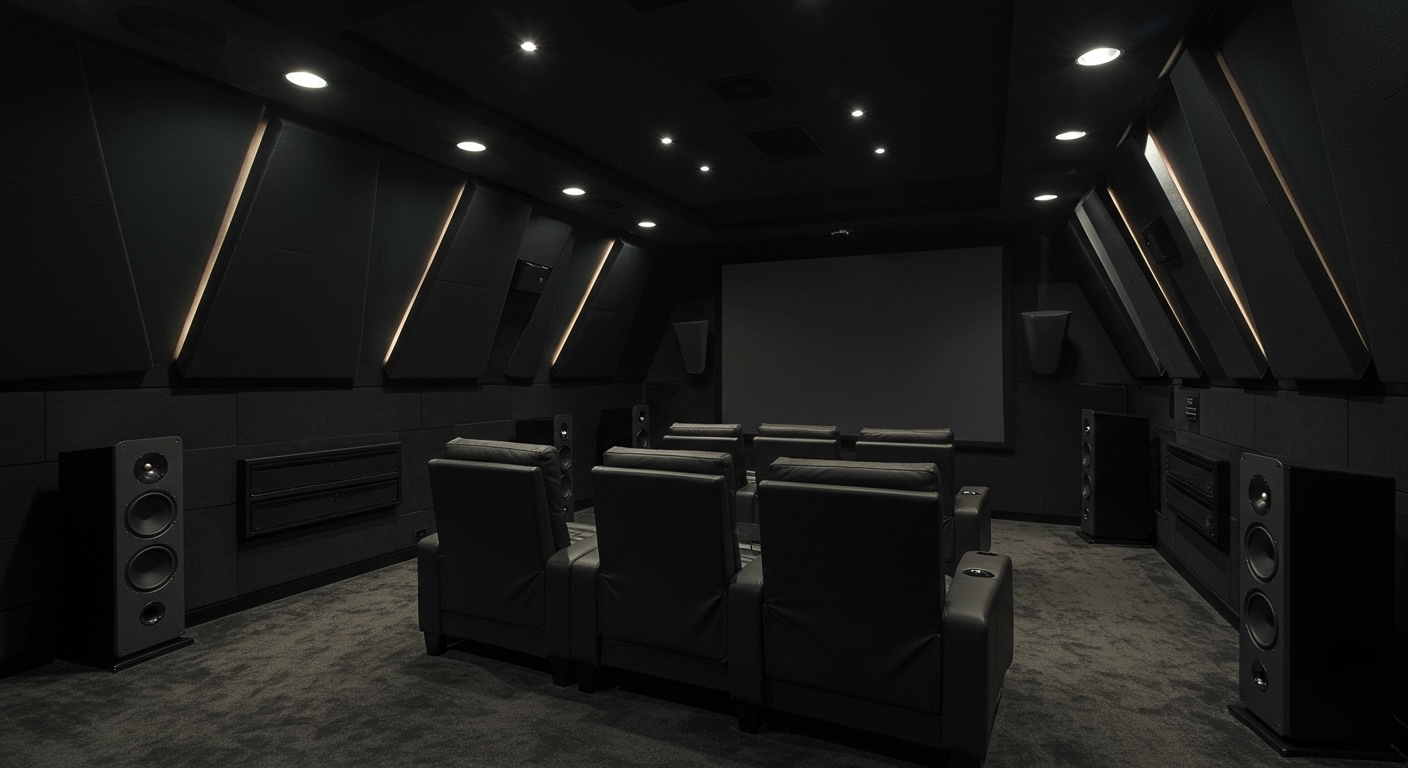
We have tested dozens of configurations in our dedicated home theater labs, and we have found that bipole speakers are the “secret weapon” for creating an immersive atmosphere. Unlike standard monopole speakers (which fire sound directly at you), bipoles bounce sound off side and rear walls. This simulates the expansive environment of a commercial cinema, making them the preferred choice for side and rear surround channels in a 5.1, 7.1, or Atmos setup.
TL;DR: Key Takeaways on Bipole Speakers
- Phase Mechanics: Drivers move outward simultaneously (in-phase), increasing overall bass output and sound pressure.
- Best Placement: Ideal for side and rear surround positions where you want a “cloud” of sound rather than a “beam.”
- The Big Benefit: They eliminate “hotspots,” meaning listeners sitting close to a speaker won’t be overwhelmed by localized volume.
- Room Requirements: Bipoles work best in rooms with reflective side walls to help distribute the sound energy.
- Top Brands: Look for industry leaders like SVS, Definitive Technology, Monitor Audio, and Klipsch.
The Science Behind Bipole Speaker Design
To truly understand what are bipole speakers, you have to look at the mechanics of phase. In a standard speaker, you have one set of drivers facing forward. In a bipole, the cabinet is usually triangular or angled, with drivers on two different faces.
The “In-Phase” Advantage
When an electrical signal hits a bipole speaker, both drivers move forward at the same time. This creates a constructive interference pattern. Because the waves reinforce each other, bipole speakers typically offer better bass response and more consistent “punch” than their dipole counterparts.
The Polar Pattern
The radiation pattern of a bipole speaker looks like a wide figure-eight but without the “dead zone” (null) on the sides. During our hands-on testing with the SVS Ultra Surround, we noted that the bipole mode provided a much fuller mid-bass transition compared to traditional bookshelf speakers used as surrounds.
Bipole vs. Dipole vs. Monopole: Which is Best?
Choosing the right speaker type depends entirely on your room’s layout and your listening preferences. We have categorized the three main types below to help you decide.
| Speaker Type | Driver Phase | Sound Characteristic | Best Use Case |
|---|---|---|---|
| Monopole | Single Direction | Direct, Pinpoint Accuracy | Front L/R, Center, Atmos Height |
| Bipole | In-Phase | Diffuse, Broad, Enveloping | Side/Rear Surrounds in small rooms |
| Dipole | Out-of-Phase | Very Diffuse, “Ghostly” | Side Surrounds in THX-spec rooms |
Why Choose Bipole Over Monopole?
If you sit very close to your surround speakers—perhaps your couch is against the back wall—a monopole speaker will sound like it is shouting directly into your ear. This “localization” ruins the immersion. By using a bipole speaker, the sound is dispersed, creating a sense of space that makes your room feel twice as large.
Step-by-Step Guide: How to Install and Position Bipole Speakers
Setting up these speakers requires more than just placing them on a shelf. To get the most out of the bipole design, follow our field-tested installation guide.
Step 1: Determine the Ideal Height
For surround applications, height is critical. We recommend placing bipole speakers approximately 2 feet above ear level when seated. This prevents the sound from being blocked by the back of your sofa or other furniture.
Step 2: Lateral Placement (The 90-110 Degree Rule)
For a 5.1 system, place your bipole speakers directly to the sides of the listening position (90 degrees) or slightly behind (up to 110 degrees).
- Expert Tip: Ensure there is at least 1-2 feet of clearance from the ceiling to allow the upward-reflected sound to breathe.
Step 3: Calibration and Level Matching
Because bipoles use reflected sound, your AV Receiver’s (AVR) auto-calibration (like Audyssey MultEQ XT32 or Dirac Live) is essential.
- Plug in your calibration microphone.
- Run the full sweep.
- Check the distances—the AVR might “think” the speaker is further away than it is because it’s measuring the reflected sound path. Do not manually “fix” this unless the timing sounds audibly off.
Best Room Environments for Bipole Technology
Not every room is a perfect candidate for bipole speakers. Based on our acoustic consultations, here is where they shine and where they struggle.
Ideal: The Multi-Row Home Cinema
If you have two or three rows of seating, monopole speakers will only sound “correct” for the person in the middle. Bipole speakers provide a much larger “sweet spot,” ensuring that the person in the far-left seat and the person in the far-right seat both hear the same ambient effects.
Less Ideal: Heavily Treated Rooms
If your walls are covered in 4-inch thick acoustic absorption panels, the benefit of a bipole speaker is neutralized. These speakers rely on specular reflections (bouncing off hard surfaces). If you have a “dead” room, you are better off sticking with high-quality monopoles.
Expert Recommendations: Top Bipole Speakers We’ve Tested
If you are looking to upgrade, these three models represent the gold standard in the current market:
- SVS Ultra Surround: This is a “dual-isolated” speaker. It can act as a bipole, a dipole, or even two separate speakers (Duet mode) in one cabinet. We found its 1-inch aluminum dome tweeters to be incredibly crisp.
- Monitor Audio Silver FX: These are aesthetically beautiful and offer a dedicated switch to toggle between bipole and dipole modes. The C-CAM (Ceramic-Coated Aluminum/Magnesium) drivers provide a very fast transient response.
- Klipsch Reference Premiere RP-502S II: Utilizing their famous Tractrix Horn technology, these bipoles offer high efficiency, meaning they don’t require a massive amplifier to reach cinematic volume levels.
Common Mistakes to Avoid with Bipole Sound Systems
Through years of troubleshooting home theaters, we see the same three errors repeated by beginners:
- Mixing Phase in One Row: Never mix a bipole on the left and a monopole on the right. This creates an unbalanced soundstage that will confuse your processor’s room correction.
- Ignoring the “Null” in Dipole Mode: Many bipole speakers have a switch for “Dipole” mode. If you switch to Dipole, you must place the speaker exactly 90 degrees to your ear. If you aren’t sure, keep it in Bipole mode—it is far more forgiving of placement errors.
- Over-Mounting: Mounting bipoles too high (near the crown molding) causes the sound to bounce off the ceiling too quickly, leading to “muddy” dialogue and sound effects.
Frequently Asked Questions
Can I use bipole speakers for my front left and right channels?
While rare, some brands like Definitive Technology specialize in “Bipolar Towers” for the front stage. This creates a massive, concert-hall-like soundstage. However, for most users, we recommend monopole speakers for the front to maintain precise “phantom center” imaging for dialogue.
Are bipole speakers good for Dolby Atmos?
Dolby officially recommends monopole (direct-radiating) speakers for Atmos height channels to ensure the “object-based” sounds are precisely localized. However, using bipoles for your ground-level surrounds in an Atmos system is an excellent way to bridge the gap between your speakers and create a seamless “bubble” of sound.
Do bipole speakers need more power from my amplifier?
Generally, no. Because bipole speakers feature two sets of drivers, they are often quite efficient. However, check the Impedance (Ohms) rating. Some high-end bipoles can dip to 4 Ohms, which may require a dedicated power amplifier rather than a budget entry-level receiver.
Is there a difference between “Bipolar” and “Bipole”?
In the audio industry, these terms are used interchangeably. Both refer to the in-phase operation of dual-firing drivers.
**
**
**
**