What are coaxial car speakers and why should you care?
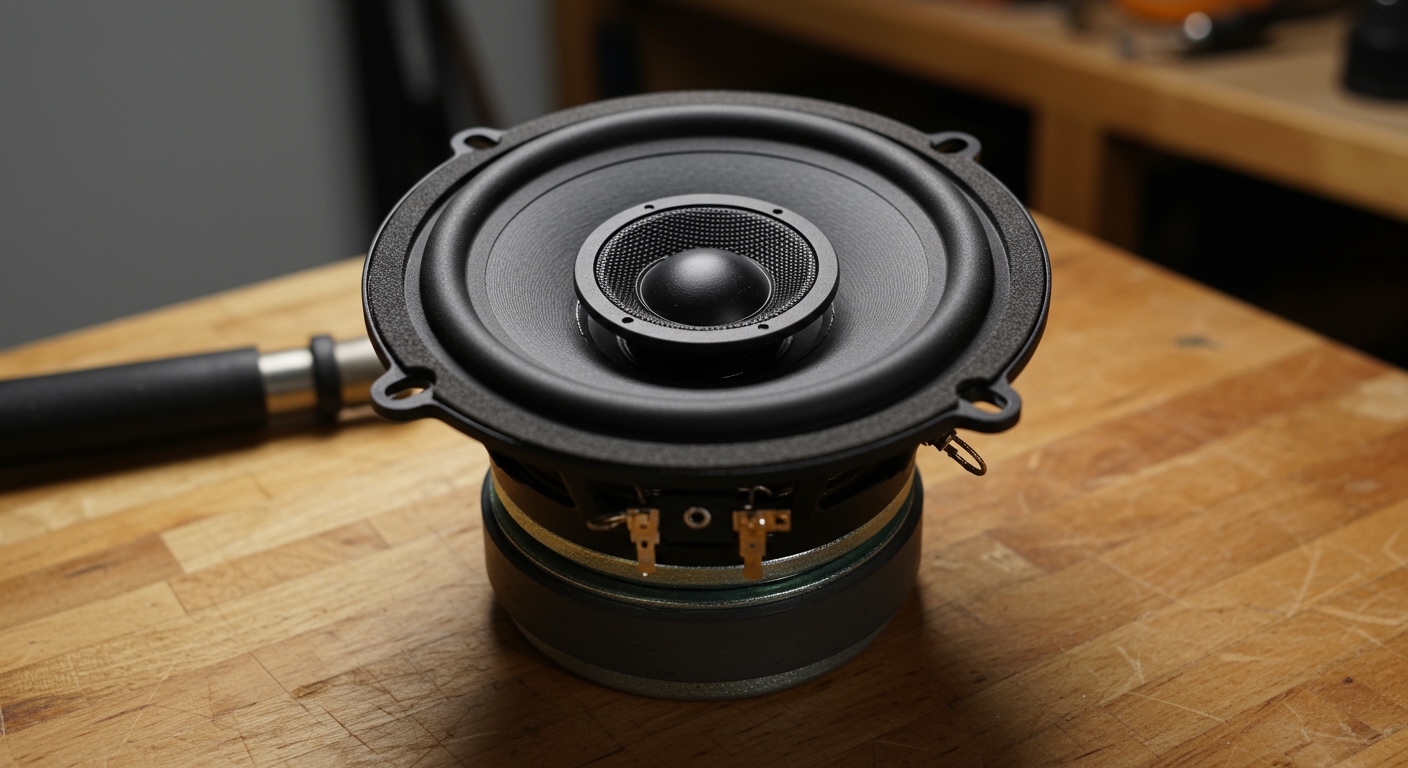
What are coaxial car speakers? Simply put, they are “all-in-one” speaker systems that combine multiple drivers—usually a woofer and a tweeter—into a single physical unit to produce a wide range of sound frequencies. This design is the industry standard for factory upgrades because it offers a balanced audio experience without the need for complex custom modifications.
Expert Summary: Key Takeaways
Space-Saving Design: Coaxial speakers house the tweeter directly in front of the woofer on a single axis.
Ease of Installation: Since all components are in one basket, they are a “drop-in” replacement for most factory speakers.
Cost-Effective: They are generally more affordable than component systems while still providing a massive leap in clarity over stock paper cones.
Integrated Crossovers: These speakers feature a built-in crossover network that directs high frequencies to the tweeter and lows to the woofer automatically.
Understanding What Does Coaxial Mean in Speakers?
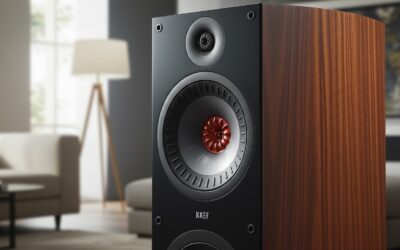
To truly grasp what does coaxial speakers mean, you have to look at the geometry of the device. The term “coaxial” refers to two or more axes that share a single center point. In the world of car audio, this means the high-frequency driver (the tweeter) is mounted on a pole or bridge directly over the center of the low-frequency driver (the woofer).
This configuration allows the sound to originate from a single point in space. For the listener, this creates a more “point-source” sound stage, which is particularly helpful in the cramped environment of a car cabin. When people ask what’s coaxial speakers, they are usually referring to this “2-way” or “3-way” integrated design.
Why the Design Matters
Most factory speakers are “full-range” single-cone drivers made of cheap paper. These struggle to play high notes and deep bass simultaneously, leading to “muddy” sound. What is coaxial speakers car technology designed for? It’s designed to solve this by splitting the labor between specialized parts:
- The Woofer: Handles the mid-bass and mid-range frequencies.
- The Tweeter: Handles the high-frequency details like cymbals and vocals.
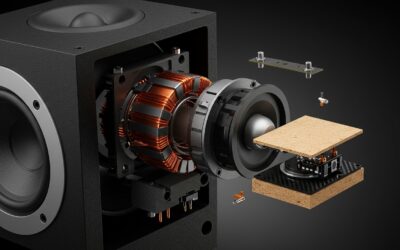
- The Crossover: A small capacitor or circuit that ensures the right sounds go to the right driver.
Are Coaxial Car Speakers Good? Comparing Options
If you are wondering are coaxial car speakers good, the answer depends on your goals. For 90% of drivers looking for a DIY upgrade that sounds significantly better than stock, they are excellent. However, they differ from component speakers which separate the drivers into different locations.
Comparison: What is Coaxial and Component Speakers?
| Feature | Coaxial Speakers | Component Speakers |
|---|---|---|
| Design | All-in-one unit | Separate woofer, tweeter, and crossover |
| Installation | Easy (Drop-in replacement) | Difficult (Requires custom mounting) |
| Sound Quality | Good to Great | Audiophile Grade (Better Imaging) |
| Price Point | Budget to Mid-range | Mid-range to Premium |
| Best For | Casual listeners & Easy DIY | Serious audiophiles & Custom builds |
Tools and Materials Needed for Installation
Before you begin your upgrade, gather these essential items. Having the right tools prevents damage to your car’s delicate plastic door panels.
| Tool/Material | Purpose |
|---|---|
| Panel Removal Tool | To pop plastic clips without scratching the paint or plastic. |
| Screwdriver Set | Typically Phillips #2 and various Torx bits for modern cars. |
| Wire Strippers/Crimpers | For connecting the new speakers to the factory wiring. |
| Wiring Harness Adapters | To plug new speakers into factory plugs without cutting wires. |
| Sound Deadening Mat | Optional but highly recommended to reduce door vibrations. |
Step 1: Research and Select Your Coaxial Speakers
Determine your speaker size. Most cars use standard sizes like 6.5-inch, 6×9-inch, or 5.25-inch. Use a fitment guide like Crutchfield to ensure the depth of the new speaker won’t hit your window glass when it’s rolled down.
Check the Sensitivity rating. If you are using a factory radio (low power), look for speakers with high sensitivity (90dB or higher). If you have an external amplifier, you can choose speakers with lower sensitivity but higher RMS power handling.
Choose your materials. For a smoother sound, look for Silk Dome Tweeters. If you prefer bright, “crisp” highs that cut through road noise, look for Metal or PEI Dome Tweeters.
Step 2: Prepare the Vehicle for Installation
Disconnect the negative battery terminal. This is a safety “must-do” to prevent any short circuits while you are messing with the electrical wiring.
Remove the door panels. Use your panel removal tool to find the hidden screws (often behind the door handle or inside the armrest). Gently pry the clips around the edge of the panel until it releases.
Unplug the switches. Before pulling the panel away completely, disconnect the wires for the power windows and door locks. Set the panel aside in a safe place where it won’t get stepped on.
Step 3: Remove the Old Factory Speakers
Unscrew the mounting bolts. Most factory speakers are held in by three or four screws. Keep these screws, as you might need them to mount the new bracket.
Disconnect the factory wiring. Usually, there is a plastic molex connector. Do not cut this yet. It is much better to use a wiring harness adapter that clicks directly into this plug.
Clean the mounting surface. Take a damp cloth and wipe away any dust or moisture inside the door cavity. This is also the perfect time to apply a small square of Butyl sound deadening behind the speaker to improve bass response.
Step 4: Wire and Mount the New Coaxial Speakers
Connect the wiring harness. Attach the female spade connectors of the harness to the terminals on your new coaxial car speakers. Ensure the “positive” (large terminal) and “negative” (small terminal) are correct to maintain proper phase.
Test the speaker. Reconnect your battery temporarily and turn on the radio. Listen for clear sound from both the woofer and the tweeter before you bolt everything down.
Secure the speaker to the door. If the holes don’t line up, you may need a plastic mounting adapter bracket. Ensure there is a tight seal between the speaker and the door to prevent “air leaks” which kill bass performance.
Step 5: Reassemble and Fine-Tune Your Audio
Reattach the door panel. Reverse the removal process. Make sure all plastic clips “click” back into place and that the window operates freely without hitting the new speaker magnets.
Adjust your Equalizer (EQ). New coaxial speakers often have much more “treble” than factory ones. You may need to lower the “High” or “Treble” setting on your head unit to find a natural balance.
Break them in. Don’t blast the volume to the maximum immediately. Give the rubber surrounds on the woofers about 10–20 hours of moderate play time to loosen up and reach their full acoustic potential.
Expert Pro-Tips for Better Sound
Avoid “3-Way” or “4-Way” Gimmicks: In cheap speakers, adding more tiny tweeters (super-tweeters) often just adds distortion. A high-quality 2-way coaxial usually sounds better than a cheap 4-way.
Use Foam Fast Rings: These foam gaskets sit around the speaker and seal it against the door panel. This forces all the sound into the cabin rather than letting it get lost inside the door.
Mind the Impedance: Most car speakers are 4-ohm. Ensure your head unit or amp is compatible. Using 2-ohm speakers on a 4-ohm rated head unit can cause it to overheat.
Match the RMS, not the Peak: Ignore the “1000 Watts” printed on the box. Look for the RMS (Root Mean Square) rating, which tells you the continuous power the speaker can actually handle.
Common Mistakes to Avoid
- Wiring out of phase: If you swap the positive and negative on one speaker but not the other, they will cancel each other’s bass out. The system will sound “thin” and “hollow.”
- Over-tightening screws: This can warp the speaker’s metal basket, causing the voice coil to rub and eventually fail.
- Ignoring the Crossover: Some high-end coaxials have an external crossover box. Don’t skip it! It protects the tweeter from blowing out.
FAQ:
Frequently Asked Questions
What does coaxial speakers mean in terms of sound quality?
It means you get a full range of sound (highs, mids, and lows) from a single location. While they don’t offer the “soundstage” height of component speakers, they provide much better clarity and detail than standard factory single-cone speakers.
Can I run coaxial speakers off my factory radio?
Yes, most coaxial car speakers are designed to be “high-efficiency,” meaning they can be powered easily by the built-in amplifier of a standard factory radio without needing an expensive external amp.
Is a 3-way coaxial better than a 2-way?
Not necessarily. A 3-way coaxial adds a “mid-range” or “super-tweeter” driver. While this sounds good on paper, in the small space of a car door, a well-built 2-way speaker with a high-quality tweeter often produces a more accurate and less “harsh” sound.
Do coaxial speakers have bass?
They produce “mid-bass” (the punchy sound of drums), but they cannot produce “sub-bass” (the deep rumble you feel). For true low-end bass, you will still need to pair your coaxial speakers with a dedicated subwoofer.
Conclusion
Upgrading to coaxial car speakers is the single most effective way to improve your driving experience without spending thousands of dollars. By understanding what are coaxial car speakers—integrated units that combine woofers and tweeters—you can make an informed decision for your vehicle.
Whether you are looking for more clarity in your favorite podcasts or more “kick” in your music, these speakers offer the perfect balance of performance and ease of use. Follow the steps above, take your time with the installation, and enjoy a transformed audio landscape on your next commute.
Ready to upgrade? Start by measuring your door speakers today and look for a pair with silk dome tweeters** for the best balance of price and performance!