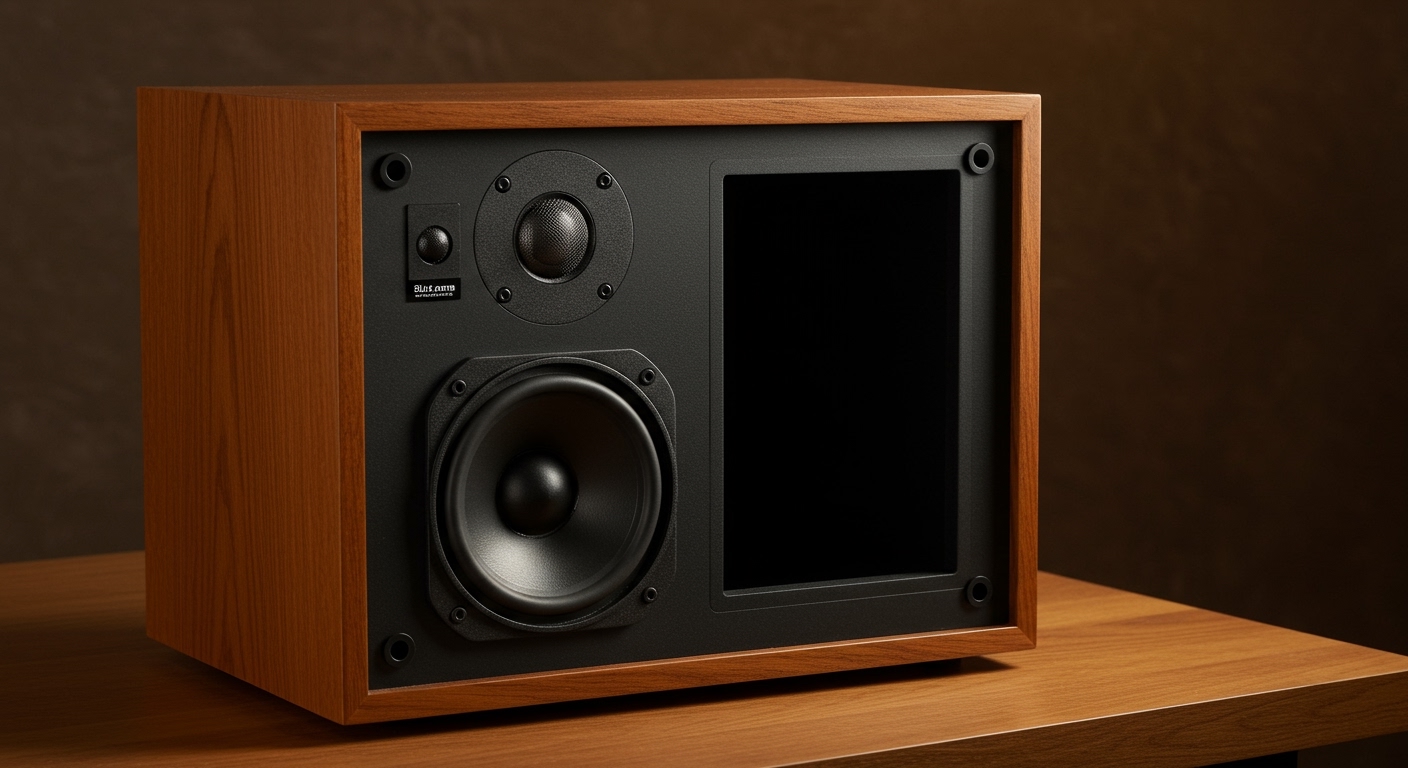
What Are Delay Speakers and Why Are They Essential?
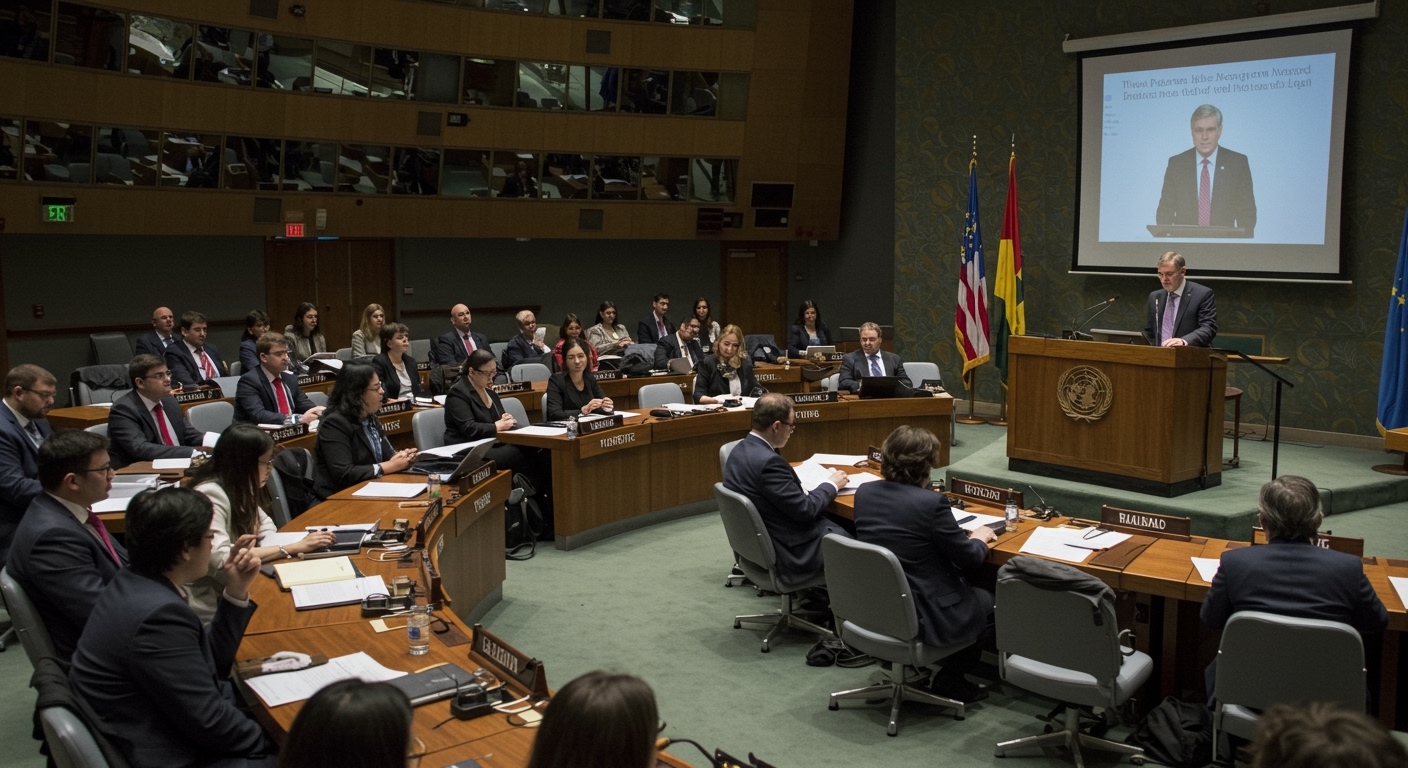
Delay speakers are secondary loudspeakers placed at specific distances from a main stage to provide clear, intelligible audio to the back of a large venue. By using a Digital Signal Processor (DSP) to “hold” the audio signal for a few milliseconds, these speakers ensure that sound arrives at the listener’s ears at the exact same time as the acoustic sound traveling from the main stage.
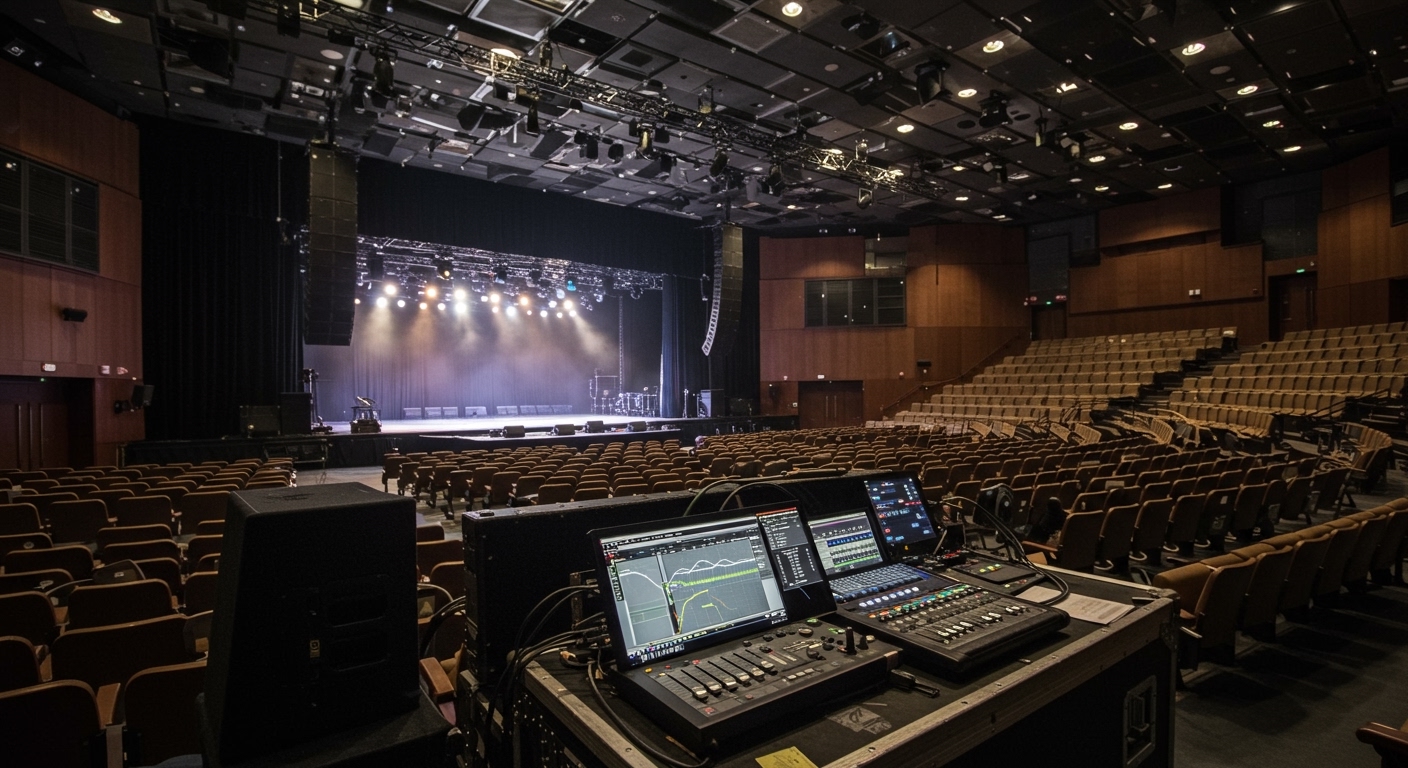
In my fifteen years as a live sound engineer, I’ve seen countless events ruined by “muddy” audio. Without properly configured delay speakers, listeners in the back of a 100-foot room hear two distinct sounds: the amplified sound from the nearest speaker and the delayed “ghost” sound from the main stage. This creates a chaotic echo that destroys speech intelligibility and musical clarity.
TL;DR: Key Takeaways
- Purpose: Delay speakers maintain volume and clarity in large spaces without making the front of the room painfully loud.
- The Math: Sound travels at approximately 1,130 feet per second (or 343 meters per second).
- Haas Effect: Adding a small buffer (10–20ms) to your delay ensures the audience still perceives the sound as coming from the main stage.
- Hardware: You need a digital crossover, a DSP-enabled power amp, or a digital mixing console to set delays.
- Benefit: Provides a “front-row” listening experience for every person in the building, regardless of their seat.
The Science Behind What Are Delay Speakers
To understand what are delay speakers, you must first understand the physics of sound. Sound is relatively slow compared to light. While light hits everyone in a stadium simultaneously, sound waves take time to physically push through the air.
The Inverse Square Law
In any acoustic environment, sound follows the Inverse Square Law. This means that for every doubling of distance from the source, the Sound Pressure Level (SPL) drops by 6dB. By the time the main speakers reach the back of a 200-foot ballroom, the high frequencies have dissipated, leaving the audience with a muffled, bass-heavy mess.
The Precedence Effect (Haas Effect)
We use delay speakers to exploit the Haas Effect. This psychoacoustic phenomenon dictates that if two sounds reach a listener within 25–35 milliseconds of each other, the brain perceives them as a single sound. Crucially, the brain localizes the sound to whichever source arrived first.
By slightly delaying the secondary speakers, we “trick” the audience’s brains into thinking all the sound is coming from the main stage, even though the speaker right above their head is doing most of the work.
Step-by-Step Guide: How to Set Up Delay Speakers
Setting up a delay system requires more than just placing a speaker halfway down the room. I follow this rigorous five-step process to ensure perfect time alignment.
Step 1: Physical Placement and Coverage
Place your delay speakers at the point where the SPL from the main speakers begins to drop below the ambient noise floor or becomes unintelligible.
- Aim the speakers toward the back of the room.
- Ensure they are high enough to maintain a clear line of sight to the audience’s ears.
- Avoid pointing them directly at hard back walls to minimize reflections.
Step 2: Measure the Distance
Accuracy is everything in time alignment. I recommend using a laser distance measurer for the best results.
- Measure from the Main Speakers (the source) to the Delay Speakers.
- Do not measure from the stage; measure from the actual speaker drivers.
Step 3: Calculate the Theoretical Delay
Use the standard formula for the speed of sound at room temperature (approx. 72°F).
- Formula (Feet):
Distance (ft) / 1.13 = Delay in Milliseconds (ms) - Formula (Meters):
Distance (m) / 0.343 = Delay in Milliseconds (ms)
Step 4: Apply the “Haas” Buffer
If you set the delay to the exact mathematical result, the sound might feel like it is pulling toward the delay speaker.
- Add 10ms to 20ms of additional delay.
This ensures the sound from the main stage arrives first*, maintaining the illusion of the stage being the primary source.
Step 5: Critical Listening and Fine-Tuning
Never rely solely on math. I always use a reference track I know intimately (typically something with a sharp snare hit or a dry vocal).
- Stand behind the delay speaker.
- Listen for a “double-hit” on the snare.
- Adjust the delay in 1ms increments until the two sources fuse into one coherent sound.
Delay Calculation Reference Table
Below is a quick-reference chart for common distances. Note: These figures include a standard 15ms Haas buffer.
| Distance from Mains (Feet) | Mathematical Delay (ms) | Recommended Setting (with 15ms Buffer) |
|---|---|---|
| 25 Feet | 22.1 ms | 37 ms |
| 50 Feet | 44.2 ms | 59 ms |
| 75 Feet | 66.3 ms | 81 ms |
| 100 Feet | 88.5 ms | 103 ms |
| 150 Feet | 132.7 ms | 147 ms |
| 200 Feet | 177.0 ms | 192 ms |
Essential Equipment for Managing Delay Speakers
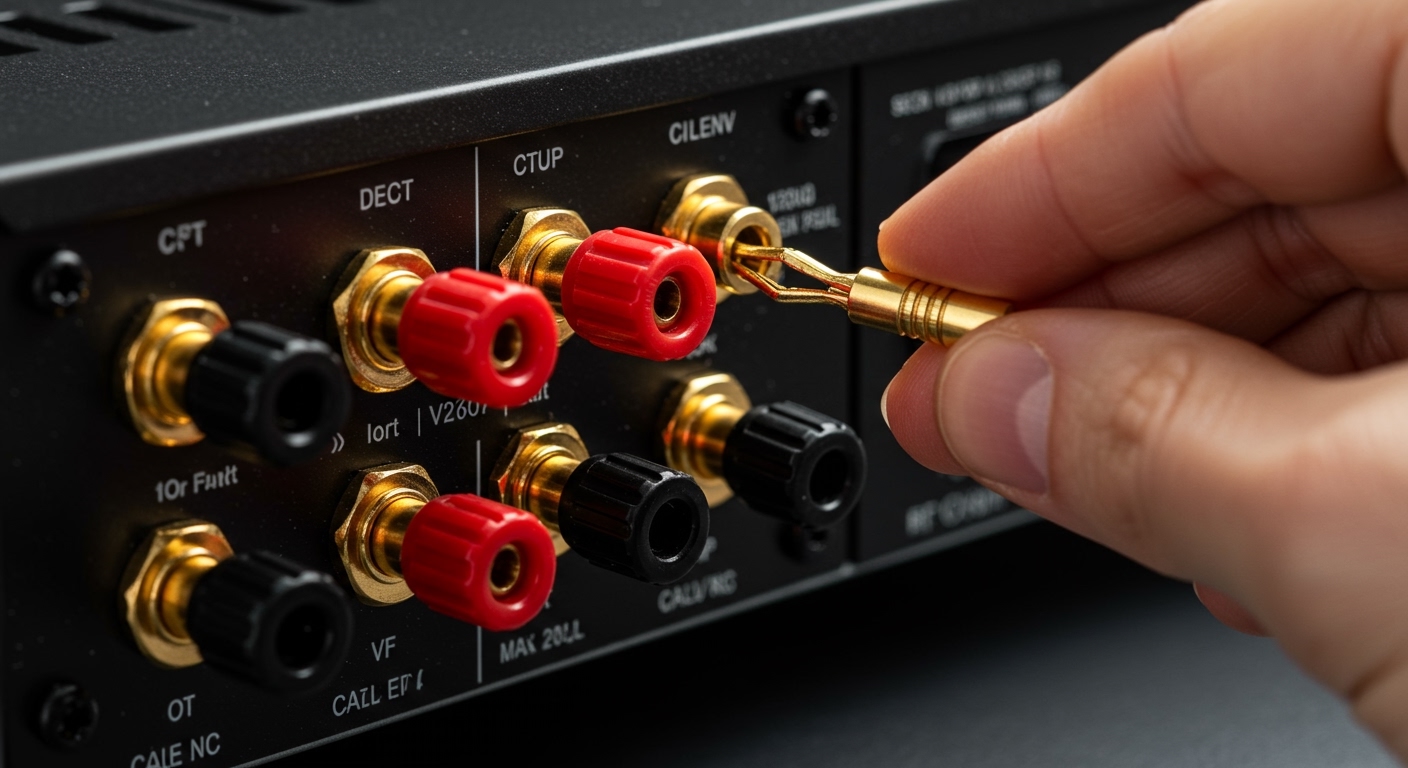
You cannot simply plug a delay speaker into a standard amplifier output. You need a device capable of signal processing.
- Digital Mixing Consoles: Most modern desks (like the Behringer X32 or Allen & Heath SQ series) have built-in delay settings on every output bus.
- Loudspeaker Management Systems: Devices like the dbx DriveRack PA2 or BSS Audio Blu-160 are dedicated hardware units designed specifically for crossovers, EQ, and time alignment.
- DSP-Enabled Amplifiers: Brands like Crown and QSC offer power amps with built-in networking and delay processing.
- Measurement Microphones: Tools like the Rational Acoustics Smaart software and an RTA microphone allow you to visualize time alignment on a screen for perfect precision.
Common Pitfalls to Avoid
During my time in the field, I’ve noticed three recurring mistakes that destroy the effectiveness of delay speakers.
Over-Amplification
The biggest mistake is making the delay speakers too loud. They should supplement the main PA, not replace it. If the audience can “hear” the speaker above them as a separate source, the volume is likely 3-6dB too high.
Ignoring Temperature Changes
Sound travels faster in heat and slower in cold. For outdoor festivals, a delay setting that worked during the 2:00 PM soundcheck will be “off” by the 9:00 PM headliner set as the air cools. High-end DSP units often have temperature probes to adjust this automatically.
Incorrect EQing
Delay speakers do not need the same amount of low-end as the mains. Use a High-Pass Filter (HPF) to cut everything below 100Hz–120Hz. Sub-bass frequencies are omnidirectional and travel long distances; adding more bass from the delay speakers usually just creates “mud.”
Expert Perspective: When Should You Use Delays?
In my professional opinion, you should consider delay speakers in the following scenarios:
- Houses of Worship: Long, narrow cathedrals with high reverberation.
- Corporate Ballrooms: When the room depth exceeds 60 feet.
- Outdoor Events: Where there are no walls to contain the sound energy.
- L-Shaped Rooms: Where a portion of the audience is blocked from the main PA’s line of sight.
Frequently Asked Questions
How many milliseconds should I delay my speakers?
The delay depends entirely on the distance. The base calculation is roughly 1ms for every 1.1 feet. Always add an extra 10-15ms to take advantage of the Haas Effect, which keeps the sound localized to the stage.
Can I use wireless speakers for delays?
While possible, it is risky. Most wireless audio systems (like Bluetooth) introduce their own latency, which can fluctuate. If you use wireless, use professional-grade UHF systems designed for low-latency audio transmission.
What happens if I don’t delay my secondary speakers?
If you don’t use delay, the audience will hear a “slap-back” echo. This makes it very difficult for the human brain to process speech, leading to listener fatigue and a poor overall experience.
Do I need a separate amplifier for delay speakers?
Yes, or at least a separate channel on your amplifier. Since the signal going to the delay speakers must be processed differently than the mains, it needs its own dedicated output from your DSP or mixer.