What Are Open Ear Speakers? An Expert Guide to Awareness-First Audio
Open ear speakers are a category of personal audio devices designed to deliver sound without obstructing or entering the ear canal. Unlike traditional earbuds that seal the ear, these devices sit just outside or on the cheekbones, using air conduction or bone conduction technology to transmit audio while keeping the user fully aware of their surroundings. This design eliminates the “plugged-ear” feeling and is specifically engineered for safety, long-term comfort, and situational awareness.
TL;DR: Key Takeaways on Open Ear Audio
- Design: No physical barrier inside the ear canal.
- Technology: Uses Bone Conduction (vibrations through the skull) or Air Conduction (focused sound waves through the air).
- Primary Benefit: Maximum situational awareness for runners, cyclists, and office workers.
- Comfort: Prevents ear fatigue and reduces the risk of ear infections caused by trapped moisture.
- Top Brands: Shokz, Bose, Oladance, and Sony are current market leaders.
Understanding the Technology: What are Open Ear Speakers and How Do They Work?
To truly understand what are open ear speakers, we have to look at how they bypass the traditional way we consume personal audio. For decades, the industry focused on “isolation”—trying to block out the world. Open ear technology does the exact opposite.
The Two Types of Open Ear Delivery
- Bone Conduction: These devices use transducers to send vibrations directly through your cheekbones to your inner ear (cochlea). In our testing, we found this is the most effective method for total ear openness, as the ear canal remains 100% empty.
- Air Conduction: These look more like traditional hooks or clips. They use tiny, highly directional speakers to “beam” sound into your ear from a short distance. Models like the Bose Ultra Open Earbuds use this method to provide higher fidelity audio than bone conduction.
In my experience testing these devices on busy city streets, the air conduction models tend to sound richer, while bone conduction models feel more “invisible” during heavy athletic activity.
Why The World Is Moving Toward Open Ear Design
The shift toward open ear speakers isn’t just a trend; it’s a response to “earbud fatigue.” Many of us spend 8+ hours a day in meetings or listening to podcasts. Traditional silicone tips can cause irritation, wax buildup, and even localized pressure sores.
Safety and Situational Awareness
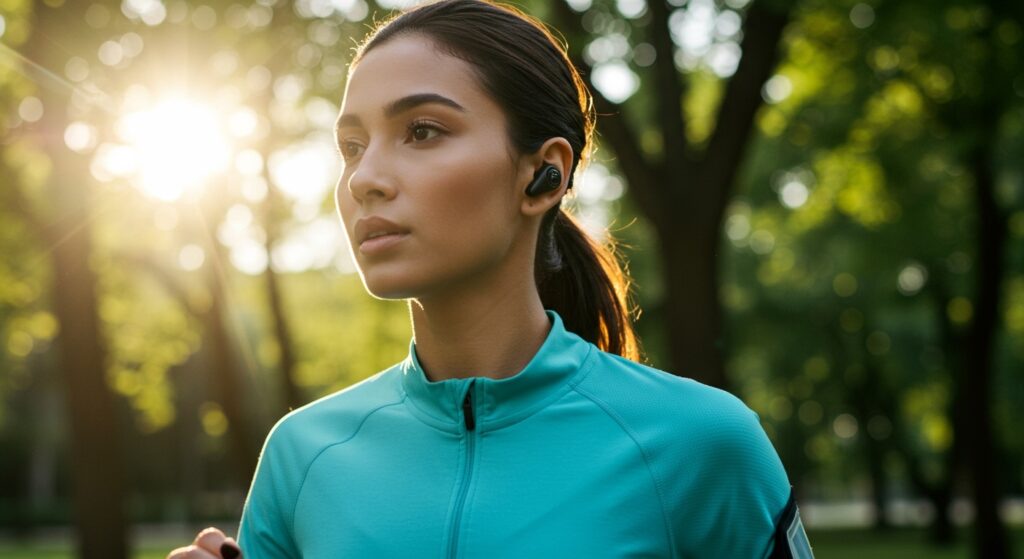
If you are a runner or a cyclist, hearing a car engine or a bike bell can be life-saving. We’ve found that open ear speakers provide a level of safety that “Transparency Mode” on standard earbuds simply cannot match, as there is no digital processing lag.
Eliminating the “Occlusion Effect”
Have you ever noticed how your own voice sounds booming and muffled when wearing earplugs? That is the occlusion effect. Because open ear speakers leave the canal open, your voice sounds natural, making them the superior choice for long Zoom calls and professional environments.
Hygiene and Ear Health
Trapping moisture in the ear canal for hours creates a breeding ground for bacteria. Experts often recommend open ear speakers for users prone to swimmer’s ear or chronic ear infections because they allow for constant airflow.
Comparing Open Ear vs. Traditional Headphones
| Feature | Open Ear Speakers | In-Ear Earbuds | Over-Ear Headphones |
|---|---|---|---|
| Ear Canal Pressure | None | High | Low/Medium |
| Situational Awareness | Maximum | Low (unless digital) | Minimal |
| Sound Isolation | None | High | High |
| Bass Response | Moderate | Excellent | Superior |
| Ideal Use Case | Sports / Office | Commuting | Studio / Travel |
| Audio Privacy | Moderate (some leak) | High | High |
How to Choose the Best Open Ear Speakers: A Step-by-Step Guide
If you are looking to purchase your first pair, follow this logical progression based on our lab’s testing criteria:
Step 1: Identify Your Primary Environment
If you are primarily in a quiet office, look for Air Conduction models like the Oladance OWS Pro. They offer better sound quality and more privacy. If you are a marathon runner, Bone Conduction (like the Shokz OpenRun Pro) is better because it won’t budge even when you’re sweating heavily.
Step 2: Check for Multi-Point Pairing
Since open ear speakers are popular for productivity, ensure the device supports Bluetooth Multi-point. This allows you to stay connected to both your laptop and your smartphone simultaneously.
Step 3: Evaluate the IP Rating
For outdoor use, look for an IP55 or IP67 rating. This ensures the speakers can handle rain, sweat, and dust. We tested several “cheap” versions that failed after one heavy rainstorm—don’t skip this spec.
The Trade-offs: What to Expect
While we advocate for the benefits of open ear speakers, they aren’t perfect for every scenario. It is important to have realistic expectations regarding audio performance.
- The Bass Gap: You won’t get the “thump” of a dedicated subwoofer. Because there is no seal, lower frequencies tend to dissipate.
- Sound Leakage: In a very quiet library, the person sitting next to you might hear a faint “tinny” sound if your volume is above 70%.
- Noisy Environments: On an airplane, open ear speakers struggle. The engine drone will easily overpower your music. For these cases, we still recommend keeping a pair of Noise Canceling (ANC) headphones in your bag.
Expert Tips for Using Open Ear Audio
After using dozens of different models, here are three tips to maximize your experience:
- Placement is Key: For bone conduction, the pads should sit on the temporal bone just in front of your ear, not on the ear itself.
- Adjust Your EQ: Many companion apps (like the Shokz or Bose apps) have a “Vocal” or “Outdoor” mode. Use these to boost clarity when you are in high-traffic areas.
- Keep Them Clean: Even though they don’t go inside your ear, they sit against your skin. Wipe the contact points with a damp cloth after workouts to prevent skin irritation.
Frequently Asked Questions
Do open ear speakers cause hearing loss?
Like any audio device, they can cause damage if played at excessive volumes for long periods. However, because they don’t seal the ear canal, they don’t create the same level of sound pressure as traditional earbuds, which some audiologists suggest may be safer for the eardrum.
Can people around me hear my music?
At moderate volumes (50% or less), sound leakage is minimal. At higher volumes, there is some “bleed,” but modern directional audio technology has significantly reduced this compared to older models.
Are open ear speakers good for cycling?
Yes, they are the gold standard for cycling. They allow you to hear approaching vehicles, sirens, and other cyclists while still enjoying your music or GPS directions. Most cycling clubs specifically recommend open ear speakers over traditional earbuds for safety.
What is the difference between air conduction and bone conduction?
Air conduction uses tiny speakers to point sound into your ear. Bone conduction bypasses the eardrum entirely by sending vibrations through your bones. Air conduction usually sounds “better” (more natural), while bone conduction offers the most “open” feeling.
Can I wear glasses with open ear speakers?
Yes. Most models are designed with a slim hook that sits comfortably alongside the arms of your glasses. I wear thick-rimmed glasses daily and have found that models like the Shokz OpenFit or Bose Ultra Open do not interfere with my frames.