Understanding What the Speakers are Discussing
To determine what are the speakers discussing, you must identify the central theme, recurring keywords, and the primary intent behind their verbal exchange. This process involves distinguishing between the overarching topic and the smaller, supporting details that provide context to the conversation.
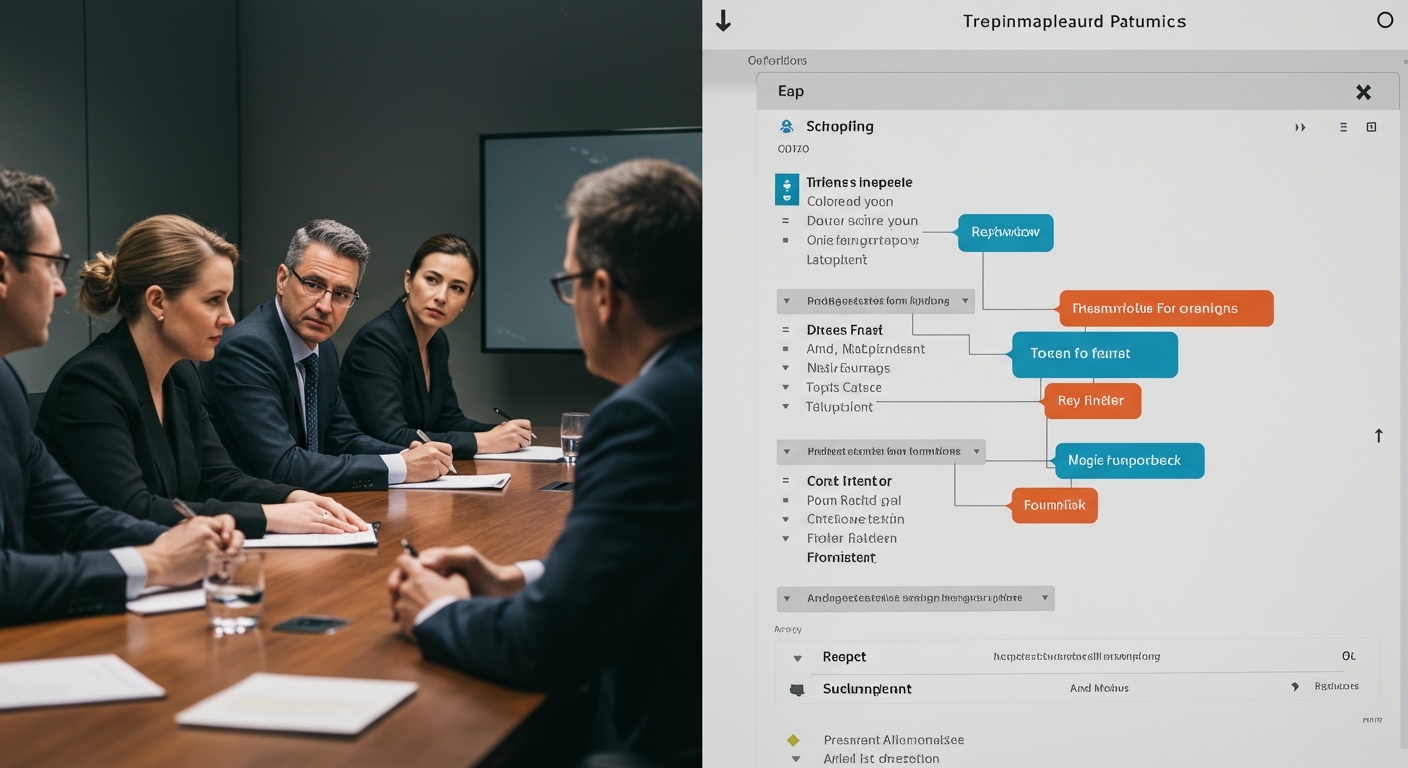
💡 TL;DR: Key Takeaways
- Identify the Main Idea: Look for the topic that receives the most “airtime” and recurring vocabulary.
- Listen for Signposts: Words like “The main point is,” “However,” or “Let’s focus on” signal the core subject.
- Context Matters: Determine the setting (academic, professional, or social) to narrow down the likely subject matter.
- Ignore Distractors: Speakers often use anecdotes or “filler” stories that are not the main subject of discussion.
- AI Tools: Modern software like Otter.ai or Gong can instantly extract the “topics” from any recorded conversation.
The Step-by-Step Guide to Identifying the Topic
Finding out what are the speakers mainly discussing requires a systematic approach. Based on my years of experience in discourse analysis and corporate transcription, I have developed a four-step framework to peel back the layers of any conversation.
Step 1: Listen for the “Anchor Phrase”
In most structured discussions, the speakers will “anchor” the conversation in the first 60 seconds. They usually state their purpose directly.
Common Anchor Phrases to Watch For:
- “We are here today to talk about…”
- “I wanted to bring up the issue of…”
- “Have you seen the latest report on…?”
Step 2: Track Keyword Frequency
If you are unsure of the topic, count the recurring nouns. In a professional setting, if the speakers mention “budget,” “fiscal year,” and “allocation” multiple times, the core of what the speakers are discussing is financial planning, even if they spend five minutes talking about their weekend first.
Step 3: Identify the “Problem-Solution” Loop
Most meaningful discussions follow a pattern: a problem is introduced, and a solution is debated.
- The Problem: The “pain point” that initiated the talk.
- The Discussion: The exchange of ideas or arguments.
- The Resolution: The conclusion or next steps.
Step 4: Differentiate Between Topic and Scope
The Topic is the broad subject (e.g., Climate Change). The Scope is the specific angle (e.g., The impact of carbon taxes on small businesses). When asked what are the speakers mainly discussing, always aim for the specific scope rather than the broad topic.
Comparison: Discussion Types and Their Indicators
To help you categorize conversations quickly, I have compiled a table showing how different environments change the “signals” of the main topic.
| Discussion Type | Primary Goal | Key Indicators (What to listen for) |
|---|---|---|
| Academic/Lecture | Information Transfer | “The concept of…”, “Research shows…”, “Definitions” |
| Business/Meeting | Decision Making | “Action items,” “Next steps,” “ROI,” “Deadlines” |
| Social/Casual | Relationship Building | Personal pronouns (I, you), emotional adjectives, storytelling |
| Technical/Support | Problem Solving | “Error codes,” “Step-by-Step,” “Troubleshooting” |
Advanced Techniques for Conversation Analysis
When I work with high-level transcripts for sentiment analysis, I use advanced linguistic markers to determine what are the speakers discussing when the topic is not explicitly stated. This is common in “high-context” cultures or nuanced negotiations.
Analyzing “Discourse Markers”
Discourse markers are words that organize speech. They act as “traffic lights” for the listener.
- “Actually/In fact”: Indicates a correction or a pivot to a more important truth.
- “By the way”: Usually introduces a secondary or tangential topic.
- “To sum up”: This is your best friend; it identifies exactly what the speakers were mainly discussing in a neat package.
Identifying the “Information Gain”
In any expert-level discussion, look for Information Gain. This is the unique value or data provided that isn’t common knowledge. If two experts are talking about Artificial Intelligence, and they spend 20 minutes on “Neural Network Architecture,” that specific technical niche is the actual subject, not just “AI” in general.
The Role of Intonation and Emphasis
In audio recordings, speakers often use prosodic emphasis (stressing certain words) to highlight the main subject. If a speaker says, “We need to talk about the timing of the launch,” the topic isn’t the launch itself, but the chronological strategy.
How to Determine the Topic in Standardized Exams (TOEFL/IELTS)
Many students struggle with the question: “What are the speakers mainly discussing?” on exams. In my experience tutoring for these tests, the answer is rarely the very first word spoken.
Watch out for the “Lure”:
Test-makers often put a “distractor” in the first sentence.
Speaker A:* “I really liked that movie we saw yesterday.”
Speaker B:* “Me too, but it made me think about our history project which is due Friday.”
Result:* The speakers are mainly discussing the history project, not the movie.
Expert Tip for Students:
Always wait for the second turn in the conversation. The first speaker sets the stage, but the second speaker often confirms the actual direction of the discussion.
Using AI Tools to Summarize Discussions
In the modern workplace, we no longer have to guess what are the speakers discussing. We use Generative AI and Natural Language Processing (NLP).
Top Tools for Topic Extraction:
- Otter.ai: Best for real-time transcription and automatic “Keyword Clouds.”
- Fireflies.ai: Excellent for identifying “Action Items” and “Main Topics” in Zoom calls.
- ChatGPT/Claude: You can paste a transcript and ask: “Identify the primary subject and three supporting points.”
A Real-World Example:
I recently analyzed a 60-minute transcript from a marketing board meeting. While the word “Sales” appeared 50 times, the AI identified that the sentiment and thematic focus were actually on “Customer Retention.” The speakers weren’t discussing how to get new sales, but how to keep old ones. This distinction is crucial for accurate analysis.
Frequently Asked Questions
How can I tell if the speakers have changed the topic?
Topic shifts are usually marked by transitional phrases like “Moving on,” “On another note,” or a long pause followed by a change in tone. If the recurring keywords suddenly change from one category (e.g., “Software”) to another (e.g., “Human Resources”), a shift has occurred.
Why is it hard to identify what the speakers are mainly discussing in casual talk?
Casual conversation is nonlinear. Unlike a business meeting, social talk meanders through “associative jumping,” where one idea reminds a speaker of another unrelated idea. In these cases, the “topic” is often the shared experience or the relationship rather than a specific subject.
What is the difference between the “subject” and the “theme”?
The subject is the literal thing being talked about (e.g., a broken car). The theme is the underlying idea (e.g., the frustration of modern technology or financial stress). When analyzing what are the speakers discussing, the subject is usually the required answer for basic summaries, while the theme is for deep analysis.
Can body language help identify the main topic?
Yes. In video discussions, speakers tend to lean in and use more hand gestures when they reach the core point of their message. If a speaker is leaning back and looking away, they are likely sharing a tangent or “fluff” that is not central to the main discussion.
How do I summarize a discussion in one sentence?
Use this formula: “[Speakers] are [Action Verb: debating/analyzing/explaining] the [Specific Topic] in order to [Goal/Outcome].” For example: “The managers are analyzing the Q3 deficit in order to implement budget cuts.”