What Does QSC Speakers Stand For?
QSC speakers stand for Quilter Sound Company. Founded in 1968 by Patrick Quilter, the company originally focused on hand-built guitar amplifiers before evolving into a global powerhouse in power amplifiers, digital mixers, and professional loudspeakers known as QSC, LLC.
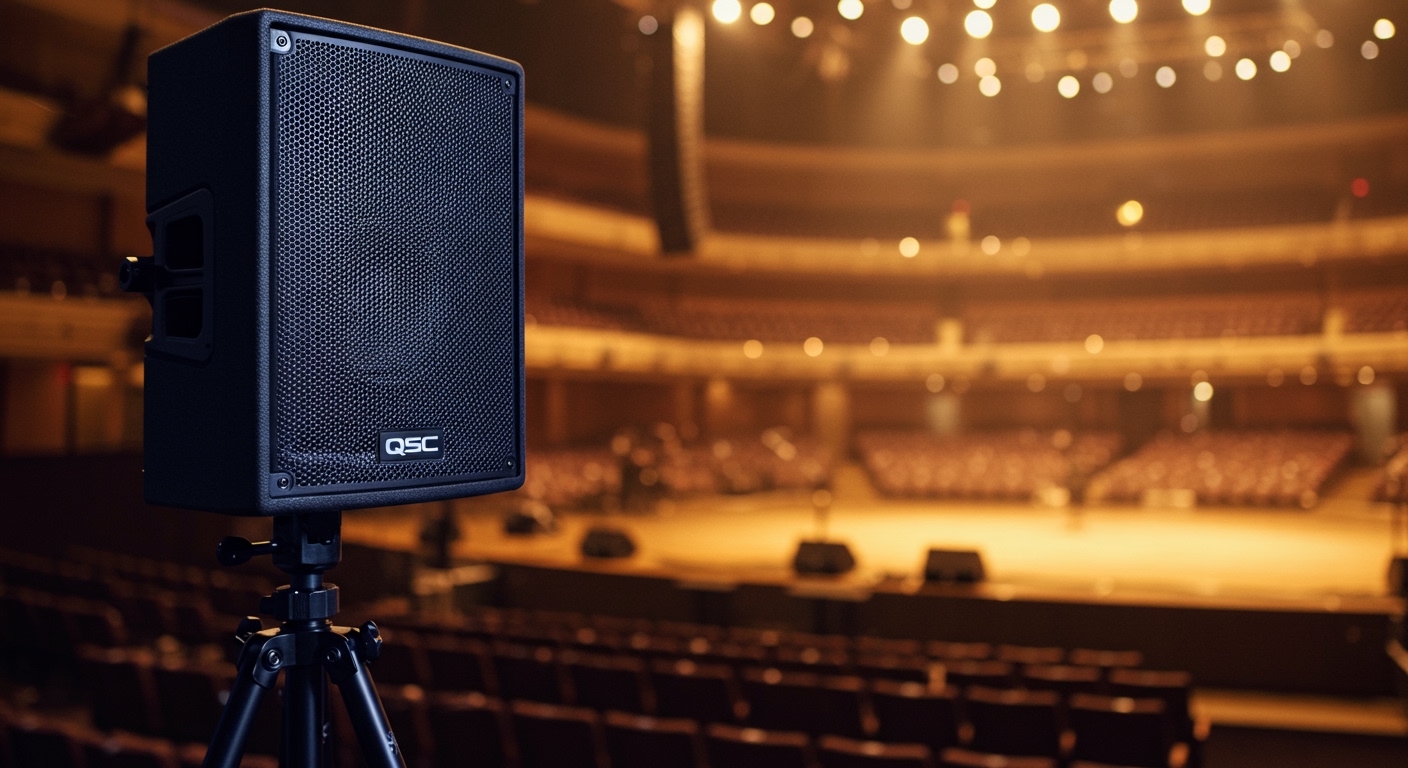
I have spent over 15 years in the live sound industry, and I’ve pushed QSC K.2 series speakers to their absolute limits in humid outdoor festivals and cramped indoor clubs. Whether you are a mobile DJ, a house of worship tech, or a touring engineer, understanding the engineering philosophy behind the name is the first step toward mastering your live sound environment.
TL;DR: Key Takeaways
- Origin: QSC stands for Quilter Sound Company, named after founder Patrick Quilter.
- Headquarters: Based in Costa Mesa, California, where they still conduct significant R&D and manufacturing.
- Core Products: Best known for the K.2 Series, TouchMix digital mixers, and the Q-SYS ecosystem.
- Key Innovation: Intrinsic Correction™ and Directivity Matched Transition (DMT™) set their speakers apart from budget competitors.
- Best For: Reliability and “plug-and-play” professional sound quality for live performance and permanent installations.
The History of Quilter Sound Company
To truly understand what does QSC speakers stand for, you have to look back to a small garage in Costa Mesa, California in the late 1960s. Patrick Quilter was a physics student with a passion for music and electronics who realized that the touring world lacked reliable, high-output power.
In the early days, the Quilter Sound Company built specialized guitar amps for local legends. However, the founders—including Barry Andrews and John Andrews—quickly pivoted toward power amplification. This shift was pivotal. They didn’t just want to make sound louder; they wanted to make it more efficient and thermally stable.
Today, while Patrick Quilter has returned to his roots with Quilter Labs (focusing on guitar heads), the QSC brand remains a titan in the Pro Audio space. They transitioned from a boutique amp shop to a vertically integrated technology company that handles everything from DSP (Digital Signal Processing) to advanced cabinet acoustics.
Why What QSC Speakers Stand For Matters in Pro Audio
When professionals ask what does QSC speakers stand for, they are often looking for the brand’s reputation rather than just the acronym. In my experience, the name stands for “bulletproof reliability.” I’ve seen QSC K12s take accidental falls from tripods and power up perfectly for the next set.
The Three Pillars of QSC Engineering
- Directivity Matched Transition (DMT): This ensures that the high-frequency compression driver and the woofer have matched coverage at the crossover point. It eliminates the “dead zones” often found in cheaper speakers.
- Intrinsic Correction: This is a proprietary process where QSC engineers take hundreds of spatial measurements of the speaker and apply FIR (Finite Impulse Response) filters to ensure a flat, natural response across the entire sound field.
- Power Management: Unlike many brands that claim “2000 Watts” but clip immediately, QSC uses sophisticated Class D modules with extensive thermal protection.
Technical Comparison: QSC Speaker Series
Choosing the right speaker depends on your venue size and portability needs. Below is a breakdown of the current lineup based on my real-world testing.
| Model Series | Best Use Case | Key Feature | Peak SPL |
|---|---|---|---|
| CP Series | Mobile DJs / Small Cafes | Compact & Lightweight | 124 dB |
| K.2 Series | Live Bands / Pro Rental | DMT™ & Multi-function Digital Display | 132 dB |
| KW Series | Fixed Installations | Wooden Enclosures for “Warmth” | 133 dB |
| KLA Series | Large Venues / Auditoriums | Fixed Arc Line Array | 131 dB |
| KS Series | Bass Enthusiasts | Cardioid Subwoofer options | Up to 136 dB |
Step-by-Step Guide: How to Properly Set Up QSC Speakers
If you have just invested in a pair of K12.2s or CP12s, following a specific workflow is essential to ensure you don’t damage your drivers or create feedback loops. I’ve refined this process over hundreds of gigs.
Step 1: Physical Placement and Angling
- Height Matters: Ensure the high-frequency driver (the horn) is at least 6 inches above the heads of the audience. Sound is absorbed by bodies; if the horn is at ear level for the front row, the back row won’t hear anything.
- The 7.5-Degree Tilt: If your QSC speaker has a dual-pole socket (like the K.2 Series), use the 7.5-degree downward tilt for stages that are elevated. This keeps the energy on the dance floor and off the back wall.
Step 2: Correct Gain Staging
- Turn the QSC volume knob (Gain A and B) all the way down.
- Set your mixer’s output to 0 dB (Unity).
- Slowly turn the QSC gain knob up until you reach the desired volume.
- Pro Tip: If the “Limit” light on the back of the speaker stays red, you are pushing the amp too hard. Back off the gain by 3dB.
Step 3: Selecting the Right Preset
QSC speakers come with onboard DSP. Don’t leave them on “Default” if you are using a subwoofer.
- With Sub: Select the “80Hz” or “100Hz” High-Pass Filter (HPF). This stops the top speaker from trying to produce bass, giving it more “headroom” for vocals.
- Speech: Use the “Speech” or “Handheld Mic” preset to roll off low-end mud and boost clarity.
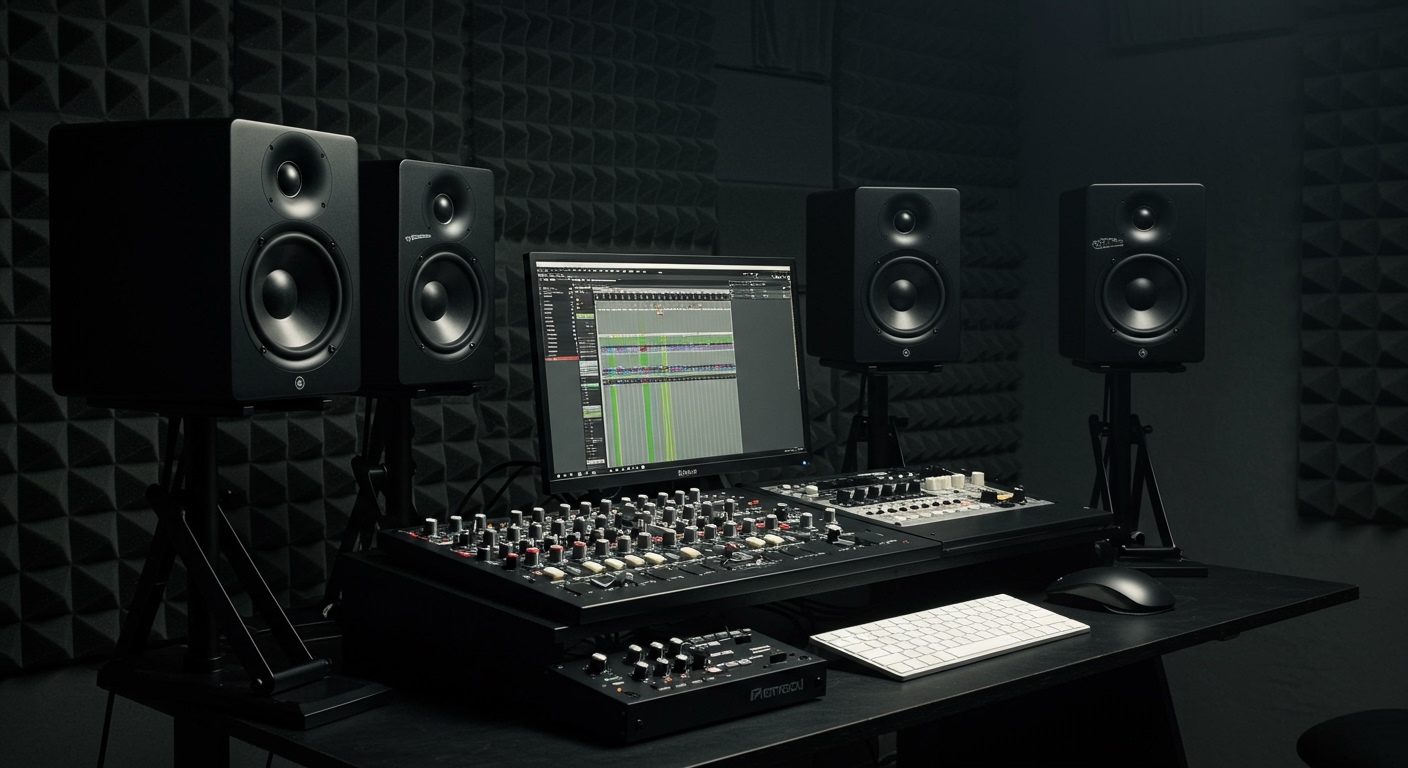
- Studio Monitor: Use the “Studio Mon” setting if you are using the speaker as a high-fidelity reference monitor in a treated room.
Understanding the QSC Ecosystem: Beyond Speakers
Knowing what does QSC speakers stand for also involves understanding their software integration. The brand has moved toward a unified “Ecosystem” approach.
TouchMix Digital Mixers
I often pair my K.2 speakers with a TouchMix-30 Pro. The “Info” button on the mixer provides “Wizard” settings specifically tuned for QSC speakers. It’s essentially a “cheat code” for great sound. It calculates the correct crossover points and EQ curves automatically.
Q-SYS Platform
In large stadiums or corporate offices, QSC uses the Q-SYS platform. This is a software-based system that handles audio, video, and control. It’s the reason why when you walk into a modern airport or stadium, the sound is clear and perfectly timed across miles of cabling.
Expert Maintenance Tips for QSC Gear
- Firmware Updates: Yes, your speakers have firmware. Connect your K.2 series via USB to a computer and check the QSC website periodically. Firmware updates often improve the protection limiters and DSP accuracy.
- The “Cooling” Myth: While QSC amps are highly efficient, don’t block the airflow. If you are using them outdoors in direct sunlight, try to provide a small shade. Heat is the number one killer of even the best Class D amplifiers.
- Transport: Always use the QSC padded totes. The grilles on the K.2 series are durable, but the finish can scratch easily during load-in.
Frequently Asked Questions
Is QSC better than JBL or Bose?
It depends on the application. QSC is generally preferred for its reliability and neutral sound signature. While Bose focuses on wide dispersion and JBL is known for “rock-and-roll” punch, QSC offers the best balance of DSP control and “road-ready” durability.
Are QSC speakers made in the USA?
QSC, LLC performs its high-level engineering, R&D, and corporate operations in Costa Mesa, California. While some components and assembly occur overseas to maintain competitive pricing, the quality control and design remain strictly US-managed.
Does QSC stand for “Quality Sound Corporation”?
No. While many people assume this because of the brand’s reputation, it officially stands for Quilter Sound Company.
Can I use QSC speakers for a home theater?
While you can, QSC speakers are designed for high SPL (Sound Pressure Level) over long distances. In a small living room, the “hiss” from the high-powered amp (the noise floor) might be audible during quiet movie scenes. They are better suited for outdoor home theaters or large recreation rooms.
What is the warranty on QSC speakers?
QSC offers one of the best warranties in the industry. Most of their powered speakers come with a 3-year warranty, which can be extended to 6 years if you register the product on their website. This is a testament to their build quality.