Understanding the Core Definition: What is a Speakers Platform?
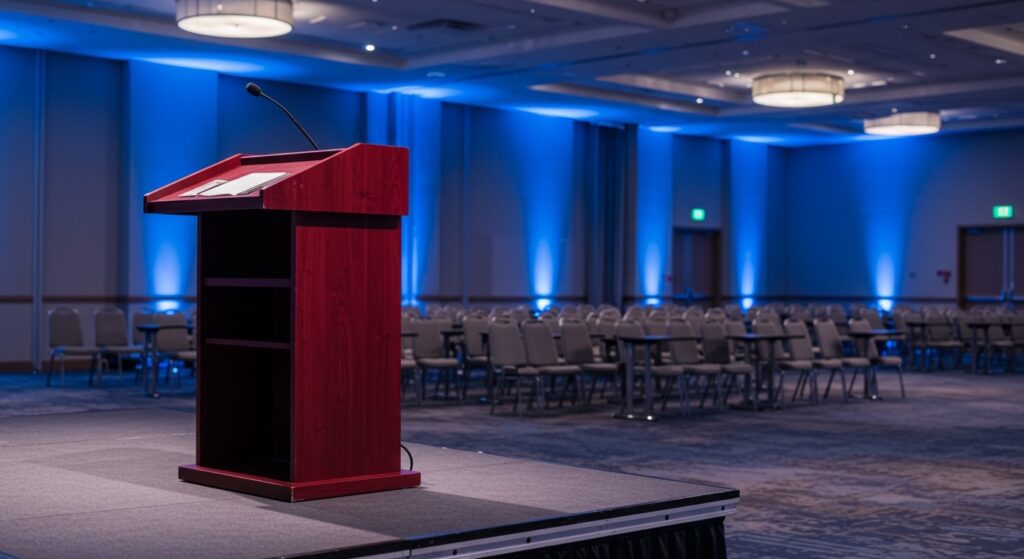
A speakers platform is an elevated structure or designated area designed to position a presenter above the level of the audience to ensure maximum visibility and sound clarity. Whether it is a simple wooden box in a small room or a massive tiered stage in an arena, what is a speakers platform at its core is a tool for professional communication and authority. In many professional circles, a speakers platform is called a dais, a rostrum, or a podium, depending on the specific architectural design and use case.
TL;DR: Key Takeaways for Event Planners
- Purpose: Elevates the speaker for better sightlines and “command” of the room.
- Common Names: Often referred to as a podium, rostrum, or dais.
- Standard Heights: Usually ranges from 8 inches to 24 inches for indoor corporate events.
- Key Consideration: Must be ADA-compliant (Americans with Disabilities Act) to ensure accessibility for all speakers.
- Material Matters: Portability requires aluminum frames, while permanent installs use solid wood or concrete.
A Word for a Speakers Platform: Decoding the Terminology
While most people use these terms interchangeably, there are technical differences in the industry that I have observed during my decade in event production. Knowing the right word for a speakers platform ensures you order the correct equipment from rental vendors.
The Podium vs. The Lectern
In my experience, the most common error is confusing a podium with a lectern. A podium is the actual platform you stand on (derived from the Greek pous, meaning foot). A lectern is the stand that holds your notes. If you tell a stagehand you need a “new podium,” they might start moving heavy stage decks when you actually just wanted a place to put your tablet.
The Dais
A dais is a specific type of speakers platform that is typically large enough to hold a head table. You will most often see these at weddings, award ceremonies, or political dinners where a group of dignitaries sits together.
The Rostrum
The term rostrum carries a more formal or academic connotation. In ancient Rome, the Rostra was a large platform for public speakers. Today, we use this term primarily in high-level diplomatic settings or competitive debate environments.
Essential Components of a Professional Speakers Platform
To create an effective speaking environment, a platform needs more than just height. We have found that the following components are non-negotiable for high-stakes presentations:
- Decking: The actual surface. It should be covered in high-grade carpet or non-slip industrial rubber to prevent slips and dampen the sound of footsteps.
- Skirting: The fabric that hangs from the edge of the platform to the floor. It hides unsightly wires, bracing, and the speaker’s feet, providing a polished look.
- Guardrails: For any platform higher than 30 inches, safety rails are generally required by law to prevent falls.
- Cable Management: Modern platforms must have integrated “tunnels” or “ports” for XLR cables, HDMI lines, and power for laptops.
How to Choose the Right Height for Your Audience
Choosing the height of your speakers platform is a science. If it is too low, the back row cannot see. If it is too high, the front row will have neck strain. Based on standard sightline geometry, here is a quick reference guide we use:
| Audience Size | Recommended Platform Height | Common Use Case |
|---|---|---|
| 1 – 50 People | Floor Level or 6-8 Inches | Intimate workshops or boardrooms |
| 50 – 200 People | 12 – 18 Inches | Corporate lunch-and-learns |
| 200 – 500 People | 24 Inches (2 Feet) | Hotel ballrooms and conferences |
| 500 – 1,500 People | 36 – 48 Inches | Large conventions and keynote halls |
| 1,500+ People | 5 Feet+ (with IMAG screens) | Stadiums and massive arenas |
The Step-by-Step Guide to Setting Up a Speakers Platform
If you are tasked with setting up a professional stage, follow these steps to ensure stability and professional quality.
Step 1: Calculate Your Space Needs
Measure the total number of people who will be on the platform simultaneously. A single speaker needs at least an 8ft x 8ft area to move naturally. If you have a panel of four people, you will likely need a 12ft x 24ft setup.
Step 2: Ensure Floor Stability
Check the surface where the platform will sit. In my years of setup, we’ve encountered plush hotel carpets that cause “wobble.” Use leveling jacks or shims to ensure the platform is perfectly horizontal. A leaning platform is a major distraction for a nervous speaker.
Step 3: Integrate Power and Audio
Run your “stinger” (extension cords) before you finish the skirting. Place a power strip near where the lectern will stand. Ensure the audio engineer has a clear path for the snake or wireless receivers.
Step 4: Add the “Confidence Monitor”
A professional speakers platform should have a monitor at the foot of the stage (facing the speaker). This allows them to see their slides or a countdown timer without turning their back on the audience.
Step 5: Final Safety Check
Walk across the entire surface. Listen for squeaks. Check that the skirting is taut and pinned properly. Ensure any stairs have reflective tape on the edges for low-light visibility.
Material Science: What Are Platforms Made Of?
The longevity and “feel” of a platform depend on its construction materials. When people ask what is a speakers platform made of, the answer usually falls into one of three categories:
- Plywood and Steel: The industry standard for rentals. These use a steel frame with a 3/4-inch plywood top. They are incredibly durable and can support up to 200 lbs per square foot.
- Aluminum Modular Decks: These are the gold standard for touring acts and outdoor events. Aluminum is lighter, rust-proof, and easier to transport.
- Acrylic or Plexiglass: Often used in television news sets or high-tech product launches. They can be internally lit with LED strips for a futuristic “floating” effect.
E-E-A-T Insight: The Psychology of the Platform
In my decade of coaching executives, I have noted that the height of the speakers platform significantly impacts the “power dynamic” of the room. A very high platform creates a sense of authority and distance. This is great for a visionary keynote.
However, if you want a “fireside chat” feel, keep the platform low (8-12 inches). This minimizes the barrier between the speaker and the audience, fostering a sense of community and vulnerability. We often recommend this for Q&A sessions or internal “Town Hall” meetings.
Common Accessories for the Modern Speakers Platform
To elevate a basic stage to a professional “Experience,” consider these add-ons:
- Marley Floor: A specialized vinyl covering that provides the perfect grip for speakers who move around a lot.
- Modesty Panels: If speakers are sitting in chairs on a raised platform, a modesty panel (a small wall or fabric barrier) is essential for those wearing skirts or dresses.
- Step Units with Handrails: Never assume your speaker can “hop” onto a 12-inch platform. Always provide wide, stable stairs.
- Branding Bricks: Custom-printed graphics that wrap the front of the platform to display the event logo to the cameras.
Accessibility and ADA Compliance
You cannot talk about what is a speakers platform without discussing accessibility. In the United States, the Americans with Disabilities Act (ADA) requires that if you provide a raised platform for a speaker, it must be accessible to people using wheelchairs.
This is usually achieved through:
- ADA Ramps: These require a 1:12 slope (for every 1 inch of height, you need 12 inches of ramp length).
- Platform Lifts: A mechanical elevator used when floor space is too limited for a long ramp.
Failure to plan for this is not just a legal risk; it is an exclusionary practice that can ruin an event’s reputation.
The Role of Digital Speakers Platforms
In the modern era, the definition of a speakers platform has expanded into the digital world. A virtual speakers platform is a software environment (like Zoom, Webex, or Hopin) that provides the same functional benefits: visibility, audio priority, and a “stage” for the presenter.
When we design virtual events, we treat the “digital stage” with the same care as a physical one. This includes:
- Spotlighting: Ensuring the speaker is the largest video feed.
- Lower Thirds: On-screen graphics that act as the digital “skirting” or “podium sign.”
- Backstage Green Rooms: Digital spaces where speakers can prep before “going live” on the main platform.
FAQ: Frequently Asked Questions about Speakers Platforms
What is the difference between a podium and a rostrum?
While both refer to a speakers platform, a podium is the general term for any raised area you stand on. A rostrum is specifically a platform for public speaking, often with a more formal or historic connotation.
Is there another word for a speakers platform?
Yes, common synonyms include dais, stage, soapbox, pulpit (in religious contexts), and tribune. In technical event production, it is often simply called a riser.
How high should a stage be for 100 people?
For an audience of 100 people, we recommend a platform height of 12 to 18 inches. This provides enough elevation for those in the back rows to see the speaker’s torso and face over the heads of the front row.
What is a “soapbox” in terms of speakers platforms?
A soapbox is a metaphorical and literal term for a makeshift speakers platform. It originated from speakers standing on wooden crates used to ship soap to make impromptu speeches in public squares.
Why is it called a dais?
The word dais comes from the Old French deis, referring to a high table. It specifically describes a raised part of a floor at the end of a hall where a head table or a throne is placed.
**
**
**
**