Understanding What is Continuous Power in Speakers
Continuous power, often referred to as RMS (Root Mean Square) power, represents the amount of electrical power a speaker can handle consistently over a long period without suffering damage or sound distortion. Unlike “peak” or “dynamic” ratings, which indicate short bursts of energy, continuous power is the most reliable metric for determining how a speaker will perform during hours of actual use.
TL;DR: Key Takeaways for Continuous Power
- Real-World Metric: Continuous power measures sustained performance, while Peak power measures split-second bursts.
- The 50% Rule: Aim for an amplifier that provides continuous power between 50% and 100% higher than the speaker’s rated RMS for optimal “headroom.”
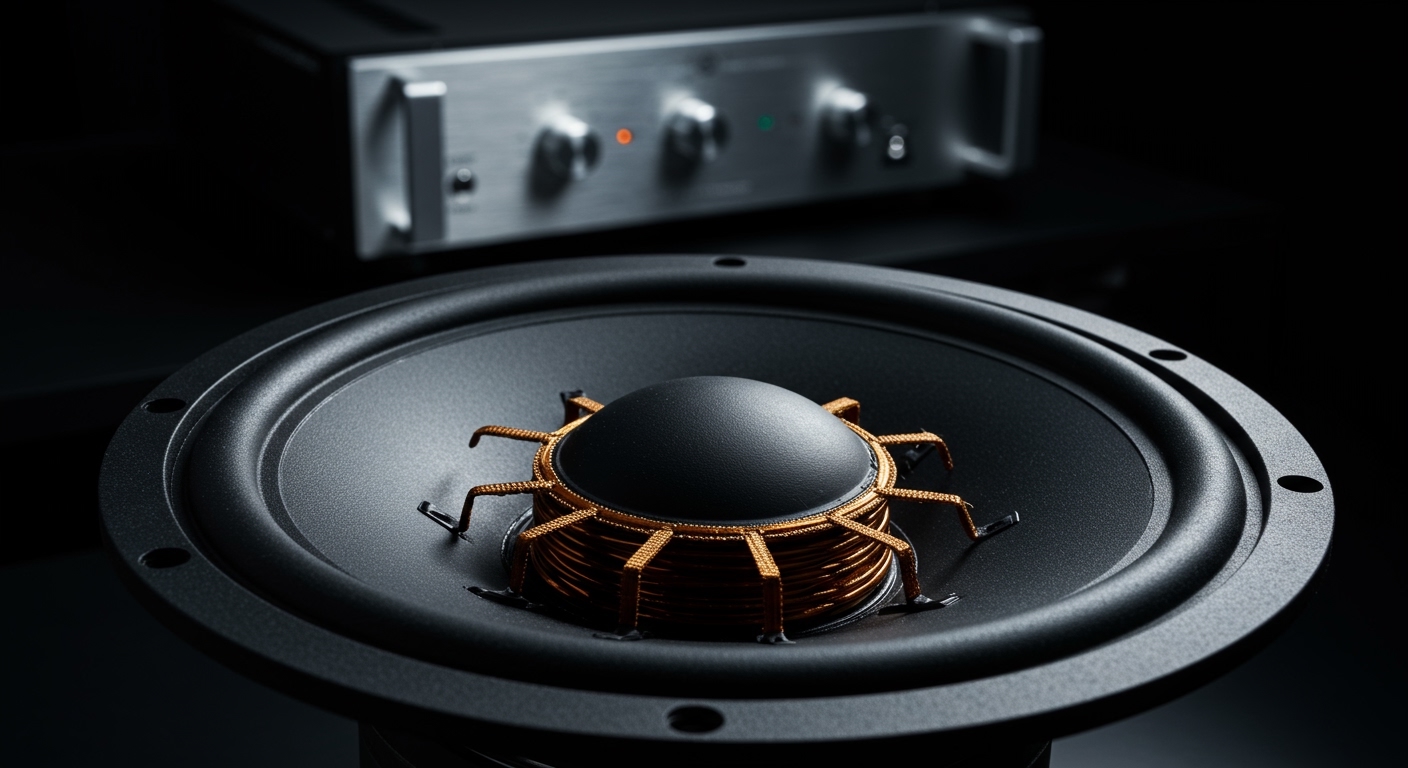
- Heat is the Enemy: Continuous power ratings are primarily determined by a speaker’s ability to dissipate heat from the voice coil.
- Check the Label: Always look for the RMS rating on the spec sheet; ignore “Max Power” marketing fluff.
Why Continuous Power (RMS) is the Most Important Metric
When I first started building high-end home theaters 15 years ago, I fell for the “1,000 Watts Max” stickers on cheap shelf systems. I quickly learned that those numbers are mostly marketing “smoke and mirrors.”
Continuous power tells you the truth about a speaker’s limits. It is a mathematical calculation derived from the Root Mean Square of the voltage, providing a realistic view of the speaker’s thermal capacity. If you exceed this limit for too long, the voice coil will overheat, the adhesive will melt, and your speaker will eventually fail.
In professional audio circles, we rely on RMS because it reflects the workhorse capability of the driver. If you are playing a two-hour concert or a long movie, the continuous power rating is what prevents your system from shutting down or catching fire.
Continuous Power vs. Peak Power: The Marathon Analogy
To understand what is continuous power in speakers, it helps to think of an Olympic athlete.
- Continuous Power (RMS): This is the athlete’s marathon pace. It is the speed they can maintain for hours without collapsing.
- Peak Power: This is the athlete’s 100-meter dash. They can reach this speed for a few seconds, but if they try to hold it, they will get injured.
| Feature | Continuous Power (RMS) | Peak / Max Power |
|---|---|---|
| Duration | Indefinite / Long-term | 10–50 Milliseconds |
| Accuracy | High (Industry Standard) | Low (Marketing Focus) |
| Heat Impact | Stable Thermal Dissipation | Rapid Heat Build-up |
| Usage | Calculating Amp Matching | Handling Musical Transients |
| Risk | Low risk if respected | High risk of “blowing” speaker |
How Continuous Power Affects Your Sound Quality
Many enthusiasts believe that higher continuous power simply means “louder.” While power does contribute to volume, its real benefit is cleanliness and clarity.
When a speaker has a high continuous power rating, it can handle complex audio signals—like a heavy bass drop or a full orchestral swell—without the cone hitting its physical limits. This is known as linear excursion.
The Role of “Headroom”
In my experience, the biggest mistake people make is underpowering their speakers. If your amplifier lacks the continuous power to drive your speakers, it will “clip.” Clipping chops off the tops of the audio waves, sending a square wave to your speaker, which is a fast track to a dead tweeter.
Sensitivity and Efficiency
You must also consider Sensitivity. A speaker with a high sensitivity (e.g., 92dB) requires less continuous power to reach high volumes than a speaker with low sensitivity (e.g., 85dB).
Step-by-Step: How to Match an Amplifier to Continuous Power Ratings
Matching your gear is the most critical step in building a safe and high-performing system. Follow this professional workflow I use for every installation.
Step 1: Identify the RMS Rating
Find the spec sheet for your speakers. Look specifically for “Continuous Power Handling” or “RMS Power.” If a speaker lists “Program Power,” that is usually double the RMS.
Step 2: Check the Impedance (Ohms)
Power is inextricably linked to Impedance. Most home speakers are 8 Ohms, while car speakers are 4 Ohms. Ensure your amplifier’s continuous power output is rated at the same Ohm level as your speakers.
Step 3: Apply the 1.5x Multiplier
To ensure headroom and prevent clipping, I recommend an amplifier that delivers 1.5 times the speaker’s continuous power.
- Example: If your speaker is rated at 100W RMS, look for an amplifier that provides 150W RMS per channel.
Step 4: Set Your Gain Correctly
Even with a perfect match, you can still damage a speaker by pushing the amplifier into distortion. Set your gain (sensitivity) levels so that the loudest parts of the music do not trigger the “Clip” or “Limit” lights on your equipment.
Technical Factors That Determine Continuous Power
Why can one 10-inch speaker handle 500W RMS while another only handles 50W RMS? It comes down to the engineering of the internal components.
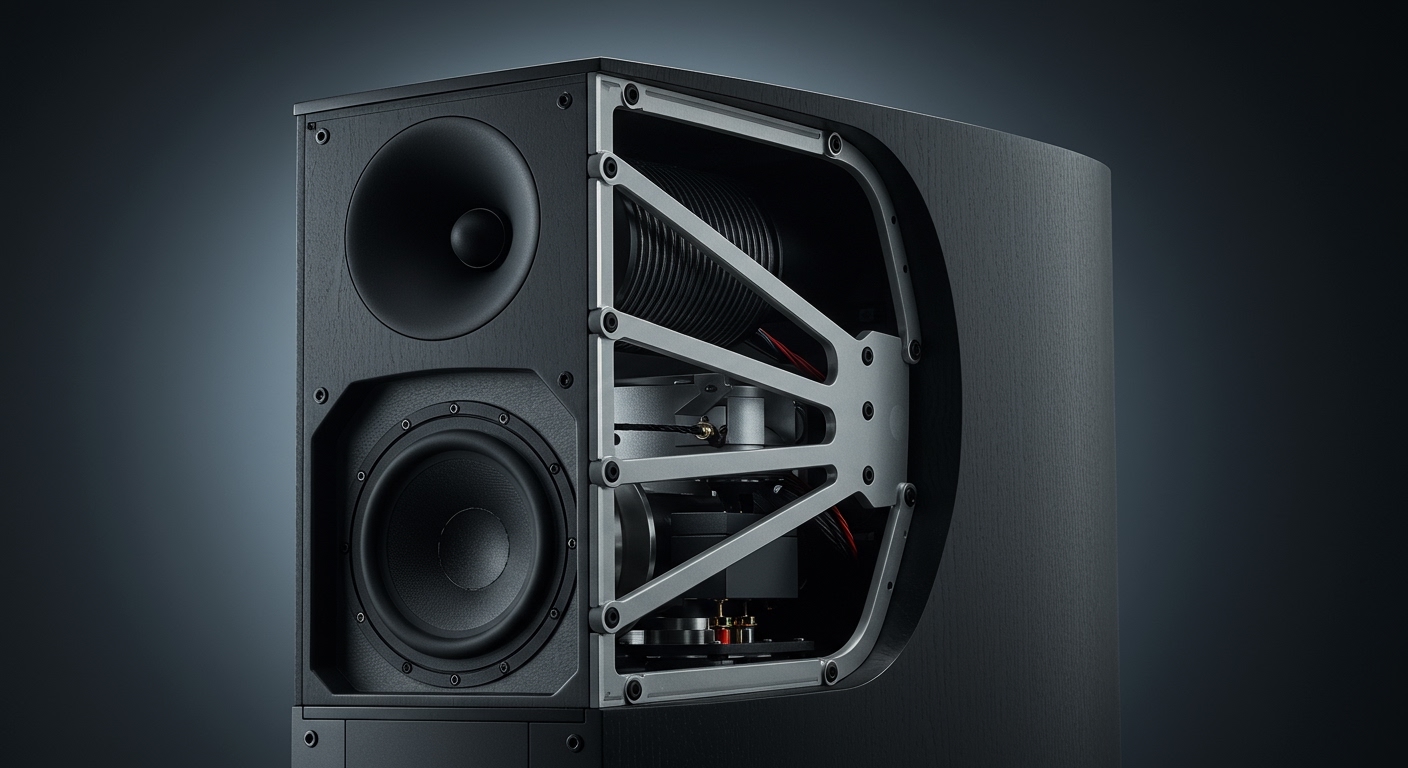
- Voice Coil Diameter: A larger voice coil has more surface area to dissipate heat. High-power speakers often use 2.5-inch to 4-inch coils.
- Magnet Assembly: Large magnets help control the movement of the cone, but they also act as a heat sink for the motor structure.
- Venting: Pro-grade speakers feature vented poles or “forced-air” cooling to move hot air away from the internal electronics during continuous power usage.
- Materials: High-end speakers use Kapton or fiberglass bobbins that can withstand temperatures exceeding 400°F (200°C).
Common Misconceptions About Speaker Power
“Underpowering a speaker will blow it.”
Technically, low power doesn’t kill speakers; clipping does. When you ask a small amp to do too much, it sends a distorted signal that overheats the speaker. This is why having more continuous power than you need is actually safer for your gear.
“More watts means better sound.”
A 200W RMS speaker isn’t inherently “better” than a 50W RMS speaker. It just handles more energy. Sound quality depends on the Frequency Response, Total Harmonic Distortion (THD), and the quality of the crossover components.
“RMS and Continuous are different.”
In the audio industry, these terms are used interchangeably. While there are slight mathematical nuances, for 99% of consumers, RMS = Continuous Power.
Expert Tips for Protecting Your Speakers
- Listen for “Stress”: If the bass starts to sound “mushy” or the high frequencies sound “sharp/brittle,” you are likely exceeding the continuous power limit. Back off the volume immediately.
- Use a High-Pass Filter (HPF): Most speakers fail because they are trying to reproduce low bass frequencies they weren’t designed for. Using an HPF at 80Hz can significantly increase a speaker’s effective continuous power handling.
- Check Your Wiring: Thin, “spaghetti” wires increase resistance and waste power as heat. Use at least 16-gauge or 14-gauge oxygen-free copper (OFC) wire for runs over 20 feet.
FAQ: Frequently Asked Questions about Continuous Power
What is the difference between RMS and Peak power?
RMS (Continuous Power) is what a speaker can handle consistently for hours. Peak power is the absolute maximum the speaker can handle for a fraction of a second without immediate mechanical failure. Always buy gear based on the RMS rating.
Can I use a 100W amplifier with a 50W speaker?
Yes, but you must be careful with the volume. Having a more powerful amplifier provides headroom, which ensures a cleaner signal. However, if you turn the volume up too high, you will exceed the speaker’s continuous power limit and cause damage.
Does continuous power affect how loud a speaker gets?
Indirectly, yes. However, Sensitivity (measured in dB) is a better indicator of loudness. A speaker with 90dB sensitivity at 50W will be just as loud as a speaker with 87dB sensitivity at 100W.
Is 50 watts of continuous power enough for a home theater?
For most average-sized living rooms, 50W to 100W RMS per channel is more than enough to reach cinematic volume levels, provided the speakers have a sensitivity rating of 88dB or higher.
How do I find the RMS of a speaker if it isn’t listed?
If the manufacturer only lists “Max Power,” a safe (though not perfect) rule of thumb is to divide that number by 4. For “Program Power,” divide by 2. However, I recommend choosing brands that are transparent about their continuous power testing standards (like CEA-2006 or AES).