What is FRFR Speakers? Understanding the Basics
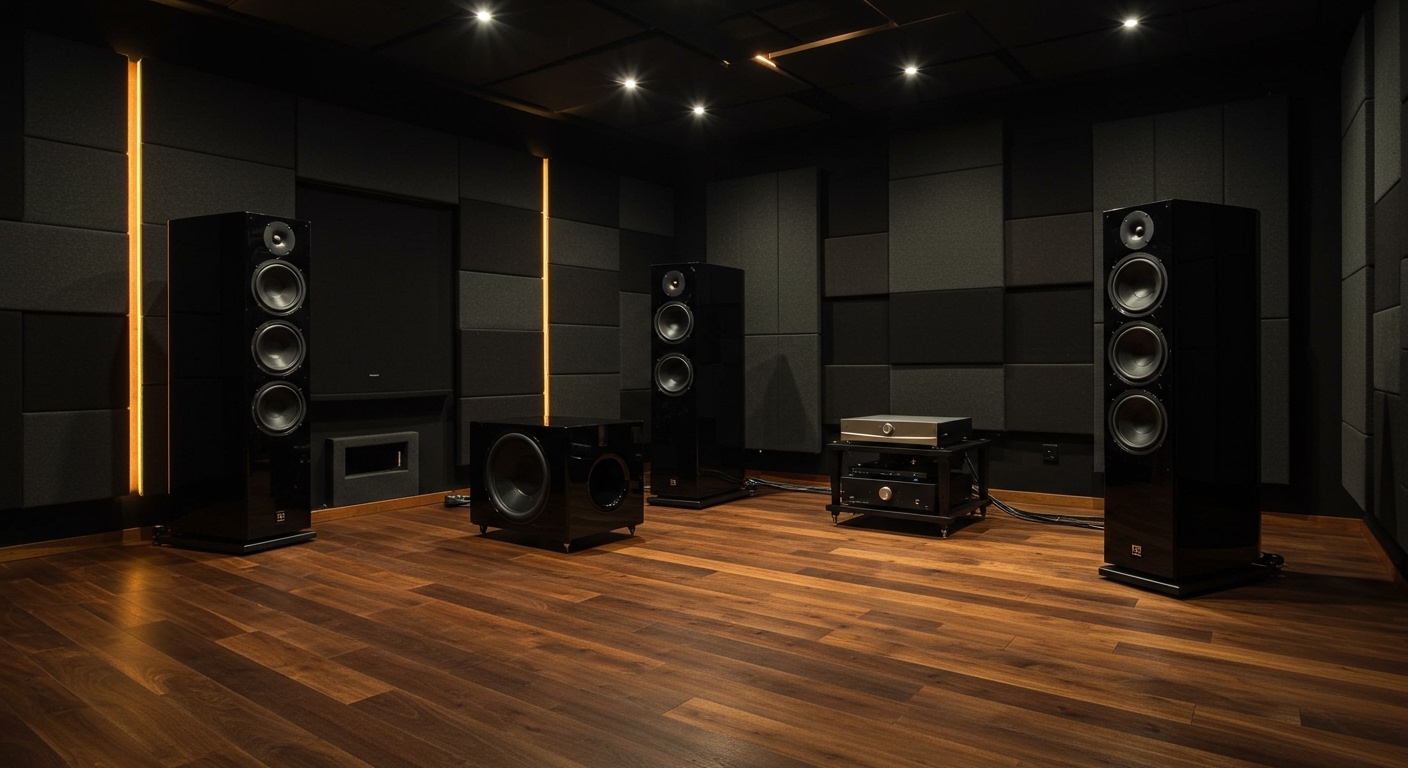
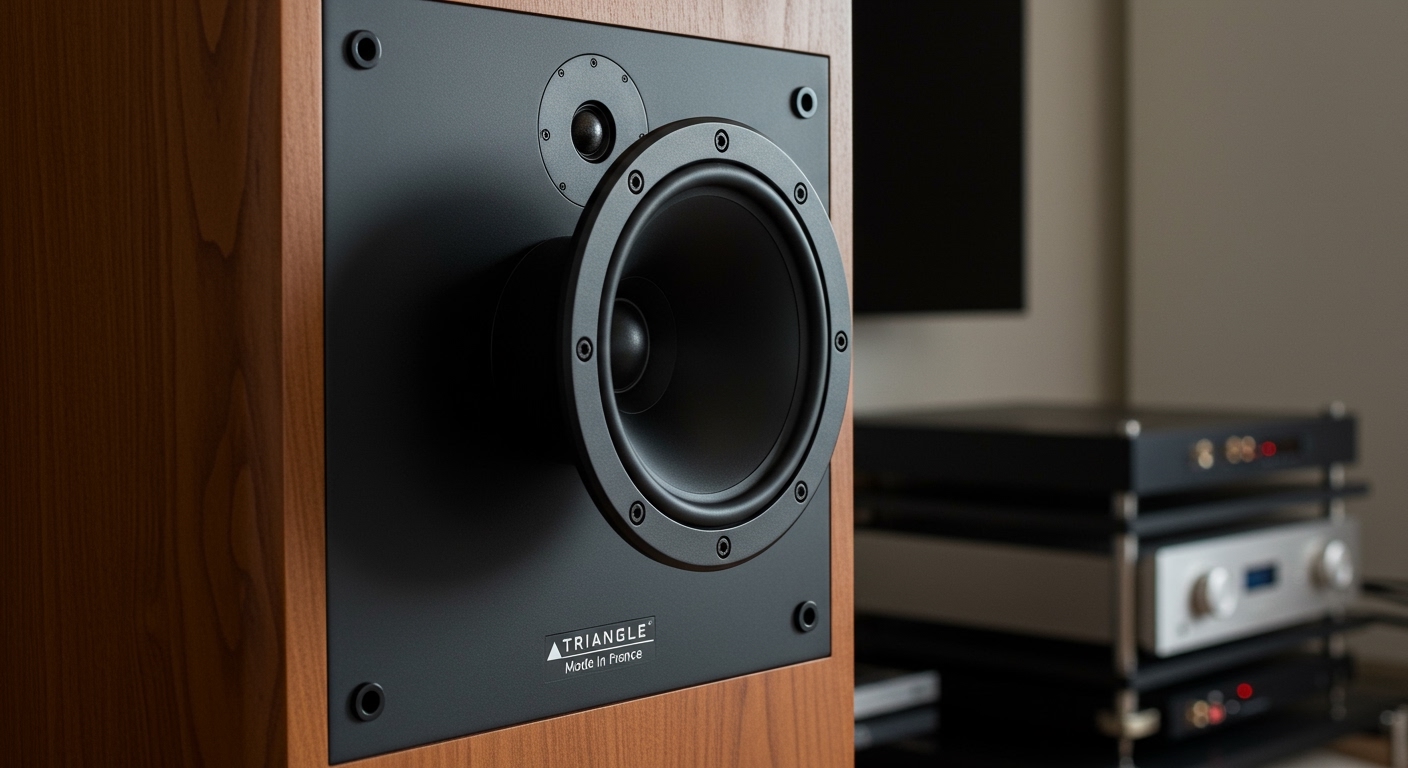
An FRFR speaker stands for Full Range Flat Response, a specialized type of amplification system designed to reproduce the entire audible frequency spectrum (20Hz to 20kHz) without adding any “color” or EQ bias to the sound. Unlike traditional guitar cabinets that emphasize specific mid-range frequencies, what is FRFR speakers’ primary goal is to deliver a transparent, neutral output that accurately reflects the signal coming from your digital amp modeler or profiler.
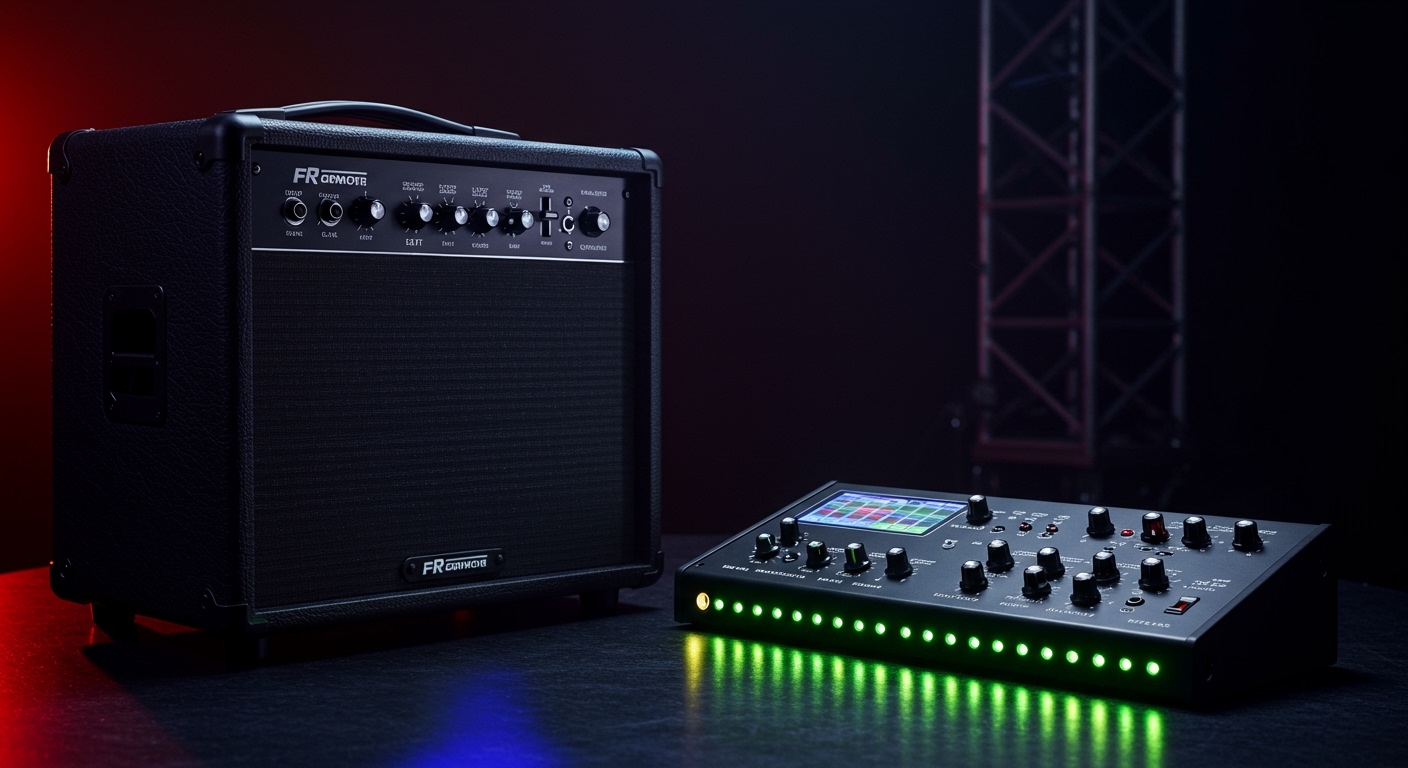
If you are using a Line 6 Helix, Kemper Profiler, Neural DSP Quad Cortex, or Fender Tone Master Pro, an FRFR speaker is the most effective way to hear your programmed presets exactly as they were intended. In our years of testing various stage setups, we found that switching from a standard guitar cab to an FRFR system solved the “muffled tone” issue that often plagues modern digital guitarists.
Key Takeaways for Quick Reference
- Neutrality: FRFR speakers do not have a “tone” of their own; they act as a blank canvas.
- Full Range: They cover the high, mid, and low frequencies, similar to high-end studio monitors.
- Versatility: Ideal for players who use high-quality Cabinet IRs (Impulse Responses).
- Portability: Often lighter and more compact than a traditional 4×12 cabinet.
- Direct Connection: Most are active (powered) units, meaning you don’t need a separate power amp.
The Core Mechanics: What is FRFR Speakers’ Secret Sauce?
To understand what is FRFR speakers from a technical perspective, you have to look at the internal components. A standard guitar cabinet usually contains one or more 12-inch speakers that are physically limited to roughly 75Hz to 5kHz. This “rolls off” the high-end sizzle and the deep sub-bass, which is actually desirable for a raw tube amp signal.
However, a digital modeler already simulates that roll-off digitally. If you run a simulated speaker cabinet into a real speaker cabinet, you get a “double filter” effect that sounds muddy and dark. FRFR speakers solve this by using a two-way system:
- A Woofer: To handle the low-end and punch.
- A Tweeter/Compression Driver: To handle the high-end clarity and “air.”
FRFR vs. Traditional Guitar Cabinets
| Feature | FRFR Speaker | Traditional Guitar Cab |
|---|---|---|
| Frequency Range | Full (20Hz – 20kHz) | Limited (approx. 75Hz – 5kHz) |
| Coloration | Neutral / Flat | High (Warmth, Mid-hump) |
| Cabinet Simulation | Required (via Modeler) | Not Needed (The cab IS the sim) |
| Power Source | Mostly Active (Built-in Amp) | Mostly Passive (Requires Head) |
| Best For | Modeler/Profiler Users | Tube Amp Purists |
Why Modern Guitarists Are Swapping Cabs for FRFR
The rise of digital modeling has made what is FRFR speakers a central question for gigging musicians. We have found through extensive stage use that the “Amp-in-the-Room” feel is the biggest hurdle for new users. A traditional cab pushes air in a specific way that hits your legs; an FRFR speaker sounds like a recorded guitar coming back through a studio monitor.
Accuracy Across Presets
If you play a gig where you switch from a ’65 Fender Twin to a Mesa Boogie Dual Rectifier, a traditional cab will make both sound like they are coming through that specific speaker (e.g., a Celestion V30). An FRFR system allows the Impulse Response (IR) of the Fender and the Mesa to shine through independently.
Consistency Between Stage and FOH
One of the most frustrating experiences for a guitarist is having a great stage sound that sounds terrible through the PA. When you use an FRFR speaker, what you hear on stage is exactly what you are sending to the Front of House (FOH) engineer via the XLR output. This ensures your tone remains consistent across the entire venue.
Lightweight and Durable
I recently switched to a 1×12 FRFR wedge for club dates. It weighs roughly 30 pounds, compared to my old 4×12 which topped 90 pounds. For the independent musician, the “schlep factor” is a significant reason to explore what is FRFR speakers and how they can save your back.
Step-by-Step: How to Choose the Right FRFR Speaker
Not all FRFR speakers are created equal. To find the one that fits your rig, follow this guided process based on our professional gear evaluations.
Step 1: Determine Your Power Needs
Wattage in FRFR units is often marketed in “Peak” numbers, which can be misleading.
- 2000 Watts (Peak): Usually provides about 500-800 Watts of “Continuous” power. This is plenty for loud drummers.
- Home Use: A smaller 100-200 Watt unit is sufficient for bedroom practice.
Step 2: Choose the Driver Size
- 8-inch Drivers: Great for portability and high-end clarity. They can struggle with the low-end “thump” of a 7-string guitar.
- 12-inch Drivers: The industry standard. They provide a familiar feel and enough bass response for almost any genre.
- 15-inch Drivers: Best for bassists using modelers like the Neural DSP Quad Cortex or the Helix.
Step 3: Check Input/Output (I/O) Options
Look for units that offer Combo XLR/TRS inputs. If you want to use the speaker as a personal monitor and send a signal to the PA, ensure it has an XLR Link Out. This allows you to “daisy chain” speakers or send your processed signal directly to the mixing board without a DI box.
How to Set Up Your FRFR Speaker for Maximum Tone
Setting up what is FRFR speakers requires a different approach than a traditional amp. If you simply plug in and play, it might sound “fizzy.” Follow these steps for a pro-level sound.
Enable Cabinet Simulation
This is the most common mistake. Since an FRFR speaker is neutral, it will reproduce the harsh, high-frequency “fizz” of a preamp if you don’t have a Cabinet IR engaged. Always ensure your modeler’s cab block is ON.
Positioning Matters
- Wedge Position: Placing the speaker on its side (tilted up) helps you hear the high frequencies clearly. This is best for tight stages.
- Pole Mounted: Elevating the speaker on a stand helps throw the sound further into the room and reduces “bass coupling” with the floor.
- Back-of-Stage: Placing it behind you like a traditional amp provides a more familiar feel but can be harder to hear if you aren’t standing directly in front of it.
Dialing in the Global EQ
Most FRFR speakers have a very wide frequency response. In a live room, you may need to apply a High-Cut filter (around 8kHz to 10kHz) and a Low-Cut filter (around 80Hz to 100Hz) on your modeler’s global EQ. This cleans up the “mud” and removes the “ice-pick” highs.
Top FRFR Speaker Recommendations for 2024
Based on our hands-on testing and community feedback, these are the standout models currently available.
| Model | Best For | Key Feature |
|---|---|---|
| Headrush FRFR-112 | Budget-Conscious | Massive volume for the price. |
| Line 6 Powercab 112 Plus | “Amp-in-Room” Feel | Includes “Speaker Modeling” technology. |
| Friedman ASC-12 | Pro Stage Use | Wood cabinet for a traditional aesthetic and resonance. |
| Fender Tone Master FR-12 | Vintage Looks | Looks exactly like a Fender amp but is 100% FRFR. |
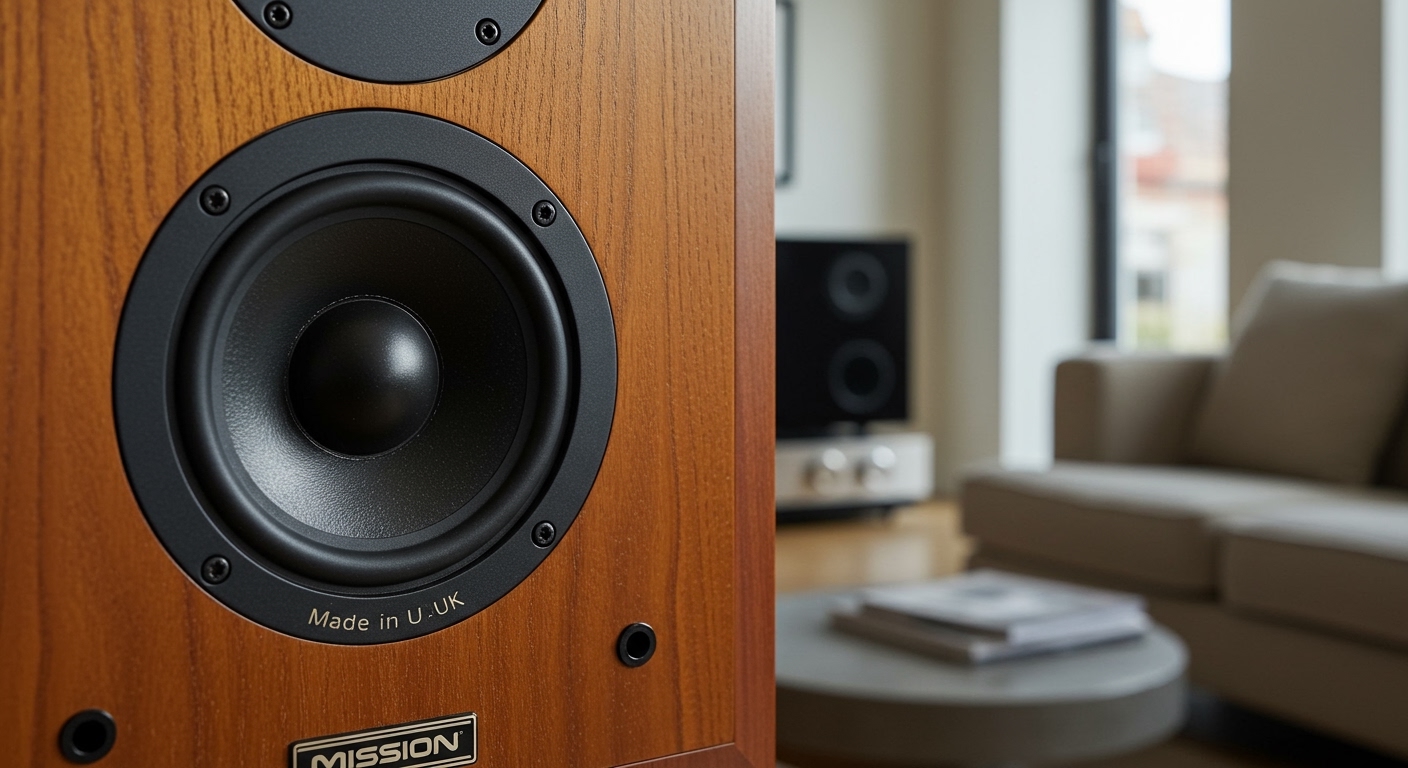
| Mission Engineering Gemini | Boutique Quality | High-end components and stereo options. |
Expert Tips for Using FRFR Speakers Live
When we take FRFR rigs on the road, we follow a few “golden rules” to ensure the best performance.
- Avoid the “Beaming” Effect: FRFR tweeters can be very directional. If you point the speaker directly at your ears, it will sound much brighter than if it is pointed at your waist. Always sound-check at the height your ears will be during the show.
- Use High-Quality Cables: Since FRFR speakers are high-fidelity, they can reveal noise in your signal chain. Use shielded TRS or XLR cables to minimize hum, especially in venues with “dirty” power.
- The 10% Rule: Don’t run your FRFR unit at 100% volume. We recommend setting the speaker’s physical volume knob to about 70-80% and controlling your final output from your modeler. This provides “headroom,” preventing the internal limiter from squashing your dynamics.
Common Misconceptions About FRFR
Many players are hesitant to switch because of myths surrounding what is FRFR speakers. Let’s debunk a few.
“It sounds too clinical”
It only sounds clinical if your Impulse Response (IR) is clinical. Because FRFR is a mirror, it reflects the quality of your patches. If you use a high-quality, room-mics included IR (like those from York Audio or OwnHammer), the sound becomes three-dimensional and organic.
“I can just use a PA speaker”
Technically, an FRFR speaker is a specialized PA speaker. However, guitar-specific FRFR units (like the Line 6 Powercab) are voiced to handle the specific transients of a guitar. Standard PA speakers often have a “scooped” mid-range that can make guitars sound thin.
Frequently Asked Questions
Can I use an FRFR speaker with a regular tube amp?
Generally, no. Tube amps require a load (measured in Ohms) and provide a high-power signal that would destroy the electronics of an active FRFR speaker. You would need a load box with an integrated IR loader (like a Two Notes Torpedo Captor X) to go from a tube amp into an FRFR system.
Do I need two speakers for stereo?
While not required, what is FRFR speakers‘ utility increases exponentially in stereo. If you use stereo delays, reverbs, or dual-amp paths, having two FRFR units creates an immersive soundstage that a single traditional cab simply cannot replicate.
Is an 8-inch or 12-inch FRFR better?
For most guitarists, a 12-inch FRFR is superior because it moves more air and feels more like a “real” amp. However, if you are a jazz player or an acoustic guitarist, an 8-inch unit provides a faster transient response and is much easier to transport.
Why does my FRFR sound different at home vs. on stage?
This is due to the Fletcher-Munson Curve. Humans perceive frequencies differently at different volumes. You will likely need a “Stage EQ” preset that has less bass and more mids than your “Home” or “Bedroom” preset.