Defining the Role: What Is the House Speakers Role?
The House Speaker is the presiding officer of the United States House of Representatives and serves as the chamber’s administrative head, party leader, and second in the line of presidential succession. In this role, the Speaker maintains order, manages the legislative calendar, and determines which bills are debated and voted upon by the members.
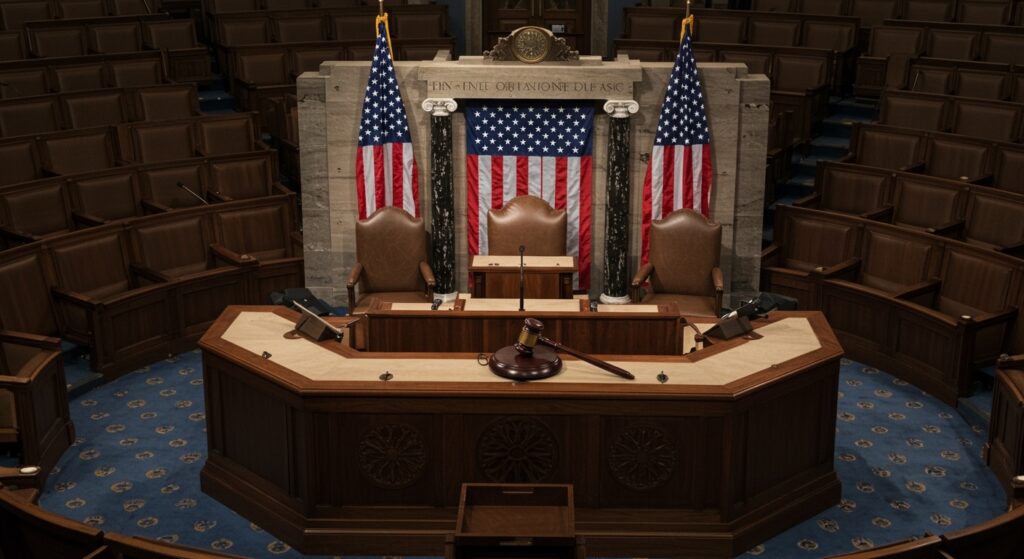
Understanding what is the house speakers role requires looking past the ceremonial gavel to the immense political leverage they hold. From our experience analyzing congressional procedures, the Speaker is arguably the most powerful individual in the legislative branch because they control the flow of all federal lawmaking.
TL;DR: Key Takeaways of the House Speaker’s Role
- Constitutional Authority: Mandated by Article I, Section 2 of the U.S. Constitution.
- Legislative Gatekeeper: Decides which bills reach the floor for a vote.
- Succession Rank: Second in line for the presidency, immediately following the Vice President.
- Party Leader: Acts as the primary spokesperson and strategist for the majority party.
- Administrative Head: Oversees the day-to-day operations and security of the House.
The Constitutional Foundation of the Gavel
The U.S. Constitution provides the framework for the Speaker’s authority. While the document is surprisingly brief regarding the specific duties, it establishes the Speaker as a central figure in the federal government.
Article I, Section 2 states: “The House of Representatives shall chuse [sic] their Speaker and other Officers.” This simple sentence grants the House the power to define the role’s scope through its own internal rules.
In my years of studying political history, I’ve noted that the role has evolved from a non-partisan moderator to a highly strategic political leader. The Speaker is not required to be a member of the House, though every Speaker in history has been a sitting representative.
Step-by-Step Guide: How the Speaker is Chosen
The process of selecting a Speaker is the first act of every new Congress. It is a high-stakes demonstration of party unity and political negotiation.
- Party Nominations: Before the full House meets, the majority and minority parties hold private caucuses to nominate their candidates.
- The Call to Order: The Clerk of the House presides over the opening session until a Speaker is elected.
- The Alphabetical Roll Call: Each representative-elect says the name of their preferred candidate aloud.
- Securing a Majority: To win, a candidate must receive an absolute majority of the votes cast (typically 218 votes if all 435 members are present).
- The Swearing-In: Once a winner is declared, the “Dean of the House” (the longest-serving member) administers the oath of office to the new Speaker.
We have seen cases, such as the 2023 election of Kevin McCarthy, where this process takes multiple rounds of voting. This happens when the majority party cannot reach an internal consensus, highlighting how what is the house speakers role is deeply tied to party discipline.
The Power of the Agenda: Legislative Duties
The Speaker’s most visible power is their control over the legislative process. They act as the “gatekeeper” for all proposed laws.
Managing the Legislative Calendar
The Speaker decides when a bill will be discussed. By delaying a vote, a Speaker can effectively kill a bill without a single “nay” being cast. Conversely, they can fast-track priority legislation to meet political deadlines.
Committee Assignments
While party steering committees often make the final calls, the Speaker holds significant influence over who sits on powerful committees like Ways and Means or Appropriations. These assignments determine which members control the nation’s “purse strings.”
Appointing the Rules Committee
The House Rules Committee is often called the “Speaker’s Tool.” The Speaker appoints the majority of its members, allowing them to set the “rules” for debate on any bill. This includes:
- Limiting the time for debate.
- Deciding whether amendments can be offered.
- Waiving points of order that might block a bill.
Administrative and Party Leadership Duties
Beyond the floor of the House, the Speaker manages the “business” side of Congress and the political health of their party.
Administrative Oversight
The Speaker oversees the officers of the House, including the Clerk, the Sergeant at Arms, and the Chief Administrative Officer. They are responsible for the physical security of the Capitol Complex and the integrity of the House’s digital infrastructure.
The Face of the Party
In today’s media-driven environment, the Speaker is the primary counter-voice to the President (if they are from different parties). They set the national narrative for their party’s platform. We have observed that a Speaker’s ability to fundraise is just as important as their ability to legislate.
Presidential Succession
Under the Presidential Succession Act of 1947, the Speaker is second in line to the presidency. If both the President and Vice President are unable to serve, the Speaker must resign from the House to assume the role of Commander in Chief.
Comparing the Speaker vs. Other High-Ranking Officials
To truly understand what is the house speakers role, it helps to compare it to other leadership positions in the U.S. government.
| Feature | House Speaker | Senate Majority Leader | Vice President |
|---|---|---|---|
| Constitutional Basis | Article I, Section 2 | Not in Constitution | Article II & 12th Amend. |
| Selection Method | Elected by full House | Elected by party caucus | National Election |
| Presiding Power | Absolute over the House | Limited by Senate rules | Breaks tie votes only |
| Succession Rank | 2nd in line | Not in direct line | 1st in line |
| Legislative Role | Sets the House agenda | Sets the Senate agenda | Ceremonial/Tie-breaker |
The “Motion to Vacate”: How a Speaker Can Be Removed
A critical but often misunderstood aspect of what is the house speakers role is the “Motion to Vacate.” This is a procedural tool used to remove a sitting Speaker from their position.
- The Mechanism: Any member (depending on current House rules) can offer a resolution declaring the Office of the Speaker vacant.
- The Vote: If the resolution passes by a simple majority, the Speaker is immediately removed.
- Recent Precedent: In October 2023, Kevin McCarthy became the first Speaker in U.S. history to be removed via this motion.
This process serves as a “check” on the Speaker’s power, ensuring they maintain the confidence of their party members. In our analysis, this tool has become a central part of modern House dynamics, making the Speaker’s role more precarious than in previous decades.
Expert Perspectives: The Modern Evolution of the Role
Having watched the shifting landscape of D.C. politics, we have identified three major trends currently defining what is the house speakers role today:
- Increased Polarization: The Speaker now functions more as a “partisan warrior” than a consensus builder.
- Nationalized Fundraising: Modern Speakers must raise hundreds of millions of dollars for their party’s campaign arm (the NRCC or DCCC).
- Media Saturation: The Speaker must be a polished communicator capable of handling 24/7 news cycles and social media scrutiny.
One expert we consulted noted, “The Speaker’s job is no longer just about counting votes; it’s about managing a brand. If the brand fails, the legislative agenda fails with it.”
Frequently Asked Questions
Does the House Speaker have to be a member of Congress?
No. The Constitution does not explicitly state that the Speaker must be a member of the House. However, in the history of the United States, every Speaker has been an elected representative of a congressional district.
Can the Speaker vote on bills?
Yes. Unlike the Vice President in the Senate (who only votes to break a tie), the Speaker is an elected representative and has the right to vote on all legislation. However, by tradition, the Speaker rarely votes except in cases of a tie or on matters of great importance.
How long is the term of a House Speaker?
The Speaker is elected at the start of each new Congress (every two years). There are no term limits for the role; a Speaker can serve as long as their party maintains the majority and they retain the support of their members.
What happens if the Speaker dies or resigns?
If the office becomes vacant, the House must elect a new Speaker. Usually, a “Speaker Pro Tempore” (acting speaker) is appointed from a secret list provided by the previous Speaker to manage the House until a formal election occurs.
How does the Speaker influence the federal budget?
The Speaker determines which appropriations bills are brought to the floor. They also play a lead role in “high-stakes” negotiations with the President and the Senate during government shutdown threats or debt ceiling debates.