Understanding What Outdoor Speakers Work with Google Home
To determine what outdoor speakers work with google home, you simply need to look for two specific technologies: Chromecast built-in or Bluetooth connectivity. While Google doesn’t manufacture dedicated outdoor speakers, any weather-resistant speaker with these features—or those connected via a Google Nest device—will sync perfectly with your smart home ecosystem.
Expert Summary: Quick Compatibility Guide
Best Integration: Choose speakers with Chromecast built-in (e.g., JBL, Sony, Sonos) for high-fidelity Wi-Fi streaming and multi-room sync.
Budget Friendly: Use Bluetooth speakers that are compatible with Google Home by pairing them directly to a Nest Mini or Nest Hub.
Pro Setup: Connect traditional “passive” outdoor speakers to a WiiM Amp or Sonos Amp to make them appear in the Google Home app.
Durability: Always verify an IP65 to IP67 rating to ensure your hardware survives rain, dust, and extreme temperatures.
Tools and Materials Needed for Outdoor Setup
Before you start mounting brackets or syncing apps, ensure you have the following components ready.
| Component | Purpose | Recommended Examples |
|---|---|---|
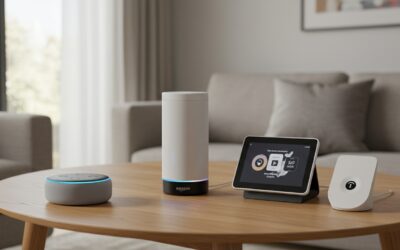
| Smart Speaker/Hub | The “brain” that controls the audio. | Google Nest Audio, Nest Hub Max |
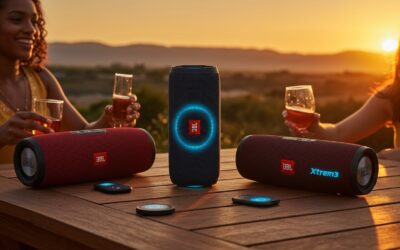
| Outdoor Speaker | The hardware that delivers the sound. | Sonos Move, JBL Boombox 3, Bose 251 |
| Connectivity Bridge | Connects “dumb” speakers to Wi-Fi. | WiiM Mini, Chromecast Audio (Legacy) |
| Wi-Fi Extender | Ensures signal reaches the backyard. | Google Nest WiFi Pro, TP-Link Deco |
| Weatherproof Gear | Protects wiring and plugs. | IP66 Junction Boxes, CL3-rated wire |
Step 1: Identify What Speakers Are Compatible with Google Home
The first step in building your outdoor sound system is identifying what speakers are compatible with google home. Not all “smart” speakers play well with Google Assistant.
Check for Chromecast Built-in
This is the gold standard. Speakers with this feature connect directly to your Wi-Fi. They allow you to stream high-resolution audio without the range limitations of Bluetooth. Brands like JBL, Marshall, and Sony often include this in their premium outdoor-friendly portable lines.
Verify Bluetooth Pairing Support
If you already own a rugged outdoor speaker, check if it has Bluetooth. You can “cast” audio from a Google Nest Mini inside your house to a Bluetooth speaker outside. This is a great way to use what speakers work with google home without buying expensive new gear.
Consider Passive vs. Active Speakers
Active (Powered): These have built-in amps and often include Wi-Fi/Bluetooth. (e.g., Sonos Move 2).
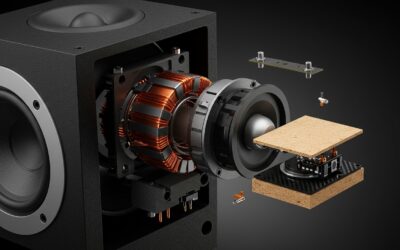
Passive (Non-powered): These require a separate amplifier. To make these work with Google Home, you must connect the amplifier to a Google Nest device or a Chromecast streamer.
Step 2: Choose Your Outdoor Audio Hardware
When searching for what speakers work with google assistant, you have three main categories to choose from based on your backyard layout.
Portable Smart Speakers
These are the easiest to manage. They are battery-powered and can be moved from the kitchen to the patio. The Sonos Move and Sonos Roam are top-tier choices because they support both Google Assistant and extreme weather.
Permanent Mounted Speakers
If you want a “set it and forget it” system, look at brands like Bose or Polk Audio. While these are “dumb” speakers, you can make them what speakers connect to google home by wiring them to a smart amplifier hidden indoors.
Rock Speakers and Landscape Audio
For a hidden look, rock speakers blend into your garden. To integrate these with Google Home, you will typically use a WiiM Amp or a Sonos Amp which acts as the bridge between your Google Home app and the physical wires.
Step 3: Connect Your Speakers to the Google Home App
Once you have selected what wireless speakers work with google home, follow these steps to get them online.
Power on your device
Ensure your outdoor speaker is fully charged or plugged into a weatherproof outlet. Put it into “Pairing Mode” if it is a Bluetooth-only model.
Open the Google Home App
Ensure your smartphone is on the same Wi-Fi network you intend to use for your outdoor space. Tap the “+” icon in the top left corner.
Select “Set up device”
Choose “New device” for Chromecast built-in speakers. The app will automatically scan for the speaker. Follow the on-screen prompts to connect it to your Wi-Fi.
Link via Bluetooth (Alternative)
If your speaker doesn’t have Wi-Fi:
Go to your Google Nest Mini/Hub settings in the app.
Tap on Audio.
Select Default music speaker.
Tap Pair Bluetooth speaker and select your outdoor unit.
Step 4: Create an Outdoor Speaker Group
One of the best reasons to figure out what bluetooth speakers are compatible with google home is the ability to play music everywhere at once.
Syncing Indoor and Outdoor Audio
- In the Google Home app, tap the “+” and select Create speaker group.
- Select your indoor Nest Audio speakers and your newly added outdoor speakers.
- Name the group “Backyard Party” or “Full House.”
- Say, “Hey Google, play 80s hits on Backyard Party.”
Adjusting Group Delay
Sometimes, Bluetooth speakers have a slight lag compared to Wi-Fi speakers.
Go to the speaker’s settings in the app.
Select Audio.
Adjust Group delay correction until the audio is perfectly synced.
Step 5: Optimize Your Outdoor Connection
Even the best what speakers work with google home will fail if your Wi-Fi doesn’t reach the patio.
Expert Tips for Better Range
Mesh Wi-Fi is Essential: Standard routers rarely penetrate exterior brick or stucco walls. Place a Google Nest Wifi point near the window facing your deck.
Use 2.4GHz for Distance: While 5GHz is faster, 2.4GHz travels through walls much better. Most outdoor smart speakers will default to this for stability.
Protect Your Hub: If you are using a Nest Mini outside, keep it under a covered porch or use a specialized “weatherproof cover” sold by third-party vendors.
Pro Tips for Managing Google Home Outdoor Audio
Having spent years configuring outdoor smart systems, I’ve found that the “little things” make the biggest difference in user experience.
Rename for Voice Clarity: Don’t leave your speaker named “JBL-XTREME-345.” Rename it to “Patio Speaker” so Google Assistant understands you every time.
Set Default Volume: Outdoor environments have ambient noise (wind, traffic). Set your outdoor speaker’s default volume to 60% so you aren’t constantly asking Google to turn it up.
Check the IP Rating:
IPX4: Splashproof (Good for covered patios).
IPX7: Waterproof (Can survive a drop in the pool).
IP67: Dustproof and Waterproof (Best for open gardens).
Common Mistakes to Avoid
- Leaving Indoor Hubs Outside: Never leave a Google Nest Hub or Nest Mini exposed to humidity. They are not built for outdoor use and will corrode.
- Ignoring Power Safety: If using a permanent amp, ensure all outdoor wiring is CL3-rated for in-wall/outdoor use to prevent fire hazards.
- Overloading Bluetooth: Bluetooth range is usually 30-50 feet. If you move your phone inside, the music will cut out. Wi-Fi (Chromecast) speakers avoid this issue.
FAQ: What Outdoor Speakers Work with Google Home?
Can I connect any outdoor speaker to Google Home?
Yes, as long as the speaker has Bluetooth or Chromecast built-in. If it is a traditional wired speaker, you must connect it to a smart amplifier like the Sonos Amp or use a Google Nest Mini as a Bluetooth transmitter.
Does Bose work with Google Home for outdoor use?
Specific models like the Bose Portable Smart Speaker have Google Assistant built-in. For passive Bose speakers (like the Bose 251), you will need to power them with a Google-compatible amplifier.
How do I make my existing outdoor speakers “smart”?
The most cost-effective way is to buy a WiiM Mini or WiiM Pro. These small devices plug into your existing amplifier’s “Aux In” and instantly add Chromecast and Google Assistant compatibility to your old system.
Why won’t my outdoor speaker show up in the Google Home app?
Ensure the speaker is in setup mode and that your phone’s Bluetooth and Location Services are turned on. If it’s a Wi-Fi speaker, make sure it isn’t trying to connect to a 5GHz band if the signal is too weak; try the 2.4GHz band instead.
Do I need a Google Nest Hub to control outdoor speakers?
No, you can control everything via the Google Home app on your iPhone or Android device. However, having a Nest Hub in the kitchen makes it much easier to adjust outdoor volume with a quick voice command.
Conclusion
Finding what outdoor speakers work with google home is the first step toward creating a seamless backyard entertainment experience. Whether you choose the portability of a Sonos Move, the ruggedness of a JBL Boombox, or a professional wired setup with a WiiM Amp, the key is ensuring Chromecast or Bluetooth compatibility.
By following the steps above—optimizing your Wi-Fi, grouping your speakers, and selecting the right IP-rated hardware—you can enjoy hands-free music, podcasts, and news while enjoying the great outdoors.
Ready to upgrade your patio? Start by checking your current speaker’s manual for “Chromecast” support, or grab a Google Nest Mini to begin your Bluetooth integration today!