Determining What Size PA Speakers You Need for Your Event
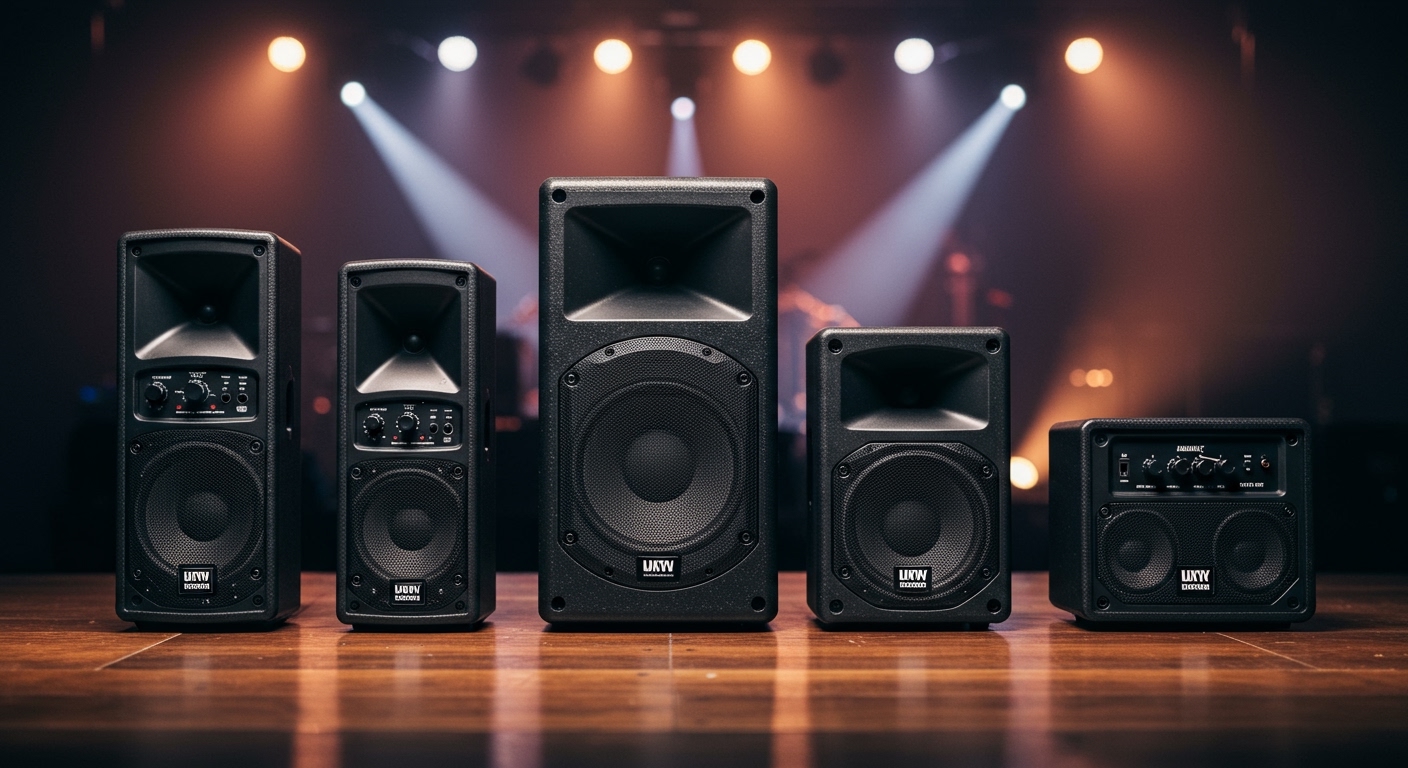
To decide what size pa speakers do i need, you must match the woofer diameter to your crowd size and venue type: 8-10 inch speakers are ideal for speech and small coffee shop gigs (under 50 people), 12-inch speakers are the industry standard for versatile mobile DJs and weddings (50-150 people), and 15-inch speakers are necessary for larger venues (150+ people) or when you need significant bass without a separate subwoofer. Generally, the larger the woofer, the lower the frequency response and the higher the potential volume (SPL).
🚀 TL;DR: Quick Speaker Size Reference
- 8-inch Speakers: Best for public speaking, solo acoustic acts, and background music in small rooms.
- 10-inch Speakers: Great for small bands, floor monitors, and presentations up to 75 people.
- 12-inch Speakers: The “sweet spot” for most DJs and bands; perfect balance of clarity and punch.
- 15-inch Speakers: Best for high-volume playback, outdoor events, and situations where you aren’t using a subwoofer.
- Pro Tip: If you use a subwoofer, 10-inch or 12-inch tops usually provide better mid-range clarity than 15-inch models.
Understanding PA Speaker Sizes: Why Diameter Matters
When we talk about PA speaker size, we are almost always referring to the diameter of the woofer (the large driver responsible for low and mid-range frequencies). In my 15 years of setting up live sound for everything from backyard parties to corporate ballrooms, I’ve found that many people mistakenly believe “bigger is always better.”
While a 15-inch woofer moves more air and produces deeper bass, it often sacrifices the “throw” and clarity of the mid-range frequencies where the human voice lives. Conversely, an 8-inch speaker might sound incredibly crisp for a podcast recording but will “fart out” (distort) the moment you try to play a kick drum through it.
The Physics of Sound Displacement
A larger cone has more surface area. This allows it to push more air, which is required to create the long sound waves of low-frequency (bass) notes. However, a larger cone is also heavier, making it slower to react to fast, high-frequency transients. This is why 12-inch speakers are often preferred by vocalists; they are small enough to be “fast” and clear, but large enough to provide some warmth.
Comparison Table: Speaker Size vs. Application
| Speaker Size | Best For | Crowd Size | Low-End Response | Portability |
|---|---|---|---|---|
| 8-inch | Speech, Cafes, Monitors | < 50 | Poor | Excellent |
| 10-inch | Acoustic Duos, Churches | 50 – 75 | Moderate | High |
| 12-inch | Weddings, DJs, Full Bands | 75 – 150 | Good | Moderate |
| 15-inch | EDM, Outdoor, No Sub | 150+ | Excellent | Heavy |
Step 1: Evaluate Your Crowd Size and Venue Volume
The first step in answering what size pa speakers do i need is calculating the required Sound Pressure Level (SPL). Sound drops by 6 decibels (dB) every time you double the distance from the speaker.
Small Crowds (Under 50 People)
For intimate settings like a small bar or a corporate boardroom, 8-inch or 10-inch speakers are sufficient. We often use the QSC K8.2 or Yamaha DBR10 for these scenarios. These speakers are unobtrusive and focus on vocal articulation.
Medium Crowds (50 to 150 People)
This is the most common range for mobile DJs and wedding performers. A pair of 12-inch powered speakers (like the Electro-Voice ZLX-12BT or JBL PRX912) is the standard here. They provide enough “thump” for a dance floor while remaining clear enough for toasts.
Large Crowds (150+ People)
Once you hit 150 people, the human bodies in the room act as “sound sponges,” absorbing high frequencies. You need the air displacement of 15-inch speakers or, ideally, a multi-speaker setup with dedicated subwoofers.
Step 2: Match Speaker Size to Your Audio Content
What you are playing through the system is just as important as how many people are listening.
Speech and Presentations
If your primary goal is “intelligibility” (making sure the audience understands every word), smaller is often better. A 10-inch speaker typically has a tighter mid-range. I have found that 15-inch speakers can sometimes sound “muddy” or “boomy” in a reverberant conference hall, making it harder to hear the speaker.
Solo Musicians and Acoustic Acts
An acoustic guitar and a vocal mic don’t require massive low-end. A 10-inch or 12-inch system provides a natural, woody tone for the guitar. If you are a solo performer, your back will also thank you for choosing the lighter, smaller cabinets.
DJs and Live Bands
If you are playing Hip-Hop, EDM, or have a live kick drum and bass guitar, you need 15-inch speakers. Without that larger cone, the bass will feel thin, and you’ll likely push your speakers into “limit” (red-lining), which can damage the drivers.
Step 3: The Subwoofer Factor (The Pro “Cheat Code”)
One of the biggest mistakes I see beginners make is buying the largest speakers possible (15-inch) thinking they won’t need a sub. While 15-inch tops have more bass than 12-inch tops, they still cannot compete with a dedicated 18-inch subwoofer.
The “Small Tops + Sub” Strategy
If you have the budget, I highly recommend buying 10-inch or 12-inch speakers and pairing them with a subwoofer.
- Clarity: The “tops” no longer have to work hard to produce bass, so the vocals become crystal clear.
- Power: The subwoofer has its own dedicated amplifier for those power-hungry low notes.
- Versatility: You can leave the heavy sub at home for small speaking gigs but bring it out for the big parties.
Step 4: Portability vs. Performance
When asking what size pa speakers do i need, you must consider the “schlep factor.”
- 8-10 inch speakers usually weigh between 18 and 28 lbs. You can carry one in each hand.
- 12-inch speakers weigh between 30 and 45 lbs. Most people can still lift these onto a tripod stand alone.
- 15-inch speakers can weigh 50 to 75 lbs. Lifting these onto a high stand often requires two people and a large vehicle for transport.
In my experience, if you are a “weekend warrior” performing solo, the slightly lower bass response of a 12-inch speaker is worth the massive gain in portability over a 15-inch beast.
Expert Tips for Choosing the Right Size
- Look at the SPL Rating: Don’t just look at “Watts.” Look at Max SPL. A high-quality 10-inch speaker with a high SPL can often outperform a cheap, generic 15-inch speaker.
- Consider Dispersion: Smaller speakers often have a wider horizontal dispersion (e.g., 90 degrees), which is better for wide, shallow rooms.
- Test with Your Own Music: When shopping, bring a track you know intimately. Listen for the transition between the woofer and the tweeter (the crossover point).
Frequently Asked Questions
Can I use 15-inch speakers for a small house party?
Yes, but they may be overkill and take up too much floor space. Also, 15-inch speakers often need to be pushed to a certain volume before they “wake up” and sound balanced. At very low volumes, they can sound dull.
Is a 12-inch speaker loud enough for outdoors?
For a small backyard, yes. For a public park or a street fair, you will likely need the extra projection of a 15-inch speaker or multiple 12-inch speakers distributed throughout the area to overcome the lack of walls reflecting the sound back.
Why do some small “Column Array” speakers sound so loud?
Column arrays (like the Bose L1 or EV Evolve) use multiple tiny drivers (2-3 inches) stacked vertically. This creates a “line array” effect that projects sound further with less volume drop-off over distance. They are a great alternative if you want the power of a 12-inch system with a much slimmer profile.
Do I need two speakers, or is one enough?
For speech, one speaker is often enough. For music, you want two for stereo imaging and to ensure even coverage across the room so the people on one side aren’t being blasted while the other side hears nothing.