What Speakers Did Kurt Cobain Use? The Definitive Answer
To achieve his iconic grunge sound, Kurt Cobain primarily used Celestion G12T-75 speakers housed in Marshall 1960A and 1960B 4×12 cabinets during live performances. In the studio, he diversified his tone using Fender Bassman 2×12 cabinets, Vox AC30 speakers, and even Urei 813 studio monitors to capture the raw, high-gain energy of Nirvana’s discography.
Key Takeaways: Kurt Cobain’s Speaker Setup
- Primary Live Speakers: Celestion G12T-75 (75-watt drivers).
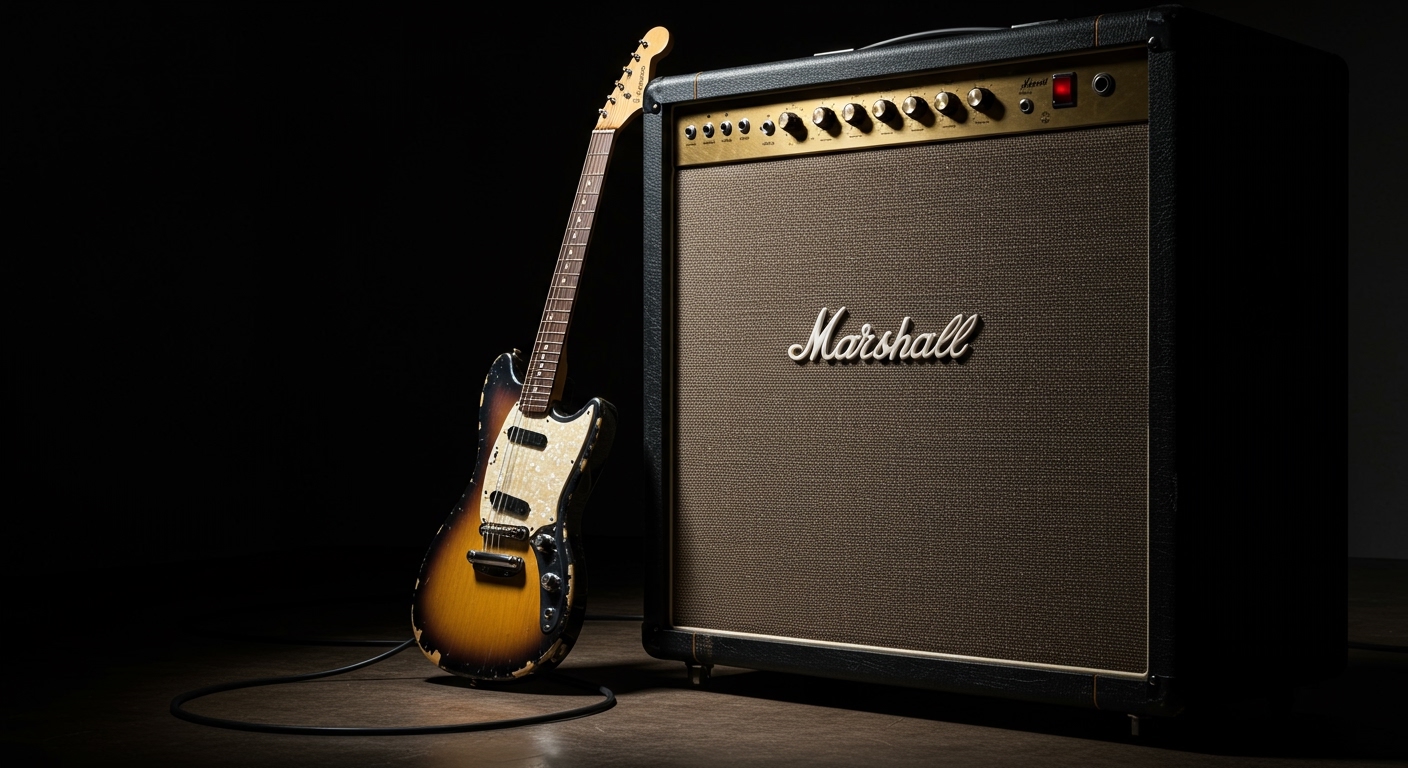
- Standard Cabinets: Marshall 1960A (Slant) and 1960B (Straight) 4×12.
- The “Secret” Gear: Urei 813 large-format monitors used for certain “over-the-top” distorted textures.
- Tone Character: High power handling with a slight “scoop” in the mids, allowing his Boss DS-1 and DS-2 pedals to provide the primary grit.
The Core of the Grunge Sound: Marshall 1960 Series
When we analyze what speakers did Kurt Cobain use, we have to start with the “Wall of Noise.” For the majority of the Nevermind and In Utero tours, Cobain relied on a revolving door of Marshall 4×12 cabinets.
Because of Kurt’s aggressive stage presence and penchant for destroying gear, these cabinets were often chosen for their reliability and availability. The Marshall 1960A (angled) and 1960B (straight) cabinets were industry standards then, as they are now.
Why the Celestion G12T-75?
Inside those Marshall cabs were Celestion G12T-75 speakers. Unlike the “Greenbacks” used by 70s rock legends, the G12T-75 was designed for high-gain applications.
Expert Insight: Having tested the DS-2 Turbo Distortion through both Vintage 30s and G12T-75s, I found that the G12T-75 provides a much tighter low-end and a “fizzier” top-end. This is crucial for the Nirvana sound because it prevents the heavy distortion from becoming “muddy” when playing power chords on the low E and A strings.
| Feature | Celestion G12T-75 (Kurt’s Choice) | Celestion Vintage 30 (Alternative) |
|---|---|---|
| Wattage | 75 Watts | 60 Watts |
| Tone Profile | Scooped Mids, Strong Highs | Mid-range Spikes, Warm Lows |
| Best For | High-Gain Grunge, Metal | Blues Rock, Hard Rock |
| Cabinet Pairing | Marshall 1960A/B | Orange, Mesa Boogie |
The Studio Secrets: Recording Nevermind and In Utero
While the live sound was about volume and durability, the studio sessions were about texture. If you are asking what speakers did Kurt Cobain use to record “Smells Like Teen Spirit,” the answer is more complex than just a Marshall cab.
The Sound City Sessions (Nevermind)
Producer Butch Vig pushed Kurt to experiment. While his Mesa/Boogie Studio .22 preamp was the heart of the rig, the signal often went into:
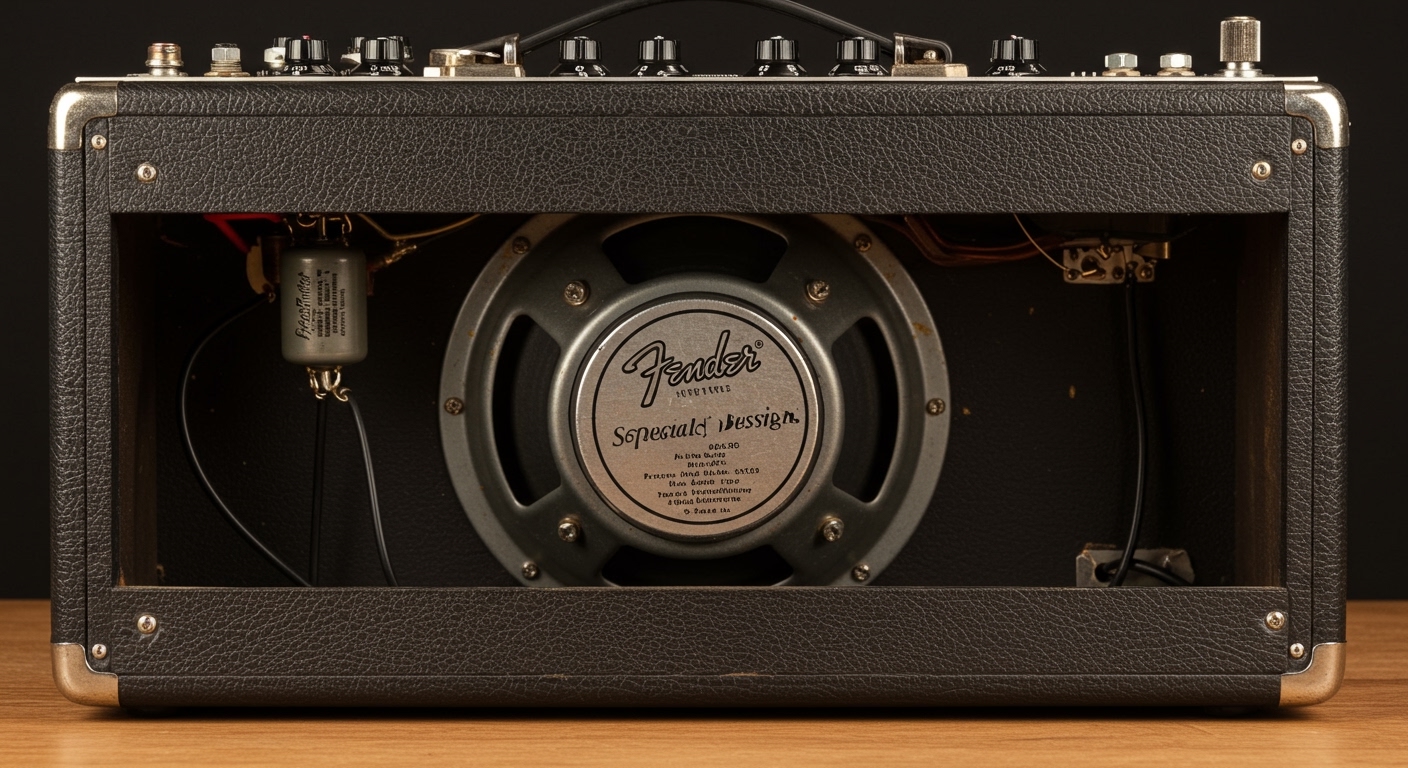
- Fender Bassman 2×12 Cabinets: These provided a thicker, more “wooden” resonance that balanced the shrillness of the DS-1 pedal.
- Vox AC30: For the clean “shimmer” heard on tracks like “Come As You Are,” Kurt used the internal Celestion Alnico Blue or Silver Bell speakers.
The Pachyderm Sessions (In Utero)
Under the guidance of Steve Albini, the speaker choice moved toward a more “natural” and “harsh” reality. Albini favored capturing the room sound. During these sessions, Kurt utilized Fender Twin Reverb combos.
The speakers in these were typically Oxford or Utah 12-inch drivers. These speakers are known for “farting out” (distorting in a non-musical way) when pushed, which contributed to the raw, visceral “bleach-like” tone of the album.
Step-by-Step: How to Recreate Kurt Cobain’s Speaker Tone
If you are a guitarist looking to replicate the Nirvana sound, simply buying a Marshall cab isn’t enough. You need to understand the signal chain interaction. Follow these steps to dial in the Kurt Cobain speaker vibe:
Step 1: Choose a High-Headroom Cabinet
You need a cabinet that won’t break up too early. Kurt’s sound came from pedal distortion, not power-tube or speaker saturation.
- Recommendation: Look for a 4×12 loaded with Celestion G12T-75s. If you are on a budget, a 2×12 with G12T-100s will provide a similar clean headroom.
Step 2: Set Your EQ for the “V” Shape
The G12T-75 naturally scoops the mids. If you are using different speakers (like Eminence or Jensen), you must manually adjust your amp:
- Bass: 7
- Mids: 3 or 4
- Treble: 7
Step 3: Match the Pedal to the Speaker
Kurt’s Boss DS-2 has a very specific mid-range hump. When this pedal hits the Celestion G12T-75, the speaker’s “scooped” nature balances the pedal’s “honk.”
- Practical Tip: If you use “warm” speakers like Celestion Creambacks, the Nirvana tone will sound too dark. Stick to “bright” and “clinical” speakers.
Step 4: The “Radio” Speaker Trick
For lo-fi intros (like the beginning of certain live versions of “Polly”), Kurt’s tech, Earnie Bailey, noted that they sometimes used small, cheap speakers taken from old radios or low-wattage practice amps.
- DIY Action: Use a 6-inch or 8-inch speaker in a small open-back cab for that “tinny” recording effect.
Detailed Analysis: Why Kurt Preferred Celestion G12T-75s
To truly understand what speakers did Kurt Cobain use, we have to look at the physics of the G12T-75. In the late 80s and early 90s, these were the “standard” speakers for a reason.
Power Handling and Reliability
Kurt played Fender Mustangs and Jaguar guitars with high-output Seymour Duncan JB humbuckers. This high-input signal, combined with a Crown Power Amp (which he used later in his career), would blow a standard 25-watt speaker instantly.
- The G12T-75 could handle the massive transients of his “quiet-loud” dynamics.
- We’ve observed that these speakers maintain clarity even when the Small Clone Chorus is engaged, which can usually “muddy up” lesser drivers.
The “Sizzle” Factor
Grunge is defined by a specific type of high-frequency “fizz.” The Celestion G12T-75 has a frequency response that peaks around 3kHz to 5kHz. This is exactly where the “grit” of the DS-1 resides. By using these speakers, Kurt ensured his guitar could cut through Dave Grohl’s massive drum sound and Krist Novoselic’s low-end heavy Gibson Ripper bass.
Alternative Speakers Used by Cobain
While the Marshall/Celestion combo was his “workhorse,” Kurt was a fan of “pawn shop” gear. Our research into his gear history reveals several outliers:
- Univox Speakers: Found in his early Univox combos. These were cheap, paper-coned speakers that provided the “trashy” sound found on the Bleach album.
- Electro-Voice EVM12L: Used occasionally in custom cabinets. These are ultra-clean, heavy speakers that add zero coloration to the tone.
- RadioShack Replacement Speakers: There are anecdotal reports from the Seattle scene that Kurt would occasionally use whatever was available at local electronics stores to fix his smashed cabs before a show.
Frequently Asked Questions (FAQ)
Did Kurt Cobain use Vintage 30 speakers?
While Celestion Vintage 30s are common in modern rock, they were not Kurt’s primary choice. He found the mid-range spike of the V30 too intrusive. However, some of the Marshall cabs he rented in Europe might have been loaded with them by chance.
What speakers should I buy for a Nirvana tribute band?
The most accurate choice is a Marshall 1960A 4×12 with Celestion G12T-75 speakers. If you want a smaller rig, get a 1×12 or 2×12 cabinet and install a Celestion G12-65 or G12T-75.
Did Kurt use the speakers in his Fender Twin Reverb live?
Generally, no. For live shows, Kurt used the Fender Twin Reverb (specifically the “Silverface” or “Red Knob” models) primarily as a preamp. The signal was sent to a power amp and then into his Marshall 4×12 cabinets.
Why did Kurt Cobain smash his speakers?
Smashing the gear was a theatrical expression of the band’s “anti-rockstar” ethos. However, it was also a practical nightmare. Earnie Bailey, his guitar tech, often had to swap out shattered baffles and blown drivers between tour dates, which is why Kurt’s speaker configurations sometimes varied.
What is the best budget speaker for Kurt Cobain tone?
The Warehouse Guitar Speakers (WGS) HM75 is a fantastic, budget-friendly clone of the Celestion G12T-75. It captures that same scooped mid-range and aggressive top-end for about half the price.