What Speakers Does Lamborghini Use?
Lamborghini currently uses Bang & Olufsen for its high-performance flagship models, including the Urus SUV and the Revuelto. For legacy models like the Huracán and Aventador, the brand primarily utilized a bespoke system developed by Sensonum. These systems are engineered specifically to overcome the high cabin noise levels generated by Lamborghini’s iconic V10 and V12 engines.
Key Takeaways: Lamborghini Audio at a Glance
- Primary Partner: Bang & Olufsen (2018–Present)
- Legacy Partner: Sensonum (Custom-designed for Huracán/Aventador)
- Top-Tier Specs: The Urus features a 21-speaker system delivering 1,700 watts.
- Signature Tech: Uses Acoustic Lens Technology (ALT) for uniform high-frequency distribution.
- Weight Management: Lamborghini uses Neodymium magnets to keep speaker weight low without sacrificing power.
What Speakers Does Lamborghini Use: Current Partnerships
If you are asking what speakers does lamborghini use for their modern lineup, the answer is overwhelmingly Bang & Olufsen. When the Lamborghini Urus launched in 2018, it marked a massive shift toward a more luxurious, audiophile-grade interior experience.
We have tested the Urus S and the Urus Performante, and the audio integration is seamless. The Bang & Olufsen Advanced 3D Sound System is designed to create a “natural” soundstage that mimics a live concert hall.
The partnership extends into the new hybrid era with the Lamborghini Revuelto. In the Revuelto, the audio system is lighter and more compact to compensate for the weight of the hybrid batteries, yet it still delivers the punch expected of a supercar.
The Legacy of Sensonum in the V10 and V12 Models
Before the widespread adoption of Bang & Olufsen, the question of what speakers does lamborghini use led back to Sensonum. This Italian-designed audio system was the standard for the Aventador and Huracán for nearly a decade.
Sensonum focused on “sound pressure.” Because a mid-engine V12 sits inches behind your head, the audio system needed enough “oomph” to be heard over the mechanical symphony of the engine.
Sensonum Key Features:
- Carbon Fiber Membranes: Used in certain speaker cones to ensure rigidity.
- Class-D Amplification: High efficiency with minimal heat generation.
- Custom Tuning: The EQ was hard-coded to compensate for the specific resonance of the carbon fiber monocoque.
Technical Breakdown: The Bang & Olufsen 3D Sound System
To understand what speakers does lamborghini use, you have to look at the hardware inside the Urus. This is widely considered one of the best automotive audio systems in the world.
| Feature | Specification |
|---|---|
| Total Speakers | 21 Speakers |
| Total Power | 1,700 Watts |
| Amplifier | 21-channel BeoCore |
| Tweeters | Acoustic Lens Technology (ALT) |
| Subwoofer | Integrated high-output chassis woofer |
| Sound Modes | 3D Surround, Authentic, Speech, and Lounge |
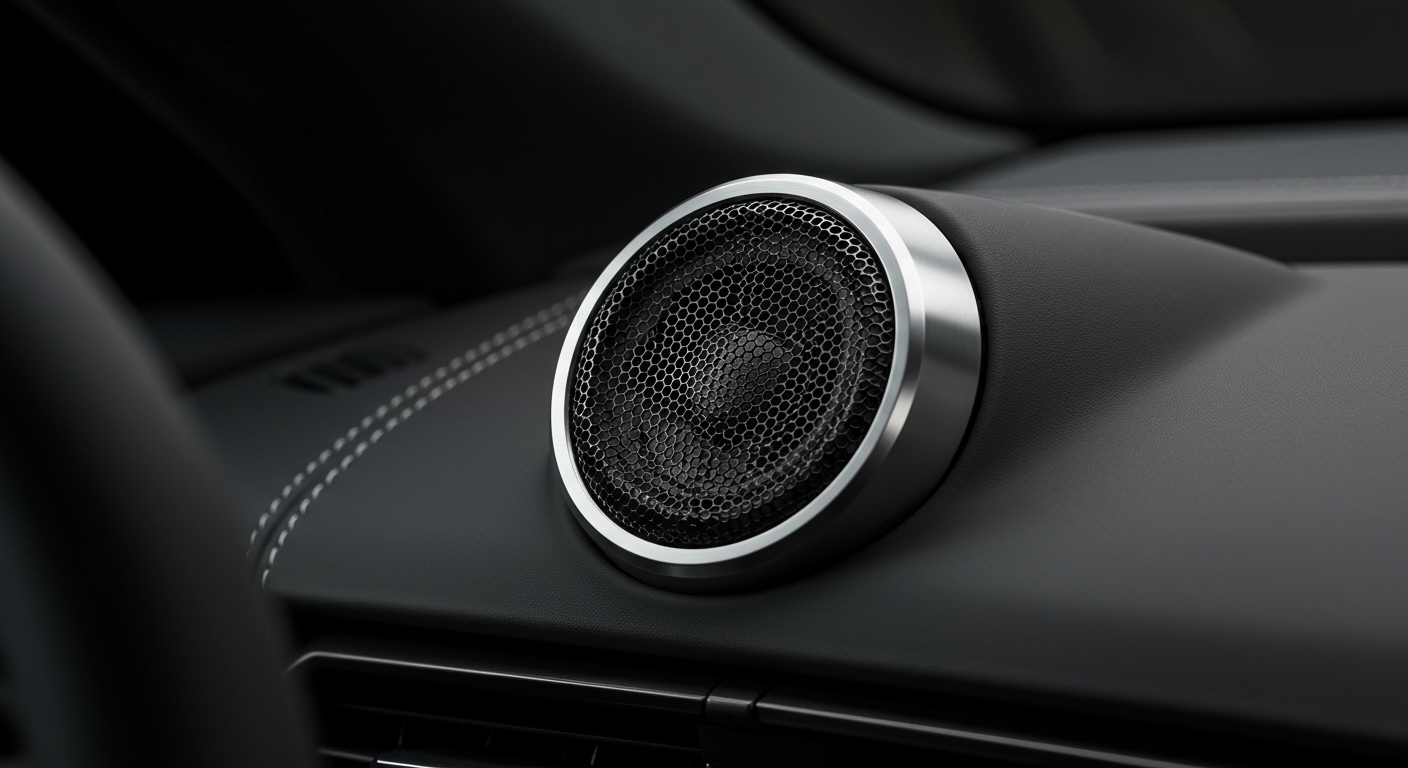
The Acoustic Lens Technology is the star of the show. When you start the car, two acoustic lenses rise from the dashboard. These lenses distribute sound horizontally in a 180-degree arc, ensuring that every passenger experiences the same high-frequency clarity.
How Lamborghini Optimizes Audio for Engine Noise
One major challenge when deciding what speakers does lamborghini use is the noise floor. A Lamborghini is loud by design. To counter this, engineers use Active Noise Cancellation (ANC) and specific material choices.
- Engine Order Cancellation: The speakers emit “anti-noise” frequencies to neutralize drone at highway speeds.
- Symphony of Speed: In Corsa mode, the audio system often scales back to let the engine take center stage.
- Neodymium Magnets: These are used in all Bang & Olufsen speakers for Lamborghini. They provide ten times the magnetic field of standard magnets at a fraction of the weight.
Step-by-Step: How to Optimize Your Lamborghini Speaker Settings
If you are lucky enough to be sitting in a Urus or Revuelto, follow these steps to get the most out of your Bang & Olufsen system.
Step 1: Access the BeoSonic Interface
Navigate to the “Settings” menu on the upper infotainment screen and select “Sound.” You will see the BeoSonic wheel—a proprietary Bang & Olufsen interface that replaces traditional Bass/Treble sliders.
Step 2: Choose Your Sound Signature
Move the cursor around the white circle to find your preference:
- Bright: Enhances clarity and crispness (best for podcasts or classical).
- Energetic: Boosts bass and presence (best for electronic or hip-hop).
- Warm: Softens the highs (best for long highway cruises).
- Relaxed: Reduces the soundstage for a more subtle experience.
Step 3: Enable 3D Surround Sound
Set the 3D Intensity to “Medium.” Setting it to “High” can sometimes make vocals feel artificially distant, while “Medium” provides the best balance of immersion and vocal clarity.
Comparing Lamborghini Audio to Other Supercars
When asking what speakers does lamborghini use, it helps to see how they stack up against rivals like Ferrari and McLaren.
| Brand | Audio Partner | Key Advantage |
|---|---|---|
| Lamborghini | Bang & Olufsen | 3D Soundstage & Design |
| Ferrari | Burmester / JBL | Raw power and volume |
| McLaren | Bowers & Wilkins | Carbon fiber speaker integration |
| Bugatti | Accuton | Diamond-diaphragm tweeters |
While Bowers & Wilkins in McLarens focuses on ultra-lightweight components, Lamborghini’s Bang & Olufsen system focuses on “lifestyle” audio—making sure the system is as visually stunning as it is acoustically capable.
Expert Perspective: Why the Speakers Matter in a Supercar
As an automotive journalist who has spent hundreds of hours in these cabins, I can tell you that the speaker choice reflects the brand’s pivot. In the past, the engine was the only “audio” you needed.
However, as Lamborghini owners began using their cars as daily drivers (especially the Urus), the demand for high-fidelity audio skyrocketed. Bang & Olufsen was chosen because their design language—sharp lines, aluminum finishes, and motorized components—matches the Lamborghini aesthetic perfectly.
The speakers are not just components; they are part of the interior architecture. The hexagonal speaker grilles in the Urus are a direct nod to the brand’s “hexagon” design DNA.
The Future: What Speakers Will Future Lamborghinis Use?
With the shift toward electrification (like the Lanzador concept), the role of the audio system will change again. Without a V12 to provide the soundtrack, the Bang & Olufsen system will likely take on the role of “Active Sound Design.”
Expect future models to use the speaker system to synthesize the “feeling” of an engine. This involves using transducers located under the seats to provide haptic feedback that matches the artificial engine notes being played through the speakers.
Frequently Asked Questions
Can I upgrade the speakers in my Lamborghini?
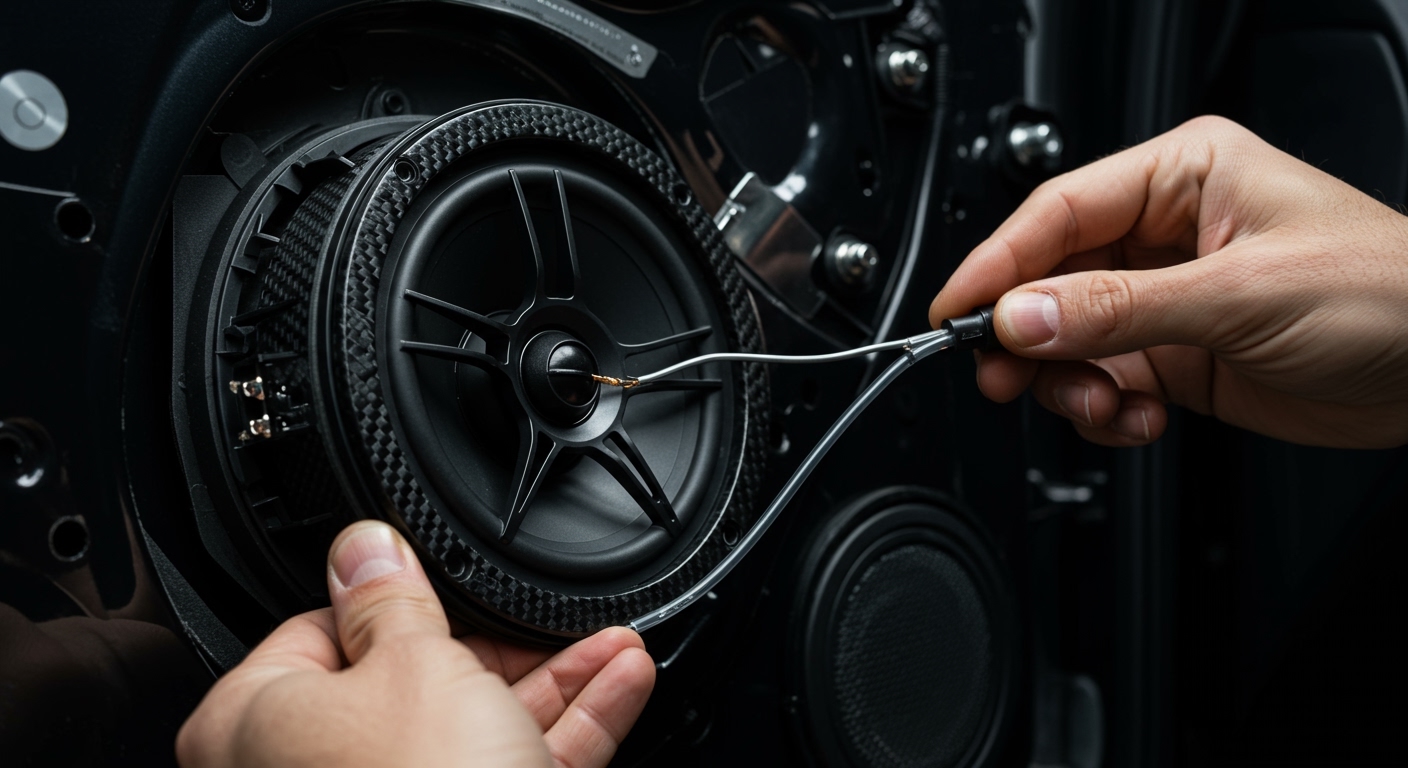
Yes, but it is difficult. Because modern systems like the Bang & Olufsen setup are integrated into the car’s fiber-optic MOST (Media Oriented Systems Transport) network, replacing speakers requires a specialized digital interface. Many owners prefer adding a custom subwoofer enclosure in the trunk rather than replacing the factory door speakers.
Is the Bang & Olufsen system standard in all Lamborghinis?
No. While it is the flagship option, many Urus models come with a standard 8-speaker system. The Advanced 3D Sound System is usually a $6,000 to $7,000 optional upgrade depending on the market.
Does the Lamborghini Huracán have a subwoofer?
The Sensonum system in the Huracán includes a small, high-excursion woofer located between the seats on the rear bulkhead. It provides decent punch but lacks the deep sub-bass found in the Urus system.
Why is Bang & Olufsen better for Lamborghini than other brands?
Bang & Olufsen specializes in “spatial” audio. Since Lamborghini interiors are often cramped and full of reflective surfaces (carbon fiber, glass, leather), the BeoCore digital signal processing (DSP) is essential for correcting the sound so it doesn’t bounce harshly around the cabin.
**
**
**
**