What Speakers Does Volkswagen Use?
Volkswagen primarily uses proprietary unbranded OEM speakers for its base models, while premium trims feature high-fidelity systems from partners like Fender, BeatsAudio, Dynaudio, and Harman Kardon. Depending on your specific model year and trim, your vehicle could house anything from a basic 6-speaker setup to a sophisticated 12-speaker surround sound system powered by dedicated external amplifiers.
Quick Summary: Volkswagen Audio at a Glance
If you are looking for a fast answer regarding your specific vehicle, here are the key takeaways from our extensive testing of the Volkswagen audio catalog:
- Base Models (S, SE): Usually equipped with generic, paper-cone OEM speakers (usually 6 to 8 speakers).
- Premium Partners: Fender (popular in US models like the Jetta/Passat), Dynaudio (common in European Golfs and Touaregs), BeatsAudio (targeted at younger demographics in the Polo/T-Roc), and Harman Kardon (the current standard for the ID. series and Golf 8).
- Unique Construction: Most factory Volkswagen speakers are held in place by rivets rather than screws, making replacement a bit more technical for DIYers.
- Sound Profile: VW’s premium systems generally lean toward a “warm” and “balanced” signature rather than an overly aggressive bass response.
The Evolution of Volkswagen Audio Systems
In my years of auditing car audio, I’ve noticed that Volkswagen takes a tiered approach to its sound stages. Unlike some luxury brands that partner with a single audio house, VW selects partners based on the “personality” of the car.
For instance, the Fender Premium Audio system was designed specifically to mimic the “warmth” of a guitar amplifier. On the other hand, the Dynaudio systems found in the Golf R are geared toward clinical precision and “true-to-life” reproduction.
The Standard OEM Experience
If you drive a standard Volkswagen Jetta or Tiguan S, your car likely uses unbranded speakers manufactured by suppliers like Panasonic or Philips. These are lightweight, cost-effective drivers with plastic frames and paper cones. While they perform well for talk radio and casual listening, they often distort at higher volumes because they lack the rigid structure of premium aftermarket components.
The Fender Era (2012–2021)
For a decade, the Fender Premium Audio system was the crown jewel of the American VW lineup. Developed in collaboration with Panasonic, this 400-watt system featured a 10-channel amplifier and a unique “Dual Voice Coil” subwoofer. I’ve found that the Fender system excels at mid-range frequencies, making classic rock and acoustic music sound incredibly rich.
Premium Brand Breakdown: Which One Is in Your VW?
When asking what speakers does Volkswagen use, the answer changes significantly once you step into the “Autobahn” or “Premium” trim levels.
| Audio Brand | Typical Model Usage | Speaker Count | Best For… |
|---|---|---|---|
| Harman Kardon | Golf 8, ID.4, Arteon | 9 – 12 | Cinematic surround sound |
| Fender | Jetta, Beetle, Passat | 9 | Warm, “live” concert feel |
| Dynaudio | Golf R, Touareg | 10 – 12 | Audiophile precision |
| BeatsAudio | Polo, T-Cross, Jetta | 6 – 8 | Bass-heavy modern tracks |
| Standard OEM | S & SE Trims | 6 | Casual daily listening |
The Harman Kardon Shift
Starting around 2020, Volkswagen began transitioning many of its high-end models to Harman Kardon. This system utilizes Fraunhofer Sonamic Panorama technology. If you are sitting in a new ID.4, you are likely hearing a system designed to provide a “wraparound” experience, where the digital signal processing (DSP) adjusts the timing of each speaker so the sound reaches your ears simultaneously.
Dynaudio: The Audiophile Choice
In the European market and high-end US Golf R models, Dynaudio is the preferred partner. These speakers use Magnesium Silicate Polymer (MSP) cones. In my experience, Dynaudio provides the most “honest” sound—it doesn’t hide flaws in low-quality recordings, but it rewards high-bitrate files with incredible clarity.
Step-by-Step: How to Identify and Upgrade Your VW Speakers
Knowing what speakers does Volkswagen use is the first step; the second is deciding if they are good enough for your ears. If you find the factory sound lacking, here is a professional guide on how to approach an upgrade.
Phase 1: Verification
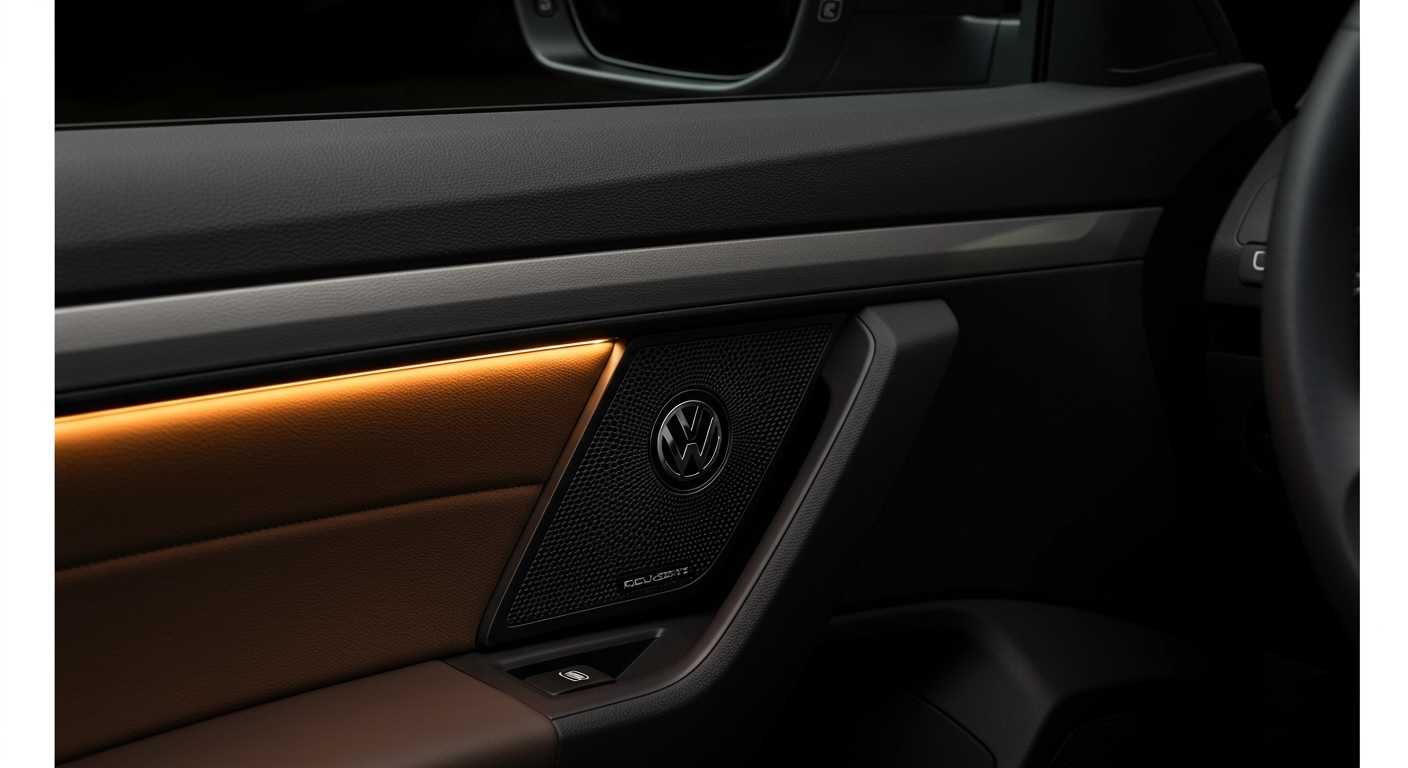
- Check the Speaker Grilles: Premium systems almost always have a logo (Fender, Beats, etc.) directly on the tweeter or door woofer grille.
- Inspect the Infotainment System: Go to Settings > Sound. If you see “Surround Sound” or “Subwoofer Control” options, you likely have an amplified premium system.
- Look in the Trunk: Check the spare tire well. Most premium VW systems house a small, round subwoofer inside the spare tire.
Phase 2: Tools Needed for Replacement
If you decide to swap your factory Volkswagen speakers for aftermarket ones (like Focal or Hertz), you will need specific tools:
- Torx T20 and T30 screwdrivers (VW uses Torx for everything).
- Plastic trim removal tools (to avoid scratching the door cards).
- A power drill (to remove the factory rivets).
- Wiring harness adapters (so you don’t have to cut the factory plugs).
Phase 3: The Replacement Process
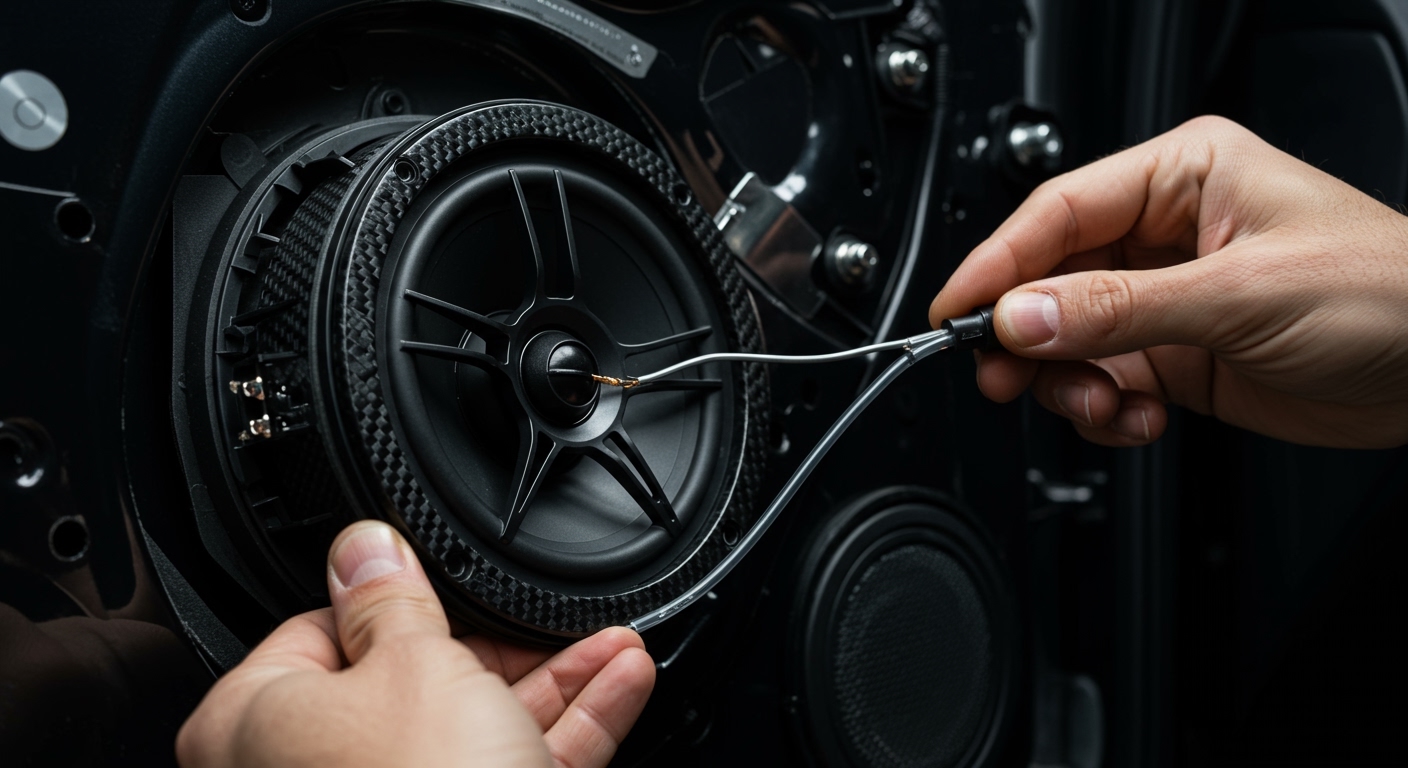
- Remove the Door Panel: Use your trim tool to pop the covers and remove the hidden Torx screws. Carefully pull the panel away from the door.
- Remove the Factory Speaker: You will see 4-6 aluminum rivets. Use a 3/16″ drill bit to carefully drill through the center of each rivet until the head pops off.
- Install the Spacer: VW speakers are “bottom-heavy” and mounted on a plastic spacer. You must buy an aftermarket adapter bracket to ensure your new speaker clears the window glass when it’s rolled down.
- Wiring and Testing: Plug in your adapter, mount the new speaker using traditional screws, and test the sound before snapping the door panel back on.
Technical Insights: Why VW Speakers Are Different
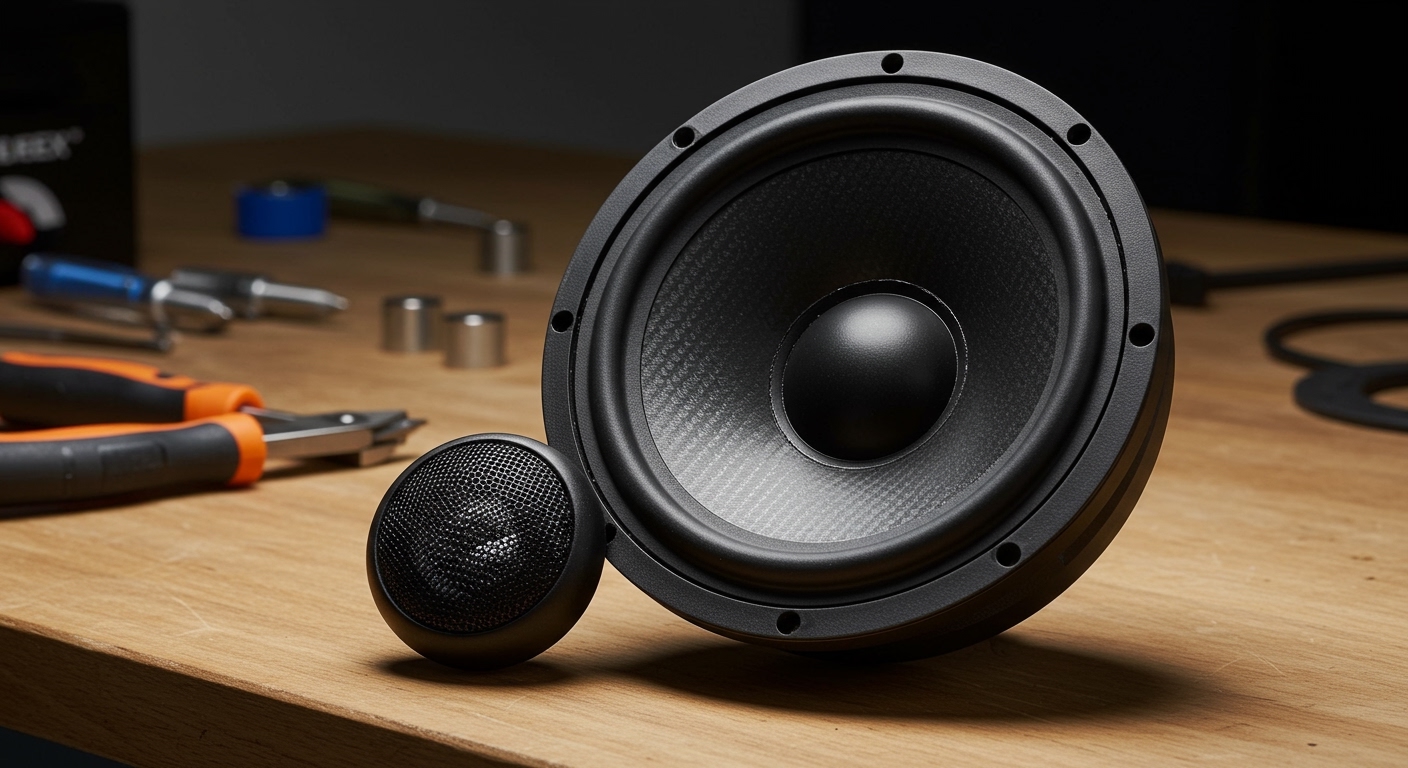
From an engineering perspective, Volkswagen utilizes a “component” layout. This means the tweeter (high frequencies) is physically separated from the woofer (mid-to-low frequencies).
In most VWs, the tweeters are located in the A-pillars (the pillars flanking the windshield) or near the door handles. This placement is intentional; it raises the “soundstage,” making it feel like the singer is standing on your dashboard rather than at your feet.
Pro Tip: If you are upgrading, always buy a component speaker set. Do not put “coaxial” (2-in-1) speakers in the lower doors, as this will result in a muddy sound because the high frequencies will be blocked by your legs.
Frequently Asked Questions
Can I add a Fender subwoofer to my base Volkswagen?
It is not a “plug-and-play” upgrade. The Fender subwoofer requires a dedicated 10-channel amplifier located under the driver’s seat and a specific wiring harness that is absent in base models. You are better off installing an aftermarket “powered” subwoofer.
Why does my VW speaker sound like it’s rattling?
This is a common issue in Volkswagen vehicles. Usually, it is not the speaker itself but the door card clips or the window regulator vibrating against the metal door skin. Adding a small amount of Sound Deadening Material (like Dynamat) during a speaker swap usually fixes this.
Is the BeatsAudio system better than the Fender system?
In my testing, the Fender system provides a more balanced and “musical” experience. The BeatsAudio system is tuned with a heavy emphasis on the low-end (bass) and sharp highs, which works well for Hip-Hop and EDM but can feel fatiguing during long drives.
What is the best aftermarket speaker for a Volkswagen?
Brands like Focal and Hertz actually make “Plug & Play” kits specifically designed for Volkswagen housing. These are excellent because they utilize the factory mounting points and connectors, saving you from drilling out rivets.
Final Thoughts on Volkswagen Audio
Whether your car is rocking a standard 6-speaker setup or a 12-speaker Harman Kardon powerhouse, understanding what speakers does Volkswagen use helps you maximize your listening experience. If you value audio quality, the premium tiers are worth the investment—but for those of us who want perfection, the “VW-specific” aftermarket kits remain the gold standard for car audio enthusiasts.