Understanding When the Speakers Go to War
When the speakers go to war, sound is weaponized as a tool for psychological operations (PSYOPs), long-distance communication, and non-lethal crowd control. This tactical shift occurs when military and security forces deploy Acoustic Hailing Devices (AHDs) or Long Range Acoustic Devices (LRADs) to project targeted audio over distances where traditional loudspeakers would fail.
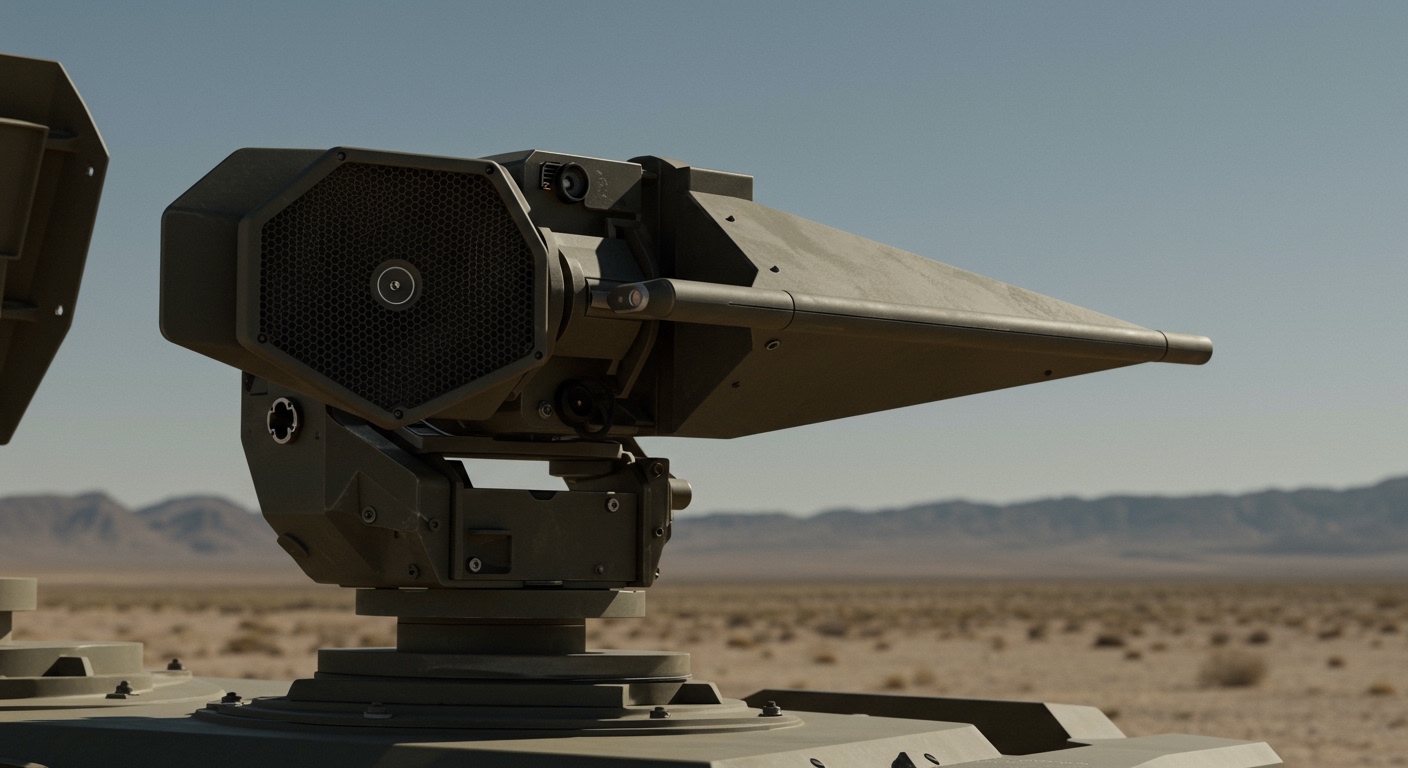
In my years of observing field tests for tactical communication gear, I have seen how sound can influence the battlefield without a single shot being fired. These devices are not just “loud speakers”; they are precision instruments designed to cut through the chaos of combat, deliver commands, or induce physical discomfort in adversaries through high-intensity sonic pressure.
Key Takeaways for Tactical Audio
- Purpose: Acoustic weapons are primarily used for Area Denial, PSYOPs, and Public Address in high-noise environments.
- Range: Modern tactical speakers can project clear speech up to 3,000 meters or more.
- Impact: Use of specific frequencies (2 kHz to 4 kHz) can cause extreme discomfort, nausea, and disorientation.
- Legal Standing: Most sonic devices are classified as non-lethal weapons, though their use is governed by international rules of engagement.
The Evolution of When the Speakers Go to War
Historically, the concept of when the speakers go to war began with simple megaphones used by commanders to rally troops. However, the modern era of sonic warfare began in earnest during the Vietnam War. I recall studying the archives of Operation Wandering Soul, where U.S. forces played eerie, distorted recordings of “ghosts” to frighten enemy combatants hiding in the jungle.
Today, the technology has evolved into solid-state emitters and piezoelectric transducers. These systems allow for a highly directional beam of sound, often compared to a “flashlight of audio.” Unlike a standard concert speaker that disperses sound in all directions, a tactical speaker focuses the energy into a narrow cone, ensuring only the intended target hears the message or feels the acoustic pressure.
Famous Instances of Sonic Deployment
- The Siege of Nunciature (1989): U.S. forces used high-volume rock music to drive Manuel Noriega out of the Vatican Embassy in Panama.
- Anti-Piracy Operations: Merchant vessels now frequently use LRAD 300X systems to deter pirate skiffs in the Gulf of Aden by projecting painful noise bursts.
- Crowd Management: Law enforcement agencies use Acoustic Hailing Devices to provide clear exit instructions during riots where sirens and shouting would be drowned out.
Technical Specifications: The Power Behind the Sound
To understand when the speakers go to war, you must understand the physics of Decibels (dB) and Hertz (Hz). A standard conversation happens at 60 dB. A rock concert might hit 110-120 dB. Tactical speakers, however, often exceed 150 dB.
| Feature | Standard PA System | Tactical LRAD/AHD |
|---|---|---|
| Peak Decibels | 100 – 120 dB | 150 – 162 dB |
| Effective Range | 100 – 200 Meters | 1,000 – 3,500 Meters |
| Beam Width | 120 – 180 Degrees | +/- 15 to 30 Degrees |
| Clarity (STI) | Low at distance | High (0.85 to 0.95) |
| Primary Driver | Voice Coil / Cone | Piezoelectric Transducers |
Sound Pressure Level (SPL) is the critical metric here. Every 3 dB increase represents a doubling of sound energy. When a device like the LRAD 2000XX operates at 160 dB, it is producing a force that is not just heard, but felt physically in the chest cavity.
Step-by-Step Guide: Deploying Speakers in a Tactical Environment
If you are a security professional or a hardware enthusiast looking to understand the deployment of high-output audio, follow this operational framework. I have developed these steps based on standard SOPs (Standard Operating Procedures) for acoustic device integration.
Step 1: Define the Mission Objective
Before the speakers go to war, you must determine if the goal is communication or deterrence.
- If the goal is communication, you prioritize Speech Intelligibility.
- If the goal is deterrence, you prioritize Acoustic Pressure and high-frequency “deterrent tones.”
Step 2: Analyze Environmental Acoustics
Sound behaves differently based on terrain. In my field testing, I’ve noted that high humidity can actually help carry low-frequency sound, while dense foliage absorbs high frequencies rapidly.
- Urban Canyons: Be aware of “echo slap.” Sound bouncing off glass buildings can make speech unintelligible.
- Open Fields: Wind direction is your greatest ally or enemy. Always deploy with the wind at your back if possible.
Step 3: Power and Portability Setup
Tactical speakers require significant power. Most AHDs run on 24V DC power.
- Ensure you have a Deep Cycle Battery or a dedicated vehicle power tap.
- For man-portable units like the LRAD 100X, ensure spare lithium-ion packs are shielded from heat.
Step 4: Calibrate the “Beam”
Using the sighting scope (often a 1x-4x optic mounted on the speaker), aim the device at the target. When the speakers go to war, precision is vital. If the beam is off by just 5 degrees, the sound pressure at 500 meters can drop by 50%.
Step 5: Execute the Audio Payload
Start with a lower volume “Warning Tone” to grab attention. If the target does not comply, transition to the Command Voice (pre-recorded or live). Only as a last resort should the Deterrent Tone (the “war” mode) be activated.
Psychological Impact: Why Sound Works as a Weapon
The human ear is most sensitive to the frequency range of 2,000 to 4,000 Hz. This is the same range as a baby crying or a woman’s scream. Evolutionarily, we are hardwired to find these sounds distressing.
When we talk about when the speakers go to war, we are talking about exploiting this biological vulnerability. A high-intensity tone in this range triggers the “Stapedius Reflex” in the ear, but at 140+ dB, the reflex isn’t enough to protect the eardrum. This causes:
- Adrenaline Spikes: Rapid heart rate and “fight or flight” activation.
- Loss of Balance: High-intensity sound can disrupt the fluid in the inner ear (vestibular system).
- Cognitive Overload: It becomes impossible to communicate with teammates, effectively breaking the chain of command for an opposing force.
Defensive Measures: Protecting Against Sonic Warfare
In any “How-to” regarding tactical gear, one must understand the counter-measures. If you find yourself on the receiving end when the speakers go to war, standard earplugs may not be enough.
- Passive Protection: High-quality NRR (Noise Reduction Rating) earmuffs. I recommend a rating of at least 30 dB.
- Active Protection: Electronic noise-canceling headphones (like Peltor ComTacs) can clip the peak decibels while still allowing you to hear low-level communication.
- Physical Barriers: Sound is a pressure wave. Stepping behind a solid concrete wall or a heavy vehicle will significantly reduce the Sound Pressure Level.
- Frequency Shifting: Some advanced units are experimenting with “active silence” generators, though these are currently bulky and largely experimental in field conditions.
The Ethics and Legality of Acoustic Deterrence
We must address the controversy surrounding when the speakers go to war. While these devices are labeled “non-lethal,” critics argue they can cause permanent hearing loss.
The Geneva Convention does not explicitly ban acoustic hailing devices, but their use must be “proportionate.” In my perspective, the use of sound is far preferable to the use of kinetic force (bullets) or chemical agents (tear gas). It provides a “sliding scale” of force that allows for de-escalation.
Pro-Tips for Operators
- Always Record: Most tactical speakers have an “internal log.” Always record the duration and volume of deterrent tones for legal accountability.
- Check Local Laws: In many jurisdictions, the use of AHDs by private security is heavily regulated due to noise ordinance laws.
- Maintenance: These devices use sensitive membranes. After deployment in sandy or salty environments (like a coast), always clean the emitter face with compressed air.
The Future of Tactical Audio: AI and Beyond
What is next for when the speakers go to war? We are currently seeing the integration of AI-driven translation. Imagine a speaker that can listen to an opposing force, translate their language, and broadcast a response in their native dialect in real-time with zero latency.
Furthermore, Phased Array technology is becoming more common. This allows a single speaker unit to “steer” the sound beam electronically without physically moving the device. This makes the “war speaker” even more stealthy and difficult to locate.
Frequently Asked Questions
Can a “war speaker” actually kill someone?
Technically, no. While the sound pressure is intense enough to cause pain and permanent hearing damage, it does not have the “overpressure” required to collapse lungs or cause internal hemorrhaging like an explosion would. However, the secondary effects (falls due to disorientation) can be dangerous.
How far can the sound really travel?
Under perfect conditions (flat water, night-time temperature inversion), a device like the LRAD 2000X can be heard clearly at 5 kilometers. For tactical commands, the effective range is usually cited at 2,500 to 3,000 meters.
What kind of music is most effective in PSYOPs?
It depends on the culture. Historically, heavy metal and rap were used in the Middle East due to the “clash” with local musical traditions. However, repetitive, dissonant tones or “looping” sounds (like a baby crying) are generally more psychologically draining than any specific genre of music.
Can I buy an LRAD for personal use?
Large-scale Acoustic Hailing Devices are typically restricted to military, law enforcement, and qualified maritime security. Smaller, portable “hailers” are available to the public, but they do not possess the decibel levels or beam-forming capabilities of true tactical systems.
What is the “vortex” effect in acoustic weaponry?
Some experimental systems use “acoustic vortex” rings to deliver a physical “punch” of air over a distance. While this is related to when the speakers go to war, it is a different technology than the continuous wave audio used by standard LRADs.
**
**
**
**