When Using Graphics and Animation in Presentations Speakers Should Prioritize Clarity
When using graphics and animation in presentations, speakers should ensure every visual element serves a specific instructional purpose, enhances the audience’s understanding of complex data, and avoids unnecessary “eye candy” that causes cognitive overload. Visuals must be high-quality, accessible, and synchronized with the spoken word to create a cohesive narrative.
TL;DR: Key Takeaways for Presenters
- Purpose over Style: Never add an animation just because it looks “cool.”
- The 3-Second Rule: An audience should understand a graphic within three seconds of seeing it.
- Consistency is King: Use the same color palette, font styles, and icon weights throughout.
- Less is More: Limit yourself to one main graphic and two subtle animations per slide.
- Accessibility: Always use high-contrast colors and provide alt-text for digital handouts.
Why Strategic Visuals Matter in Modern Presentations
In my years of coaching executives for high-stakes keynotes, I have observed that the most common mistake is using slides as a teleprompter. When using graphics and animation in presentations, speakers should remember that the audience cannot read a wall of text and listen to a speaker simultaneously. This is known as Cognitive Load Theory.
Research suggests that we process visual information 60,000 times faster than text. By leveraging high-quality presentation graphics, you are not just making your deck look better; you are literally making it easier for your audience to learn.
The Impact of “Visual Noise”
“Visual noise” refers to any graphic or animation that does not contribute to the message. This includes:
- Spinning logos.
- Irrelevant clip art.
- Low-resolution, watermarked images.
- Gratuitous sound effects.
When you remove these distractions, your core message gains authority and retention.
Step 1: Selecting High-Impact Graphics
Before you even open Microsoft PowerPoint, Google Slides, or Canva, you need a graphic strategy. When using graphics and animation in presentations, speakers should select visuals that bridge the gap between abstract concepts and concrete reality.
Types of Essential Presentation Graphics
- Photography: Use high-resolution, “authentic” photos. Avoid the “shiny happy people in suits” stock photos that feel dated.
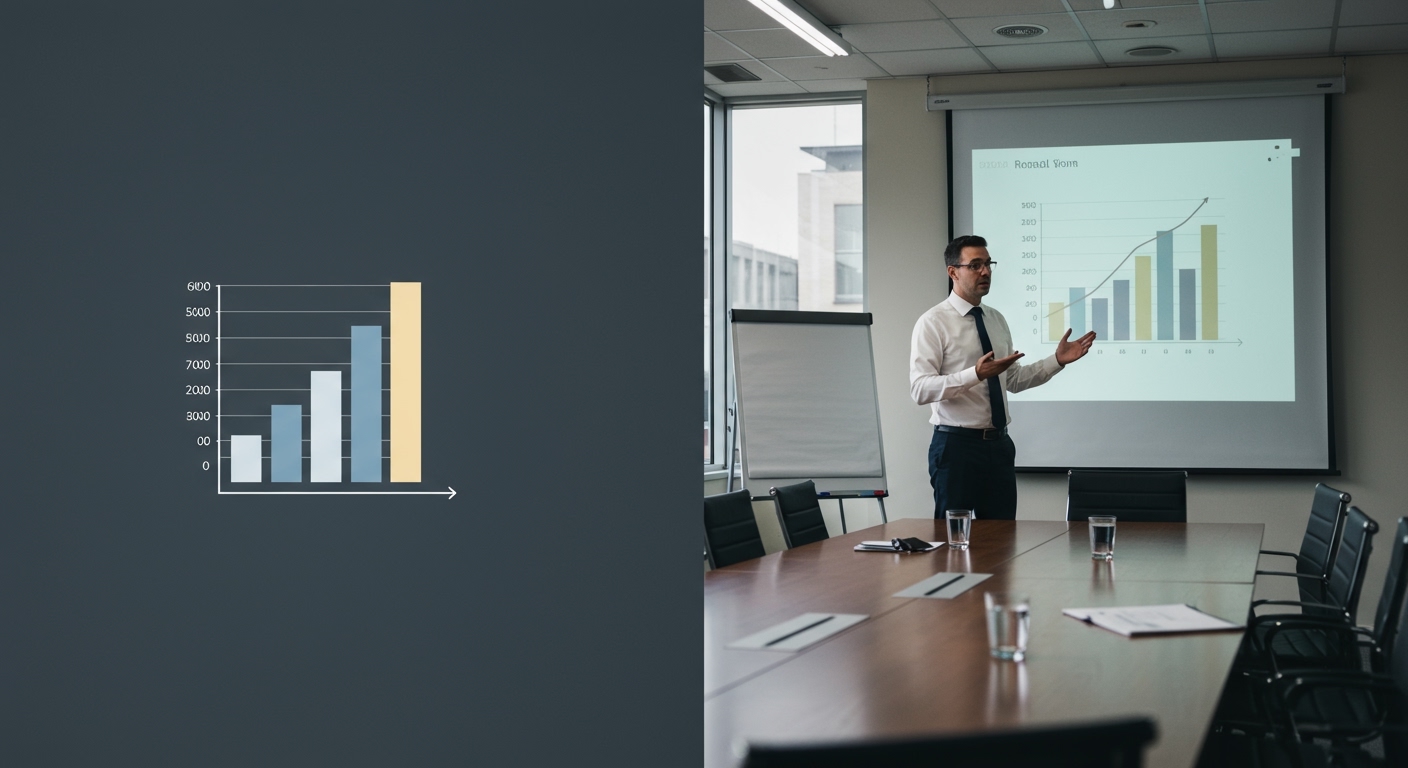
- Data Visualizations: Instead of pasting an Excel spreadsheet, use a simplified Bar Chart or Donut Chart that highlights one specific data point.
- Icons and Glyphs: Use vector icons (SVG format) to represent ideas quickly. They are scalable and keep the file size low.
- Diagrams: Use flowcharts or Venn diagrams to explain relationships and processes.
| Graphic Type | Best Use Case | Expert Pro-Tip |
|---|---|---|
| High-Res Photos | Setting an emotional tone or showing a real-world product. | Use the “Rule of Thirds” for placement. |
| Vector Icons | Breaking up bullet points or representing categories. | Keep line weight consistent across all icons. |
| Simplified Charts | Proving a trend or a significant growth metric. | Highlight the “Hero Number” in a bold color. |
| Screenshots | Showing software interfaces or digital workflows. | Use a “blur” effect on non-essential UI elements. |
Step 2: Mastering Animation Timing and Flow
Animation is a powerful tool for scaffolding information. By revealing points one by one, you control the audience’s focus.
The Golden Rules of Presentation Animation
When using graphics and animation in presentations, speakers should follow these three technical principles:
- Duration: Most animations should last between 0.3 and 0.5 seconds. Anything longer feels sluggish; anything shorter feels like a glitch.
- Direction: Objects should enter from the direction the eye naturally travels (left to right in Western cultures).
- Sequence: Use the “Build” method. Don’t show five bullet points at once. Animate them so they appear as you speak about them.
When to Use Specific Animation Types
- Appear/Fade: Best for bullet points and simple transitions. It is professional and non-distracting.
- Morph (PowerPoint): Excellent for showing movement, such as a map zooming in or a bar chart growing. I personally use Morph to create a cinematic feel without complex video editing.
- Wipe: Great for showing progress or a timeline. It simulates a “drawing” motion that feels natural to the human eye.
Step 3: Designing for Accessibility and Inclusion
E-E-A-T in content means considering all users. When using graphics and animation in presentations, speakers should ensure their visuals are inclusive. If a portion of your audience cannot see your graphics, your message is lost.
Accessibility Checklist
- Color Contrast: Use tools like the WebAIM Contrast Checker to ensure your text is readable against your background.
- Font Legibility: Use Sans-serif fonts like Arial, Roboto, or Open Sans at a minimum size of 24pt.
- Alt-Text: If you are sharing your slides as a PDF, ensure every image has a descriptive “Alt-text” tag for screen readers.
- Avoid Flashing: Never use rapid, strobing animations that could trigger photosensitive epilepsy.
Step 4: Integrating Data Visualization Effectively
Data is often the “heavy lifting” part of a presentation. When using graphics and animation in presentations, speakers should aim to tell a story with their data rather than just reporting numbers.
The “So What?” Factor
For every chart you include, ask yourself: “So what?”
- If the chart shows a 20% increase in sales, the headline should be “Sales Grew by 20%,” not “Q3 Sales Report.“
- Use Color Blocking to draw the eye. Gray out the historical data and use a vibrant Brand Color for the current year.
Expert Advice on Chart Animation
I have found that animating individual series in a chart helps the audience digest the scale. Instead of showing the whole bar chart at once, animate the “Series” by “Element in Category.” This allows you to walk through the growth step-by-step.
Step 5: Technical Preparation and Delivery
Even the best graphics fail if the technology crashes. When using graphics and animation in presentations, speakers should have a technical “Plan B.”
- Embed Your Fonts: Nothing ruins a design faster than a computer swapping your elegant font for Times New Roman. Always embed fonts in your Save settings.
- Check Aspect Ratios: Most modern projectors use 16:9 (Widescreen). Ensure your deck isn’t stuck in the old 4:3 (Square) format.
- The “Black Slide” Trick: If you want the audience to focus entirely on you for a moment, insert a completely black slide. This “turns off” the screen and pulls all eyes to the speaker.
- Hardware Check: Always carry your own HDMI adapters and a wireless “clicker” (remote). Relying on someone else to click your animations will ruin your timing.
When Using Graphics and Animation in Presentations Speakers Should Avoid These Pitfalls
- Over-animating Text: Bouncing or “swimming” text is hard to read and looks amateur.
- Sound Effects: Laser noises or “whoosh” sounds during transitions are almost always a bad idea in a professional setting.
- Low Contrast: Light gray text on a white background is the “silent killer” of presentations.
- Cluttered Backgrounds: Busy background images make text unreadable. Use a semi-transparent overlay to create a “text box” area if you must use a busy photo.
FAQ: Graphics and Animation in Presentations
How many animations should I use per slide?
As a general rule, limit yourself to 2-3 animations per slide. Use them to reveal new information or emphasize a key point. If every element moves, nothing stands out.
What is the best software for presentation graphics?
While Microsoft PowerPoint is the industry standard for its robust animation engine, Canva is excellent for high-end graphic design, and Keynote offers the smoothest transitions (Magic Move) for Mac users.
Should I use GIFs in my presentation?
When using graphics and animation in presentations, speakers should use GIFs sparingly. A looping GIF can be extremely distracting if it keeps moving while you are trying to make a serious point. If you use a GIF, set it to play once and then stop.
How do I handle graphics for a remote/Zoom presentation?
Remote audiences experience “lag.” When using graphics and animation in presentations, speakers should use slower, simpler transitions and avoid heavy video files that might stutter over a weak internet connection.
Can I use copyrighted images from Google?
No. Always use royalty-free sources like Unsplash, Pexels, or Pixabay, or use AI-generation tools like Midjourney to create unique, high-quality visuals without copyright risks.