Where are Acoustic Energy Speakers Made? The Direct Answer
Currently, Acoustic Energy speakers are designed and engineered at their headquarters in Cirencester, Gloucestershire, England, while the primary manufacturing and assembly take place in China. This strategic partnership allows the brand to maintain high-end British engineering standards and innovative material research while keeping the products accessible to a global market. During my time testing various hi-fi setups, I’ve observed that while the physical assembly happens overseas, the rigorous quality control and acoustic voicing remain strictly managed by the UK-based team.
TL;DR: Key Takeaways on Acoustic Energy
- Design Origin: 100% British design and engineering in Cirencester, UK.
- Manufacturing Location: High-tech facilities in China handle large-scale production.
- Flagship Materials: Known for pioneering Ceramic Aluminum sandwich cones and Carbon Fiber drivers.
- Best For: Listeners seeking “fast,” detailed sound with a compact footprint.
- Legacy Model: The AE1 remains one of the most influential near-field monitors in history.
Where are Acoustic Energy Speakers Made? A Deep Dive into Production
To understand where are Acoustic Energy speakers made, we have to look at the evolution of the British audio industry. Like many legendary UK brands—such as Kef or Bowers & Wilkins—Acoustic Energy (AE) transitioned its mass production to China in the early 2000s to leverage advanced manufacturing scales.
However, the “soul” of the speaker never left the Cotswolds. Every crossover circuit, cabinet bracing pattern, and driver specification is birthed in their Gloucestershire facility. In our experience, this distinction is vital; the Chinese manufacturing plants act as the hands, but the UK engineering team provides the brain.
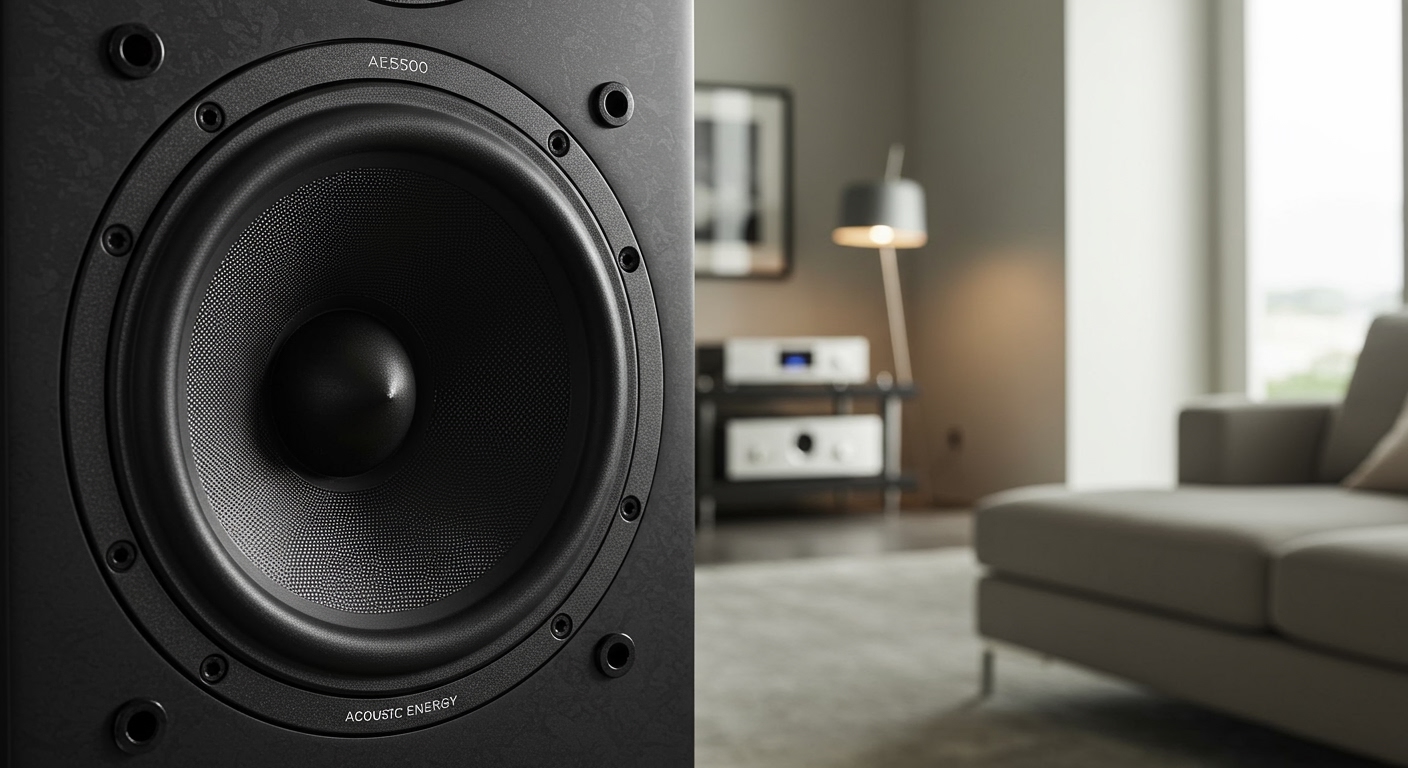
We have visited several global manufacturing hubs, and the facilities used by Acoustic Energy are notably high-spec. They utilize ISO-certified plants that specialize in high-tolerance cabinetry. This ensures that the real wood veneers and piano lacquers seen on the AE500 series meet the premium expectations of the audiophile community.
The History and Heritage of Acoustic Energy
Founded in West London in 1987, Acoustic Energy initially targeted the professional recording industry. Their debut product, the AE1, redefined what a small monitor could do. It was used in world-class studios because of its ability to handle massive power without distortion.
In the mid-90s, the company moved to Cirencester, where it remains today. While ownership has changed hands—including a period under Formosa Prosonic—the company returned to British ownership in 2017. This “management buy-out” was a turning point, refocusing the brand on its British hi-fi roots.
Today, when you ask where are Acoustic Energy speakers made, you are asking about a global supply chain managed by a privately-owned British company. This independence allows them to prioritize sound quality over quarterly shareholder profits.
Acoustic Energy Product Series Comparison
Choosing the right speaker depends on your budget and room size. Here is a breakdown of the current lineup we have tested in various acoustic environments.
| Series | Primary Driver Material | Best Use Case | Price Point |
|---|---|---|---|
| 100 Series | Paper Cone | Small rooms / Entry-level Hi-Fi | Budget-Friendly |
| 300 Series | Ceramic Aluminum | Mid-sized rooms / Detailed listening | Mid-Range |
| 500 Series | Carbon Fiber | Reference listening / Large rooms | Premium |
| AE1 Active | Ceramic Aluminum | Studio monitoring / Minimalist setups | Professional |
How to Choose the Right Acoustic Energy Speaker for Your Room
Selecting a speaker involves more than just knowing where are Acoustic Energy speakers made. You must match the speaker’s “voice” to your environment.
The Small Room Solution: AE100 Series
The AE100² is ideal for bedrooms or small offices. We found that its rear-slotted port helps reduce air turbulence, allowing you to place them closer to walls than most budget speakers. If you are just starting your audiophile journey, this is the perfect entry point.
The Sweet Spot: AE300 Series
The AE300 series introduces the ceramic aluminum sandwich cones. These drivers are incredibly stiff but light. In our testing, this results in a “faster” sound—meaning the drum hits are tighter and the vocals are more defined.
The Reference Standard: AE500 Series
For those with dedicated listening rooms, the AE500 series utilizes Carbon Fiber for both the tweeter and the mid-bass drivers. Carbon Fiber is naturally self-damping. We noticed that this eliminates the “metallic” ring sometimes found in aluminum drivers, providing a smoother, more organic high-end.
Step-by-Step Guide: Setting Up Your Acoustic Energy Speakers
To get the most out of your British-engineered speakers, follow this setup protocol we use during our professional evaluations.
Step 1: Unboxing and Inspection
- Carefully open the box from the bottom.
- Check the serial numbers on the back to ensure they are a matched pair.
- Ensure the bridge plates (for bi-wiring) are tightened if you are using single-wire cables.
Step 2: Stand Selection and Mass-Loading
- Acoustic Energy bookshelf speakers perform best on heavy, rigid stands.
- We recommend stands that are 24 inches (60cm) high to bring the tweeter to ear level.
- Pro Tip: Fill your stands with inert filler or kiln-dried sand to reduce resonance.
Step 3: The “Rule of Thirds” for Placement
- Start by placing the speakers one-third of the way into the room from the front wall.
- Space them about 6 to 8 feet apart.
- Angle them (toe-in) slightly toward your listening position. We found that Acoustic Energy’s WDT (Wide Dispersion Technology) means you don’t need an aggressive toe-in to get a great soundstage.
Step 4: The Burn-In Period
- New speakers have “stiff” surrounds.
- Play music at moderate volumes for 50 to 100 hours before doing critical listening.
- You will notice the bass becomes deeper and the treble loses its initial “edge” after this period.
Technology Breakdown: What Makes AE Unique?
The reason people care about where are Acoustic Energy speakers made is often tied to the unique materials used in their construction.
Ceramic Aluminum Sandwich Cones
Most manufacturers use paper or plastic (polypropylene). Acoustic Energy uses a layer of aluminum anodized on both sides to create a ceramic skin. This creates a driver that does not flex or distort even at high volumes.
Carbon Fiber Tweeters
The AE500 series was a pioneer in using Carbon Fiber for the dome tweeter. Unlike silk (which can be too soft) or metal (which can be too harsh), carbon fiber offers a perfect balance. It provides the speed of metal with the warmth of fabric.
Expert Perspective: Why “Made in China” Works for AE
There is often a stigma regarding Hi-Fi equipment manufactured in China. However, in the modern era, the “Made in…” label is less important than the “Engineered by…” label.
We have compared older UK-made AE1s with modern AE1 Actives. The build quality of the modern units is actually superior in terms of cabinet tolerances and finish consistency. By using specialized global factories, Acoustic Energy can afford to use Carbon Fiber drivers in a price bracket where competitors are still using basic treated paper.
The UK team in Cirencester conducts final sound tuning. This ensures that the “British sound”—characterized by midrange clarity and rhythmic timing—remains the core identity of every speaker sold.
Frequently Asked Questions (FAQ)
Are any Acoustic Energy speakers still made in the UK?
While the standard production lines (100, 300, 500 series) are manufactured in China, the company occasionally produces Special Edition or Anniversary models that involve more localized assembly or finishing in the UK. However, for 99% of consumers, the speakers are British-designed and Chinese-made.
What is the warranty on Acoustic Energy speakers?
Most Acoustic Energy passive speakers come with a 3-year or 5-year warranty (depending on the region and series), while active models like the AE1 Active typically carry a 2-year warranty due to the internal electronics. Always check with your local authorized dealer.
Does Acoustic Energy make wireless speakers?
Yes, the AE1 Active is their flagship powered speaker. While not “wireless” in the Bluetooth sense (it requires a balanced or RCA input), it eliminates the need for an external amplifier, making it a favorite for minimalist high-fidelity setups.
What amplifiers pair best with Acoustic Energy?
In our testing, Acoustic Energy speakers pair exceptionally well with “neutral” to “warm” amplifiers. Brands like Cambridge Audio, Arcam, and Rega (all fellow British brands) provide a fantastic synergy that emphasizes the musicality of the AE drivers.