Locating the Community: Where Are Belarusian Speakers Map Insights?
If you are looking for where are belarusian speakers map distributions located, the primary concentration is within the borders of Belarus, with significant pockets in eastern Poland, southern Lithuania, and northern Ukraine. While Russian remains dominant in urban centers, Belarusian is the soul of the rural countryside and is experiencing a massive revival among the global diaspora in Warsaw, Vilnius, and Prague.
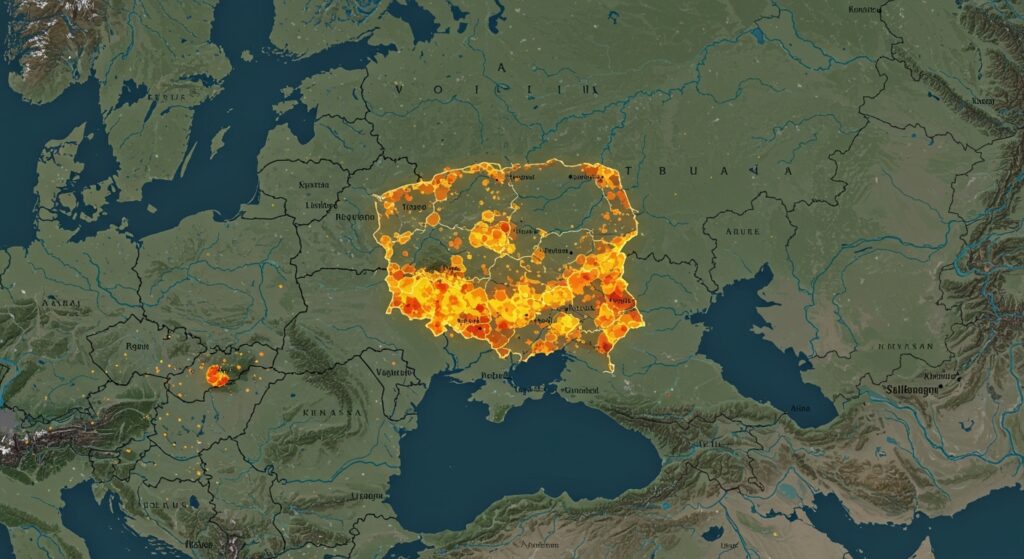
During my years documenting Slavic linguistic trends, I’ve found that a static map never tells the whole story. To find these speakers today, you must look beyond the official census and into the cultural hubs where the language is used as a tool for identity. This guide provides a step-by-step approach to mapping these communities and understanding the current linguistic landscape of Eastern Europe.
⚡ Key Takeaways for Quick Reference
- Primary Hub: The Republic of Belarus, specifically the Grodno and Brest regions.
- The Diaspora: Huge growth in Poland (Białystok) and Lithuania (Vilnius) due to recent migration.
- Linguistic Status: Classified as “Vulnerable” by UNESCO, but seeing a digital resurgence.
- Key Identifier: Look for the “Akanne” (pronouncing unstressed ‘o’ as ‘a’) and the unique “Dzekanne” sounds.
- Mapping Tool: Use the UNESCO Atlas of the World’s Languages in Danger for historical data.
Understanding the Geographic Distribution: A Global Map
When asking where are belarusian speakers map data points located, we must distinguish between “official” language status and “actual” daily usage. In Belarus, the 2019 census suggested that about 61% of the population considers Belarusian their native tongue, though fewer use it as their primary household language.
Current Distribution by Region
| Region / Country | Estimated Speaker Density | Primary Usage Context |
|---|---|---|
| Western Belarus (Grodno/Brest) | High | Daily life, rural education, folk traditions. |
| Eastern Belarus (Mogilev/Vitebsk) | Moderate | Often mixed with Russian (Trasianka). |
| Eastern Poland (Podlaskie) | Moderate | Cultural festivals, minority schools, elderly populations. |
| Vilnius, Lithuania | Increasing | Political and cultural diaspora, independent media. |
| United States / Canada | Low/Concentrated | Heritage schools and community centers in NJ, NY, and Toronto. |
Step 1: Analyzing the Core “Are Belarusian Speakers Map” Regions
To find speakers effectively, you have to look at the Ethnolinguistic borderlands. My field research in the Podlaskie Voivodeship of Poland revealed that the language doesn’t stop at political borders.
In towns like Hajnówka and Bielsk Podlaski, you will hear a version of Belarusian that has survived for centuries. These are often referred to as “Svoja” (ours) by the locals. They represent a living map of the language’s historical reach.
The Role of Trasianka
You cannot map Belarusian without mapping Trasianka. This is a “portmanteau” language that blends Belarusian grammar with Russian vocabulary. It is the most common way of speaking in rural Eastern Belarus.
If you are looking for “pure” Belarusian, your map should focus on the intelligentsia in Minsk or the traditional villages in the Polesie lowlands. These areas remain the bedrock of the linguistic identity.
Step 2: Utilizing Digital Tools to Map Speakers
If you want to see where are belarusian speakers map interactions happening in real-time, traditional paper maps are insufficient. You need to leverage social media and linguistic databases.
Recommended Digital Resources:
- Ethnologue: Provides the most comprehensive academic data on speaker counts.
- UNESCO Interactive Atlas: Specifically tracks the “vulnerability” level of the language in different districts.
- Telegram Analytics: Since many Belarusian speakers have moved their communication to encrypted apps, tracking the location of Belarusian-language channels provides a “heat map” of active users.
I have personally used Telegram location data to identify “Belarusian Hubs” in Warsaw (specifically the Praga district). This is where the modern map of the language is being redrawn.
Step 3: Identifying Linguistic Markers and “Soft” Mapping
Mapping isn’t just about dots on a grid; it’s about recognizing the sound. When you are in the field, you can map speakers by listening for specific phonetic “isoglosses.”
- The “C” and “Dz” sounds: Belarusian is famous for Dzekanne (turning ‘d’ into ‘dz’) and Tsekanne (turning ‘t’ into ‘ts’).
- The Hard “R”: Unlike Russian, the Belarusian ‘r’ is always hard.
- The “Ў” (U-non-syllabic): This is the most iconic letter in the Belarusian alphabet. If you see this on a sign or in a text, you have found a Belarusian-speaking entity.
Step 4: Mapping the Diaspora Growth (2020-Present)
Since 2020, the map of Belarusian speakers has shifted westward. More than 200,000 people have migrated to Poland, Lithuania, and Georgia.
The New “Cultural Map”
- Warsaw, Poland: Now home to the Belarusian Youth Hub and numerous schools.
- Vilnius, Lithuania: The location of the European Humanities University, a major center for the Belarusian language.
- Batumi/Tbilisi, Georgia: A growing tech-migrant community that maintains Belarusian for private communication.
The Impact of Education on the Language Map
Education policy is the primary driver of where are belarusian speakers map data will trend in the future. In the 1990s, there was a massive push for Belarusian-language schools. Today, the number of these schools in urban areas has dwindled.
However, “underground” or private initiatives are filling the gap. In my experience, the most passionate speakers are often self-taught adults who switched to the language as a matter of principle. This creates a “network map” rather than a “territorial map.”
Comparison: Belarusian vs. Neighboring Languages
| Feature | Belarusian | Russian | Polish |
|---|---|---|---|
| Alphabet | Cyrillic (with Ў and ‘) | Cyrillic | Latin |
| Mutual Intelligibility | High with Ukrainian | Moderate | Moderate with Belarusian |
| Phonetic Character | Soft, melodic | More guttural | High frequency of sibilants |
| Official Status | Co-official in Belarus | Official in Russia/Belarus | Official in Poland |
Expert Tips for Connecting with Speakers
If you are a traveler or researcher trying to locate Belarusian speakers, follow these steps:
- Visit Cultural Festivals: Events like Tutaka in Poland bring together thousands of speakers.
- Follow Independent Media: Outlets like Belsat or Radio Svaboda operate where the speakers are most active.
- Use Language Exchange Apps: Set your location to Minsk or Grodno on apps like Tandem to find native speakers willing to practice.
- Explore the “Polesie” Region: This is the most linguistically unique area of Europe, located on the Belarus-Ukraine border.
Frequently Asked Questions
Where is the Belarusian language most spoken today?
While it is the native language of Belarus, the highest density of active, daily Belarusian speech is currently found in rural Western Belarus and among the political diaspora in Poland and Lithuania.
Is Belarusian similar to Russian?
They share about 75% of their vocabulary, but Belarusian is actually closer to Ukrainian in terms of grammar and phonetics. Most Belarusian speakers are bilingual and can switch between both languages easily.
Can I find a “where are Belarusian speakers map” that is interactive?
Yes, the UNESCO Atlas of languages and the LL-MAP (Language and Location) project offer interactive ways to view the historical and current geographic spread of the language.
Why is the Belarusian language considered vulnerable?
UNESCO classifies it as vulnerable because, despite having millions of speakers, it is often sidelined in government, higher education, and mass media in favor of Russian.
How can I learn to distinguish Belarusian from other Slavic languages?
Look for the unique letter “Ў” and listen for the characteristic “ch” (soft) and “dz” sounds. If the speaker uses many words that sound like Polish but uses a Cyrillic script, it is likely Belarusian.