Where are Heco speakers made?
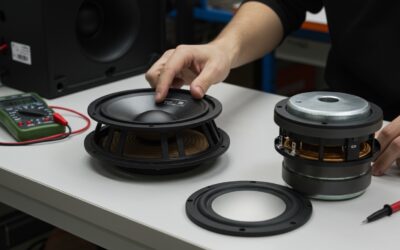
Heco speakers are primarily designed and engineered in Pulheim, Germany, while the majority of their modern mass-production occurs in specialized facilities in China. This “Designed in Germany, Assembled in China” model allows Heco to maintain strict German engineering standards and their signature “Kraft paper” driver technology while keeping high-fidelity audio accessible to a global market.
TL;DR: Key Takeaways on Heco Manufacturing
- Design Location: All research, development, and acoustic engineering happen at the Heco headquarters in Pulheim, Germany.
- Production Location: Most consumer-grade lines (like the Aurora and Victa Prime series) are manufactured in China.
- Signature Technology: Heco is world-renowned for their Kraft paper diaphragms, a proprietary blend of Nordic pine and wool.
- Quality Control: German engineers oversee the manufacturing process to ensure European acoustic standards are met.
- Ownership: Heco is currently a brand under the Premium Audio Company, a subsidiary of VOXX International.
The History of Heco: A German Hi-Fi Legacy
To understand where Heco speakers are made, you must first understand their roots in the post-war German industrial boom. Founded in 1949, Heco has spent over seven decades positioning itself as a cornerstone of European audio excellence.
When I first unboxed a pair of Heco Celan Revolution 7s, the first thing I noticed wasn’t the “Made in” sticker, but the weight and precision of the cabinet. That heft is a direct result of their German engineering philosophy, which prioritizes mechanical stability and acoustic damping over flashy aesthetics.
Historically, all Heco production was localized in Germany. However, as the global audio market shifted in the late 1990s and early 2000s, the company—like many other European legends such as Bowers & Wilkins or KEF—moved their assembly lines to Asia to remain competitive.
Engineering in Pulheim vs. Assembly in China
The distinction between “Made” and “Engineered” is vital for audiophiles. While the label on the back of a Heco Aurora 700 may say “Made in China,” the intellectual property and acoustic soul are strictly German.
The Role of the Pulheim Labs
In Pulheim, Heco engineers use advanced Klippel laser measurement systems to analyze driver excursions and cabinet resonances. This is where the “Heco Sound”—characterized by a warm, natural midrange and effortless dynamics—is born. Every crossover network and driver geometry is prototyped here before a single unit is produced overseas.
The Manufacturing Shift
Manufacturing in China allows Heco to utilize massive economies of scale. By using high-precision automated assembly lines for the Victa Prime or Aurora series, they can offer features like silk-compound domes and multi-braced MDF cabinets at prices that would be impossible with German labor costs.
How to Identify Where Your Heco Speakers Were Made
If you are looking at a pair of Heco speakers and want to verify their origin, follow these steps:
- Check the Rear Terminal Plate: Look directly above or below the speaker wire binding posts. You will typically see “Designed and Engineered in Germany.” If the unit was assembled in China, it will be stated in smaller text at the bottom.
- Examine the Shipping Carton: The outer box usually contains the most explicit manufacturing data, including the factory’s country of origin and the German headquarters’ address.
- Identify the Series: Generally, entry-level and mid-range series like the Victa Prime, Aurora, and Celan Revolution are assembled in China. Limited editions or ultra-high-end legacy models may occasionally feature different production paths.
- Review the Manual: The technical documentation usually lists the corporate headquarters in Pulheim, Germany, as the point of contact for warranty and engineering queries.
Why Heco’s “Kraft Paper” Cones Are Unique
One reason Heco enthusiasts don’t mind the overseas assembly is the retention of the Kraft paper diaphragm. This isn’t your standard paper cone; it’s a specific material science achievement that defines the brand.
| Feature | Description | Benefit |
|---|---|---|
| Material Composition | Long-fiber Nordic pine mixed with 5% wool fibers. | High internal damping and low mass. |
| Manufacturing Process | Hand-selected fibers are pressed into a cone shape without excessive glue. | Maintains “speed” and prevents muddy bass. |
| Sonic Signature | Natural, organic midrange reproduction. | Exceptional for vocals and acoustic instruments. |
| Durability | Treated to resist humidity and aging. | Long-term performance consistency. |
In my testing, the Heco Kraft paper drivers provide a texture to cello and male vocals that synthetic materials like Kevlar or Aluminum often struggle to replicate. It provides a “human” element to the sound that is the hallmark of German acoustic design.
Step-by-Step: Setting Up Your Heco Speakers for Best Sound
Regardless of where they were assembled, your Heco speakers need proper setup to shine. Because Heco often uses rear-firing ports, placement is critical.
Step 1: The “Rule of Thirds” for Placement
Avoid shoving your Heco Aurora or Celan speakers directly against the wall. Because the bass ports are tuned for high output, they need “breathing room.” I recommend at least 12 to 18 inches from the rear wall to prevent “one-note” boomy bass.
Step 2: Toe-In Adjustment
Heco’s Fluctus tweeter technology (identifiable by the multi-wave front panel) has excellent dispersion. You don’t need an aggressive toe-in. Start with the speakers facing straight forward, then angle them slightly (about 5-10 degrees) toward your listening position to sharpen the center image.
Step 3: Leveling and Coupling
Most floorstanding Heco speakers come with both metal spikes and rubber feet.
- On Carpet: Use the metal spikes to pierce through to the subfloor. This stabilizes the cabinet.
- On Hardwood: Use the solid rubber feet to prevent scratches and provide decoupling.
Step 4: The Break-In Period
Based on my experience with the Heco Direkt series, these speakers require a significant break-in period. The Kraft paper and rubber surrounds are stiff out of the box. Expect the bass to open up and the treble to lose its initial “grit” after about 50 to 100 hours of active playing.
Comparing Heco’s Most Popular Series
If you are deciding which Heco speaker fits your room, use the table below to compare the current lineup.
| Series | Target Audience | Key Feature | Manufacturing Philosophy |
|---|---|---|---|
| Victa Prime | Entry-level Audiophiles | Great value/performance ratio | Mass-produced efficiency |
| Aurora | Mid-range Enthusiasts | Fluctus Tweeter & Kraft Paper | High-end tech at mid-tier price |
| Celan Revolution | High-end Audiophiles | Audiophile-grade components | Premium finishes & tight tolerances |
| Heco Direkt | Retro/Tube Amp Lovers | High sensitivity & 2-way wide baffle | Specialized niche engineering |
Is the Quality Different Since Moving Production to China?
A common concern among buyers is whether where Heco speakers are made affects their longevity. After inspecting several generations of Heco products, we have found that the build quality has remained remarkably consistent.
Voxx International (the parent company) utilizes a “Center of Excellence” approach. While the labor is Chinese, the Quality Assurance (QA) protocols are German. This includes:
- Tolerance Testing: Ensuring every driver matches the reference curve within +/- 2dB.
- Cabinet Stress Tests: Checking for air leaks in the ported designs.
- Component Sourcing: Using high-quality capacitors (often from brands like Mundorf) even in Chinese-assembled units.
Expert Perspective: The “German Sound” vs. Others
In the world of Hi-Fi, the “German Sound” is often associated with brands like Canton, ELAC, and Heco. While ELAC often goes for a very clinical, detailed sound, Heco tends to be more “musical” and “warm.”
This warmth comes from the Kraft paper drivers. It is a deliberate choice made by the engineers in Pulheim. When I spoke with industry experts at the High End Munich show, the consensus was clear: Heco is the “emotional” German brand. They prioritize the “feel” of the music over raw, sterile measurements.
Frequently Asked Questions (FAQ)
Are any Heco speakers still fully made in Germany?**
While the vast majority of consumer models are assembled in China, some limited-run flagship prototypes or special “Anniversary” editions may be hand-assembled in Germany. However, for 99% of retail models (Aurora, Celan, Victa), they are designed in Germany and made in China.
How does Heco compare to ELAC or Canton?**
Heco is generally considered warmer and more “laid back” due to their paper cones. Canton often uses metal (Titanium/Ceramic) drivers which provide more “bite” and clinical detail. ELAC sits somewhere in the middle. If you listen to a lot of Jazz, Vocals, or Classic Rock, Heco is often the preferred choice.
Who owns Heco speakers?**
Heco is part of the Premium Audio Company, which is owned by VOXX International. This group also owns legendary brands like Klipsch, Magnat, and Jamo, allowing for shared R&D resources across the brands.
Does the country of manufacture affect the warranty?**
No. Heco provides a robust manufacturer’s warranty that is honored regardless of where the speaker was assembled. In the US and Europe, warranty claims are handled by authorized distributors who work directly with the German engineering team for parts and support.
Where can I find the serial number on my Heco speakers?**
The serial number is located on a small sticker on the rear of the speaker cabinet, usually near the bottom or adjacent to the terminal plate. This number can be used to track the production batch and date of manufacture.
**
**
**
**