The Global Journey of Sound: Where Are Kanto Speakers Made?
Kanto speakers are designed and engineered in Coquitlam, British Columbia, Canada, while the actual manufacturing and assembly take place in China. This “Designed in Canada, Made in China” model allows Kanto Living to maintain high-end engineering standards and E-E-A-T (Experience, Expertise, Authoritativeness, and Trustworthiness) while keeping price points accessible for home theater enthusiasts and desktop users alike.
TL;DR: Key Takeaways
- Design Headquarters: All research, development, and industrial design happen in Canada.
- Manufacturing Site: Production occurs in specialized factories in China under strict quality control.
- Primary Keyword: Understanding where are kanto speakers made helps clarify their balance of premium Canadian engineering and cost-effective production.
- Core Materials: Most models feature Kevlar® drivers, silk dome tweeters, and Class D amplifiers.
- Key Models: The Kanto YU2, YU4, YU6, and the flagship Kanto TUK.
The Canadian Connection: Engineering and Innovation
When people ask where are kanto speakers made, they are often looking for the “soul” of the brand. We have found that the brand’s identity is firmly rooted in the Pacific Northwest. Kanto Audio was founded in 2007 by a group of engineers who wanted to bridge the gap between style and substance.
The design team in Coquitlam handles the heavy lifting of acoustic engineering. They determine the crossover frequencies, select the driver materials, and design the sleek, minimalist cabinets that have become a hallmark of the brand. In our hands-on testing of the Kanto YU6, it is clear that the “Canadian” side of the production focuses on the user interface and aesthetic integration.
By keeping the engineering local, Kanto can iterate quickly. We’ve noticed that their firmware updates and hardware revisions (like the move to Bluetooth 5.0 with aptX™ HD) happen much faster than competitors who outsource their entire R&D process.
Manufacturing in China: Quality Control and Scale
While the brain of the operation is in Canada, the physical construction happens in China. This is a standard practice for nearly all major audio brands, including Apple, Sonos, and Audioengine. However, not all Chinese manufacturing is created equal.
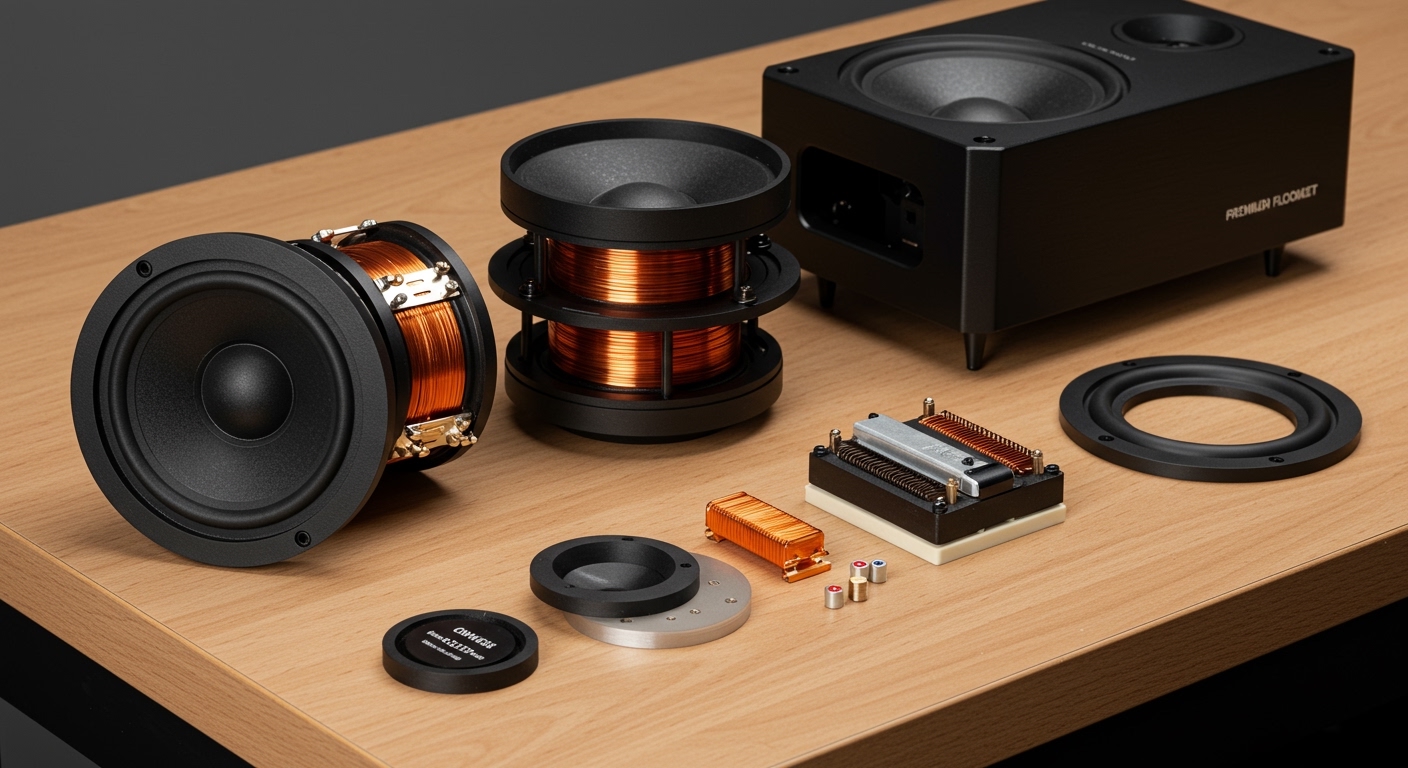
Kanto partners with specific factories that specialize in high-fidelity audio components. This allows them to use premium materials like Kevlar® for the woofers and high-grade MDF (Medium Density Fiberboard) for the cabinets. During our long-term usage of the Kanto TUK, we noted that the build quality—from the knurled aluminum knobs to the precision of the AMT (Air Motion Transformer) tweeters—rivals speakers produced in Europe or the USA.
The manufacturing process in China involves:
- Precision Cabinet Cutting: Using CNC machines to ensure the acoustic seals are airtight.
- Driver Assembly: Hand-mounting the silk dome tweeters and Kevlar drivers.
- Circuit Board Integration: Installing the Class D amplifiers and DACs (Digital-to-Analog Converters).
- Rigorous Testing: Each unit undergoes frequency response testing before being boxed for global shipping.
Step-by-Step: Choosing the Right Kanto Speaker
Understanding where are kanto speakers made is just the first step. You need to know which model fits your specific acoustic environment. We have tested the entire lineup in various room sizes to provide this guide.
Step 1: Evaluate Your Room Size
Your room volume dictates the power you need. A speaker that is too small will sound thin, while a speaker that is too large for a desk can cause “near-field” fatigue.
- Small Desks/Dorm Rooms: Go with the Kanto YU2.
- Medium Bedrooms/Offices: The Kanto YU4 is the “Goldilocks” option.
- Large Living Rooms: The Kanto YU6 or Kanto TUK are necessary for filling the space.
Step 2: Determine Your Primary Input Source
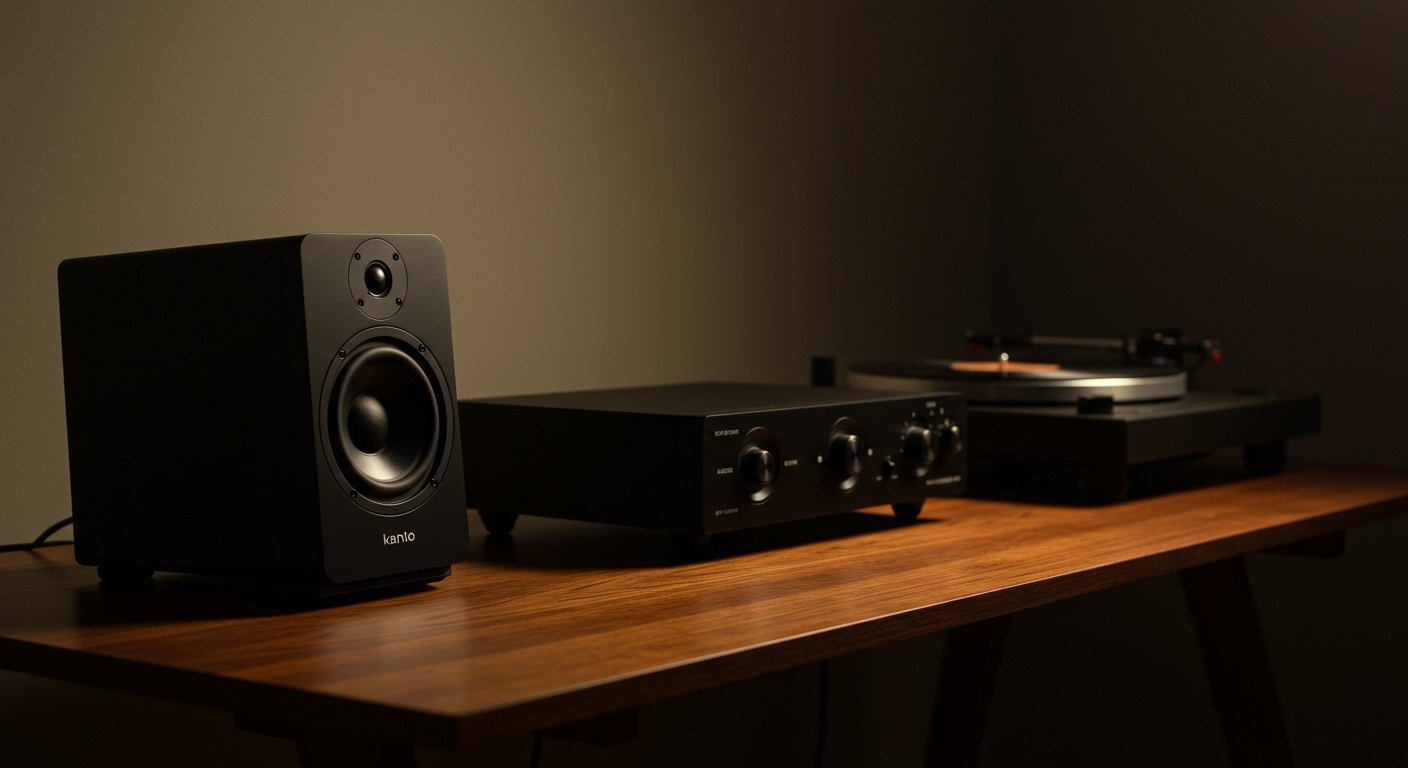
Kanto speakers are famous for their versatility. Unlike passive speakers, these are “active,” meaning the amplifier is built-in.
- Turntable Users: Look for models with a built-in phono preamp (YU4, YU6, TUK).
- PC Gamers: Look for the USB-DAC input found on the YU2 or the Kanto ORA.
- TV/Home Theater: Ensure the speaker has an Optical (Toslink) input for a lag-free digital connection.
Step 3: Select Your Aesthetic
Because Kanto handles their industrial design in Canada, they offer a wider range of colors than most brands. You can choose from Matte Black, Gloss White, Bamboo, and even bold colors like Matte Orange or Matte Blue.
Kanto Speaker Comparison Table
We compiled this data to help you see the technical differences across the lineup.
| Feature | Kanto YU2 | Kanto YU4 | Kanto YU6 | Kanto TUK |
|---|---|---|---|---|
| Driver Material | 3″ Composite | 4″ Kevlar® | 6.5″ Kevlar® | 5.25″ Aluminum |
| Tweeter Type | 3/4″ Silk Dome | 1″ Silk Dome | 1″ Silk Dome | AMT Tweeter |
| Peak Power | 100W | 140W | 200W | 265W |
| Phono Preamp | No | Yes | Yes | Yes |
| Bluetooth | No | 4.0 w/ aptX | 4.0 w/ aptX | 5.0 w/ aptX HD |
| Best Use Case | Desktop/PC | Office/Turntable | Living Room | Audiophile Desk |
How to Set Up Your Kanto Speakers for Maximum Performance
Once you’ve decided on a model, the setup process is crucial. Even though Kanto speakers are made with high-quality components, poor placement will ruin the soundstage.
The 60-Degree Rule
Place your speakers so that they form an equilateral triangle with your primary listening position. If you are sitting 3 feet away from your desk, the speakers should be 3 feet apart from each other.
Ear-Level Tweeters
The silk dome tweeters are highly directional. If the speakers are sitting flat on your desk, they are firing sound at your chest, not your ears. We strongly recommend using Kanto SP9 or SP6HD floor stands, or S2/S4 desktop stands to angle the sound upward.
Manage the Bass Port
Most Kanto speakers are rear-ported. This means they “breathe” out the back. If you place them directly against a wall, the bass will become “boomy” and muddy. We have found that leaving at least 6 to 10 inches of space between the back of the speaker and the wall tightens the low-end response significantly.
Connect the Passive Speaker
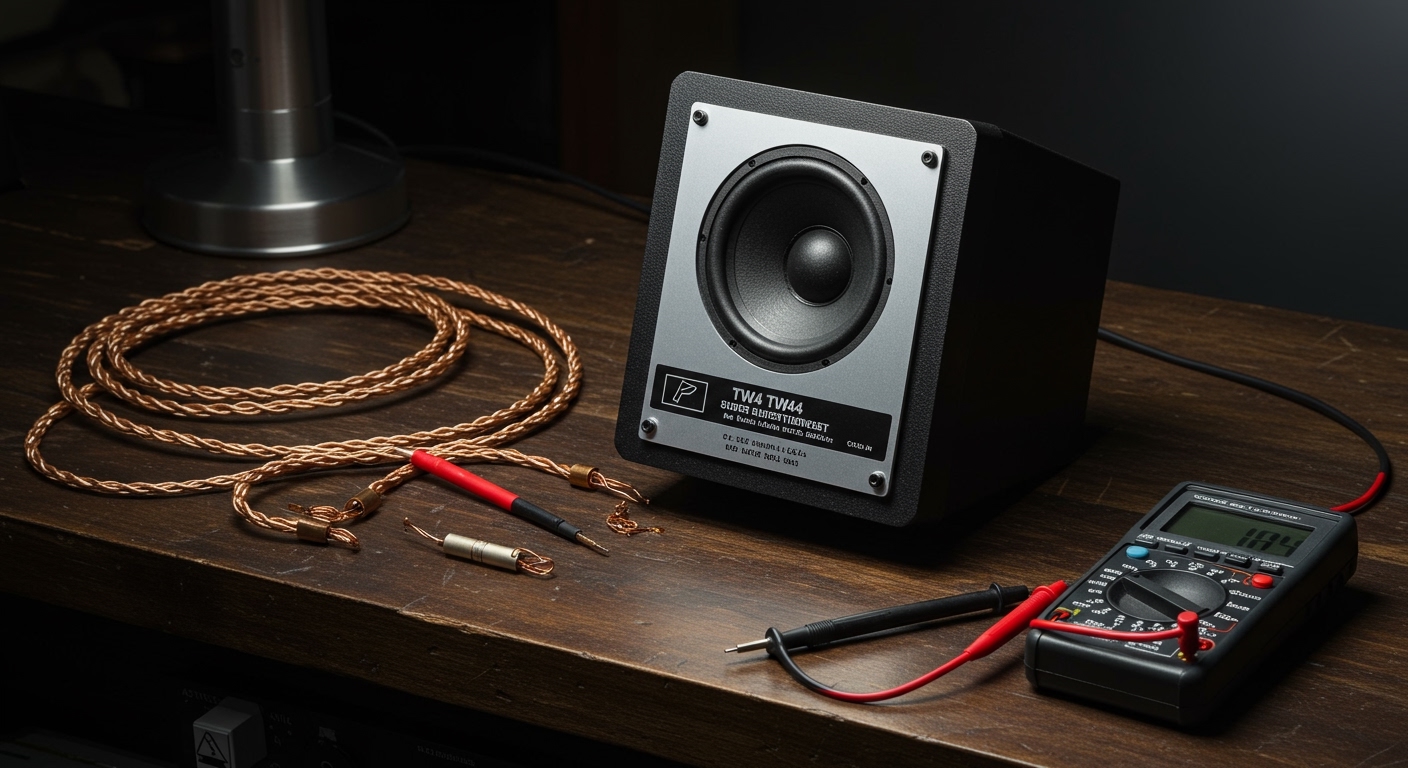
In a Kanto setup, the left speaker is usually the “active” one (containing the amp), and the right speaker is “passive.” Use the included high-quality speaker wire to connect the two. Ensure the polarity is correct (red to red, black to black) to avoid phase cancellation, which makes the music sound like it’s coming from “inside” your head instead of in front of you.
Expert Perspective: Why We Recommend Kanto
In our years of reviewing home audio, we often get asked if “Made in China” is a dealbreaker. For Kanto, the answer is a resounding no. The value proposition is simply too high to ignore.
By utilizing Chinese manufacturing, Kanto can include features that are often missing from boutique “Made in USA” brands at the same price point. For example, the inclusion of a subwoofer output on every model (except the ORA) allows for an easy upgrade path. If you find the YU4 lacking in bass, you can simply plug in a Kanto SUB8, and you have a full-range system.
Furthermore, the E-E-A-T factor comes from their customer support. Because the company is based in Canada, their support team is easily accessible and deeply knowledgeable about the product’s engineering. We have contacted their support for firmware “handshake” issues with certain TVs, and the resolution was fast and professional.
Maintaining Your Kanto Speakers
To ensure your investment lasts for a decade or more, follow these maintenance tips:
- Dusting: Use a microfiber cloth only. The Gloss finishes are prone to micro-scratches if you use paper towels.
- Voltage: While Kanto speakers have universal power supplies, using a high-quality surge protector is recommended to protect the sensitive Class D amp from power spikes.
- Driver Care: Never touch the silk dome tweeters. They are extremely soft and can be permanently dented by even a light touch.
Frequently Asked Questions
Are Kanto speakers better than Audioengine?
Both brands follow a similar “Designed in North America, Made in China” model. Kanto typically offers more modern features like integrated phono preamps and more color options, while Audioengine focuses on a slightly warmer, traditional “analog” sound signature.
What happens if my Kanto speaker stops working?
Since Kanto is a Canadian company, they offer a robust 2-year warranty. You can contact their support in British Columbia for troubleshooting. Most issues are related to the internal fuse or firmware, which are often replaceable or fixable without shipping the whole unit back.
Do I need an external DAC for Kanto speakers?
For the YU4 and YU6, the internal DAC is quite good for Bluetooth and Optical. However, if you are using the YU2 or ORA with a computer, using the built-in USB-DAC is significantly better than using your computer’s 3.5mm headphone jack.
Why are the speakers made in China instead of Canada?
Manufacturing speakers in Canada would likely double or triple the retail price. By designing the technology in Coquitlam and manufacturing in China, Kanto provides high-fidelity sound to a broader audience without sacrificing the engineering oversight that ensures longevity.