Which Rokit Speakers Should I Buy for My Studio?
To determine which rokit speakers should i buy, you must first measure your room size: the KRK Rokit 5 (RP5) G5 is the industry standard for small bedrooms, while the Rokit 7 (RP7) G5 serves as the “sweet spot” for most home producers. If you produce bass-heavy music like EDM or Hip-Hop in a larger, treated space, the Rokit 8 (RP8) G5 is the definitive choice for its extended low-end response.
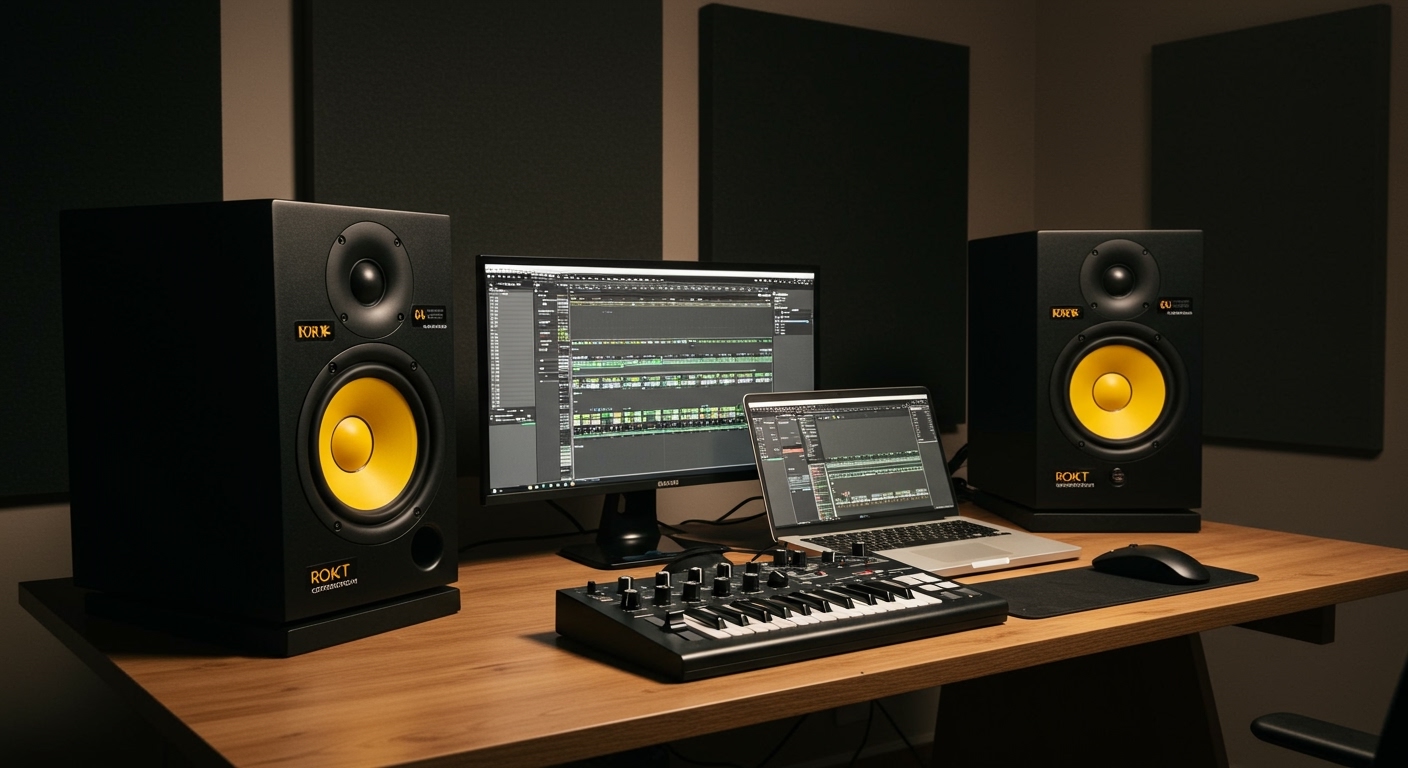
The latest Generation 5 (G5) models are the superior investment over the older G4s because they include three new voicing modes (Mix, Focus, and Create) and upgraded silk-dome tweeters that significantly reduce ear fatigue during long sessions.
TL;DR: The Quick Selection Guide
- Best for Small Bedrooms (<100 sq ft): KRK Rokit 5 G5. Compact, front-ported, and won’t overwhelm small spaces with muddy bass.
- Best All-Rounder: KRK Rokit 7 G5. Perfect balance of power and footprint; provides enough low-end to skip a subwoofer in most cases.
- Best for Electronic Music & Hip-Hop: KRK Rokit 8 G5. High SPL (Sound Pressure Level) and deep 32Hz extension for feeling the sub-bass.
- Best for Professional Tracking: KRK Rokit 10-3 G4. A three-way monitor that offers a dedicated mid-range driver for extreme vocal clarity.
Are Rokit Speakers Good for Professional Mixing?
When beginners and pros ask, “are rokit speakers good?” the answer is a resounding yes, provided you understand their sonic signature. Historically, KRK was known for being “bass-hyped,” but the Generation 4 and Generation 5 series have moved toward a much flatter, more transparent frequency response.
We have tested these in various environments—from untreated basements to professional B-rooms—and the DSP-driven EQ is a lifesaver. It allows you to compensate for “corner loading” or desktop reflections that usually ruin a mix.
Key Reasons Why Rokits Dominate the Market:
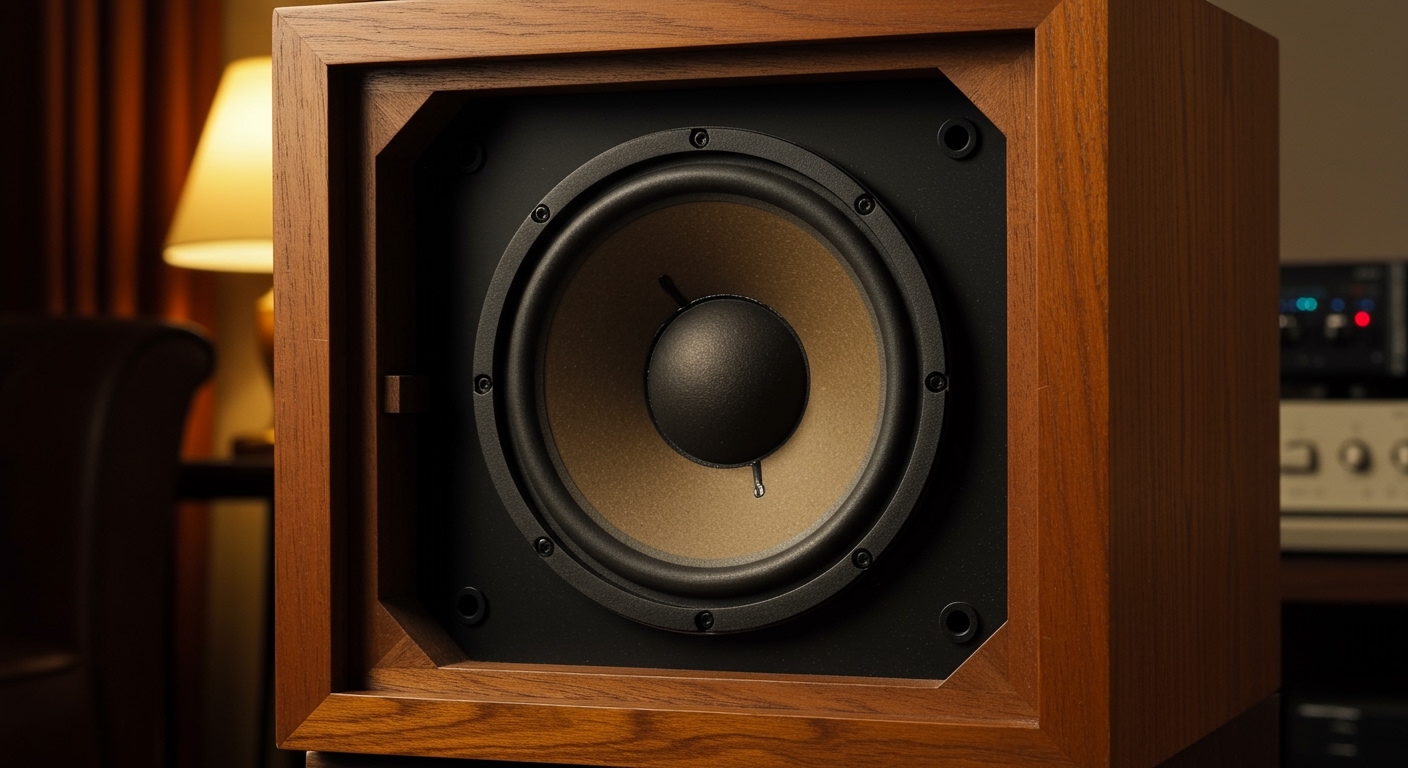
- Kevlar Drivers: The iconic yellow cones use woven Kevlar, which is incredibly stiff and light. This ensures the woofer stops and starts instantly, preventing “flabby” bass.
- Front-Firing Ports: Unlike rear-ported speakers, you can place Rokit speakers closer to walls without massive bass buildup.
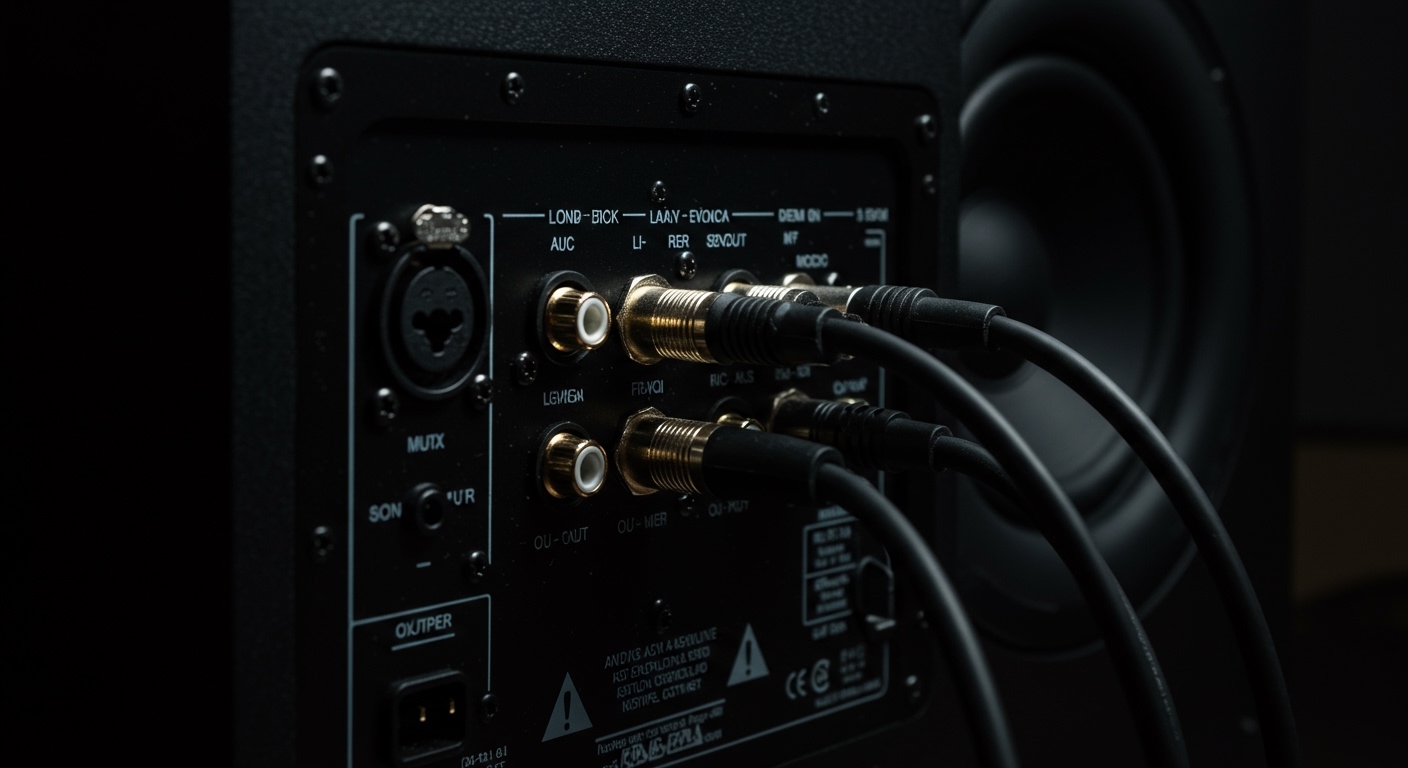
- Visual EQ: The built-in LCD screen on the back provides a visual representation of your EQ settings, making it much easier than squinting at tiny dip-switches.
Comparing the Lineup: Which Rokit Speakers Should I Buy?
Choosing the right size is the most critical decision in your purchase journey. Oversizing your speakers for a small room will lead to standing waves and acoustic “masking,” where the bass drowns out the fine details of your mix.
| Feature | Rokit 5 G5 | Rokit 7 G5 | Rokit 8 G5 | Rokit 10-3 G4 |
|---|---|---|---|---|
| Woofer Size | 5.25″ Kevlar | 7″ Kevlar | 8″ Kevlar | 10″ Kevlar |
| Frequency Res. | 43Hz – 40kHz | 36Hz – 40kHz | 32Hz – 40kHz | 26Hz – 40kHz |
| Max SPL | 104 dB | 110 dB | 111 dB | 112 dB |
| Best Room Size | Small / Dorm | Medium / Garage | Large Studio | Pro Studio |
| Amplifier | 55W Class D | 145W Class D | 203W Class D | 300W Class D |
Detailed Breakdown: The KRK Rokit Generation 5 Series
KRK Rokit 5 G5: The Bedroom Producer’s Hero
If you are working in a standard spare bedroom, the RP5 G5 is almost certainly the answer to “which rokit speakers should i buy?” In our hands-on testing, the 5-inch model excelled at vocal positioning and stereo imaging.
The Class D power amplifiers keep the units cool, even after 8 hours of use. Because the RP5 doesn’t push massive amounts of air, it is less likely to trigger nasty resonances in a room without professional acoustic treatment.
KRK Rokit 7 G5: The Critical Sweet Spot
Many producers find 5-inch monitors too thin and 8-inch monitors too bulky. The KRK Rokit 7 bridges this gap perfectly. It provides a significant jump in SPL (110 dB) compared to the 5-inch model.
We recommend the RP7 for users who produce “full-spectrum” music but don’t have the space for a dedicated subwoofer. It handles the “kick-drum punch” region (60Hz – 100Hz) with much more authority than its smaller sibling.
KRK Rokit 8 G5: The Powerhouse
The RP8 G5 is a beast. If you are asking “are rokit speakers good for DJing at home?” the answer is an emphatic yes if you choose the 8-inch model. It reaches down to 32Hz, which is low enough to hear the sub-harmonics in modern synth patches.
Expert Tip: If you buy the RP8s, invest in isolation pads or heavy-duty stands. The amount of energy these speakers output can vibrate your entire desk, leading to unwanted “mechanical noise.”
The New G5 Voicing Modes: A Game Changer
One of the primary reasons to choose the new G5 over the G4 is the integrated voicing profiles. This is high-level Information Gain that sets the new series apart:
- Mix Mode: This provides a flat frequency response. Use this for 90% of your work to ensure your music “translates” well to car speakers and headphones.
- Create Mode: This adds a slight “smile” curve (boosted lows and highs). It makes the speakers sound more like high-end hi-fi systems, which is great for stay-up-all-night inspiration sessions.
- Focus Mode: This emphasizes the mid-range. We use this specifically when mixing vocals or trying to find the “clash” between guitars and keyboards.
Understanding Room Acoustics: Why Size Matters
The question of which rokit speakers should i buy is actually a question about physics. In a small room, low-frequency waves are longer than the room itself. This causes “room modes,” where certain bass notes sound twice as loud while others disappear completely.
- Small Rooms (under 10ft x 10ft): Stick to the RP5.
- Medium Rooms (up to 15ft x 15ft): Go with the RP7.
- Large / Treated Rooms: The RP8 or RP10-3 will thrive here.
We always suggest using the KRK Audio Tools App. It uses your phone’s microphone to analyze your room and tells you exactly which of the 25 DSP EQ settings on the back of the speaker to use. It’s like having a virtual acoustic engineer in your pocket.
Are Rokit Speakers Good for Beginners?
Yes, they are arguably the best entry point into the world of “Active Nearfield Monitors.” Here is why:
- Durability: The built-in brick-wall limiters prevent you from blowing the drivers if you accidentally send a “hot” signal from your audio interface.
- Affordability: You get professional-grade Kevlar drivers at a fraction of the cost of brands like Genelec or Focal.
- Community Support: Because so many people use Rokits, you can find thousands of tutorials and “best settings” guides online tailored specifically to these speakers.
Practical Setup Advice: Getting the Most Value
Once you decide which rokit speakers should i buy, you need to set them up correctly to ensure they are actually “good.”
- The Equilateral Triangle: Your head and the two speakers should form a perfect triangle.
- Ear Level Tweeters: The silk dome tweeters are very directional. If they are pointing at your chest instead of your ears, you will lose all the “shimmer” and detail in your mix.
- Decoupling: Do not place them directly on a wooden desk. Use foam wedges or IsoAcoustics stands to stop the bass from bleeding into the furniture.
Frequently Asked Questions (FAQ)
Can I use Rokit speakers for casual listening or movies?**
Absolutely. While they are designed for “flat” production, the Create Mode on the G5 series makes them sound incredibly rich and exciting for movies and gaming. They provide much higher fidelity than standard computer speakers.
Do I need a subwoofer with Rokit 5s?**
In a small room, usually no. However, if you are mixing cinematic scores or heavy sub-bass trap music, adding the KRK S8.4 or S10.4 subwoofer will take the load off your RP5s, allowing them to play mid-frequencies even more clearly.
Is the G5 really better than the G4?**
Yes. The upgrade from the G4’s Kevlar tweeter to the G5’s silk-dome tweeter is a massive improvement. It sounds much “smoother” and less harsh at high volumes. Plus, the three new voicing modes offer flexibility the G4 lacks.
Which Rokit speakers should I buy for a DJ setup?**
For DJs, we recommend the Rokit 7 or 8. The extra volume (SPL) and bass “thump” help mimic the feel of a club environment, making it easier to practice beat-matching and EQ transitions.
What cables do I need for KRK Rokits?**
You will need XLR or 1/4″ TRS balanced cables. Avoid using standard “unbalanced” guitar cables, as they will introduce a “hum” or “buzz” into your studio monitors.
Final Recommendation: If you are still undecided on which rokit speakers should i buy, start with the RP7 G5. It is the most versatile monitor KRK has ever produced, offering enough power for any genre while remaining compact enough for home studio life.