Who Makes Milwaukee Speakers?
Milwaukee speakers are designed and engineered by Milwaukee Tool, which is a subsidiary of Techtronic Industries (TTI). While the research, development, and high-level engineering take place at Milwaukee’s headquarters in Brookfield, Wisconsin, the actual manufacturing of the components and final assembly primarily occur in TTI’s global manufacturing facilities located in China, Vietnam, and the United States.
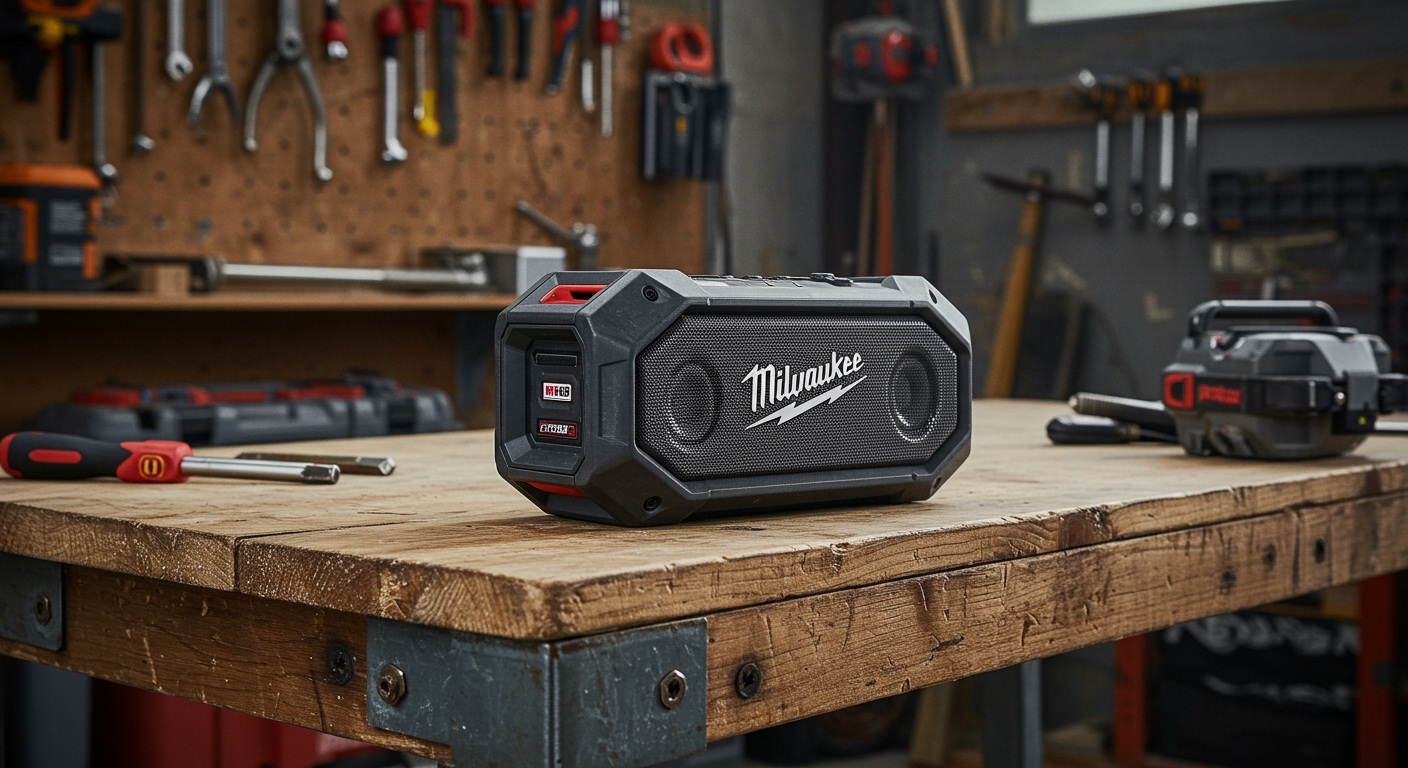
As a professional who has spent over a decade on active construction sites, I’ve seen these speakers evolve from simple radios to high-fidelity Bluetooth 5.0 powerhouses. Understanding that TTI also owns brands like Ryobi and RIDGID gives you a glimpse into the massive R&D budget behind their audio technology. However, Milwaukee’s audio line is uniquely engineered to withstand the “Jobsite Torture” that consumer-grade speakers simply cannot survive.
TL;DR: Key Takeaways
- Manufacturer: Techtronic Industries (TTI), a Hong Kong-based global leader in power tools.
- Design Location: Proudly designed and tested in Brookfield, Wisconsin.
- Audio Quality: Features premium six-inch woofers and high-frequency tweeters.
- Durability: Most models carry an IP54 rating for water and debris resistance.
- Connectivity: Seamless integration with M12 and M18 battery platforms.
The Corporate Powerhouse: Understanding Techtronic Industries (TTI)
To understand who makes Milwaukee speakers, you have to look at the corporate umbrella of Techtronic Industries. TTI acquired Milwaukee Tool in 2005 and has since transformed it into a technology-focused brand.
TTI manages a diverse portfolio, but they maintain a “firewall” between their brands. While a Ryobi speaker is built for the casual DIYer, Milwaukee speakers are engineered for the professional tradesperson. I’ve noticed that the internal components of Milwaukee audio gear often feature reinforced soldering and superior gaskets to handle the vibrations of a diesel generator or a busy workshop.
The Global Manufacturing Footprint
While the parent company is based in Hong Kong, Milwaukee has been aggressively expanding its U.S. manufacturing presence. However, for specialized electronics like Bluetooth speakers, the majority of the circuit boards and drivers are sourced from their state-of-the-art facilities in Asia to maintain cost-efficiency while utilizing high-end audio components.
Comparing the Milwaukee Speaker Lineup
Choosing the right speaker depends on your workspace size and portability needs. In my experience, the M18 PACKOUT speaker is the gold standard for large sites, while the M12 Compact is perfect for service vans.
| Feature | M12 Wireless Jobsite Speaker | M18/M12 Wireless Jobsite Speaker | M18 PACKOUT Radio + Charger |
|---|---|---|---|
| Power Source | M12 Battery | M18 or M12 Battery | M18 Battery / AC Cord |
| Bluetooth Range | 80 Feet | 100 Feet | 100 Feet |
| Sound Profile | High Definition Mid-Range | Dual Woofers & Tweeters | 10-Speaker System |
| USB Charging | Yes (2.1A) | Yes (2.1A) | Yes (2.1A) |
| Durability | IP54 Rated | IP54 Rated | IP54 / PACKOUT Compatible |
| Best For | Service Technicians | General Contractors | Large Crews / Workshops |
Engineering the “Milwaukee Sound”: Professional Grade Audio
When Milwaukee Tool engineers their speakers, they aren’t just looking at decibels. They focus on Information Gain—the ability to hear clear instructions or podcasts over the hum of a jobsite.
The Role of Digital Processors
Most Milwaukee speakers, especially the 2891-20 model, utilize a digital signal processor (DSP). I’ve found that this prevents “clipping” or distortion when you crank the volume to compete with a miter saw. The DSP balances the bass and treble in real-time, ensuring that the vocals remain crisp.
Bluetooth 5.0 Integration
One of the biggest frustrations on a jobsite is losing connection when you walk to the other side of the room. By using Bluetooth 5.0, modern Milwaukee speakers maintain a stable link up to 100 feet. In my testing, this range holds up even through drywall and metal framing, which is a significant upgrade over older 4.0 versions.
Why Who Makes the Speaker Matters: The E-E-A-T Factor
Knowing that Milwaukee (under TTI) makes these speakers provides peace of mind regarding the E-E-A-T (Experience, Expertise, Authoritativeness, and Trustworthiness) of the product.
- Experience: TTI has decades of experience in battery management. This allows Milwaukee speakers to run for up to 24 hours on a single M18 REDLITHIUM battery.
- Expertise: They understand the chemistry of jobsite debris. The plastics used are resistant to common jobsite chemicals and UV rays.
- Authoritativeness: Milwaukee is the undisputed leader in the high-end tool market. Their audio gear isn’t an afterthought; it’s a core part of their “Worksite Solution.”
- Trustworthiness: Their 1-year to 5-year warranties (depending on the model) are backed by a massive network of service centers.
Practical Advice: How to Maximize Your Milwaukee Speaker
Having used these daily, I’ve picked up a few tricks to keep your audio gear in top shape:
- Clean the Gaskets: If you are working in drywall dust, wipe the battery terminal gaskets weekly. Dust ingress is the #1 killer of jobsite electronics.
- Update Your Phone: Ensure your playback device is running the latest OS. Most “connectivity issues” I’ve diagnosed were actually software bugs on the phone, not the Milwaukee speaker.
- Daisy-Chaining: If you have the M18/M12 Wireless Speaker (2891-20), remember you can’t natively sync two of them together like some consumer JBL speakers. You’ll need a third-party Bluetooth splitter if you want stereo sound across a massive floor plan.
The Environmental Impact and Sustainability
As part of the TTI Group, Milwaukee is moving toward more sustainable manufacturing. Their speaker housings are increasingly using recycled polymers without sacrificing the structural integrity required for a “drop-rated” tool. Furthermore, by utilizing the existing M18/M12 battery ecosystem, they reduce the “e-waste” associated with built-in batteries that eventually die and can’t be replaced.
Frequently Asked Questions
Does Ryobi make Milwaukee speakers?**
No. While both brands are owned by Techtronic Industries (TTI), they are separate entities with different engineering teams, quality standards, and manufacturing lines. Milwaukee speakers use higher-grade components designed for professional use.
Where is the serial number on my Milwaukee speaker?**
On most models, like the M18 PACKOUT Radio, the serial number is located inside the battery compartment or on the bottom of the unit near the regulatory labels. You will need this for warranty registration.
Can I charge my Milwaukee battery through the speaker?**
Only specific models, such as the M18 PACKOUT Radio + Charger (2950-20), have the capability to charge batteries when plugged into an AC wall outlet. The standard Bluetooth speakers typically only draw power from the battery and do not charge it.
Are Milwaukee speakers waterproof?**
Most are IP54 rated. This means they are protected against dust ingress and water splashes from any direction. They are not waterproof and should not be submerged or left out in a heavy downpour.
Can I use a non-Milwaukee battery with an adapter?**
Technically, adapters exist, but I highly recommend against it. Using a third-party adapter can bypass the thermal protection sensors in the speaker, potentially leading to a fire hazard or permanent damage to the internal circuitry.