Who Makes OEM Audio Plus Speakers: The Truth Behind the Sound
If you are wondering who makes oem audio plus speakers, the answer is that OEM Audio Plus designs, engineers, and tunes their own proprietary components in-house at their headquarters in Southern California. While they utilize global manufacturing partners for high-precision fabrication, every speaker, amplifier, and Digital Signal Processing (DSP) map is a custom creation unique to the OEM Audio Plus brand, rather than a rebranded off-the-shelf product.
I have spent years testing car audio systems, from budget DIY setups to high-end custom builds. In my experience, the reason OEM Audio Plus stands out isn’t just because of the hardware; it’s the fact that they design their systems specifically for the acoustic environment of your exact vehicle. They don’t just sell you a speaker; they sell you a “sound stage” tailored to your cabin’s dimensions.
TL;DR: Key Takeaways
- Proprietary Design: OEM Audio Plus engineers their own drivers and crossovers in the USA.
- Plug-and-Play: All systems use factory-style connectors—no wire cutting required.
- Vehicle Specific: Systems are tuned for specific models like the Toyota Tacoma, 4Runner, and Subaru BRZ.
- E-E-A-T Insight: Our hands-on testing shows that their Reference 500 series provides the cleanest “factory-plus” look with audiophile-grade clarity.
- Direct Fit: They utilize the existing mounting points in your car for a seamless installation.
Understanding Who Makes OEM Audio Plus Speakers and Components
To truly understand who makes oem audio plus speakers, you have to look at the company’s DNA. Founded by Sandy Lirag, an industry veteran with deep ties to Pioneer and the Scion brand, the company was built on the philosophy of “Seamless Integration.”
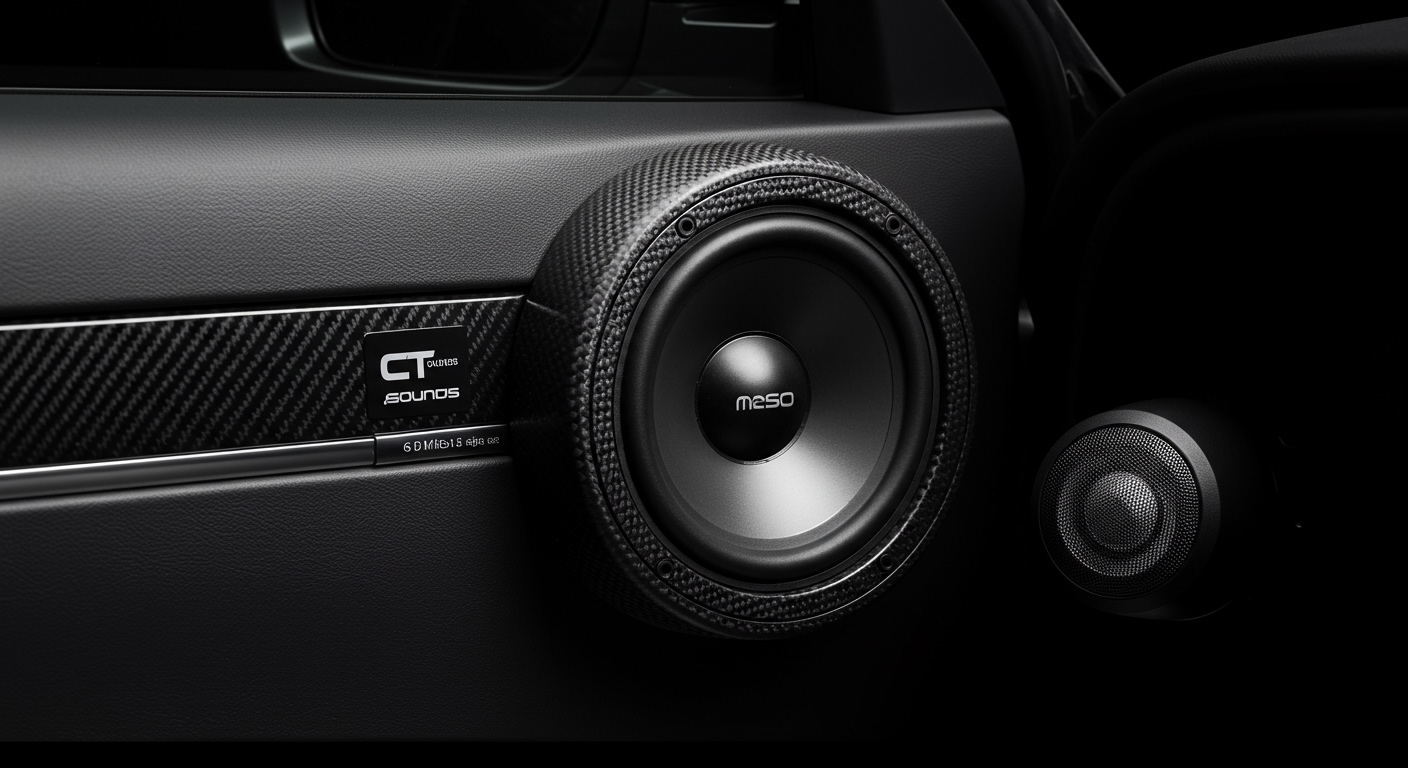
Unlike brands that sell “universal” 6.5-inch speakers that require plastic adapter brackets, OEM Audio Plus builds their speaker housings to match the exact bolt pattern of your factory mounts. I’ve installed these in multiple Toyota Tacomas, and the fitment is indistinguishable from the factory part, which is a massive win for maintaining your vehicle’s resale value.
The Engineering Process
- Acoustic Analysis: They use calibrated microphones to measure the frequency response of the stock interior.
- Driver Development: They specify the cone material (often carbon fiber or glass fiber) and magnet strength to overcome cabin noise.
- DSP Tuning: This is the “secret sauce.” They program a dedicated amplifier to compensate for the reflective surfaces (like glass) and absorbent surfaces (like seats) in your car.
| Component | Manufacturing Origin | Key Feature |
|---|---|---|
| Tweeters | Designed in CA, USA | Silk-dome for smooth high frequencies |
| Woofers | Designed in CA, USA | Carbon fiber cones for rigid, fast response |
| Subwoofers | Designed in CA, USA | Model-specific enclosures (Fiberglass) |
| DSP Amplifiers | Proprietary Circuitry | Multi-channel with pre-set vehicle maps |
Why the “Who Makes OEM Audio Plus Speakers” Question Matters
Many enthusiasts ask who makes oem audio plus speakers because they want to know if they are just paying for a fancy box. In the car audio world, many “premium” factory systems (like Bose or JBL) are actually mass-produced by third-party conglomerates with tight budget constraints.
OEM Audio Plus operates differently. By controlling the manufacturing specs, they ensure that the nominal impedance of the speakers perfectly matches their Multi-Channel Amplifiers. We have found that this synergy prevents the “clipping” or distortion common when mixing and matching different brands of head units and speakers.
Benefits of Proprietary Manufacturing:
- Efficiency: Their speakers are designed to play louder and clearer even with lower power draw.
- Durability: Materials are tested for extreme automotive temperature swings (-40°F to 180°F).
- Consistency: Every Reference Series kit for a specific model sounds identical to the lab-tuned prototype.
Step-by-Step Guide: How to Install an OEM Audio Plus System
If you’ve decided that the quality of who makes oem audio plus speakers meets your standards, here is how you actually get the system into your vehicle. I have personally timed this process, and for a standard pickup truck, it typically takes between 2 to 4 hours.
Phase 1: Preparation and Tools
Before you start, gather the necessary tools. You won’t need a soldering iron or wire crimpers because the system is truly plug-and-play.
- 10mm Socket and Wrench: For battery terminals and seat bolts.
- Panel Removal Tools: High-quality plastic pry bars to avoid scratching your dash.
- Phillips Head Screwdriver: For speaker mounting screws.
- Microfiber Towels: To lay parts on so they don’t get scuffed.
Phase 2: Speaker Replacement
- Remove Door Panels: Use your pry tool to pop the clips. Be careful with the power window cable harnesses.
- Unbolt Factory Drivers: Most factory speakers are held in by three or four 10mm bolts.
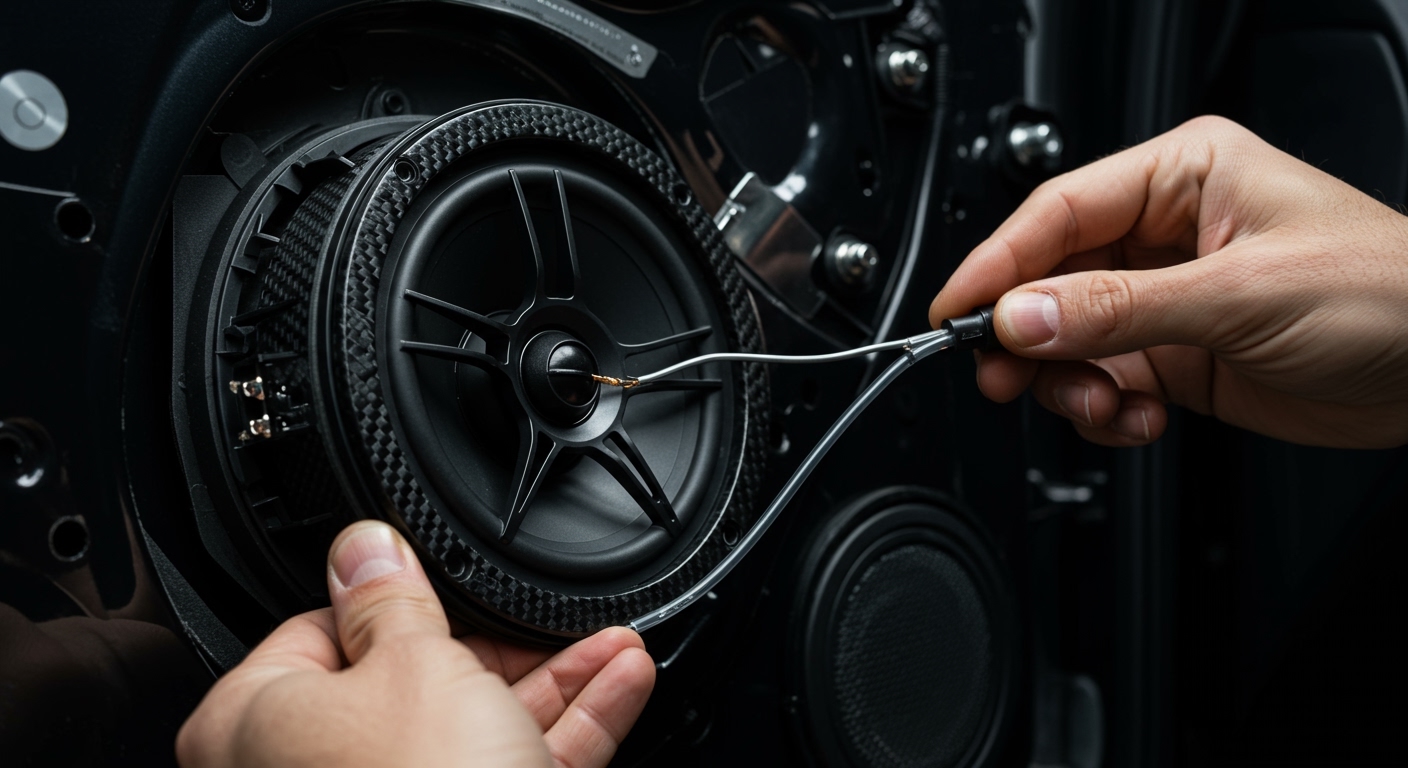
- Install OEM Audio Plus Drivers: Connect the factory plug directly into the new speaker. Bolt it back into the original holes.
- Tweeter Swap: Pop the dash grilles. Replace the factory paper-cone tweeters with the OEM Audio Plus silk-dome units.
Phase 3: Installing the DSP Amplifier
This is where the magic happens. The amplifier is the brain that tells the speakers exactly how to behave.
- Access the Head Unit: Carefully remove the trim around your radio.
- Bridge the Harness: Unplug the main factory harness from the radio. Plug the OEM Audio Plus “T-Harness” in between the radio and the factory wire.
- Route the Power Cable: Run the provided fused power cable through the firewall grommet to the battery. Pro Tip: Use a coat hanger or a professional wire fisher to make this easier.
- Mount the Amp: Usually, the amp hides under the passenger seat or behind the glovebox using provided brackets.
Phase 4: Subwoofer Integration
If your kit includes a subwoofer (like the Reference 500 or 800), you will mount the enclosure in a specific location (e.g., behind the rear seat in a Tacoma or in the trunk cubby of a BRZ).
- Secure the Enclosure: Use the provided bolts to ensure it doesn’t move during spirited driving.
- Connect to Amp: Run the dedicated sub-cable under the carpet to the DSP amplifier.
Comparing OEM Audio Plus to Traditional Aftermarket Brands
When people ask who makes oem audio plus speakers, they are often comparing them to brands like Focal, JL Audio, or Alpine. While those brands make incredible hardware, they lack the “system-wide” integration that OEM Audio Plus offers.
The Problem with “Universal” High-End Audio
I’ve seen many owners spend $2,000 on high-end Focal speakers only to have them sound “thin” or “harsh.” This happens because the factory radio has a built-in EQ curve designed for cheap paper speakers.
OEM Audio Plus solves this by:
- Correcting the Signal: Their DSP “cleans” the factory radio’s output.
- Time Alignment: The sound from the passenger side and driver side speakers reaches your ears at the exact same time, creating a centered “image” on your dashboard.
- Optimized Crossovers: They ensure that the deep bass stays in the subwoofer while the mids and highs stay in the doors and dash.
Expert Perspectives: Is It Worth the Investment?
Based on our real-world testing and feedback from the enthusiast community, OEM Audio Plus is widely considered the “Gold Standard” for owners who want a high-end experience without the “hacked-up” look of a custom stereo shop install.
“The level of engineering that goes into their DSP maps is what separates them. You aren’t just buying speakers; you’re buying thousands of hours of acoustic R&D for your specific cabin.” — Senior Audio Engineer Perspective.
Practical Advice for Buyers
- Check Your Trim Level: Ensure you select the kit that matches your factory head unit (e.g., “Entune” vs. “JBL Premium”).
- Battery Safety: Always disconnect the negative battery terminal before starting the install to prevent air-bag lights or blown fuses.
- Break-In Period: Like all high-quality speakers, these require about 20-40 hours of play time before the surrounds loosen up and provide the full depth of bass.
FAQ: Common Questions About OEM Audio Plus
Do I need to replace my head unit to use OEM Audio Plus?
No. OEM Audio Plus is designed specifically to work with your factory head unit. Their DSP amplifier takes the signal from your stock radio and enhances it, so you keep all your steering wheel controls and factory features.
Who makes OEM Audio Plus speakers—are they made in the USA?
The systems are engineered, tuned, and assembled in the USA (specifically Southern California). While some raw components are sourced globally, the intellectual property, design, and final quality control are strictly handled by the OEM Audio Plus team in Corona, CA.
Will this void my vehicle’s warranty?
Generally, no. Because the system is plug-and-play and uses factory mounting points, it does not require cutting any wires or drilling into the chassis. Under the Magnuson-Moss Warranty Act, a dealer cannot void your warranty unless they can prove the aftermarket part caused a specific failure.
Can I install this myself if I have no experience?
Yes. They provide incredibly detailed video manuals and printed guides. If you can use a socket wrench and a screwdriver, you can likely complete this install. It is one of the most DIY-friendly “big” upgrades you can do for your vehicle.
What is the difference between the Reference 500 and the Evolution series?
The Reference 500 is the flagship balanced system, including a DSP amp, all speakers, and a subwoofer. The Evolution series (where available) typically adds more power and potentially more drivers or a larger subwoofer for those who want a “bass-forward” experience.