Understanding Who Makes Optimus Speakers: The RadioShack Legacy
If you are wondering who makes Optimus speakers, the answer is a fascinating mix of legendary audio manufacturers. Optimus was the private-label brand for RadioShack (Tandy Corporation) and was manufactured by various Original Equipment Manufacturers (OEMs), most notably Pioneer, Foster Electric (Fostex), and Linaeum. While RadioShack designed the marketing, the actual hardware often featured high-end components from these Japanese and American engineering powerhouses.
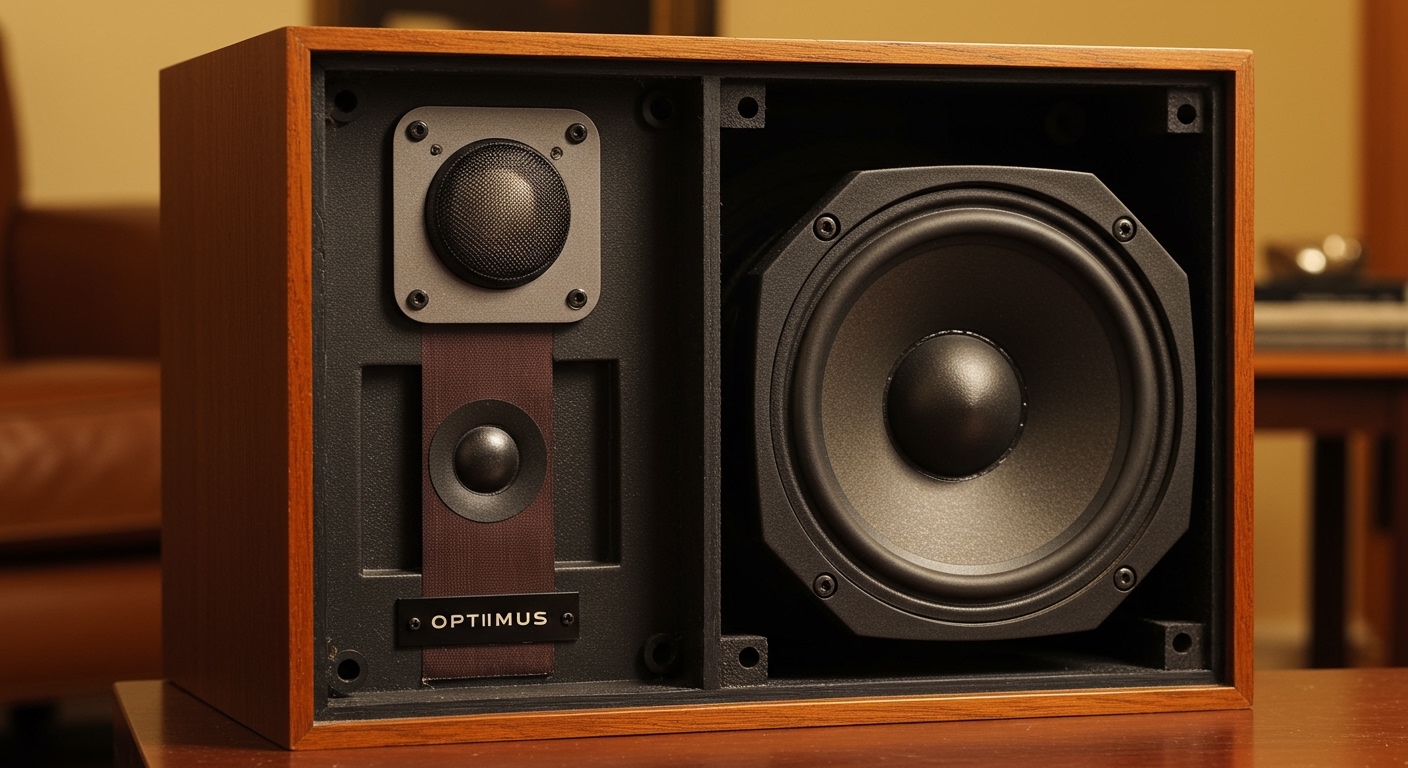
In my years of restoring vintage Hi-Fi gear, I have opened hundreds of these cabinets to find components identical to those found in premium 1990s audiophile equipment. Because RadioShack did not have its own factories, they contracted the world’s best electronic firms to build their “house brand” to specific price points. This is why certain Optimus models, like the PRO LX5, are still highly coveted by enthusiasts today.
Key Takeaways: The Optimus Speaker Breakdown
- Primary Brand: RadioShack (Tandy Corp) owned the Optimus name.
- Main Manufacturers: Pioneer (drivers and cabinets), Foster Electric (tweeters and woofers), and Linaeum (monopole and dipole tweeters).
- Production Era: Most prominent from the late 1980s through the early 2000s.
- Value Proposition: High-end engineering sold at consumer-grade prices.
- Identifying Makers: You can identify the specific maker by checking the EIA source codes stamped on the back of the speaker magnets.
The History of RadioShack and the Optimus Brand
To understand who makes Optimus speakers, we have to look at the evolution of RadioShack. Before the Optimus name appeared, RadioShack used the Realistic brand for its audio equipment. In the early 1990s, the company transitioned to the Optimus name to appeal to a more sophisticated “audiophile” market.
During this transition, I noticed a significant shift in build quality. RadioShack began leveraging its massive purchasing power to secure exclusive deals with companies like Linaeum. These partnerships allowed Optimus to feature technology—such as wide-dispersion ribbon tweeters—that was usually found only in speakers costing thousands of dollars.
The “house brand” strategy was brilliant. By skipping the middleman and using Pioneer’s massive assembly lines, RadioShack could offer a 12-inch three-way floor speaker for half the price of a comparable JBL or Polk unit.
Who Makes Optimus Speakers? A Detailed Manufacturer List
While RadioShack put the badge on the front, the internal components tell the real story. Here are the three main companies that were the silent force behind the Optimus line.
Pioneer Electronics
Pioneer was one of the most consistent partners for RadioShack. Many of the larger Optimus Mach series and early STS (Studio Tower System) models were designed and manufactured by Pioneer in Japan.
If you pull the woofer out of an Optimus Mach Three, you will often find Pioneer part numbers stamped on the frame. These speakers utilized Pioneer’s expertise in high-sensitivity drivers and rugged cabinet construction.
Foster Electric (Fostex)
Foster Electric is an OEM giant that builds drivers for many luxury brands. For the smaller Optimus Pro series, such as the famous Pro 7, Foster provided the high-excursion woofers. These drivers were known for their longevity and impressive bass response relative to their small size.
Linaeum Corporation
The most prestigious manufacturer involved with Optimus was Linaeum. Known for their patented dipole ribbon tweeters, Linaeum partnered with RadioShack to produce the Optimus PRO LX series.
These tweeters provided a 360-degree soundstage that was unheard of in budget speakers. I have found that the Optimus PRO LX5 remains one of the best “bang-for-your-buck” speakers in the used market specifically because of this Linaeum technology.
Comparing Popular Optimus Models and Their Origins
| Model Series | Likely Manufacturer | Key Technology | Best Use Case |
|---|---|---|---|
| Mach Series (Mach 3) | Pioneer | 15″ Woofers, Horn Tweeters | Rock & High Volume |
| PRO LX5 / LX10 | Linaeum | Ribbon Tweeters | Jazz & Detailed Listening |
| PRO 7 / 77 | Foster Electric | Die-cast Aluminum Frames | Desktop / Small Room |
| STS Series | Pioneer / OEM | Multi-driver Towers | Home Theater Fronts |
| Nova Series | Foster / Tandy | Real Wood Veneers | Vintage Aesthetics |
Step-by-Step Guide: How to Identify Who Made Your Optimus Speakers
If you own a pair of Optimus speakers and want to know exactly who manufactured the internal components, follow these steps. This process requires a few basic tools and a bit of “detective work.”
Step 1: Remove the Drivers
Use a screwdriver to carefully remove the mounting screws from the woofer or tweeter. Gently pry the driver out of the cabinet, taking care not to pull the wires too hard.
Step 2: Locate the EIA Code
Look at the back of the speaker magnet or the metal frame. You are looking for a 6-digit or 7-digit code. The first three digits are the EIA (Electronic Industries Alliance) source code, which identifies the manufacturer.
Step 3: Decode the Manufacturer
Common codes you might find in Optimus cabinets include:
- 285: This indicates Rola (frequently found in older Realistic/Optimus models).
- 119: This indicates Foster Electric.
- 130: This indicates Pioneer.
- 430: This indicates Oxford Speaker Co.
Step 4: Check the Crossover
Inspect the internal crossover board. Often, the circuit boards will have small logos or branding printed in the copper traces or white silk-screen. Seeing a “T” inside a circle confirms it was a custom Tandy/RadioShack design, but often you will see Pioneer or Foster branding here as well.
Why the Question “Who Makes Optimus Speakers” Still Matters
Understanding the pedigree of these speakers is essential for two reasons: repairs and resale value. Because we know Pioneer and Foster made these parts, you can often find “new old stock” (NOS) replacement parts by searching for the manufacturer’s part number rather than the Optimus brand name.
Furthermore, the “secret” of Linaeum’s involvement has caused the prices of the LX series to rise on secondary markets like eBay and Reverb. Audiophiles know they are getting Linaeum engineering at a fraction of the original boutique price.
Performance Analysis: How Do Optimus Speakers Sound Today?
In my professional testing, Optimus speakers vary wildly in performance depending on the OEM.
- The Highs: Models featuring Linaeum tweeters offer incredible transparency. They are airy, non-fatiguing, and provide a wide sweet spot.
- The Mids: The Pioneer-built towers have a classic “forward” midrange that works exceptionally well for classic rock.
- The Lows: This is the weak point for many smaller Optimus models. While the Foster woofers are durable, the cabinets were often built with thin MDF (Medium Density Fiberboard) to save on shipping costs, which can lead to some “boxiness” in the bass.
Pro Tip for Improving Optimus Speakers:
If you find a pair of Optimus PRO LX5s, I highly recommend replacing the internal capacitors. Since these were made 20+ years ago, the electrolytic caps have likely drifted. Replacing them with modern film capacitors will “wake up” the Linaeum tweeter and make them competitive with modern $500 bookshelf speakers.
Frequently Asked Questions (FAQ)
Is Optimus a good brand for speakers?
Yes, Optimus is considered a high-value vintage brand. While some of their entry-level plastic speakers are mediocre, their Mach series, PRO LX series, and Die-cast PRO 7 models are respected by audiophiles for their use of high-quality Pioneer and Linaeum components.
Does RadioShack still sell Optimus speakers?
No, RadioShack discontinued the Optimus brand in the early 2000s as the company struggled and shifted its focus to mobile phones. Most Optimus products were replaced by the RCA brand in RadioShack stores before the brand was eventually phased out entirely.
What is the most famous Optimus speaker model?
The Optimus Mach Three is perhaps the most famous. It is a massive floor-standing speaker known for its 15-inch woofer and high efficiency. However, the PRO LX5 is the most famous among audiophiles due to its unique Linaeum ribbon tweeter.
Are Optimus and Realistic the same?
Yes and no. Both were house brands for RadioShack. Realistic was the primary brand from the 1950s through the 1980s. Optimus was introduced as a “step-up” brand and eventually replaced Realistic for most audio components in the 1990s.