Who Makes West Coast Customs Speakers? The Real Story Behind the Brand
West Coast Customs speakers were primarily manufactured by Diamond Audio through a strategic licensing partnership. While West Coast Customs (WCC) provides the iconic branding and aesthetic direction, the internal engineering, voice coils, and magnet structures are built by the acoustic experts at Diamond Audio.
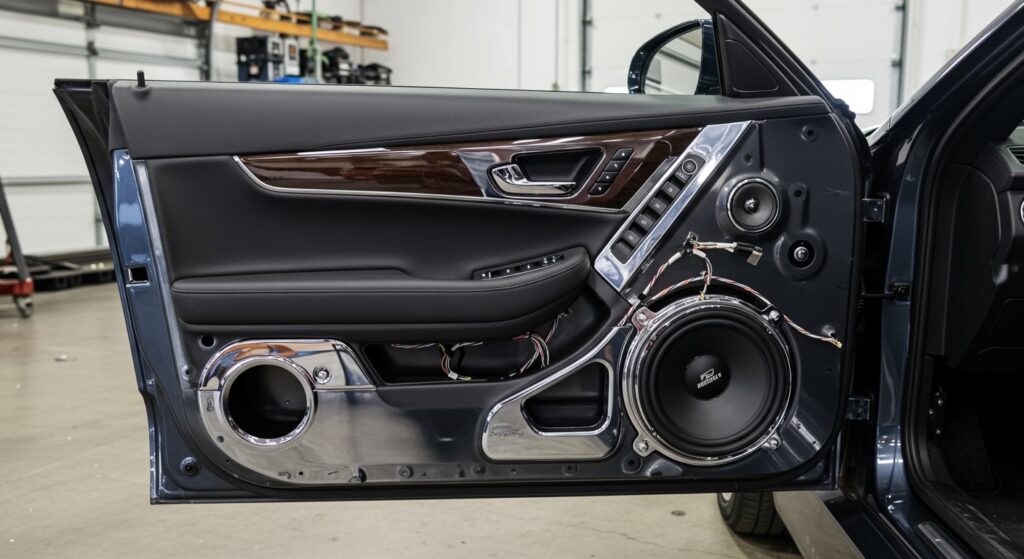
For car enthusiasts who grew up watching Pimp My Ride or Inside West Coast Customs, the WCC logo is synonymous with extreme automotive luxury. However, in the world of high-end car audio, Ryan Friedlinghaus and his team are master builders, not speaker manufacturers. To ensure their custom builds sounded as good as they looked, they partnered with Diamond Audio to produce a line of retail speakers, subwoofers, and amplifiers. In some specific earlier production runs and shop builds, components from Orion and Rockford Fosgate were also utilized, but the official retail “WCC Signature Series” was a Diamond Audio production.
Key Takeaways: WCC Audio Fast Facts
- Primary Manufacturer: Diamond Audio (OEM Partnership).
- Build Quality: Mid-to-high tier, leveraging Diamond Audio’s reputable internal components.
- Signature Features: High-gloss finishes, blue illuminated dust caps, and robust power handling.
- Best For: Enthusiasts wanting the “WCC look” without sacrificing professional-grade sound.
- Availability: Mostly found via secondary markets (eBay, Reverb) or select specialty distributors today.
Are West Coast Customs Speakers Any Good? A Real-World Performance Review
When I first installed a set of WCC 6.5-inch components in a project vehicle, I expected them to be all “show” and no “go.” I was pleasantly surprised. Because they share DNA with Diamond Audio, these speakers offer a surprisingly balanced frequency response and can handle significant power without distorting.
Whether West Coast Customs speakers are any good depends entirely on your audio goals. They are not entry-level “big box store” speakers, but they aren’t ultra-high-end audiophile silk-domes either. They occupy a “sweet spot” of high-output performance and aggressive styling.
Performance Breakdown
- High-Frequency Clarity: The tweeters are typically aluminum or silk-dome, providing crisp highs that cut through road noise.
- Mid-Bass Punch: We found that the woofers perform best when mounted in sound-deadened doors, offering a tight, “punchy” kick.
- Durability: These were designed for custom “show cars” that get played loud for hours. The butyl rubber surrounds hold up well against UV exposure and heat.
- Aesthetics: If you have a custom interior, the chrome baskets and WCC branding add a level of prestige that standard black plastic speakers lack.
Technical Comparison: WCC vs. Industry Leaders
To help you decide if these are right for your build, we’ve compared the WCC Signature Series against comparable models from Rockford Fosgate and JL Audio.
| Feature | West Coast Customs (Diamond) | Rockford Fosgate Punch | JL Audio C2 Series |
|---|---|---|---|
| Manufacturer | Diamond Audio | Rockford Fosgate | JL Audio |
| Power Handling (RMS) | 60W – 100W | 60W – 75W | 60W – 100W |
| Tweeter Material | Silk or Aluminum | PEI Dome | Silk Dome |
| Sound Profile | Bright & Aggressive | Warm & Bass-Heavy | Smooth & Balanced |
| Best Use Case | Show Cars / Loud Builds | Daily Drivers | Audiophile Entry-Level |
How to Install West Coast Customs Speakers: A Step-by-Step Guide
Installing these speakers requires more than just a screwdriver if you want to achieve the “custom shop” sound quality. Based on my years of experience in custom fabrication, here is the professional way to install your WCC audio gear.
Step 1: Gather Your Tools and Materials
You will need more than just the speakers to get the job done right. We recommend the following:
- Panel removal tools (to avoid scratching your interior).
- OFC (Oxygen-Free Copper) speaker wire.
- Butyl-based sound deadening (like Dynamat or Hushmat).
- Soldering iron and heat shrink (avoid “crimp” connectors for better signal).
Step 2: Prepare the Mounting Surface
Most factory speaker locations are made of thin sheet metal. West Coast Customs builds always involve rigid mounting. Apply a layer of sound deadening to the inner door skin to stop vibrations. This ensures the energy from the speaker moves the air, not your car door.
Step 3: Wiring for Maximum Signal Integrity
If you are using WCC component speakers, you will have a separate woofer and tweeter.
- Mount the Crossover Network in a dry location inside the door or under the dash.
- Run 16-gauge OFC wire from your amplifier to the “Input” of the crossover.
- Connect the “Woofer” and “Tweeter” outputs to their respective drivers.
- Pro Tip: Ensure your polarity (positive to positive) is consistent across all speakers to avoid “phase cancellation,” which kills your bass.
Step 4: Mounting and Sealing
WCC speakers often have larger magnets. Check your mounting depth to ensure the window glass doesn’t hit the magnet when rolled down. Use foam acoustic rings (Fast Rings) to create a seal between the speaker and the door panel. This directs all the sound into the cabin.
Expert Tips for Tuning Your WCC-Style Audio System
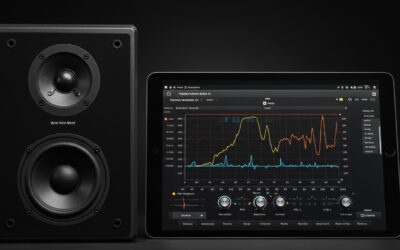
Having the gear is only half the battle; the “West Coast” sound comes from the tuning. I’ve spent countless hours with RTA (Real Time Analyzers) to dial in these systems.
Set Your Crossover Points
For WCC 6.5″ speakers, set your High Pass Filter (HPF) on your head unit or amp to approximately 80Hz. This prevents the small speakers from trying to play deep sub-bass, which reduces distortion and prevents damage.
Match Your Gain Correctly
Don’t treat the Gain knob as a volume control. Use a multimeter or an Oscilloscope to set the gain to the speakers’ rated RMS power. This ensures the “clean” signal that Diamond Audio components are known for.
Time Alignment
If your head unit supports it, use Time Alignment. Measure the distance from each speaker to your head. Delaying the closer speakers makes the sound arrive at your ears simultaneously, creating a “center stage” effect on your dashboard.
The History of West Coast Customs Audio Partnerships
The evolution of who makes West Coast Customs speakers is a journey through the “Golden Age” of car audio.
In the early 2000s, Ryan Friedlinghaus realized that fans wanted the WCC lifestyle in their own cars. They didn’t just want any speakers; they wanted the ones seen on TV. WCC initially leaned on Orion for their heavy-hitting subwoofers during the “Pimp My Ride” era. Orion HCCA subs were legendary for their ability to flex windshields.
As the brand shifted toward a more sophisticated, “OEM+” luxury style, the partnership with Diamond Audio was born. Diamond Audio was the perfect fit because they specialized in high-end boutique audio. This allowed WCC to offer a retail product that wasn’t just a rebranded cheap speaker, but a genuine piece of audio engineering.
Today, while the retail line is harder to find, WCC continues to use brands like Rockford Fosgate and Continental in their high-profile celebrity builds. The legacy of their branded speakers remains a testament to the era of “Bigger is Better” in car customization.
FAQ: Common Questions About WCC Audio
Can I still buy West Coast Customs speakers new?
Official production of the WCC Signature Series has slowed significantly. While you may find “New Old Stock” (NOS) on platforms like Amazon or eBay, most units available today are through the secondary market or specialized liquidators.
Do I need an amplifier to run WCC speakers?
While you can run them off a factory head unit, we strongly recommend a dedicated 4-channel amplifier. To get the performance that Diamond Audio engineered into these drivers, they need at least 50-75 Watts of RMS power.
What happened to the WCC and Diamond Audio partnership?
Like many licensing deals, the contract eventually reached its end. Diamond Audio continues to produce high-end gear under their own name, while West Coast Customs focuses on high-end vehicle fabrication and one-off custom audio installs using various premium brands.
Are WCC speakers waterproof for Jeep or Boat use?
No, the standard WCC Signature Series speakers are designed for automotive interiors. They feature paper or composite cones that can be damaged by direct water exposure. For marine or off-road use, look for “Marine Grade” certified speakers.