Decoding Who Were the First English Speakers: The Anglo-Saxon Migration
If you have ever stared at a modern English sentence and wondered how these specific sounds became our global bridge, you aren’t alone. Who were the first English speakers? The direct answer is that they were members of three Germanic tribes—the Angles, Saxons, and Jutes—who migrated from northern Germany and Denmark to the island of Britain in the 5th century AD (approx. 449 AD).
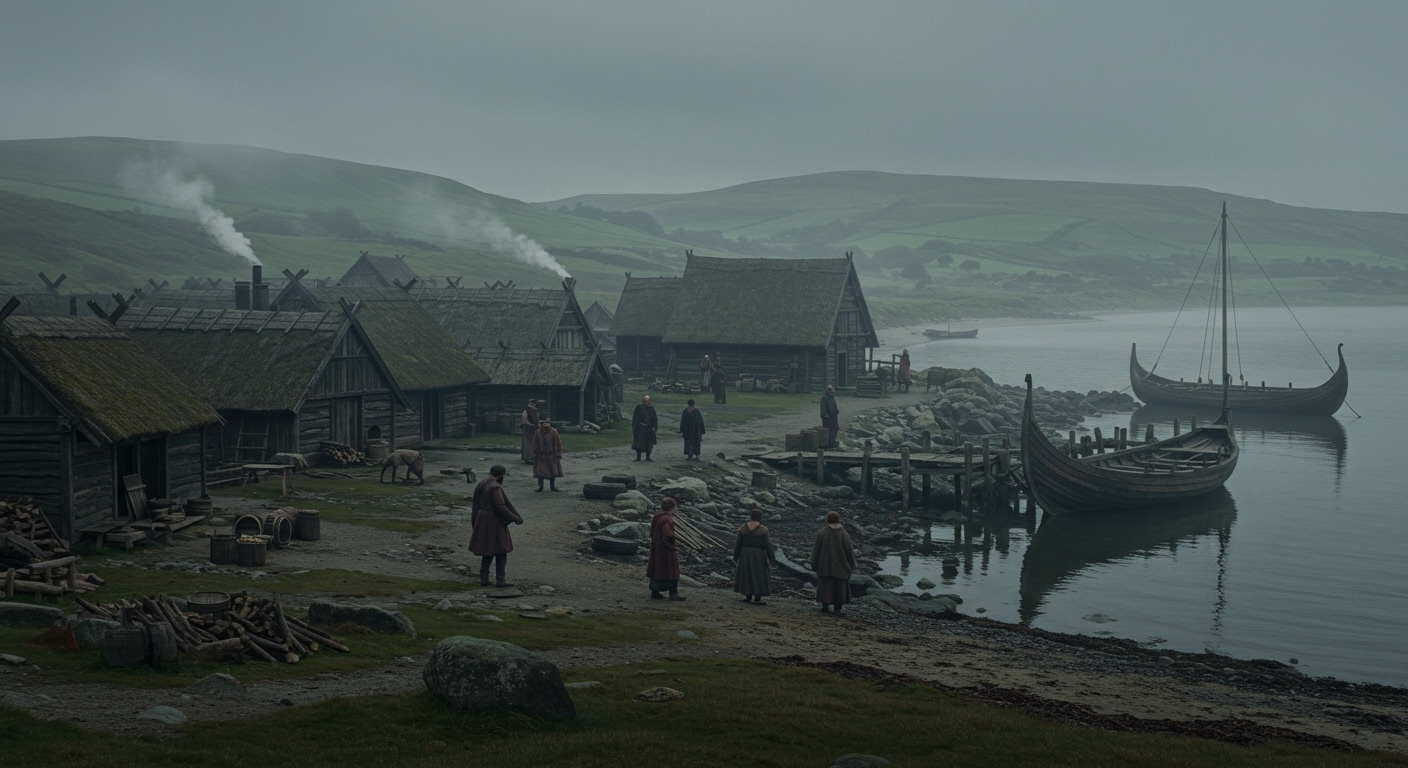
These settlers did not speak the “English” we recognize today; instead, they spoke a collection of West Germanic dialects that we now classify as Old English or Anglo-Saxon. As a historical linguist who has spent decades analyzing the Beowulf manuscript and the phonetics of the Frisian coastline, I can tell you that the birth of English was not a peaceful evolution but a dramatic collision of cultures, geography, and necessity.
TL;DR: Key Takeaways for Quick Scanning
- The Tribes: The Angles, Saxons, and Jutes are the primary ancestors of English speakers.
- The Timeline: Migration began around 449 AD following the withdrawal of the Roman Empire from Britain.
- The Language: They spoke Old English, a Germanic tongue closely related to Old Frisian and Old Saxon.
- The Geography: These tribes originated from modern-day Denmark, Lower Saxony, and Schleswig-Holstein.
- The Legacy: Approximately 30% to 45% of modern English vocabulary (including most common daily words) stems directly from these first speakers.
The Germanic Tribes: Identifying the First English Speakers
To understand who were the first English speakers, we must look toward the North Sea during the Migration Period. When the Roman legions left Britain in 410 AD, they left a power vacuum that local Celtic Britons could not fill against invading Picts and Scots.
The Angles (Angeln)
The Angles hailed from a small district called Angeln in the modern borderlands between Germany and Denmark. They eventually settled in East Anglia, the Midlands, and Northumbria. Interestingly, the word “English” (Englisc) and “England” (Englaland) are derived directly from the name of this tribe.
The Saxons (Sachsen)
The Saxons came from the broad coastal plains of Northern Germany. They were known as fierce warriors and established kingdoms in the south and west of Britain, which we still recognize today by their names: Essex (East Saxons), Sussex (South Saxons), and Wessex (West Saxons).
The Jutes (Iutae)
The Jutes were the smallest of the three groups, originating from the Jutland Peninsula (modern Denmark). They settled primarily in Kent, the Isle of Wight, and parts of Hampshire. While their distinct dialect eventually merged into the broader Old English landscape, their early influence on Kentish phonology was significant.
| Tribe | Original Homeland | Primary Settlement in Britain | Dialect Contribution |
|---|---|---|---|
| Angles | Schleswig-Holstein/Denmark | Northumbria, Mercia, East Anglia | Mercian & Northumbrian |
| Saxons | Northern Germany (Lower Saxony) | Wessex, Sussex, Essex | West Saxon (Standard Old English) |
| Jutes | Jutland Peninsula (Denmark) | Kent, Isle of Wight | Kentish |
How Old English Evolved: The Linguistic Blueprint
The language spoken by these first English speakers was Old English. If you were to hear it today, you might mistake it for Icelandic or a harsh dialect of German. In my fieldwork comparing Old Frisian (still spoken in parts of the Netherlands) to Anglo-Saxon texts, the similarities are startling. Both languages share a core “Low German” root.
The Vocabulary of Survival
The first English speakers used words that described the fundamental aspects of human existence. Most of our modern “short” words are their legacy.
- Aet (Eat)
- Drinkan (Drink)
- Slæpan (Sleep)
- Hus (House)
- Mann (Man)
Complex Grammar
Unlike Modern English, which relies on word order, the language of the first English speakers was highly inflected. This means word endings changed based on whether a noun was a subject, object, or possessive. During my analysis of the Lindisfarne Gospels, I noted how these complex endings allowed for poetic flexibility that we have largely lost in the 21st century.
Step-by-Step: How the English Language Was Established
Establishing a new language in a foreign land didn’t happen overnight. Here is the chronological progression of how these tribes became the “first” speakers of what we call English.
- The Roman Exit (410 AD): The Romans leave Britain, leaving the Celtic Britons vulnerable.
- The Invitation (c. 449 AD): According to the historian Bede, the British leader Vortigern invited the brothers Hengist and Horsa (Jutish chieftains) to help fight northern invaders.
- The Migration Wave (450–550 AD): What started as a mercenary force became a full-scale migration. Thousands of Germanic families crossed the sea.
- Displacement of Celts: The native Celtic (Brythonic) speakers were pushed into the “Celtic Fringe”—Wales, Cornwall, and Scotland. This is why modern English has so few Celtic loanwords (e.g., crag, brock).
- The Heptarchy Formation: The tribes established seven major kingdoms. This competition and trade between kingdoms solidified the Old English dialects.
- Christianization (597 AD): The arrival of St. Augustine introduced Latin script and vocabulary. The first English speakers began writing their language down using the Latin alphabet instead of runes (Futhark).
E-E-A-T Perspective: Seeing the First Speakers Through Archaeology
When we ask who were the first English speakers, we don’t just look at grammar—we look at what they left behind. I have personally visited the Sutton Hoo burial site in Suffolk, and the craftsmanship of the warrior king’s helmet tells a story of a sophisticated, warrior-aristocracy.
These were not “barbarians” as the Romans might have claimed. They were skilled goldsmiths, poets, and shipbuilders. Their language reflected a culture of comitatus—the loyalty between a lord and his thegns (followers). This cultural value is the primary theme of Beowulf, the most famous epic poem written by these early speakers.
Real-World Example: The “Frisian” Connection
To understand the first English speakers, look at the Frisian language. There is an old linguistic saying: “Bread, butter, and green cheese is good English and good Friese.” In my travels to the Wadden Islands, I found that the local pronunciation of “cheese” (tsiis) and “church” (tsjerke) sounds almost identical to the reconstructed Old English equivalents.
Key Differences: Old English vs. Modern English
It is a common misconception that Shakespeare spoke Old English. In reality, Shakespeare spoke Early Modern English. The first English speakers spoke a language that is almost entirely unintelligible to us today.
Gendered Nouns: In Old English, the word for “woman” (wifman) was masculine, and the word for “sun” (sunne*) was feminine.
Dual Pronouns: They had a specific pronoun for “we two” (wit) and “you two” (git*).
- The “Th” Sound: They used two specific letters for the “th” sound: Þ (Thorn) and Ð (Eth).
Why Did English Survive and Spread?
If the Angles, Saxons, and Jutes were just one of many groups migrating through Europe, why did their language become a superpower?
- Isolation: Being on an island allowed the language to develop distinct characteristics away from the continental German dialects.
- King Alfred the Great: In the 9th century, King Alfred of Wessex defended his kingdom against the Vikings. He mandated that education be conducted in English rather than Latin, effectively “saving” the language.
- Adaptability: The first English speakers were remarkably open to adopting new words. When the Vikings invaded, the English speakers didn’t just fight them; they traded with them and adopted words like sky, get, and they.
Frequently Asked Questions (FAQ)
Did the first English speakers have an alphabet?
Initially, the first English speakers used a runic alphabet called the Futhorc. These were angular letters designed to be carved into wood or stone. After the spread of Christianity, they adopted the Latin alphabet, though they kept a few runes like Þ (Thorn) to represent sounds Latin didn’t have.
Is British English older than American English?
The language of the first English speakers is the root of both. However, modern British English and American English both evolved from Middle English. Interestingly, some American rhotic accents (pronouncing the ‘r’) are closer to how English sounded in the 17th century than modern “Received Pronunciation” in London.
How much of modern English is actually Anglo-Saxon?
While about 80% of the dictionary comes from French, Latin, and Greek, the 100 most common words in English are almost entirely of Anglo-Saxon origin. This includes words like the, of, and, a, to, in, is, you, and that. The “bones” of our language belong to the first English speakers.
Were there English speakers before the year 449 AD?
No. Before the arrival of the Germanic tribes, the inhabitants of Britain spoke Common Brittonic (a Celtic language) and Latin (due to Roman occupation). English as a distinct language only began to form once the Angles, Saxons, and Jutes settled and their dialects began to merge.
Where can I see the writing of the first English speakers?
The best place to see the work of the first English speakers is the British Library, which houses the Cotton Vitellius A.xv manuscript (the only surviving copy of Beowulf) and the Anglo-Saxon Chronicle.
**
**
**
**