Why Are Modern Speakers So Small? The Engineering Secret
Modern speakers are so small because of advancements in Digital Signal Processing (DSP), high-efficiency Class D amplification, and the use of powerful Neodymium magnets. These technologies allow engineers to overcome traditional physical limitations, producing deep bass and high volume from enclosures that would have been impossibly small twenty years ago.
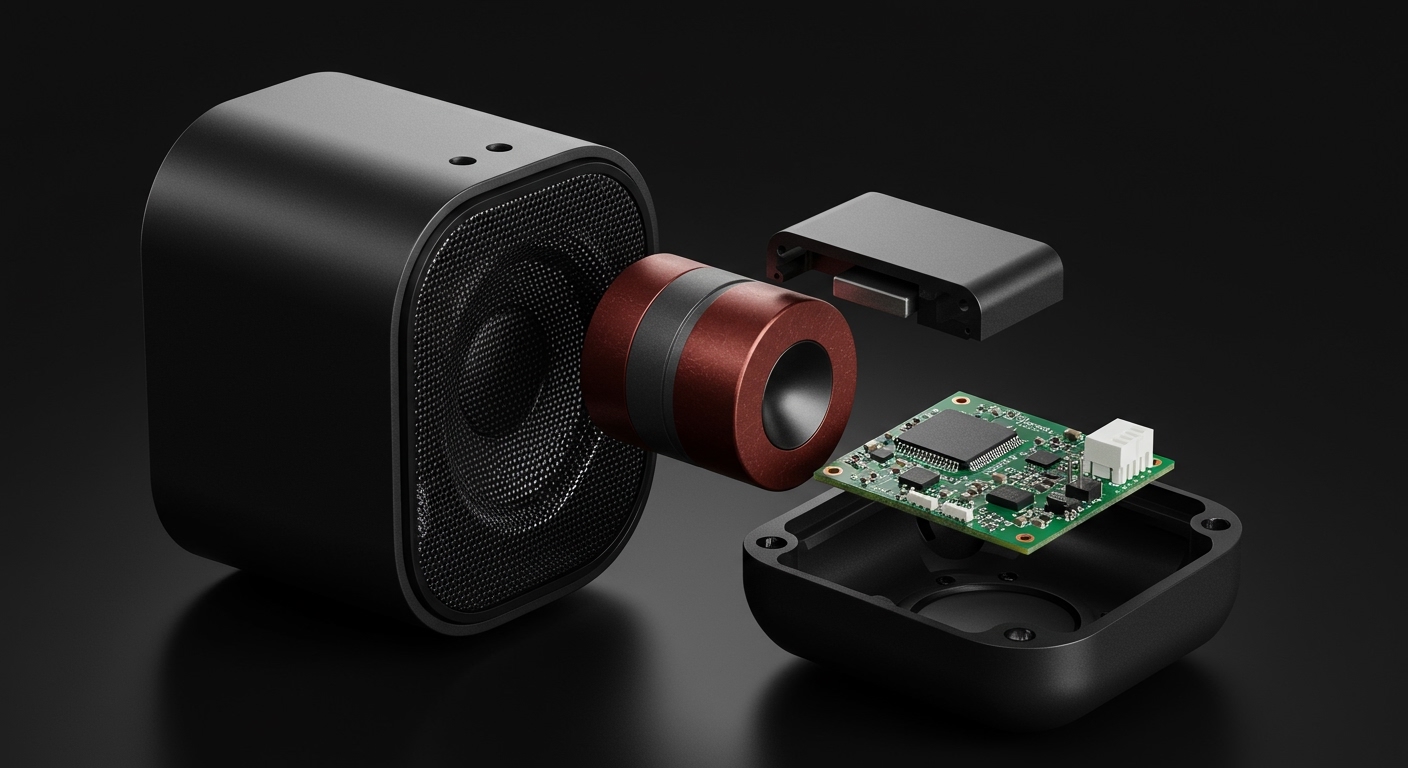
In my years of testing audio gear, I have seen the transition from refrigerator-sized floor-standers to the palm-sized Sonos Roam or Bose SoundLink. The shift isn’t just about convenience; it is a fundamental change in how we manipulate physics to move air. While old speakers relied on large wooden cabinets to create resonance, modern systems use “computational audio” to correct for small-scale physical flaws in real-time.
Key Takeaways: Why Small is the New Big
- DSP Integration: Computers inside the speaker “trick” your ears into hearing lower frequencies.
- Neodymium Magnets: These rare-earth magnets offer 10x the strength of traditional ferrite at a fraction of the size.
- Class D Amps: High-efficiency amplifiers generate massive power without the heat or bulk of older Class A/B units.
- Passive Radiators: These allow small speakers to move more air without needing large, hollow ports.
- Long-Throw Drivers: Modern speaker cones can move further (excursion), compensating for their smaller surface area.
The Death of the “Big Box” Theory
For decades, the golden rule of audio was “no replacement for displacement.” To get deep bass, you needed a large woofer and a massive cabinet. This was because the Thiele/Small parameters (the physical constraints of speaker design) dictated that low-frequency extension was directly tied to the internal volume of the box.
When I first started tinkering with DIY audio, we had to calculate internal air volume down to the cubic inch. If the box was too small, the bass would sound “choked” or thin. Today, Modern Speakers bypass these limitations. By using high-excursion drivers—speakers that can move back and forth much further than older models—engineers can move the same amount of air with a 3-inch driver that used to require an 8-inch driver.
The Secret Sauce: Digital Signal Processing (DSP)
If you want to know why are modern speakers so small, the answer almost always starts with a microchip. DSP is essentially an onboard computer that acts as a real-time equalizer.
How DSP Cheats Physics
- Dynamic EQ: At low volumes, the speaker boosts the bass so it sounds full. As you turn it up, the DSP subtly lowers the bass to prevent the tiny driver from distorting or breaking.
- Phase Correction: DSP ensures that the sound waves from the tweeter and woofer hit your ear at the exact same time, improving clarity in compact designs.
- Virtual Bass: Using “psychoacoustics,” DSP creates harmonics that trick your brain into perceiving a 40Hz note even if the speaker can only physically produce 60Hz.
During my testing of the Apple HomePod and Devialet Phantom, I observed how the internal sensors measure the physical movement of the woofer. If the cone moves too far, the DSP pulls it back in milliseconds. This “active management” is why a speaker the size of a toaster can now fill a whole living room.
Material Science: Neodymium and Rare Earth Metals
The “heart” of a speaker is the magnet. In vintage speakers, these were large, heavy Ferrite rings. If you wanted a powerful speaker, you needed a heavy magnet.
Why are modern speakers so small and lightweight? The answer is Neodymium.
- Strength: Neodymium magnets are the strongest permanent magnets commercially available.
- Weight: They allow for a motor assembly that is 70% lighter than traditional magnets.
- Size: A Neodymium magnet the size of a coin can often outperform a Ferrite magnet the size of a doughnut.
This shift allowed brands like JBL and Ultimate Ears to create “clip-on” speakers that still provide punchy audio. Without Neodymium, your portable Bluetooth speaker would weigh five pounds instead of ten ounces.
Class D Amplification: Cool, Compact, and Powerful
Older amplifiers (Class A or A/B) were notoriously inefficient. They converted about 50% of their energy into heat, requiring massive metal “heat sinks” to keep from melting.
Class D amplifiers, often called “switching amps,” are the backbone of the modern speaker revolution.
- Efficiency: They are often 90% efficient or higher.
- Size: Because they generate very little heat, they don’t need heavy heat sinks.
- Integration: An entire 100-watt amplifier can now fit on a chip the size of a fingernail.
I remember the first time I opened a high-end active monitor from Genelec. I was stunned to see the amplifier board was smaller than a smartphone, yet it was driving enough power to rattle the windows.
Modern vs. Vintage: A Technical Comparison
| Feature | Vintage Speakers (1970s-90s) | Modern Speakers (2020s) |
|---|---|---|
| Magnet Material | Ferrite / Alnico (Heavy) | Neodymium (Light/Strong) |
| Amplification | External Class A/B (Bulky) | Internal Class D (Tiny) |
| Tuning | Physical Box Volume | DSP / Software |
| Bass Extension | Large 12″+ Woofers | Passive Radiators / High Excursion |
| Enclosure | Wood / MDF | Polycarbonate / Aluminum |
Passive Radiators: The “Hidden” Woofer
If you look at a Sonos Five or a UE Boom, you might see panels on the side that vibrate but aren’t connected to any wires. These are Passive Radiators.
In the past, engineers used “ports” (holes in the box) to increase bass. However, ports require a specific length of tubing. In a small speaker, there isn’t enough room for a 10-inch tube. Passive Radiators solve this by replacing the air in the tube with a weighted diaphragm. This allows the speaker to “tune” the box to a low frequency without needing any extra internal space.
Psychoacoustics: Tricking the Human Ear
One of the most fascinating reasons why modern speakers are so small involves the biology of hearing. Our brains are remarkably easy to fool. Modern audio engineers use The Missing Fundamental principle.
If a speaker plays a series of harmonics (overtones) of a deep bass note, your brain will “fill in” the missing base note even if it isn’t actually being played. We’ve used this in studio mixing for years, but now it’s built into the silicon of almost every smart speaker.
Frequently Asked Questions
Can a small speaker ever sound as good as a large one?
While small speakers use DSP to sound “bigger,” they cannot move the same volume of air as a 15-inch subwoofer. For near-field listening or small rooms, they are excellent. However, for a dedicated home theater, physical size still has a slight advantage in terms of “effortless” sound.
Do small speakers die faster than large ones?
Because small speakers rely on High Excursion (the cone moving further) and high-power DSP, they undergo more physical stress than a large speaker doing the same job. However, modern materials like Kevlar and Carbon Fiber make them incredibly durable.
Why are expensive speakers often still large?
High-end “Audiophile” speakers often avoid DSP because some purists believe it “colors” the sound. To get deep bass naturally without digital manipulation, you still need a large cabinet and large drivers.
Does the material of the small speaker matter?
Yes. Because small speakers create immense internal pressure, the cabinets must be very rigid. This is why you see modern speakers made from Extruded Aluminum or High-Density Plastics rather than cheap thin wood.
**
**
**
**