Understanding Why English Speakers Call Deutschland Germany
English speakers call Deutschland “Germany” primarily because the English language adopted the Latin term Germania, which was popularized by Julius Caesar and the historian Tacitus. While the people living in those central European lands eventually identified as Deutsche (derived from the Old High German word for “the people”), English retained the Roman exonym through centuries of linguistic tradition and political influence.
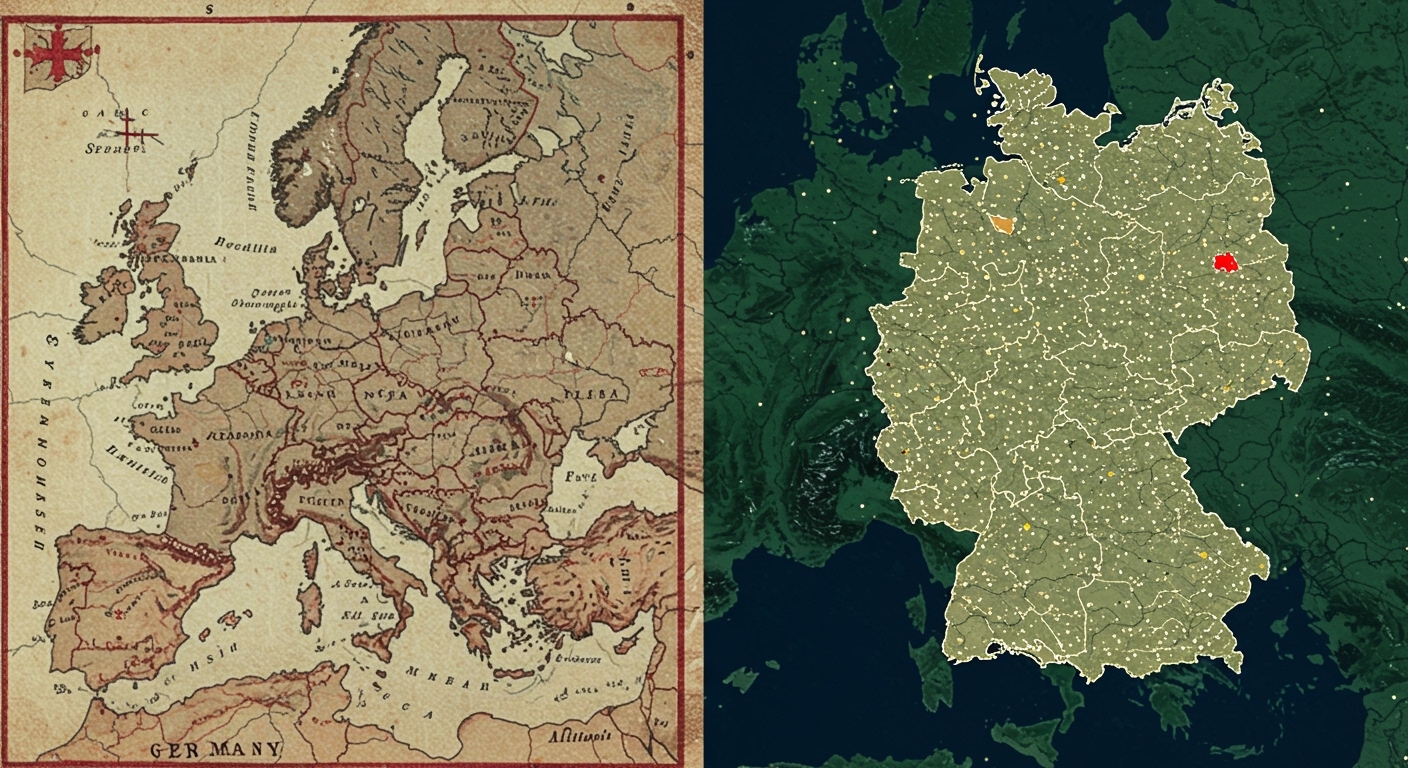
During my years living in Berlin and researching European linguistics, I’ve found that few things confuse travelers more than the massive gap between what Germans call their country and what the rest of the world calls it. This discrepancy is a result of Germany being a “crossroads” nation, surrounded by different tribes who each gave the region a name based on the specific group they encountered first.
Key Takeaways: The Origin of the Name Germany
- Roman Influence: The word comes from the Latin Germania, used by Romans to describe the tribes east of the Rhine.
- The Endonym: Deutschland comes from the Old High German diutisc, meaning “of the people.”
- Linguistic Diversity: Germany has more names in different languages (Germany, Deutschland, Allemagne, Saksa, Németország) than almost any other country.
- English Adoption: English stuck with the Latin root via Old French and medieval academic texts, rather than adopting the local German term.
The Roman Roots: How “Germania” Became the Standard
The primary reason why do english speakers call deutschland germany dates back to the Gallic Wars around 50 B.C. Julius Caesar used the term Germani to distinguish the tribes across the Rhine from the Gauls (Celts). At the time, the people living there didn’t have a collective name for themselves; they were a collection of independent tribes like the Cherusci, Chatti, and Suebi.
Later, in 98 A.D., the historian Publius Cornelius Tacitus wrote a detailed ethnographic work titled Germania. This book became the definitive source for European scholars for over a millennium. When English began to formalize as a language, scholars and mapmakers leaned heavily on these classical Latin texts, cementing “Germany” into the English lexicon long before the modern state of Germany even existed.
The Evolution of Deutschland: Why Germans Use a Different Name
While the Romans called the land Germania, the people living there developed their own identity. By the 8th century, the word theudisk (or diutisc) appeared. It stems from the Proto-Indo-European root *teuta, which literally means “the people.”
I remember visiting the Römisch-Germanisches Museum in Cologne, where the shift in identity is palpable. The local tribes used diutisc to distinguish their vernacular Germanic speech from the Latin used by the Church and the elite. Over time, diutisc evolved into the Middle High German diutsch, and eventually into the modern Deutsch. Consequently, Deutschland translates simply to “The Land of the People.”
How the World Names Germany: A Comparison Table
Germany is unique because its various neighbors interacted with different tribes, leading to a wide variety of names.
| Language Group | Name for Germany | Origin / Root Tribe |
|---|---|---|
| English | Germany | Latin (Germania) |
| German | Deutschland | Old High German (diutisc / The People) |
| French | Allemagne | The Alamanni tribe |
| Spanish | Alemania | The Alamanni tribe |
| Polish | Niemcy | Proto-Slavic (nemoy / Mute or “Those who don’t speak like us”) |
| Finnish | Saksa | The Saxon tribe |
| Italian | Germania | Latin (Germania) |
Step-by-Step: The Timeline of the Name “Germany” in English
To truly understand why do english speakers call deutschland germany, we have to look at how the English language evolved alongside European history.
Step 1: The Roman Occupation (50 B.C. – 400 A.D.)
The Romans establish the provinces of Germania Superior and Germania Inferior. The term is purely geographic and ethnic from a Roman perspective.
Step 2: The Migration Period (400 A.D. – 800 A.D.)
As the Roman Empire falls, Germanic tribes like the Angles and Saxons migrate to Britain. Ironically, they were “Germans” themselves, but they referred to their continental cousins by specific tribal names rather than a collective “German” identity.
Step 3: The Renaissance and Latin Revival (1400s – 1600s)
During the Renaissance, European scholars rediscovered Tacitus. Since English scholars wrote primarily in Latin during this era, they used Germania. When they translated their works into English, they simply anglicized it to Germany.
Step 4: The Unification of 1871
When the various kingdoms (Prussia, Bavaria, etc.) finally unified into a single nation-state in 1871, the English-speaking world already had a 400-year history of calling the region Germany. Changing the name to “Deutschland” would have been a massive linguistic undertaking that the British Empire saw no reason to pursue.
Linguistic “Information Gain”: The Slavic and Baltic Perspective
One of the most fascinating aspects I’ve encountered in my research is the Slavic name for Germany: Niemcy. This doesn’t come from a tribe or a Latin root. Instead, it comes from the Slavic word for “mute” (němъ).
To the early Slavic peoples, the Germans were “the people who cannot speak” because their language was unintelligible. This provides a sharp contrast to the English “Germany” (a Roman label) and the German “Deutschland” (a self-given label of “the people”).
E-E-A-T Insights: Does the Name Matter Today?
In my professional experience working with international businesses in Frankfurt and Munich, the “naming gap” rarely causes confusion, but it does highlight the importance of cultural context.
When we use the word “German” in English, we are using an exonym (a name given by outsiders). When we use “Deutsch,” we use an endonym (a name used by locals).
Actionable Advice for Travelers and Students:
- Respect the Endonym: When speaking German, always use Deutschland and Deutsch. Using “Germany” while speaking German sounds incredibly out of place.
- Understand Adjectives: In English, “German” describes the people, the language, and the country. In German, it is Deutscher (person), Deutsch (language), and Deutschland (country).
- Historical Context: If you visit the Hermannsdenkmal (Arminius Monument) in the Teutoburg Forest, you are standing at the site where the “Germanic” tribes defeated the Romans, effectively ensuring that Deutschland would eventually develop its own identity separate from the Roman Empire.
The Printing Press and the Fixation of “Germany”
The invention of the printing press by Johannes Gutenberg (a German!) actually helped cement the English name. Early English maps and bibles were influenced by the Latin Vulgate. Because the maps printed in London and used by the British Navy labeled the region as Germania or Germany, that name became the legal and navigational standard for the English-speaking world.
By the time the United States was founded, the term “Germany” was so deeply embedded in English law and geography that it was never questioned.
Frequently Asked Questions (FAQ)
Why don’t we just call Germany “Deutschland” in English?
English, like many languages, has traditional names for foreign countries (exonyms) that have been used for centuries. Just as Germans call France Frankreich or Italy Italien, English speakers continue to use Germany due to historical inertia and the influence of Latin.
Is “Dutch” related to “Deutsch”?
Yes! Historically, Dutch and Deutsch were variations of the same word meaning “of the people.” In the 16th and 17th centuries, English speakers used “Dutch” to describe anyone from the Germanic-speaking areas of the Netherlands or Germany. Over time, “Dutch” became specific to the people of the Netherlands, while “German” was used for those in the Holy Roman Empire.
Who actually named Germany?
The specific term Germania was likely a Celtic word adopted by the Romans. Julius Caesar is credited with being the first to use it in written records to describe the tribes living east of the Rhine River.
How many names does Germany have?
Germany has one of the highest numbers of distinct names in the world. These are generally categorized into six groups: those derived from Germania (English, Italian), those from theudisk (German, Dutch, Scandinavian), those from the Alamanni tribe (French, Spanish), those from the Saxon tribe (Estonian, Finnish), those from the Slavic “mute” root (Polish, Czech), and those from the Nemetes tribe (Hebrew).
Why do some people call it “The Fatherland”?
“The Fatherland” (Das Vaterland) is a literal translation of the German term used to describe one’s native country. While it was used heavily in 19th-century romantic nationalism and later by the Nazi regime, in a modern context, it simply refers to the land of one’s ancestors.