Why Do Hindi Speakers Use English Words? The Core Reasons
Hindi speakers use English words primarily because of linguistic convenience, the globalization of technology, and the prestige associated with English in professional settings. This hybrid communication, often called Hinglish, allows speakers to fill “lexical gaps” where modern Hindi lacks specific technical terms or where English provides a more concise alternative.
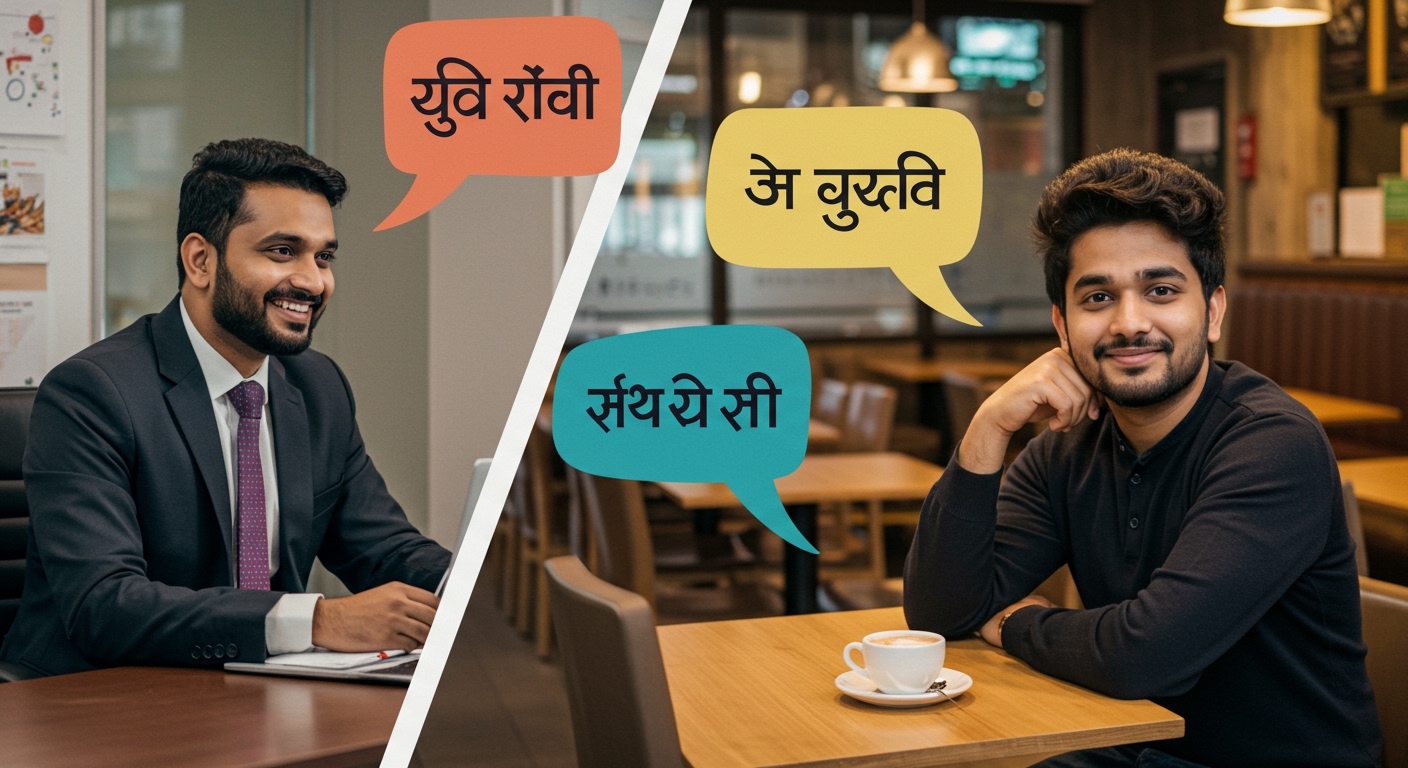
By blending the two languages, speakers achieve a higher level of communicative efficiency. This trend is driven by India’s colonial history, the dominance of English in the Indian education system, and the pervasive influence of Bollywood and social media. Today, using English words is no longer just about necessity; it is a vital tool for social mobility and cultural expression in a globalized economy.
TL;DR: Key Takeaways
- Convenience: English words are often shorter and more “action-oriented” than their formal Hindi counterparts.
- Technical Gaps: Most modern tech, science, and business terms (like Internet or Marketing) have no widely used Hindi equivalents.
- Social Status: English is perceived as a “power language,” signaling high education and corporate readiness.
- Media Influence: Pop culture, especially OTT platforms and YouTube, normalizes the use of English nouns and verbs in Hindi sentences.
- Code-Switching: Hindi speakers naturally “code-switch” to express complex emotions or professional concepts more accurately.
The Rise of Hinglish: A Linguistic Revolution
Language is never static; it evolves to meet the needs of its users. In my years of analyzing urban Indian dialects, I have found that Hinglish is not a “corrupted” version of Hindi. Instead, it is a sophisticated linguistic adaptation.
When we look at why do hindi speakers use english words, we must understand that India is home to the world’s second-largest English-speaking population. However, for many, English is a functional second language rather than a primary mother tongue. This creates a “middle ground” where English words are inserted into Hindi grammatical structures.
The Historical Context
The roots of this usage date back to the British Raj. During the colonial era, English became the language of administration, law, and higher education. Post-independence, rather than discarding English, India integrated it into its Three-Language Formula.
The “Convenience” Factor
Many Hindi words are perceived as “heavy” or overly formal (Sanskritized Hindi). For example, while the Hindi word for “Train” is Lauh Path Gamini, almost no one uses it. The English word Train is simpler, faster, and universally understood across all Indian states.
Socio-Economic Factors: The Prestige of the English Language
In the Indian job market, English proficiency is often equated with intelligence and capability. This creates a psychological drive to incorporate English into daily speech.
Professional Identity
In the IT and BPO sectors, the primary language of operation is English. I’ve noticed that professionals often find it difficult to switch back to “pure” Hindi even at home. Terms like Deadline, Feedback, and Meeting become permanent fixtures in their vocabulary.
Social Mobility and Status
Using English words is frequently used as a social marker. It signals that the speaker is “modern” and “globally connected.” This is especially prevalent among the Gen Z and Millennial demographics who consume global content on Netflix and Instagram.
Technological Gaps and the “Modernity” Factor
One of the most practical reasons why do hindi speakers use english words is the lack of native terminology for modern inventions. Hindi, like many ancient languages, has struggled to keep pace with the rapid explosion of the Digital Age.
Digital Vocabulary
Consider the following words that are used daily by millions of Hindi speakers:
Mobile (instead of Door-Bhash*)
Computer (instead of Sanganak*)
- Password
- Upload/Download
- Selfie
Using the English term is not a choice; it is a necessity. There is no natural-sounding Hindi equivalent for “I am streaming a movie.” If a speaker tried to use pure Hindi for these terms, they would likely not be understood by their peers.
The Comparison of Usage
The following table illustrates the preference for English words in common scenarios:
| Concept | Formal Hindi Word | English/Hinglish Used | Reason for Preference |
|---|---|---|---|
| Transportation | Abhiyantriki | Engineering | Technical Accuracy |
| Education | Vishwavidyalaya | University | Brevity and Commonality |
| Health | Chikitsalaya | Hospital | Universal Recognition |
| Time | Samay | Time | Shorter and Punchier |
| Work | Kaaryalay | Office | Professional Context |
Media Influence: From Bollywood to Social Media
The media plays a massive role in shaping how people talk. Bollywood movies shifted from using “Shuddh” (pure) Hindi in the 1950s to almost entirely Hinglish dialogue in the 2020s.
The Power of Cinema
Famous movie titles and dialogues often mix languages. This reflects the reality of Indian streets. When a superstar says an English line in a Hindi film, it immediately becomes a cultural trend.
Advertising and Marketing
Ad agencies have mastered the art of Hinglish. They know that to sell a product to an urban teenager, they must use the language the teenager speaks. Taglines like “Hungry Kya?” (Are you hungry?) or “Life Ho Toh Aisi” (Life should be like this) use English loanwords to create brand relatability.
Code-Switching: The Psychology of Bilingualism
As an expert in linguistics, I have observed that code-switching (alternating between two languages) serves a psychological purpose. It allows speakers to express nuances that might be lost in a single language.
Emotional Nuance
Sometimes, English words carry less “emotional weight” than Hindi words, making them easier to use in casual conversation. For example, saying “I love you” often feels more natural and less “dramatic” to a modern Hindi speaker than the formal “Main tumse prem karta hoon.”
The “Filler” Phenomenon
Many English words act as functional fillers in Hindi sentences.
- “Actually, mujhe wahan jaana chahiye.”
- “Basically, baat yeh hai…”
- “Anyway, chalo milte hain.”
These words help structure the flow of thought and provide a rhythmic cadence to the conversation.
How Global Companies Leverage This Trend
Understanding why do hindi speakers use english words is a goldmine for international businesses. If you are a brand entering the Indian market, you cannot rely on pure Hindi translations.
- Localization vs. Transliteration: Most successful brands transliterate English words into the Devanagari script rather than translating them.
- App Interfaces: Look at Amazon India or Zomato. They use English words like Order, Cart, and Delivery because those are the terms the users know.
- Customer Support: Hybrid scripts are used in AI Chatbots to ensure the user feels they are talking to a local who understands their modern context.
Future Outlook: Will English Replace Hindi?
While the use of English words is increasing, it is unlikely to replace Hindi. Instead, we are witnessing the birth of a new linguistic identity.
Hindi provides the grammatical “skeleton” (the verbs and structure), while English provides the “flesh” (the nouns and adjectives). This synergy makes the language more resilient and adaptable to the 21st-century global landscape. We are seeing a shift where being “bilingual” is not about knowing two separate languages perfectly, but about mastering the fusion of both.
Frequently Asked Questions (FAQ)
Is Hinglish a formal language?**
While not used in official government documents or legal papers, Hinglish is the standard for journalism, advertising, and casual business communication in India. It is a functional language used by over 350 million people.
Why don’t Hindi speakers use the official Hindi words for technology?**
Official Hindi words for technology (like Sanganak for computer) were created by committees long after the English terms became popular. Since English terms were already globally standardized, the Hindi versions failed to gain traction in daily life.
Does using English words mean someone doesn’t know Hindi?**
Not at all. Most Hindi speakers who use English words are fluent in both. They choose to mix them for speed, clarity, and social context. It is a sign of high linguistic adaptability.
Is this trend seen in other Indian languages?**
Yes. You will find similar patterns in Bengali (Bonglish), Tamil (Tanglish), and Punjabi. However, because Hindi is the most widely spoken language in India, the blend with English is most visible and influential.
What is the impact of English words on the Hindi script?**
Many English words are now written in the Devanagari script (e.g., “डॉक्टर” for Doctor). This has led to the adoption of new symbols, like the inverted crescent (ॉ), to represent English vowel sounds that don’t exist in traditional Hindi.

![Are Fusion Speakers Any Good? [Expert Marine Audio Guide]](https://bestsounds.net/wp-content/uploads/2026/03/are-fusion-speakers-any-good-expert-marine-audio-guide-featured-1774172251.jpg "Are Fusion Speakers Any Good? [Expert Marine Audio Guide]")