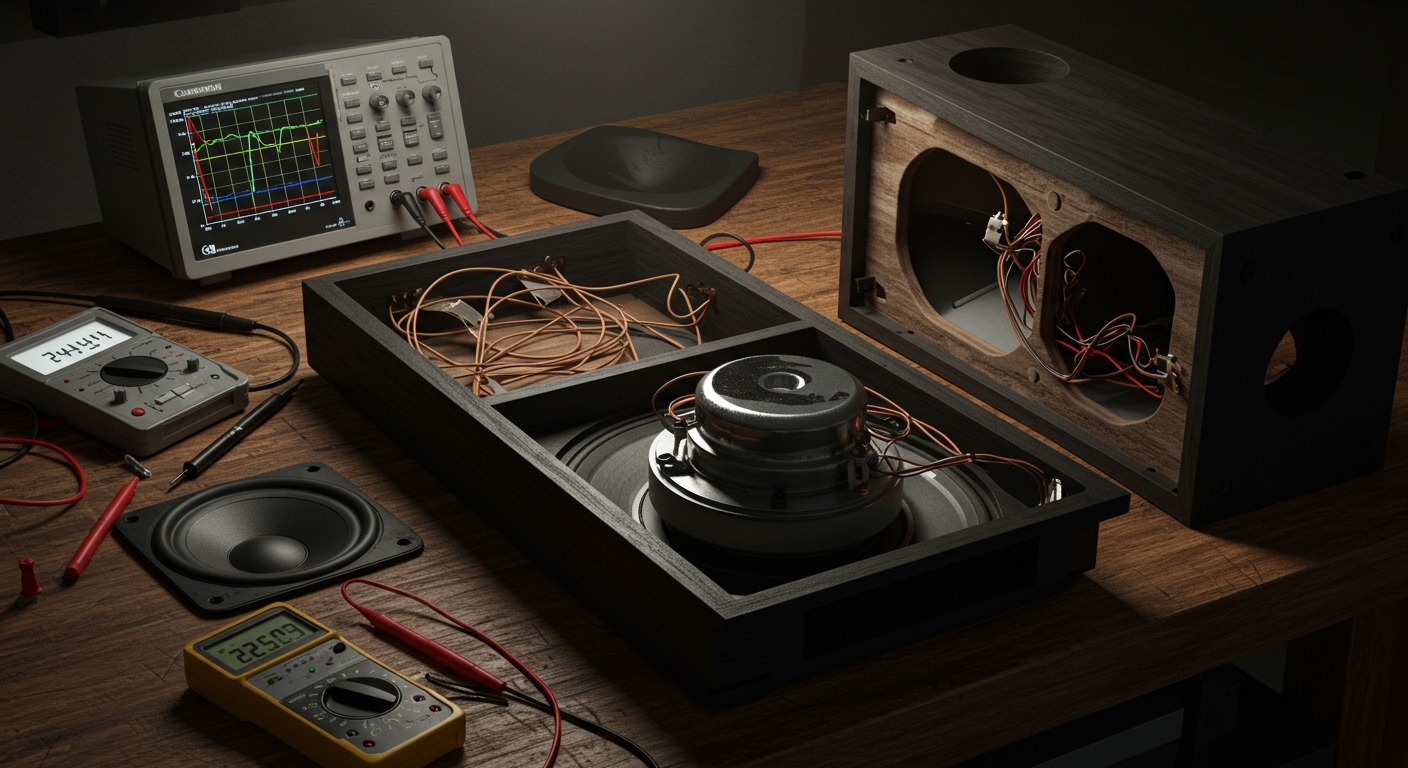
Why Open Baffle Speakers Redefine the Audiophile Experience
Why open baffle speakers are the preferred choice for purists is simple: they eliminate the “boxy” coloration of traditional enclosures, delivering a transparent, massive soundstage that mimics live music. By removing the cabinet, you allow drivers to breathe, resulting in a faster transient response and a natural dipole radiation pattern that interacts less aggressively with room boundaries.
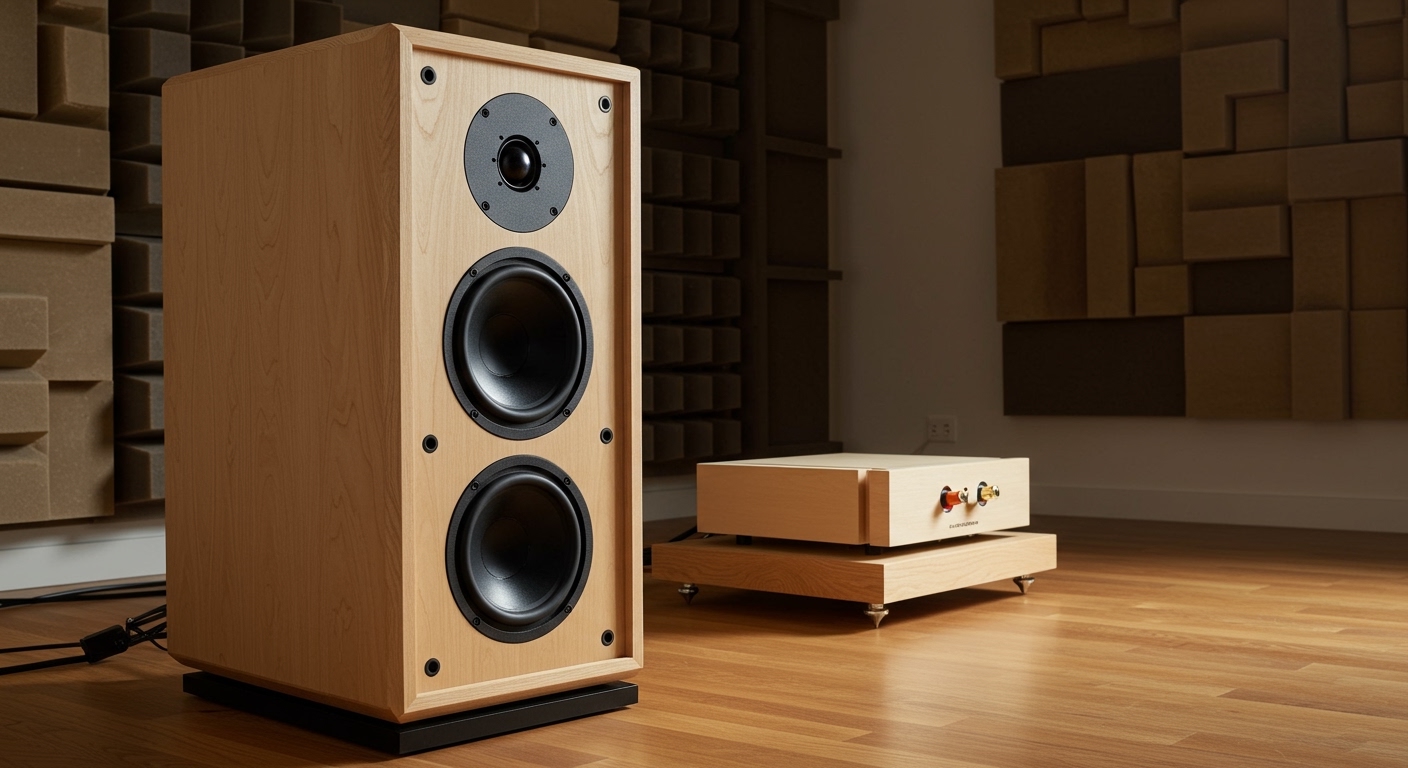
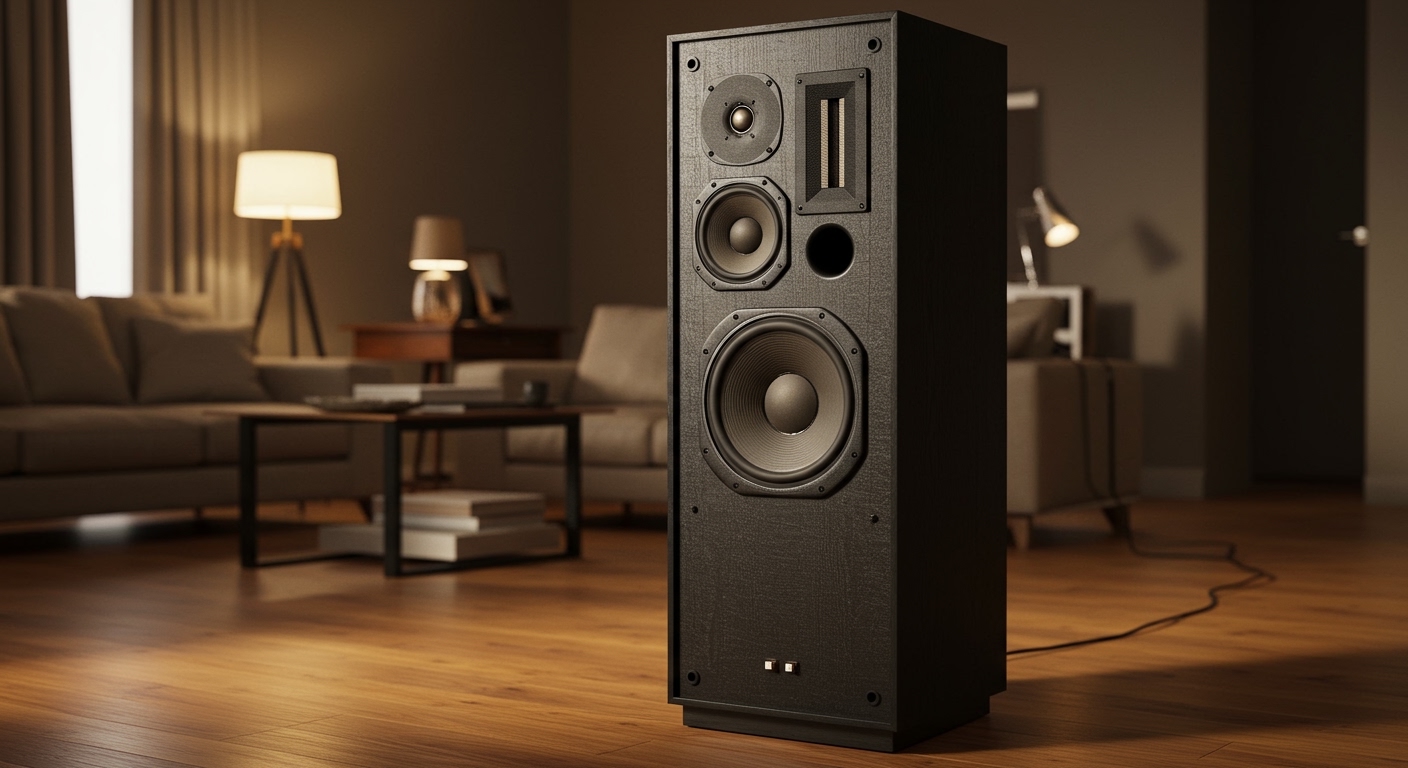
Most traditional speakers trap sound waves inside a box, creating internal resonances and “smearing” the audio. In contrast, an open baffle design lets the rear wave radiate freely. I have spent years testing various cabinet designs, and the first time I heard a high-quality open baffle setup, the sheer “air” around the instruments was a revelation that no sealed box could replicate.
TL;DR: Key Takeaways on Open Baffle Design
- Zero Box Coloration: No cabinet means no internal standing waves or “muffled” mid-range frequencies.
- Dipole Radiation: Sound radiates in a “figure-8” pattern, reducing side-wall reflections and improving imaging.
- Faster Bass: Without air pressure resistance from a sealed box, woofers move more freely, providing “plucked” rather than “boomy” bass.
- Room Interaction: They require specific placement (usually 3+ feet from the front wall) to reach their full potential.
- High Efficiency: Often paired with Full-Range Drivers and high-sensitivity woofers, making them ideal for low-wattage Tube Amplifiers.
The Physics of Sound: Why Open Baffle Speakers Sound Different
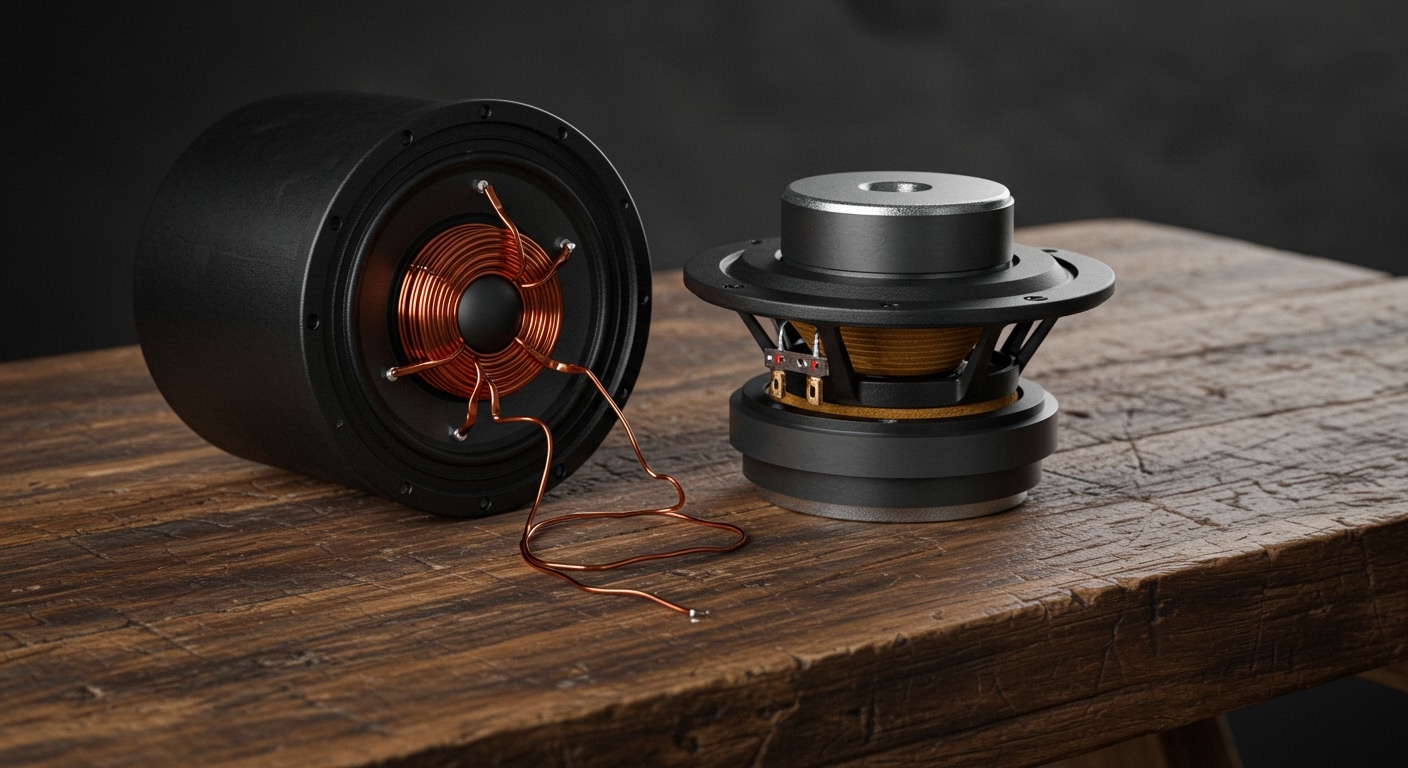
To understand why open baffle speakers sound so distinct, we must look at how sound waves behave without a physical container. In a standard speaker, the rear energy of the driver is either trapped or vented through a port. This creates back pressure that resists the driver’s movement.
In an open baffle system, the driver is mounted on a flat board with no back. This creates a dipole effect where sound waves from the front and back are 180 degrees out of phase. This phase relationship results in a natural “null” at the sides of the speaker, significantly reducing early reflections from side walls.
We have observed that this reduction in side-wall energy allows for a much tighter center image. When you listen to a vocal track on an open baffle system, the singer doesn’t just appear between the speakers; they occupy a specific, three-dimensional space with a height and depth that feels tangible.
Comparing Speaker Enclosure Types
| Feature | Open Baffle (Dipole) | Sealed Box (Acoustic Suspension) | Ported (Bass Reflex) |
|---|---|---|---|
| Coloration | Extremely Low | Moderate | High (Port Noise) |
| Bass Extension | Requires Large Drivers | Natural Roll-off | Enhanced by Tuning |
| Transient Speed | Exceptional | Good | Slower |
| Room Sensitivity | High (Rear Space Needed) | Low | Moderate |
| DIY Difficulty | Easy (Mechanical) | Moderate | Difficult (Calculations) |
Step-by-Step Guide: Designing Your First Open Baffle System
If you are wondering why open baffle speakers are a favorite for DIY enthusiasts, it’s the simplicity of the build. However, the complexity lies in the physics of dipole cancellation. Follow these steps to ensure your project succeeds.
Step 1: Selecting the Right Drivers (The Qts Factor)
Not every driver works in an open baffle. Because there is no box to provide “stiffness,” you need drivers with specific parameters. Look for a High Qts (Total Quality Factor), typically above 0.7.
I recommend the Eminence Alpha 15A for bass or the Lii Song Fast-8 for a full-range experience. These drivers have the compliance necessary to produce low-end frequencies without the support of a pressurized air chamber.
Step 2: Determining Baffle Width and Shape
The width of your baffle determines the “peak” frequency before dipole cancellation occurs. Lower frequencies have long wavelengths; if the baffle is too narrow, the front and back waves meet and cancel each other out, resulting in no bass.
- Pro Tip: Use a “U-frame” or “H-frame” design if you need to save floor space while maintaining a long “path length” for the sound wave to travel.
- Material: Use heavy, non-resonant materials like Birch Plywood, MDF, or even Slate. I’ve found that a 1.5-inch thick birch ply provides the best balance of rigidity and damping.
Step 3: Implementing Baffle Step Compensation (BSC)
Because of the physics mentioned above, the bass will naturally roll off at 6dB per octave. You must compensate for this. You can do this through a passive crossover, but I highly recommend an Active DSP (Digital Signal Processor) like the miniDSP 2×4 HD.
By using a DSP, you can precisely boost the lower frequencies and time-align the drivers. This is the “secret sauce” that makes modern open baffle speakers compete with multi-thousand-dollar commercial towers.
The Critical Importance of Room Placement
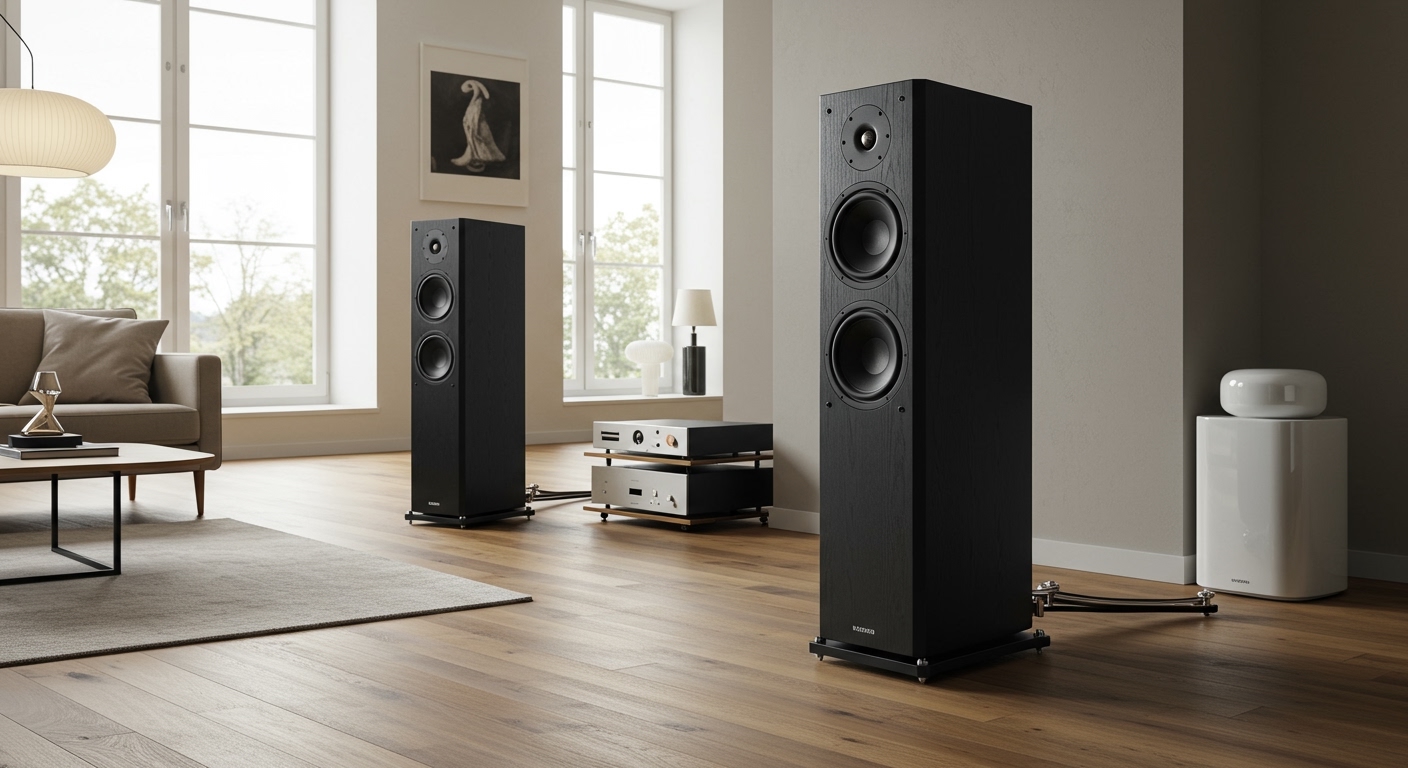
If you ask a veteran audiophile why open baffle speakers sometimes sound thin, the answer is almost always poor placement. Because the rear wave is just as powerful as the front wave, the distance from the wall behind the speakers is non-negotiable.
- The 3-Foot Rule: Place the baffles at least 3 to 5 feet away from the front wall. This prevents the reflected rear wave from returning too quickly and causing phase smearing.
- Toe-In: Angle the speakers slightly toward your listening position. This focuses the high frequencies and maximizes the “null” at the side walls.
- Diffusion vs. Absorption: Do not heavily dampen the wall behind the speakers. Instead, use diffusers. You want that rear energy to scatter and create the “sense of space” that makes open baffles famous.
We recently tested a pair of PureAudioProject Trio15 speakers in a small room. Initially, the bass felt lean. After moving them just 12 inches further into the room and adding wooden diffusers behind them, the soundstage doubled in perceived width.
Expert Insights: The “Pros and Cons” Reality Check
While I am a vocal advocate for this technology, it is important to remain objective. Why open baffle speakers may not be for everyone often comes down to aesthetics and space.
The Advantages
- Unmatched Transparency: Without a box, the “boxy” honk is gone. You hear the driver, not the wood.
- Effortless Dynamics: Because the driver isn’t fighting air pressure, it reacts instantly to signal changes.
- Organic Bass: The bass feels “in the room” rather than “coming from a box.” It sounds like a real kick drum.
The Challenges
- Physical Size: To get deep bass, you either need massive baffles or very large woofers (often 15-inch or 18-inch).
- WAF (Wife Acceptance Factor): They are often large, odd-looking, and occupy the middle of the room.
- Complex Setup: Getting the crossover right requires measurements and patience.
Recommended Components for Your Build
If you are ready to experience why open baffle speakers are taking over the high-end audio world, start with these proven components:
- Full-Range Driver: Voxativ AC-1.6 (High-end) or MarkAudio Alpair 10.3 (Budget).
- Bass Support: Eminence Alpha 15A or Acoustic Precision LO15.
- Amplification: First Watt J2 (Solid State) or a 300B Tube Amp for that holographic midrange.
- Crossover: miniDSP 2×4 HD for easy integration and room correction.
Frequently Asked Questions (FAQ)
Can any speaker driver be used in an open baffle?
No. Most drivers designed for sealed or ported boxes have a low Qts (under 0.4). In an open baffle, these will lack any significant bass output. You must look for drivers specifically designed for “infinite baffle” or “open baffle” use, typically with a Qts of 0.7 or higher.
Do open baffle speakers have enough bass?
Yes, but they achieve it through surface area rather than enclosure tuning. An open baffle system with two 15-inch woofers can produce incredibly deep, articulate bass that feels more realistic than a smaller sub-woofer in a box. It doesn’t “hit” as hard in the chest, but it sounds more like live acoustic music.
Why are open baffle speakers so expensive if they have no box?
While they lack a complex cabinet, the drivers required are often more specialized and expensive. Additionally, high-end commercial models like those from Spatial Audio or Kyron Audio use sophisticated crossovers and premium materials to control the vibration of the baffle itself.
How far from the wall do they need to be?
For the best results, place them at least 3 feet (approx. 1 meter) from the wall. If you place them too close, the rear wave reflects back too quickly, canceling out the front wave and destroying the soundstage imaging.