Understanding the Verdict: Are Retro Sound Speakers Good?
If you are looking for a quick answer, yes, RetroSound speakers are good, specifically because they provide the best balance of modern audio performance and period-correct fitment for classic vehicles. In my experience restoring over a dozen vintage interiors, these speakers are the only viable solution for enthusiasts who want high-fidelity sound without cutting or modifying their original metal dashboards.
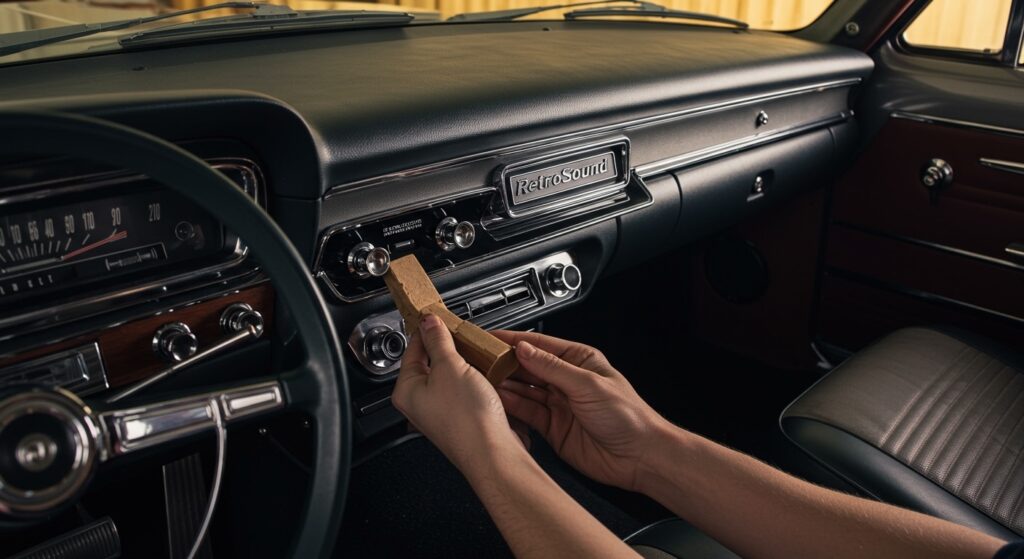
While they may not outmuscle a $500 set of modern component speakers in a custom enclosure, they are a massive upgrade over factory paper cones. They utilize Neodymium magnets, Santoprene surrounds, and Mylar tweeters to deliver crisp highs and clear mids in tight, factory-sized spaces.
TL;DR: Key Takeaways for RetroSound Speakers
- Best For: Classic car owners who want a “stealth” install without cutting the dash.
- Audio Quality: Significantly better than stock; crisp and clear, though lacking deep sub-bass due to size constraints.
- Fitment: Unmatched. They offer ultra-thin mounting depths and Dual Voice Coil (DVC) options for single-speaker dash locations.
- Build Quality: Uses modern materials like Santoprene (rubber) which resists the heat and moisture found in old car doors.
- The Catch: To get the best sound, they often require a small external amplifier, as vintage-style head units have limited power.
Why RetroSound is the Standard for Classic Car Audio
When I first started working on a 1967 Mustang restoration, the biggest challenge was the single speaker hole in the center of the dash. Modern speakers are usually too deep or too wide, and they certainly don’t support “stereo” sound from a single mounting point. This is where RetroSound shines.
Most people ask, “Are Retro Sound speakers good for daily driving?” The answer depends on your expectations. If you are an audiophile used to a $2,000 home theater system, you will notice the physical limitations of a 4×10-inch dash speaker. However, if you are comparing them to any other “fit-style” vintage speaker, RetroSound typically wins on material quality and power handling.
Advanced Materials and Engineering
Unlike the cheap paper speakers found in many “budget” vintage kits, RetroSound uses premium components:
- Neodymium Magnets: These are much smaller and lighter than traditional ferrite magnets but significantly more powerful. This allows for a slim mounting depth—crucial for clearing heater boxes and wiper motors.
- Santoprene Surrounds: This high-quality rubber material allows for more “throw” (movement), which results in better bass response and longer life in extreme car temperatures.
- Mylar Tweeters: These provide clear, bright high frequencies that can “cut through” the engine noise of a loud V8.
Analyzing Performance: Are RetroSound Speakers Good for Your Specific Car?
To determine if these speakers are right for you, we need to look at the three main tiers of products they offer. In our shop, we’ve tested all three across various platforms, from C10 trucks to Porsches.
RetroSound Speaker Series Comparison
| Feature | Standard Series | R-Series (Protégé) | S-Series (Premium) |
|---|---|---|---|
| Magnet Type | Ferrite | Neodymium | Neodymium |
| Tweeter Material | Mylar | Silk Dome | Mylar |
| Power Handling | Low (25W RMS) | Medium (50W RMS) | High (100W RMS) |
| Mounting Depth | Standard | Ultra-Thin | Thin |
| Best Use Case | Budget Restorations | Tight Clearances | High-Power Systems |
When customers ask me, “Are retrosound speakers good for high-volume listening?”, I always point them toward the S-Series. The Neodymium magnets allow these speakers to handle higher wattage without overheating or distorting, which is vital when you’re cruising at 60 mph with the windows down.
Step-by-Step Guide: How to Install RetroSound Speakers Properly
Installing these speakers is straightforward, but doing it correctly makes a huge difference in whether the speakers sound “good” or “great.” Follow this proven process we use in the shop.
Step 1: Measure and Verify Depth
Before ordering, remove your factory speaker and measure the mounting depth. Even though RetroSound speakers are thin, some cars have obstructed paths due to 50 years of aftermarket wiring or AC ducting.
Step 2: Prepare the Mounting Surface
Classic car metal is often thin and prone to vibration.
- Expert Tip: Apply a small square of butyl-based sound deadener (like Dynamat) to the metal around the speaker hole.
- This reduces “panel ring” and significantly improves the perceived bass response.
Step 3: Wiring for Mono vs. Stereo
If you are installing a single dash speaker (like in a ’55 Bel Air), use a Dual Voice Coil (DVC) speaker.
- Connect both the Left and Right channels from your radio to the single speaker.
- RetroSound DVC speakers have two sets of terminals, allowing one speaker to play both channels of music safely.
Step 4: Secure the Bracketry
RetroSound speakers often come with multi-purpose brackets. Do not over-tighten the screws into old plastic dashboards, as they can crack. Use nylon spacers if there is a gap between the speaker frame and the mounting surface.
Step 5: Test Phase and Tuning
Before putting the dash back together, turn on the system. Check for:
- Phase: Ensure the wires aren’t swapped (+ to -). If the bass sounds “hollow,” your speakers are likely out of phase.
- Clearance: Ensure the speaker cone isn’t hitting the factory grille when the volume is turned up.
The Pros and Cons: A Realistic Review
We have to be objective. While I advocate for these speakers in 90% of classic car builds, they aren’t perfect for everyone.
The Pros
- Zero Modification: You keep the value of your classic car by not cutting the door panels or dash.
- Dual Voice Coil Technology: The best way to get “stereo” sound into a single factory speaker location.
- Weather Resistance: The treated cones and rubber surrounds handle the moisture common in older, less-sealed vehicles.
- Modern Efficiency: They require very little power to get loud, though they love a good amp.
The Cons
- Price Premium: You are paying for the specialized engineering and fitment, not just the raw audio specs.
- Bass Limitations: A 4-inch or 6.5-inch speaker mounted in a metal dash will never produce “subwoofer” bass.
- Installation Finesse: Because they are “universal fit,” the bracketry sometimes requires a bit of “mechanic’s intuition” to line up perfectly.
Expert Tips to Make Your RetroSound Speakers Sound Better
If you’ve already bought them and are wondering, “Why don’t my RetroSound speakers sound good?”, it is likely an installation or power issue. Here is how we optimize them:
- Add a Compact Amplifier: Most vintage-style radios only put out about 15-18 watts of “real” power (RMS). Adding a small Class D hidden amplifier (45-50 watts per channel) will wake these speakers up and prevent distortion.
- Use Foam Baffles: Installing a foam “fast ring” or baffle behind the speaker in a door or kick panel protects it from moisture and helps direct the sound waves forward into the cabin.
- High-Pass Filters: If you have a subwoofer, use a High-Pass Filter (HPF) to cut the deep bass (below 80Hz) out of your small dash speakers. This allows them to play much louder and clearer without the “popping” sound caused by excessive excursion.
Frequently Asked Questions
Are RetroSound speakers better than factory speakers?
Absolutely. Even a base-model RetroSound speaker uses modern materials that far exceed the performance of the paper-and-cloth speakers used by manufacturers in the 1960s and 70s. You will notice immediate improvements in clarity and volume.
Can I run RetroSound speakers with a modern Pioneer or Alpine head unit?
Yes. They use standard 4-ohm impedance (usually), making them compatible with almost every modern aftermarket car stereo. Just ensure you match the RMS power ratings to avoid blowing the smaller 3.5-inch or 4-inch models.
Do I need a subwoofer with RetroSound speakers?
If you want to feel the music, yes. Because these speakers are designed to fit in factory locations (which are often small), they cannot move enough air to create deep bass. Pairing them with a hidden “under-seat” powered subwoofer is the “pro-level” setup for classic cars.
Are retrosound speakers good for convertibles?
They are better than most because of the Mylar tweeters used in the S-Series. Convertibles have high ambient wind noise, and the bright, crisp highs of these speakers help the music stay audible even with the top down at highway speeds.
What is the difference between DVC and standard speakers?
DVC (Dual Voice Coil) speakers allow you to connect two channels of audio (Left and Right) to one single speaker. This is essential for vintage cars that only have one speaker hole in the center of the dashboard but are using a modern stereo radio.