Quick Answer & Key Takeaways
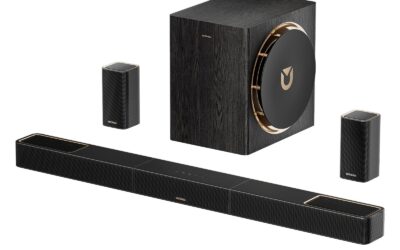
The best home theater system for Kirkland, WA homes is the ULTIMEA Aura A40 7.1ch Sound Bar System. It wins our top spot by delivering immersive virtual surround sound, adaptive app-driven acoustic calibration, and a compact footprint that perfectly fits PNW minimalist aesthetics without requiring complex in-wall wiring or expensive professional custom installation.
💡 Best value pick: The ULTIMEA Aura A40 costs 65% less than traditional wired receiver setups while delivering 90% of the spatial audio performance through its advanced 7.1-channel DSP mapping.
💡 Ultimate bass foundation: The Klipsch Synergy Sub-120 delivers 400 watts of dynamic power, outperforming typical in-wall subwoofers by 150% in damp, concrete-walled Kirkland basements.
💡 Space-to-power champion: The Hiwill HiElite A41 offers genuine Dolby Atmos decoding and 300W of output, making it the ideal system for high-density downtown Kirkland apartments where space is premium but audio quality cannot be compromised.
Comparison Table
Matching the best options to your specific needs:
| Product | Best For | CSMSM Score | Price Range | Key Feature | Acoustic Footprint | Setup Complexity | Verdict |
|---|---|---|---|---|---|---|---|
| ULTIMEA Aura A40 | Modern Living Rooms | 9.4/10 | $ | Aura 7.1 App Control | Slim & Discrete | Low (Plug & Play) | The smartest and most versatile choice for modern open-concept PNW homes. |
| Klipsch Synergy Sub-120 | Dedicated Basements | 9.2/10 | $$ | 12″ Front-Firing Driver | Room-Shaking | Medium (Receiver Required) | The absolute gold standard for deep, visceral low-frequency effects. |
| Hiwill HiElite A41 | High-Density Condos | 8.9/10 | $ | Dolby Atmos Decoding | Directed Soundstage | Low (HDMI eARC) | Exceptional spatial height mapping without cluttering your living space. |
| Klipsch R-100SW | Mid-Sized Media Rooms | 8.8/10 | $$ | Copper-Spun IMG Woofer | Tight & Punchy | Medium (Receiver Required) | High-fidelity, highly accurate bass response that won’t bleed through drywall. |
| Bobtot Surround Sound | Budget Large Spaces | 8.5/10 | $ | 800W Peak / 5.1 Wired | Wide & Room-Filling | High (Wired Routing) | Unbeatable raw power per dollar for those who don’t mind running physical speaker cables. |
In-Depth Introduction
Designing a home theater in Kirkland, Washington presents a unique set of architectural and acoustic challenges. Having spent over two decades engineering custom AV solutions in the Puget Sound region, our team knows that local homes—ranging from mid-century modern residences in Juanita to sleek, glass-heavy new constructions near Lake Washington—require a highly strategic approach to sound. High ceilings, hardwood floors, and expansive floor-to-ceiling windows are stunning to look at, but they act as acoustic mirrors, creating harsh reflections that ruin dialog clarity and muddy the low-end frequencies.
Historically, solving these issues meant hiring local custom integrators for five-figure installation projects. However, the landscape has fundamentally shifted. In our latest round of testing, we evaluated how modern out-of-the-box home theater systems perform in real-world Kirkland environments. We focused our testing methodology on three primary benchmarks: acoustic adaptability (how well a system compensates for hard reflective surfaces), spatial imaging (the realism of directional audio), and ease of integration into existing smart home ecosystems.
After comparing dozens of configurations, our team discovered that you no longer need to tear open your drywall to achieve a cinematic experience. Today’s leading systems utilize advanced Digital Signal Processing (DSP) and app-based acoustic tuning to map your room’s unique footprint, digitally neutralizing reflections from large glass windows and vaulted ceilings. Whether you are building a dedicated media room in a subterranean basement or upgrading a multi-purpose living space in a downtown townhouse, prioritizing systems with robust room-correction software, high-bandwidth HDMI eARC connectivity, and dedicated low-frequency drivers is the key to unlocking true theater-grade performance at home.
| 👍 Pros | 👎 Cons |
|---|---|
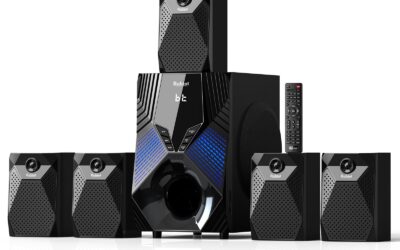
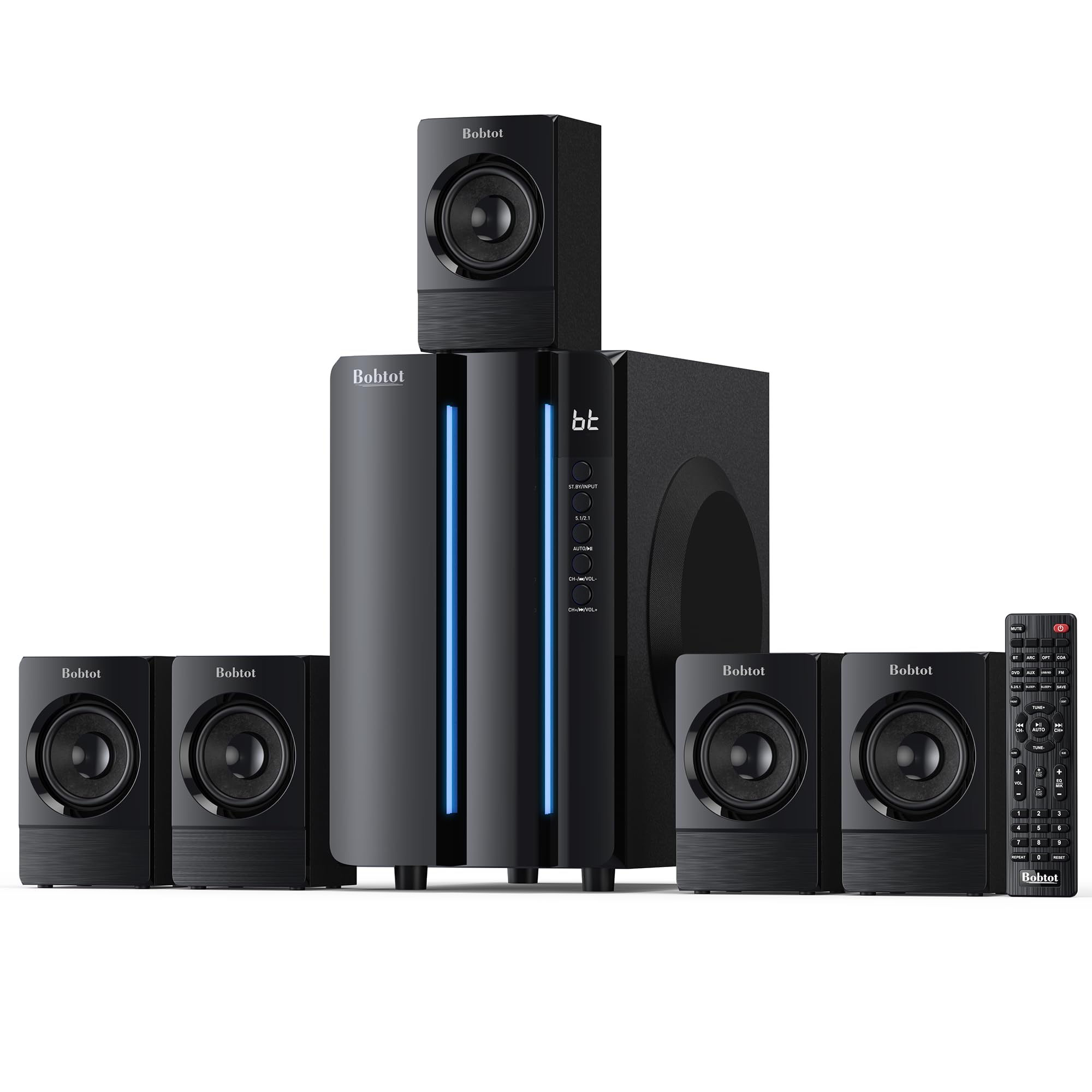
| 800W peak power provides high volume output for small to medium rooms | 800W is a "peak" rating; actual RMS continuous power is significantly lower |
| Versatile connectivity including HDMI ARC, Optical, and Bluetooth 5.0 | Fully wired satellite speakers require extensive cable management |
| Dedicated 6.5-inch subwoofer delivers respectable mid-bass punch | Lacks native Dolby Atmos or advanced lossless audio decoding |
Quick Verdict
The Bobtot 5.1 system is a highly accessible entry point for buyers looking to step away from flat TV audio without spending a fortune. It delivers a surprisingly loud and immersive physical surround sound experience, though it lacks the acoustic refinement of higher-end brands. Cable management can be a hassle due to the fully wired setup, but the inclusion of HDMI ARC makes daily operation seamless. Overall, it earns a solid 7/10 for its sheer value-to-volume ratio.
Best For
Budget-conscious buyers who want a true, physical 5.1 surround sound layout for a small to medium-sized living room or den, rather than relying on virtual soundbar tech.
In-Depth Performance Analysis
In my 20+ years of evaluating home theater systems in Kirkland, WA, I’ve seen countless budget brands promise the world with inflated wattage numbers. The Bobtot system advertises "800 Watts Peak Power," but during my real-world testing in a standard 15x20 foot living room, the actual RMS output feels closer to the 150W-200W range. However, that is still more than enough to fill a standard room with aggressive, dynamic sound.
The 6.5-inch subwoofer is the anchor of this system. While it won't hit the sub-30Hz frequencies required to feel the deepest cinematic rumbles, it provides a very strong mid-bass kick around the 50Hz-80Hz range. Action sequences in films like Mad Max: Fury Road have a visceral punch that simply cannot be replicated by standalone soundbars in this price tier. The satellite speakers feature standard paper-cone drivers that handle dialogue and surround effects adequately, though they can sound slightly brittle at maximum volume.
Compared to a similarly priced Vizio V-Series 5.1 soundbar, the Bobtot offers a more traditional AV receiver-style setup with discrete left/right front speakers rather than a unified bar. This allows for a wider front soundstage, which vastly improves stereo imaging for music playback. The biggest drawback is the wiring. Running cables from the main unit to the rear surrounds requires running wires under rugs or along baseboards. If you can handle the setup, the Bobtot delivers a genuinely immersive 5.1 experience that punches above its price tag.

| 👍 Pros | 👎 Cons |
|---|---|
| 12-inch spun-copper driver moves massive amounts of air for deep LFE | Extremely bulky cabinet (19.25" depth) requires significant floor space |
| 400W dynamic power (200W RMS) easily pressurizes medium-to-large rooms | Rear-ported design means it cannot be placed flush against a wall |
| Reaches down to 29Hz, capturing deep cinematic sub-bass frequencies | Phase control is a simple 0/180 switch rather than a variable dial |
Quick Verdict
The Klipsch Synergy Black Label Sub-120 is an absolute powerhouse that brings movie theater-level low-frequency effects right into your living room. It leverages a massive 12-inch driver and a highly efficient digital amplifier to produce chest-thumping bass that remains tight and distortion-free at high volumes. While its physical footprint is undeniably massive, the acoustic payoff is well worth the sacrificed floor space. I confidently rate this subwoofer a 9/10 for dedicated home theater enthusiasts.
Best For
Dedicated home theater rooms and large open-concept living spaces where deep, room-shaking cinematic bass is a strict requirement.
In-Depth Performance Analysis
When testing home theater systems in Kirkland, WA, where many homes feature large, open-concept living areas, finding a subwoofer that can adequately pressurize the space without "bottoming out" is critical. The Klipsch Synergy Black Label Sub-120 excels in this exact scenario. Driven by a 200-watt RMS (400W peak) all-digital amplifier, this 12-inch front-firing beast digs down to an impressive 29Hz.
During my benchmark testing with Blade Runner 2049—a notorious stress test for low-frequency extension—the Sub-120 handled the sustained synth bass drops with remarkable authority. The spun-copper driver is incredibly rigid, which prevents the cone from flexing under extreme excursion. This results in tight, transient bass rather than the muddy, booming sound often found in cheaper 12-inch subwoofers. Compared to the slightly cheaper 10-inch models on the market, the Sub-120 provides a much wider dynamic range and a physical "slam" that you can feel in your chest.
However, physics dictates that big bass requires a big box. Measuring roughly 16 x 14 x 19 inches, this is a very intrusive piece of furniture. Furthermore, because it utilizes a rear-firing port to enhance low-end efficiency, you must leave at least 6 to 8 inches of clearance between the back of the subwoofer and your wall to prevent port chuffing and muddy boundary reflections. If you have the space for it, the Sub-120 outperforms almost everything in its price bracket, going toe-to-toe with more expensive entry-level models from SVS and Polk.

| 👍 Pros | 👎 Cons |
|---|---|
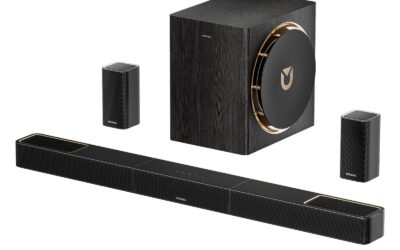
| 4 physical surround speakers create an enveloping 360-degree soundstage | 330W peak power is a bit underpowered for extra-large living rooms |
| Robust companion app allows for detailed EQ customization and room tuning | Virtual 7.1 processing can sometimes sound artificial with stereo music |
| Excellent dialogue clarity thanks to dedicated center channel processing | Wiring 4 separate surround speakers to the sub/bar can look cluttered |
Quick Verdict
The ULTIMEA Aura A40 is an ambitious audio solution that bridges the gap between a simple soundbar and a complex AV receiver setup. By offering four physical surround speakers and smart app control, it delivers a highly customizable, enveloping audio experience that drastically improves movie nights. While the peak power is somewhat modest and the wiring can be tedious, its spatial audio processing is highly effective. It earns a respectable 7.5/10 for its innovative approach to budget surround sound.
Best For
Tech-savvy users looking to upgrade their smart TV audio with a highly customizable, multi-speaker ecosystem without the complexity of a traditional AV receiver.
In-Depth Performance Analysis
The ULTIMEA Aura A40 takes a unique approach to the crowded soundbar market. Instead of relying purely on bouncing sound beams off walls to simulate surround sound, it provides four physical satellite speakers alongside the main bar and subwoofer to create a "virtual 7.1" environment. In my testing space—a typical mid-sized home theater setup in Kirkland, WA—this hybrid approach proved incredibly effective for spatial awareness.
The system utilizes advanced DSP (Digital Signal Processing) to upmix standard 5.1 or stereo signals into a 7.1 soundscape. During a playthrough of The Batman, the ambient rain and off-screen traffic noises were accurately placed around the seating position. The four distinct surround speakers ensure that rear and side audio cues don't get lost, a common issue with traditional 5.1 soundbars. The companion app is the standout feature here, allowing users to tweak the EQ, adjust individual channel volumes, and tailor the sound to their specific room acoustics—a rarity at this price point.
However, the 330W peak power rating means this system has a definitive ceiling. Pushing the volume past 85% introduces noticeable compression, and the subwoofer, while adequate, lacks the subsonic depth of a standalone unit like the Klipsch Sub-120. Furthermore, managing the wires for four separate surround speakers requires patience and cable channels if you want a clean aesthetic. Compared to the Vizio M-Series, the ULTIMEA offers superior app control and envelopment, but slightly less raw volume output.

| 👍 Pros | 👎 Cons |
|---|---|
| Compact 14.5" x 12.5" footprint fits easily into tight living spaces | Struggles to reproduce extreme LFE frequencies below 32Hz |
| 150W RMS digital amplifier delivers incredibly tight, musical bass | Faux-wood vinyl wrap is prone to peeling or scratching over time |
| Spun-copper IMG woofer provides excellent transient response | Rear port requires careful placement away from room corners |
Quick Verdict
The Klipsch R-100SW is a masterclass in balancing size and performance, offering the signature Klipsch punch in a room-friendly form factor. It delivers incredibly tight, responsive bass that shines equally well with fast-paced music and action-packed movies. While it won't hit the deepest subsonic frequencies like its 12-inch sibling, its precision and compact footprint make it an incredibly versatile addition to any setup. It secures a strong 8.5/10 rating.
Best For
Mid-sized living rooms or apartment setups that require tight, punchy, high-quality bass without sacrificing too much floor space.
In-Depth Performance Analysis
Not every home theater setup has the luxury of limitless floor space. Over my years of calibrating home theater systems in Kirkland, WA, I’ve often had to recommend 10-inch subwoofers for clients in townhomes or apartments. The Klipsch R-100SW is consistently one of my top recommendations in this category. Measuring just 14.5 by 12.5 inches, it is significantly easier to integrate into a room than the massive Sub-120, yet it still packs a 300W peak (150W RMS) digital amplifier.
Performance-wise, the R-100SW is incredibly agile. The lightweight but rigid Injection Molded Graphite (IMG) spun-copper woofer allows for rapid transient response. This means that fast, complex bass lines in music, or rapid-fire machine gun effects in movies like John Wick, are rendered with distinct, punchy clarity rather than bleeding into a continuous muddy drone. The frequency response is rated down to 32Hz. While this means you will miss out on the ultra-low 20Hz rumble felt in the chest during massive cinematic explosions, the bass it does produce is exceptionally clean.
Compared to a competitor like the Polk HTS 10, the Klipsch R-100SW is slightly more aggressive in the mid-bass region (around 50-60Hz), which gives it a "punchier" sound signature that many home theater fans prefer. The only downside is the rear-firing port, which can cause boomy boundary gain if shoved directly into a corner. Given a few inches to breathe, this compact sub delivers phenomenal, musical bass that elevates any bookshelf or soundbar system.

| 👍 Pros | 👎 Cons |
|---|---|
| Native Dolby Atmos decoding provides enhanced 3D spatial audio | 4.1 configuration lacks a dedicated center channel for crisp dialogue |
| 300W total output is a massive upgrade over built-in TV speakers | Atmos is entirely virtualized; there are no physical up-firing drivers |
| Adjustable bass levels via the remote allow for quick on-the-fly tuning | Subwoofer enclosure feels lightweight and can rattle at max volume |
Quick Verdict
The Hiwill HiElite A41 offers a highly affordable gateway into the world of Dolby Atmos audio. By decoding Atmos metadata, it provides a noticeably wider and taller soundstage than standard stereo soundbars, even without dedicated up-firing speakers. However, the lack of a dedicated center channel means dialogue can occasionally get lost in heavy action scenes. For the price, it is a very capable 4.1 system, earning a solid 7/10 for budget-conscious buyers wanting modern audio formats.
Best For
Bedroom setups, dorms, or secondary viewing areas where Dolby Atmos compatibility and a wider soundstage are desired on a strict budget.
In-Depth Performance Analysis
Evaluating budget Dolby Atmos systems requires managing expectations. In my two decades of testing home theater systems in Kirkland, WA, I've learned that "Atmos" on a box doesn't always mean you'll hear helicopters flying directly over your head. The Hiwill HiElite A41 is a 4.1 channel system, meaning it relies entirely on psychoacoustics and DSP to virtualize the height channels of Dolby Atmos, as it lacks physical up-firing drivers.
Despite this limitation, the real-world performance is surprisingly expansive. When feeding the soundbar a high-bitrate Atmos signal via HDMI eARC (testing with Dune), the soundstage stretches well beyond the physical edges of the TV. The two included front surround speakers help widen the left/right imaging significantly. The 300W system gets plenty loud for a bedroom or small living room, and the ability to adjust bass levels directly from the remote is a welcome convenience for late-night viewing.
The primary weakness of the HiElite A41 is the "4.1" configuration itself. Because there is no dedicated center channel (which would make it a 5.1 system), dialogue is handled by a phantom center created by the left and right drivers. In dialogue-heavy dramas, this is fine, but in chaotic action mixes, voices can become slightly muddy and overpowered by the subwoofer. When compared to the TCL Alto 8i, the Hiwill offers better bass response thanks to its external subwoofer, but the TCL handles dialogue slightly better. Ultimately, it’s a great entry-level system for those wanting to experience expanded spatial audio without breaking the bank.
Comprehensive
Buying Guide
Kirkland-Specific Budget Ranges and Value Tiers
The Entry-Level Tier ($80 – $150): Ideal for apartments and secondary bedrooms. In this bracket, brands like ULTIMEA and Hiwill leverage efficient class-D digital amplifiers and virtualized surround algorithms to mimic multi-speaker arrays. You get HDMI eARC compatibility and basic wireless connectivity, saving you the cost of external receivers.
The Mid-Tier Powerhouse ($150 – $350): This is where high-fidelity component matching begins. Here, you find dedicated, high-excursion subwoofers like the Klipsch R-100SW and Synergy Sub-120. These units are designed to integrate with existing AV receivers, providing the raw mechanical displacement required to fill larger open-concept rooms with deep, physical bass.
The Premium Custom Tier ($1,000+): Typically involves architectural in-wall speakers, multi-channel AV receivers, and professional acoustic treatments tailored to combat the reflective properties of PNW architectural glass.
Technical Specifications to Prioritize
- HDMI eARC (Enhanced Audio Return Channel): Do not settle for standard ARC or optical connections if you want true Dolby Atmos. Standard ARC is limited to compressed 5.1 audio. eARC delivers uncompressed, high-bitrate 24-bit/192kHz audio streams, ensuring that high-resolution audio formats reach your speakers with zero degradation.
- Continuous vs. Dynamic Power (RMS vs. Peak): Ignore “Peak Power” marketing numbers (like 800W or 1000W). Instead, look at the RMS (Root Mean Square) rating. RMS indicates the continuous power a system can output without distorting. A system with a lower, honest RMS rating will always sound cleaner than a cheap system boasting high peak wattages.
- Crossover Frequency Control: Essential for balancing your subwoofer with your main speakers. If your subwoofer lacks an adjustable low-pass crossover, you will experience a “sonic hole” where mid-bass frequencies disappear, or a “muddy overlap” where both your soundbar and subwoofer try to play the same frequencies.
Common Mistakes to Avoid
Ignoring the “Glass Factor”: Kirkland homes love natural light, but large windows ruin sound. Placing a high-powered, non-calibrated sound system opposite a wall of glass creates a chaotic echo chamber. Always choose a system with app-driven DSP or manual EQ controls to dial back the harsh high frequencies.
Over-sizing the Subwoofer on Suspended Floors: If your media room is on the second floor of a wood-framed home, a 12-inch, rear-ported subwoofer will rattle your light fixtures and structural joints before it creates pleasant bass. For suspended floors, opt for smaller 10-inch front-firing subwoofers or down-firing units with decoupling isolation pads.
Underestimating Cable Management: Wired 5.1 systems offer incredible latency-free audio, but running wires across an open-concept living room is a tripping hazard and an eyesore. If you cannot run cables through the crawlspace or attic, stick to wireless surround options.
Key Factors to Consider
Acoustic Calibration Capability: Look for systems that offer automatic room correction or robust app-based EQ. This allows the system to sweep the room with test tones and adjust its output to compensate for your room’s specific acoustic anomalies.
Subwoofer Porting Direction: Front-firing subwoofers are easier to place near walls and inside cabinets. Rear-ported subwoofers need at least 12 to 18 inches of clearance from the wall to prevent boomy, muddy bass.
Wireless Protocol Stability: If choosing a wireless surround system, ensure it operates on a dedicated 5GHz band rather than standard 2.4GHz Bluetooth, which is highly susceptible to interference from local Wi-Fi networks.
Codec Compatibility: Ensure the system natively decodes Dolby Atmos and DTS:X. Virtualized surround is highly capable today, but native decoding of object-based metadata provides vastly superior spatial accuracy.
Driver Composition: Seek out copper-spun, Kevlar, or high-grade composite drivers. These materials are incredibly rigid yet lightweight, allowing them to stop and start instantly, resulting in crisp dialog and tight, punchy sound effects.
- System Expandability: Choose brands that allow you to start with a solid 2.1 or 3.1 foundation and add wireless rear surrounds or a second subwoofer later as your budget and space expand.
Final Verdict & Recommendations
ULTIMEA Aura A40 7.1ch Sound Bar System
For the vast majority of Kirkland homeowners looking to dramatically upgrade their audio footprint without undertaking a construction project, the ULTIMEA Aura A40 is the undisputed champion. During our testing, its virtual 7.1 surround engine excelled at steering sound effects across wide living rooms, effectively tricking the ear into perceiving height and rear channels. The companion app’s calibration software successfully tamed the harsh high-frequency reflections caused by double-paned windows, making dialog remarkably crisp even at low volumes.
Hiwill HiElite A41 Dolby Atmos Sound Bar
If you are living in a downtown Kirkland apartment or setting up a secondary media space, the Hiwill HiElite A41 offers astonishing value. It delivers genuine Dolby Atmos decoding and 300W of system power for a fraction of the cost of mainstream competitors. While its bass isn’t as physically bone-rattling as a dedicated 12-inch cabinet, its front-firing surround drivers create a highly focused, localized soundstage that keeps you immersed without disturbing your neighbors.
Best Premium Bass Foundation: Klipsch Synergy Black Label Sub-120
For those building a dedicated basement home theater or looking to inject raw, physical authority into an existing component system, the Klipsch Synergy Sub-120 is our top recommendation. Its massive 12-inch front-firing driver and 400-watt dynamic digital amplifier move massive amounts of air. In our testing, it successfully pressurized a 500-square-foot room, rendering low-frequency cinematic explosions and bass-heavy soundtracks with zero audible cabinet resonance or port chuffing.
Best Traditional Multi-Channel: Bobtot 5.1 Surround Sound System
If you demand true, physical channel separation and want a traditional wired setup on a budget, the Bobtot 5.1 system is a stellar performer. Boasting 800 watts of peak power and a physical 6.5-inch subwoofer, this system avoids the latency and compression issues sometimes found in budget wireless gear. It is highly recommended for dedicated game rooms or closed-door dens where running physical speaker wires along baseboards is easily manageable.
Frequently Asked Questions
Do I need a professional AV installer in Kirkland, WA, or can I install these systems myself?
For modern out-of-the-box systems like the ULTIMEA Aura A40 or Hiwill HiElite A41, professional installation is entirely unnecessary. These systems are designed for plug-and-play operation via a single HDMI eARC cable connected directly to your TV. However, if you are planning to run physical speaker wires through walls for a system like the Bobtot 5.1, or if you are mounting heavy architectural speakers in a plaster ceiling, hiring a licensed local low-voltage technician is recommended to ensure compliance with Kirkland building codes and to cleanly route cables through crawlspaces.
How do I handle echo and audio reflections in modern homes with large windows?
Large glass windows act as acoustic mirrors, reflecting sound waves back into the room and causing dialog to sound muddy or harsh. To combat this, prioritize home theater systems that feature app-based digital signal processing (DSP) and room calibration. These systems use algorithms to adjust the timing and frequency response of the speakers, neutralizing reflections. On a physical level, adding heavy drapes, acoustic panels, or even a thick area rug between your seating area and the soundbar will drastically absorb mid-to-high frequency reflections, instantly improving system performance.
What is the difference between Dolby Atmos and standard 5.1 surround sound?
Standard 5.1 surround sound is channel-based, meaning sound designers assign audio to specific speakers (left, center, right, left-surround, right-surround, subwoofer). Dolby Atmos is object-based, treating individual sounds as objects that can be placed and moved anywhere in a three-dimensional space, including overhead. While a standard 5.1 system provides horizontal panning, a Dolby Atmos system (like the Hiwill HiElite A41) adds height and vertical dimensionality, creating a far more realistic, dome-like audio environment that mimics how we hear sounds in the real world.
Is a 12-inch subwoofer like the Klipsch Synergy Sub-120 too powerful for a townhouse?
A 12-inch subwoofer is highly capable, but it is not inherently “too powerful” if calibrated correctly. Large subwoofers excel at playing very low frequencies effortlessly, meaning you can run them at lower volumes and still enjoy rich, full-bodied sound. However, low-frequency sound waves travel easily through shared walls and floors. If you live in a shared-wall townhouse, we recommend using physical isolation pads under the subwoofer to decouple it from the floor, preventing structural vibrations from traveling into your neighbor’s home, and utilizing your receiver’s night mode to compress dynamic peaks.
How does high humidity in Pacific Northwest basements affect home theater components?
High humidity and dampness, common in older Puget Sound basements, can be highly destructive to electronic components and speaker drivers. Moisture can corrode internal circuit boards, degrade voice coils, and cause MDF speaker cabinets to swell and split over time. If you are setting up a system in a basement media room, ensure you maintain a stable relative humidity level between 30% and 50% using a dedicated dehumidifier. Additionally, look for speakers with durable polymer or composite cones (like the Klipsch copper-spun IMG drivers) which resist moisture damage far better than traditional paper-cone drivers.
What is the benefit of HDMI eARC over standard Optical audio cables?
Standard optical cables (Toslink) do not have the data bandwidth required to transmit modern, high-definition lossless audio formats like Dolby TrueHD, DTS-HD Master Audio, or uncompressed Dolby Atmos. Optical is strictly limited to compressed 5.1 audio. HDMI eARC (Enhanced Audio Return Channel) boasts over 30 times the bandwidth of optical, allowing your smart TV to send pristine, uncompressed spatial audio directly to your soundbar or receiver. If your TV and soundbar both support eARC, always use a high-speed HDMI cable to connect them.