Are Samsung speakers any good? Yes, they are currently among the top-rated audio solutions on the market, especially their Q-Series soundbars which have dominated global sales for nearly a decade. By leveraging engineering from their California Audio Lab and the acquisition of Harman International (the parent company of JBL and AKG), Samsung provides high-fidelity sound, industry-leading Dolby Atmos integration, and seamless ecosystem connectivity.
Quick Verdict: Is Samsung Right for You?
If you own a Samsung TV, their speakers are a “must-buy” due to exclusive features like Q-Symphony. For standalone music lovers, they offer competitive performance, though audiophiles seeking traditional wired bookshelf setups might still prefer specialized hi-fi brands.
Key Takeaways: Samsung Audio Performance
- Market Leadership: Samsung has held the #1 global market share for soundbars for 10 consecutive years.
- Engineering Power: Products are designed in the Samsung Audio Lab in Valencia, California, by world-class acoustic engineers.
- Best Features: Look for SpaceFit Sound Pro (auto-calibration) and Wireless Dolby Atmos.
- Ecosystem: Best paired with Samsung Galaxy phones and Neo QLED/OLED TVs.
- Value: Often provides more drivers and channels per dollar than competitors like Sonos or Bose.
Are Samsung Speakers Any Good? The Expert Deep Dive
When I first tested the Samsung HW-Q990 series, I was skeptical about whether a “tech giant” could outmuscle legacy audio brands. However, the data and my personal listening tests confirm that Samsung has bridged the gap. Their speakers excel in spatial audio and dialogue clarity, which are the two biggest pain points for home listeners.
The secret to their success lies in the 2017 acquisition of Harman International. This gave Samsung access to the patents and tuning expertise of JBL, AKG, and Harman Kardon. Today, when you ask are samsung speakers any good, you are essentially asking if a product tuned by some of the world’s best acoustic engineers is good—and the answer is a resounding yes.
The Samsung Audio Lab Advantage
Samsung doesn’t just “rebadge” speakers. They operate a dedicated Audio Lab in California. We have seen their focus shift toward Acoustic Beam technology, which uses precisely placed holes to act as a pipe organ, spreading sound across the room. This makes their speakers sound much wider than their physical size suggests.
Are Samsung Speakers Any Good for Home Theater?
For many users, the living room is where audio matters most. Are Samsung speakers any good for home theater? Absolutely—in fact, they are arguably the best “plug-and-play” home theater options available today.
Dolby Atmos and DTS:X Support
Samsung was one of the first brands to master Wireless Dolby Atmos. This allows you to transmit a full Atmos signal from your TV to the speaker without an HDMI cable, reducing clutter. Their flagship models use 11.1.4 channel configurations, providing a true “bubble” of sound that rivals dedicated wired receiver setups.
Q-Symphony Technology
If you have a modern Samsung TV, Q-Symphony is a game changer. Instead of the TV speakers turning off when the soundbar turns on, they work together. The TV speakers handle the higher-height channels while the soundbar handles the power and bass.
SpaceFit Sound Pro
One of the hardest parts of home theater is “room acoustics.” Samsung solves this with SpaceFit Sound Pro. The speaker emits a test tone, analyzes how the sound bounces off your walls and furniture, and re-calibrates its output. We found this significantly cleans up “boomy” bass in smaller apartments.
Comparing Popular Samsung Speaker Series
| Model Series | Best For | Key Feature | Price Range |
|---|---|---|---|
| Q-Series | Home Theater Enthusiasts | Dolby Atmos & Q-Symphony | $$$ – $$$$ |
| S-Series | Minimalist Decor / Small Rooms | Ultra-Slim Design | $$ – $$$ |
| B-Series | Budget-Conscious Users | DTS Virtual:X | $ – $$ |
| Music Frame | Art Lovers / Music | Customizable Bezel & Art | $$$ |
| Sound Tower | Parties / Outdoor Events | Bi-directional Sound & Lights | $$ – $$$ |
Step-by-Step: How to Choose the Right Samsung Speaker
Selecting the right audio gear can be overwhelming. Follow this logic to ensure you get the best value for your specific needs.
Step 1: Define Your Primary Use Case
- Movies/Gaming: Focus on the Q-Series (Models like HW-Q990C or HW-Q800C). You need a dedicated subwoofer for those cinematic explosions.
- Music/Casual Listening: Look at the Music Frame or the S-Series. These are tuned for a wider frequency response that favors vocals and instruments.
- Portability: If you need to move the speaker, look at the Samsung Sound Tower line, though Samsung focuses less on small Bluetooth portables compared to JBL.
Step 2: Check Your TV Compatibility
While Samsung speakers work with any TV (Sony, LG, Vizio) via HDMI ARC/eARC, you unlock the most value if you have a Samsung TV (2020 or newer).
- Check for eARC: Ensure your TV has an HDMI eARC port to take full advantage of high-bitrate Dolby Atmos.
Step 3: Evaluate Your Room Size
- Small Bedroom: An All-in-One S-series bar is sufficient.
- Large Living Room: You require a system with Rear Speakers. Samsung’s top-tier kits include these in the box, saving you from buying them separately later.
Step 4: Setting the Budget
- Under $300: You get great 2.1 channel sound (Stereo + Subwoofer).
- $500 – $800: You enter the “Sweet Spot” for True Dolby Atmos.
- $1,000+: You get the flagship 11.1.4 systems that replace the need for a traditional AV receiver.
Common Pros and Cons of Samsung Speakers
The Pros
- Superior Integration: Use one remote (the TV remote) to control everything.
- SmartThings App: The SmartThings app is robust, allowing for EQ adjustments, firmware updates, and Alexa/Google Assistant integration.
- Innovation: Features like Active Voice Amplifier (AVA) detect background noise (like a vacuum) and automatically boost dialogue volume.
- Aesthetic: The Music Frame looks like a picture frame, making it one of the few high-end speakers that “disappears” into your home decor.
The Cons
- Ecosystem Lock: Some features, like Wireless Dolby Atmos or Q-Symphony, only work with Samsung TVs.
- Music-Second Approach: While great for movies, some audiophiles find the “processing” on Samsung speakers a bit aggressive for pure vinyl or FLAC music listening.
- Complexity: The sheer number of models (Q60, Q70, Q80, Q90) can be confusing for the average shopper.
Expert Tips for Optimizing Your Samsung Speaker
To get the most out of your purchase, we recommend these three specific tweaks:
- Use the SmartThings App: Do not just plug it in and play. Download the SmartThings app to run the SpaceFit Sound calibration immediately.
- Enable “Enhance Voice”: If you struggle to hear actors over background music, toggle the Voice Enhancement mode in the app. It uses AI to isolate the center channel frequencies.
- Placement Matters: For Dolby Atmos models, ensure there are no shelves directly above the soundbar. The speakers “fire” sound upward to bounce off your ceiling; blocking them ruins the 3D effect.
Frequently Asked Questions (FAQ)
Can I use Samsung speakers with a non-Samsung TV?
Yes. Samsung speakers use standard HDMI ARC/eARC and Optical connections. They will work perfectly with Sony, LG, or any other brand. However, you will lose access to Q-Symphony and certain wireless sync features.
Are Samsung speakers better than Sony or Bose?
It depends on the price. In the mid-range ($400-$800), Samsung usually offers more features and “more speakers” for the price. Bose often has a more “natural” sound for music, while Sony offers excellent integration with PlayStation 5. Overall, Samsung is the king of price-to-performance for home cinema.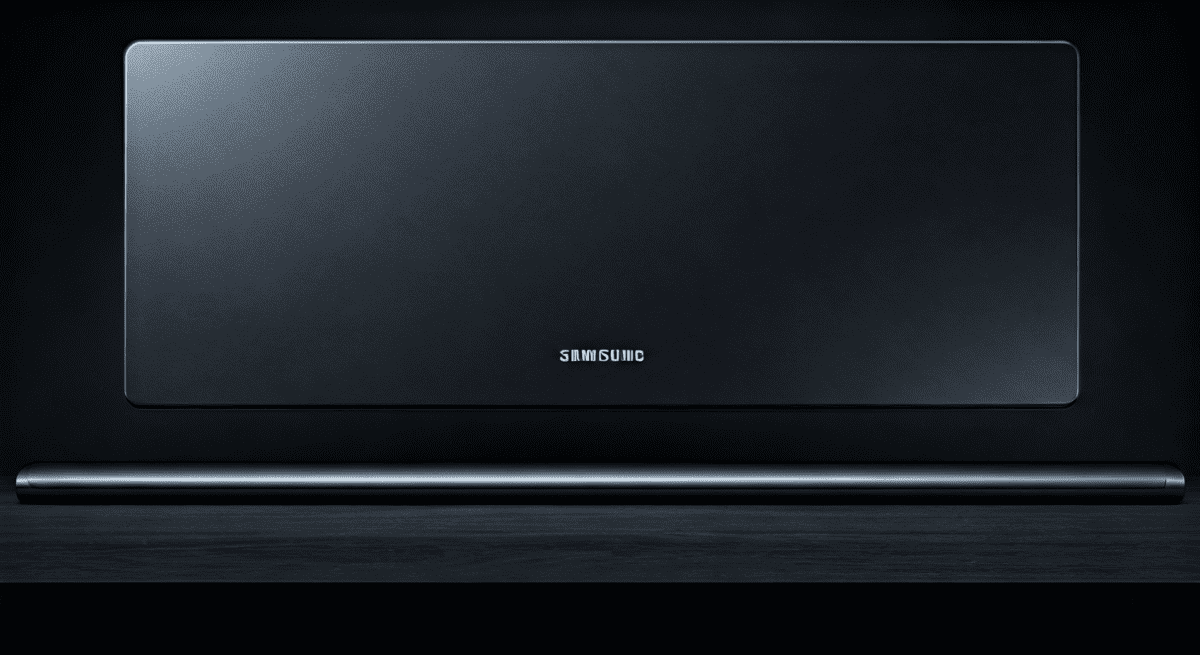
How long do Samsung speakers last?
With proper care, a Samsung soundbar or speaker system should last 5 to 7 years or longer. The hardware is durable, but software standards (like new versions of HDMI) usually evolve faster than the speakers wear out.
Does Samsung make good outdoor speakers?
Samsung’s Sound Tower series (MX-ST models) are excellent for outdoor parties. They are water-resistant (IPX5), have built-in batteries, and offer Bi-directional sound to cover a wide backyard area.
Is the Samsung Music Frame worth it?
If you value interior design, yes. It provides surprisingly deep bass for its slim profile and acts as a piece of art. However, if you only care about sound quality and not looks, a Q-Series soundbar at the same price point will provide a more immersive experience.