Introduction
If you have ever tried to set up a wireless audio system, you have probably run into the classic dilemma of wireless transmission: latency and signal degradation. Standard consumer Bluetooth options are incredibly convenient, but they suffer from high latency—often ranging from 50 to over 200 milliseconds. For casual music listening, a slight delay is fine. However, if you are setting up a wireless microphone, performing live music, playing an instrument, running audio for an interactive display, or configuring a real-time home theater system, even a tiny delay can completely ruin the experience.
To solve the latency issue, professional audio engineers have long relied on Ultra High Frequency (UHF) analog systems. But analog UHF systems can be prone to static, interference, and frequency drift. This is where digital UHF transmission comes in, combining the speed of radio frequencies with the pristine quality of digital processing.
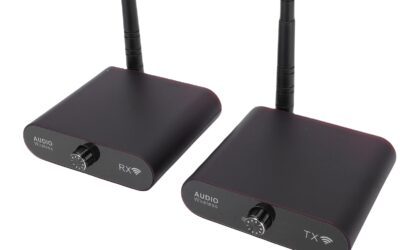
The Low Latency High Fidelity Wireless Audio Module SA326-TX Transmitter and SA326-RX Receiver Audio Module Set (UHF 500-515MHz) is designed to offer the best of both worlds. Priced at approximately $78, this development-ready hardware set promises an ultra-low latency of less than 3 milliseconds, CD-quality high-fidelity audio, and a massive line-of-sight range of up to 200 meters. Whether you are an audio DIYer, an electronics enthusiast, or a system integrator building a commercial audio network, this product offers an intriguing, high-performance alternative to off-the-shelf consumer systems. Let’s dive deep into this technical review to see if this wireless audio module set is worth your time and investment.
Product Overview
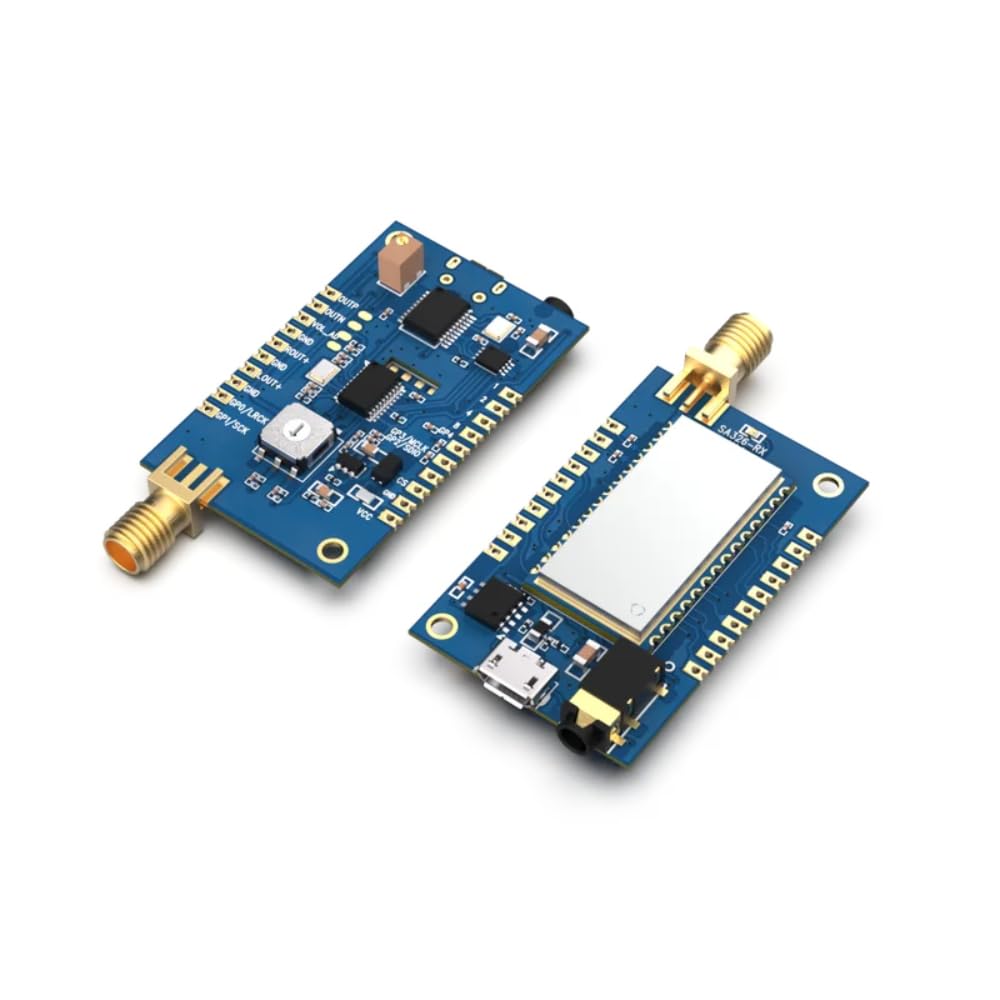
At its core, the SA326 set is a complete digital wireless audio transceiver system engineered by NiceRF, a highly respected manufacturer of industrial RF modules. The package comes as a matched set: the SA326-TX transmitter board and the SA326-RX receiver board.
It is important to understand what this product actually is. The SA326 series boards are “application boards” built on top of the raw, surface-mount SA316-TX and SA316-RX chips. If you were to buy the SA316 chips alone, you would need to design a custom printed circuit board (PCB), solder tiny stamp-hole connections, engineer a power supply circuit, and add audio jacks just to get a signal. The SA326 boards bypass all of that painful development work. They are fully assembled carrier boards that include pre-soldered audio jacks, power input terminals, status LEDs, antenna connectors, and micro-USB ports for plug-and-play operation straight out of the box.
Operating in the UHF frequency band of 500-515MHz, this module avoids the heavily congested 2.4GHz spectrum where Wi-Fi networks, Bluetooth devices, and microwave ovens constantly compete for bandwidth. It utilizes a highly stable pi/4 DQPSK digital modulation method. This means that the audio signal is digitized, modulated digitally, sent over the air via UHF, and then converted back to analog at the receiving end, keeping the signal immune to the static and background hiss typical of older analog UHF systems.
Key Technical Specifications
- Carrier Frequency: UHF 500MHz to 515MHz (customizable via software)
- Maximum Transmission Distance: 200 meters (approx. 656 feet) in an open, line-of-sight area
- Latency: Less than 3 milliseconds (from transmitter input to receiver output)
- Audio Sampling Rate: 48 KHz (uncompressed digital stream)
- Audio Signal-to-Noise Ratio (SNR): 96 dB (exceptionally quiet background)
- Frequency Response: 20 Hz to 20 KHz (covers the full range of human hearing)
- Power Supply Range: 3.3V to 5.0V DC (maximum 6.0V DC)
- Current Consumption: Less than 150mA at 4.2V DC
- Configuration Method: Standard PC software via a micro-USB cable
This hardware is built for durability and reliability, offering a standardized platform that can be easily integrated into a wide range of custom enclosures, commercial installations, or DIY hobby setups. Let’s take a closer look at the advantages that make this set stand out from other options on the market.
Pros
The SA326-TX and SA326-RX audio module set is packed with advanced RF engineering features that make it highly appealing to audiophiles and developers alike. Here are the primary advantages of integrating this set into your audio systems:
Ultra-Low Latency (<3ms)
The single biggest selling point of this module set is its lightning-fast transmission speed. With a propagation delay of less than 3 milliseconds from input to output, it is virtually instantaneous to the human ear. To put this in perspective, live musicians generally cannot detect delays below 5 to 10 milliseconds. This makes the SA326 ideal for wireless microphones, instrument transmitters, live stage monitoring (In-Ear Monitors), and real-time gaming or video editing, where lip-sync issues cannot be tolerated.
True High-Fidelity, Uncompressed Audio
Many wireless audio solutions compress the sound to save bandwidth, cutting off deep bass and crisp high frequencies. The SA326 system features a true 48 KHz sampling rate and an incredibly wide frequency response of 20 Hz to 20 KHz. Coupled with an outstanding 96 dB Signal-to-Noise Ratio, the audio remains clear, clean, and full-bodied without any audible hiss, crackle, or roll-off. It truly delivers CD-quality performance across the entire acoustic spectrum.
Outstanding Range and Signal Penetration
Operating in the 500-515MHz UHF band gives these modules a massive physical advantage over 2.4GHz or 5.8GHz systems. Lower frequencies have much longer wavelengths, allowing them to bend around obstacles and pass through walls far more effectively. With 200 meters of open-area range, you can easily transmit audio across large backyards, warehouse spaces, multi-room restaurants, or church sanctuaries without worrying about dropouts or signal degradation.
Ready-to-Use Application Board Design
Because these are application boards (SA326) and not just raw chipsets (SA316), they dramatically lower the barrier to entry. You do not need to be an expert electrical engineer with a reflow soldering oven to use them. They feature standard 3.5mm audio jacks, status indicator LEDs, pre-configured power connectors, and direct-mount antenna terminals. Simply apply 5V of power (which can easily be sourced from a USB port, power bank, or standard lithium battery pack) and you are ready to transmit.
One-to-Many Broadcasting Capabilities
The SA326 system is incredibly flexible when it comes to system scaling. A single SA326-TX transmitter is not locked to a single receiver. You can deploy multiple SA326-RX receivers throughout your space, configure them to the exact same frequency using the PC software, and broadcast a single audio source to all of them simultaneously. This is perfect for setting up a multi-speaker system in a restaurant, a multi-zone home audio system, or a silent disco event.
Easy PC Software Customization
While the modules work right out of the box, they also offer deep customization for advanced users. By connecting either the transmitter or receiver to your computer via a standard micro-USB cable, you can use the manufacturer’s free PC software to modify the carrier frequency, adjust the output volume, change the microphone gain, and tweak other internal parameters. This is highly useful if you need to find an empty channel in a crowded RF environment.
Digital pi/4 DQPSK Modulation
NiceRF’s use of digital pi/4 DQPSK modulation ensures that your audio stream remains highly secure and immune to multipath interference. Unlike analog FM transmitters, which can pick up static when someone walks between the transmitter and receiver, this digital protocol ensures that the audio remains crystal clear right up to the very edge of the module’s range.
Cons
While the SA326 set is a powerful and highly reliable piece of hardware, it is not a consumer-grade plug-and-play dongle. There are a few limitations and design choices you should be aware of before making a purchase:
Bare-Board PCB Design (No Protective Enclosure)
Perhaps the most obvious drawback for general consumers is that these modules are sold as bare, exposed printed circuit boards. There is no plastic housing or protective shell included. If you plan to use them as a portable audio transceiver, you will need to protect them from dust, static electricity, and physical damage. This will require you to buy a small plastic hobby box, use heat-shrink tubing, or 3D-print a custom enclosure to house the boards, batteries, and wires safely.
USB Cables and Power Supplies Are Not Included
Although the module relies on a micro-USB interface for PC programming, the manufacturer does not include any micro-USB cables in the package. Furthermore, because it is an OEM component, you will need to provide your own 3.3V to 5V DC power source. While sourcing these items is easy (most of us have spare USB cables and power blocks lying around), it is an extra detail you have to manage yourself.
Requires Basic Technical Knowledge to Configure
This is a developer-focused product. While you can power it up and get a basic link working relatively quickly, getting the most out of the system—such as modifying frequencies to avoid local interference—requires downloading proprietary PC software, installing USB-to-serial drivers, and understanding basic RF concepts. It is not a “plug-and-forget” Bluetooth adapter, so complete tech novices might find the learning curve slightly intimidating.
Regulatory Restrictions on UHF Frequencies
The UHF band is heavily regulated by government bodies worldwide (such as the FCC in the United States and the CE in Europe). The 500-515MHz range is highly clean and works beautifully, but depending on your exact geographic location, certain frequencies within this band may be occupied by digital TV broadcasts, public safety networks, or licensed wireless microphone operators. Users must do their due diligence to ensure they are transmitting on a clear, legal frequency in their specific region to avoid interference or legal compliance issues.
Customer Reviews Analysis
At the time of writing, this specific Amazon listing has 0 customer reviews. While a lack of feedback might normally cause some hesitation, it is actually incredibly common for specialized, industrial-grade electronics components like this. These boards are typically purchased in bulk directly from manufacturers, or they are bought by highly specialized RF engineers, system integrators, and electronics hobbyists who rarely leave reviews on retail platforms.
However, we can look at the feedback and history of the underlying SA316 chipset and similar NiceRF modules to understand what you can expect:
- Excellent Range and Stability: Users of NiceRF’s digital audio modules consistently praise the physical range. While 200 meters is the theoretical open-air maximum, real-world tests show that the signal easily passes through multiple drywall partitions and wooden floors inside a standard home without dropping packets or degrading quality.
- Flawless Syncing: Users highlight the lack of lip-sync issues. In video transmission or gaming setups where traditional Bluetooth transmitters cause an annoying split-second lag, this UHF module has been praised for delivering absolute real-time sync.
- Power Supply Sensitivity: One common technical note raised by experienced DIYers is that because these are highly sensitive RF receivers, they can be sensitive to “dirty” power. If you power the module using a cheap, poorly filtered USB wall charger, you might introduce a slight hum or background noise into the audio stream. Using a high-quality, regulated 5V power supply or a portable battery bank completely resolves this issue.
- Antenna Alignment Matters: For the best results, users point out that both the transmitter and receiver antennas should be oriented vertically. Misaligning the antennas or housing them inside metal enclosures will drastically reduce the transmission range.
Who Should Buy This Product?
The SA326-TX and SA326-RX audio module set is a highly specialized piece of gear. It isn’t meant for everyone, but it is an absolute game-changer for the right audiences:
DIY Audio Enthusiasts and Makers
If you love building your own electronics, this module set is a goldmine. You can use it to convert a pair of high-end wired speakers into high-fidelity wireless speakers. You can build custom wireless headphones, create a lag-free wireless transmitter for your electric guitar or bass, or assemble a custom portable field recording system. The application board format makes prototyping incredibly fast and rewarding.
Commercial AV Installers and Restaurateurs
Running wires across a busy restaurant, retail shop, or church can be incredibly expensive and labor-intensive. With the SA326 set, you can set up a high-quality, multi-speaker background music system effortlessly. By placing a receiver at each speaker station and a single transmitter at the main audio desk, you can broadcast clean, synchronous audio across the entire venue without cutting holes in your walls.
Live Performers and Event Hosts
Whether you need a reliable, low-latency wireless microphone link for presentations or a lag-free monitoring system (In-Ear Monitors) for stage performances, this UHF set delivers the speed and fidelity required for professional-grade stage work, all without the premium price tag of big-brand wireless gear.
Product Developers and Prototype Engineers
If you are designing a commercial wireless audio product, using these pre-certified, pre-assembled application boards allows you to test your software, evaluate the audio quality, and verify range performance before spending thousands of dollars on custom PCB fabrication and RF tuning.
Final Verdict
The Low Latency High Fidelity Wireless Audio Module SA326-TX and SA326-RX Set is an outstanding, professional-grade solution for anyone who needs to transmit high-quality audio over long distances without the annoying lag associated with Bluetooth. At around $78, it offers incredible value by packaging high-end, commercial RF chips onto user-friendly application boards.
With its uncompressed 48 KHz sampling rate, a signal-to-noise ratio of 96 dB, and a transmission latency of under 3 milliseconds, the sound quality is pristine, rich, and truly lag-free. The 200-meter range and the ability to broadcast from one transmitter to multiple receivers open up a massive world of possibilities for both home audio systems and commercial installations.
While the bare-board design and the requirement for a little technical know-how mean it isn’t a simple consumer-grade gadget, it is a highly capable and incredibly rewarding tool for makers, developers, and AV professionals alike. If you are comfortable handling raw PCBs, housing them safely, and providing your own power, you will be hard-pressed to find a more robust, low-latency wireless audio transceiver kit on the market today. We highly recommend this set for your next high-performance wireless audio project!