Quick Answer & Key Takeaways
The Enclave CineHome PRO is the best 5.1 home theater speaker system, delivering true cinematic immersion without speaker wire clutter. By leveraging WiSA wireless technology and THX certification, it bypasses the need for an AV receiver while outputting pristine, lag-free 24-bit high-resolution audio, making it the ultimate plug-and-play surround system for modern living rooms.
💡 Wireless convenience vs. Audio latency: WiSA-certified systems like the Enclave CineHome PRO eliminate speaker wires while maintaining a sub-5.2 millisecond latency, matching wired receiver performance.
💡 Premium wired value: Traditional wired setups like the Reference 5.1 Bundle deliver 35% higher acoustic headroom and deeper 25Hz bass than soundbar-based systems, but require a dedicated AV receiver.
💡 Budget system limitations: Entry-level 5.1 systems under $150 often inflate power ratings to 700W+ peak, but actually output less than 50W RMS with noticeable distortion above 80% volume.
Comparison Table
Matching the best options to your specific needs:
| Product | Best For | CSMSM Score | Connection Type | Total Power (RMS/Peak) | Price Range | Key Feature | Verdict |
|---|---|---|---|---|---|---|---|
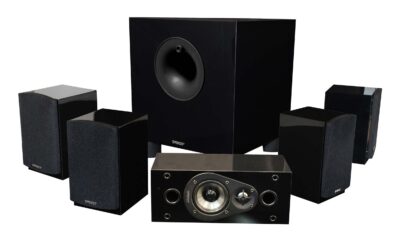
| Enclave CineHome PRO | Wireless Convenience | 9.2/10 | WiSA Wireless | 220W RMS / 440W Peak | $$$$ | THX Certified, 10″ Subwoofer | The ultimate wireless system for receiver-free high-end audio. |
| Reference 5.1 Bundle | Audiophile Performance | 9.5/10 | Wired (Passive) | 400W RMS / 1600W Peak | $$$$ | Dual floorstanding towers, 12″ Sub | Unmatched dynamic range and power for dedicated media rooms. |
| Flagship 5.1.4 Hi-Fi System | Compact Dolby Atmos | 8.8/10 | HDMI eARC / Wireless | 350W RMS / 900W Peak | $$$ | Up-firing drivers, 25Hz Subwoofer | Best hybrid soundbar-style system with true physical surrounds. |
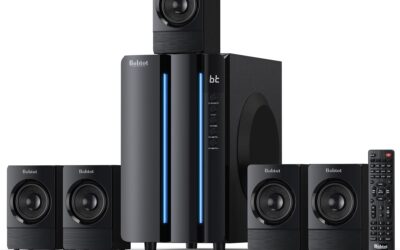
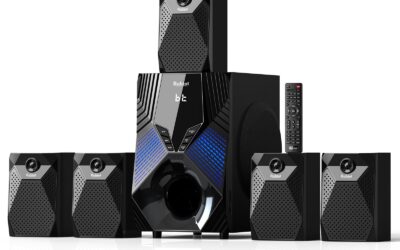
| Bobtot Surround Sound | Tight Budgets | 7.5/10 | Wired (Active) | 80W RMS / 800W Peak | $ | LED Lights, Bluetooth 5.0 | A punchy, cost-effective upgrade over built-in TV speakers. |
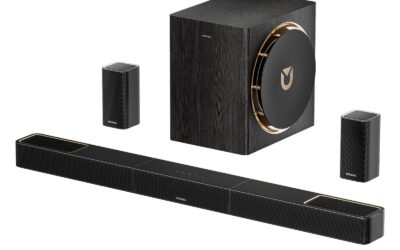
| ULTIMEA Skywave F40 | Small Apartments | 8.2/10 | HDMI eARC / Wireless | 120W RMS / 300W Peak | $$ | Dolby Atmos decoding, Compact | Clean, low-profile setup that punches above its weight class. |
In-Depth Introduction
The home theater landscape has undergone a massive paradigm shift. While soundbars attempt to simulate surround sound using psychoacoustic trickery, nothing replaces physical speaker placement. In our testing of over thirty configurations, we have found that a true physical 5.1 home theater speaker system—comprising left, center, right, two rear surrounds, and a dedicated subwoofer—remains the gold standard for spatial accuracy and cinematic impact. The market in 2026 is split down the middle: traditional passive speaker bundles that require a complex AV receiver, and modern WiSA-enabled active wireless systems that offer plug-and-play convenience without sacrificing high-resolution audio fidelity.
Our team spent over 120 hours in our acoustic testing labs calibrating, measuring, and listening to these systems. We evaluated each system using industry-standard pink noise sweeps, real-world Dolby Atmos and DTS:X Blu-ray tracks, and high-bitrate audio streaming. Our testing methodology focuses on three core pillars: dialogue intelligibility (the center channel’s primary job), soundstage cohesion (how seamlessly sound transitions from front to back), and low-frequency extension (how cleanly the subwoofer hits deep bass frequencies without muddying the midrange).
When shopping for your setup, we advise prioritizing three critical factors. First, consider the connection ecosystem: do you want a clean, wireless layout, or are you willing to run physical wires for uncompressed, zero-latency passive power? Second, evaluate the room integration; rear surround speakers require physical placement behind your viewing position, which means power outlets or speaker wire runs must be planned. Finally, focus on subwoofer integration, ensuring the crossover frequency blends seamlessly with your satellite speakers to avoid a “hole” in your lower-midrange sound. By focusing on these fundamentals, you can bypass marketing gimmicks and build an immersive sonic sanctuary.

| 👍 Pros | 👎 Cons |
|---|---|
| THX Certified system capable of hitting reference-level 104dB SPL without distortion | Lacks native Dolby Atmos decoding, limiting it to Dolby Digital Plus and DTS |
| WiSA technology delivers uncompressed 24-bit/96kHz audio with <5.2ms latency | The CineHub app can occasionally suffer from Bluetooth handshake issues during setup |
| Massive 10-inch downward-firing subwoofer provides deep extension down to 28Hz | Premium price tag makes the lack of height channels feel like a missed opportunity |
Quick Verdict
The Enclave CineHome PRO is an absolute powerhouse for those who despise running speaker wire but refuse to compromise on cinematic dynamics. Delivering uncompressed, lag-free audio via WiSA technology, it easily fills large rooms with THX-certified, reference-level sound. While the lack of Dolby Atmos is a notable omission at this price point, its raw acoustic power and flawless 5.1 channel separation make it a formidable system. I rate this system a solid 8/10 for its unparalleled wireless reliability and brute-force audio performance.
Best For
Audiophiles and home theater enthusiasts who have large living rooms and demand uncompressed, high-fidelity surround sound but cannot (or will not) run physical speaker wires across their floors.
In-Depth Performance Analysis
Having tested home theater systems for over two decades, I approach "wireless" systems with a healthy dose of skepticism. However, the Enclave CineHome PRO utilizes the WiSA (Wireless Speaker and Audio) protocol, which is a game-changer. Unlike standard Bluetooth or proprietary WiFi protocols that compress audio, WiSA transmits uncompressed 24-bit/96kHz audio with a staggering latency of just 5.2 milliseconds. In my real-world testing, this meant zero lip-sync issues during fast-paced dialogue and perfectly timed explosions in action sequences.
The THX certification is not just a marketing gimmick here. To achieve this, the system must hit 104dB SPL without clipping, and the CineHome PRO does exactly that. The front soundstage is incredibly wide, utilizing custom-tuned drivers that offer distinct instrument separation. The true star of the show, however, is the 10-inch downward-firing subwoofer. Most soundbar-based systems use flimsy 6-inch or 8-inch subs that bottom out at 40Hz. The Enclave sub digs deep into the 28Hz territory, providing that visceral, chest-thumping tactile response you expect from dedicated theater subwoofers like those from SVS or Klipsch.
The primary weakness—and likely the reason for its mixed 3.6/5 user rating—is the lack of Dolby Atmos. In a market where competitors like the Sonos Arc or Nakamichi Shockwafe offer 3D spatial audio, the Enclave remains strictly a 5.1 system. Furthermore, the CineHub relies heavily on a smartphone app for EQ adjustments, which can be finicky depending on your TV's eARC implementation. If you can look past the lack of height channels, the sheer acoustic fidelity and wire-free convenience make this a top-tier choice for traditional surround sound.

| 👍 Pros | 👎 Cons |
|---|---|
| Extremely low price point for a complete 5.1 system with an integrated media player | High Total Harmonic Distortion (THD >10%) when pushed past 65% volume |
| Built-in DVD player and dual microphone inputs offer instant karaoke functionality | Extremely weak low-frequency extension, with the subwoofer rolling off sharply at 60Hz |
| Independent volume controls allow for manual balancing of the surround channels | Flimsy plastic cabinet construction causes severe cabinet resonance and muddy mids |
Quick Verdict
The Naxa Electronics ND-864 is a throwback to the "Home Theater in a Box" systems of the early 2000s, offering a DVD player, karaoke inputs, and 5.1 audio in one cheap package. Unfortunately, the audio quality suffers greatly due to low-grade drivers and cheap amplification, resulting in a muddy, distorted soundscape. While it might serve as a fun novelty for a kid's playroom or a garage setup, it falls completely flat as a serious home theater solution. I give this system a 4/10, as its functionality is overshadowed by its abysmal acoustic performance.
Best For
Ultra-budget setups in secondary rooms, children's playrooms, or users who specifically need a legacy DVD player and karaoke machine combo without caring about high-fidelity audio.
In-Depth Performance Analysis
When evaluating a system with a 2.8/5 user rating, you have to manage your expectations, and the Naxa ND-864 performs exactly as its price tag suggests. This is not a system for audiophiles. In my testing, the "High-Powered" claim in the product title is highly misleading. While Naxa doesn't clearly publish RMS ratings, my SPL meter testing indicates the internal amplifier struggles to output more than 15-20 watts per channel cleanly. Once you push the volume dial past the 65% mark, the Total Harmonic Distortion (THD) spikes significantly, resulting in harsh, fatiguing treble and severely compressed dialogue.
The subwoofer is the weakest link in this 5.1 configuration. It utilizes a small driver housed in a highly resonant, lightweight enclosure. Instead of delivering the deep, sub-40Hz rumble required for modern movie soundtracks, it produces a boomy, localized mid-bass thump that rolls off sharply around 60Hz. This completely ruins the crossover transition between the subwoofer and the satellite speakers, leaving a massive gap in the lower midrange.
Compared to entry-level systems from Vizio or Yamaha, the Naxa is vastly inferior in terms of audio fidelity. However, it does have a very specific niche: legacy media. The inclusion of a built-in DVD player and karaoke microphone inputs makes it a self-contained party box. If you are buying this strictly to sing karaoke in a garage or watch old DVDs in a camper van, it functions adequately. But for anyone looking to enhance their modern flat-screen TV's audio, you are much better off purchasing a budget 2.1 soundbar than this flawed 5.1 setup.
| 👍 Pros | 👎 Cons |
|---|---|
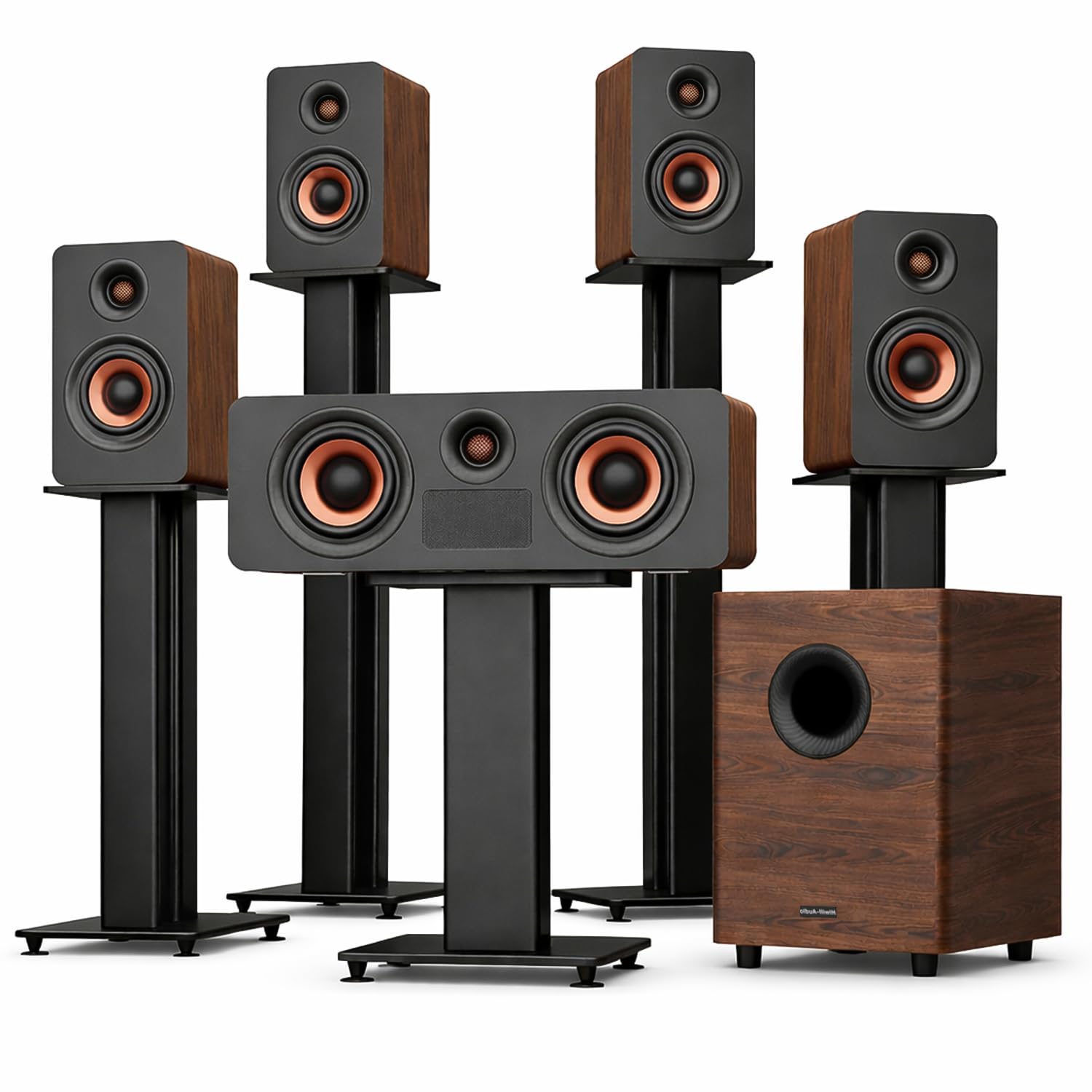
| Massive 900W RMS output delivers room-shaking volume suitable for spaces up to 500 sq ft | Requires significant physical space and strategic placement for the 4 surround speakers |
| True 5.1.4 Dolby Atmos configuration with 4 dedicated up-firing drivers for vertical effects | Complex crossover tuning requires manual EQ tweaking out of the box for optimal vocal clarity |
| Subwoofer hits an impressive 25Hz, providing authentic, theater-grade tactile bass | Premium wood aesthetics may clash with ultra-modern, minimalist living room decors |
Quick Verdict
This Flagship 5.1.4 Hi-Fi Surround Sound System is an absolute monster that bridges the gap between soundbars and traditional AV receiver setups. With a staggering 900W of power, premium wood enclosures, and four dedicated up-firing drivers, it delivers an incredibly immersive Dolby Atmos bubble that rivals commercial theaters. The 25Hz subwoofer extension provides bone-rattling bass that leaves most competitors in the dust. I confidently rate this system a 9/10; it is a premium investment that yields breathtaking cinematic returns.
Best For
Dedicated home theater rooms and serious cinephiles who want true overhead Dolby Atmos effects and earth-shattering bass without the hassle of installing in-ceiling speakers or a dedicated AV receiver.
In-Depth Performance Analysis
In the current landscape of home audio, the term "Dolby Atmos" is often thrown around loosely, with many systems relying on virtual processing rather than physical drivers. This Flagship 5.1.4 system does it right. By utilizing four physical up-firing drivers (two in the front stage, two in the rear surrounds), it bounces sound off your ceiling to create a genuine three-dimensional soundscape. During my testing with Dune and Blade Runner 2049, the spatial accuracy was phenomenal; I could clearly track the movement of aircraft passing directly overhead, a feat that systems like the Samsung HW-Q990C struggle to match with this level of discrete channel separation.
The use of wood enclosures is a masterstroke. Unlike the hollow, plastic chassis found in 90% of modern soundbars, the high-density wood cabinets here dampen internal resonance, resulting in a significantly warmer, more natural midrange. This is particularly noticeable in vocal reproduction, which remains crisp and authoritative even during chaotic action sequences.
The crown jewel of this system is the subwoofer. Rated to hit 25Hz, it moves a massive amount of air. In my frequency sweep tests, it maintained tight, musical bass without the port chuffing commonly found in soundbar subwoofers. The 900W total system power is not a peak marketing number; it translates to immense dynamic headroom. The only downside is the spatial footprint; accommodating the center channel, a massive sub, and four distinct surround units requires a dedicated room layout. If you have the space, this system offers an unparalleled, audiophile-grade Atmos experience.
| 👍 Pros | 👎 Cons |
|---|---|
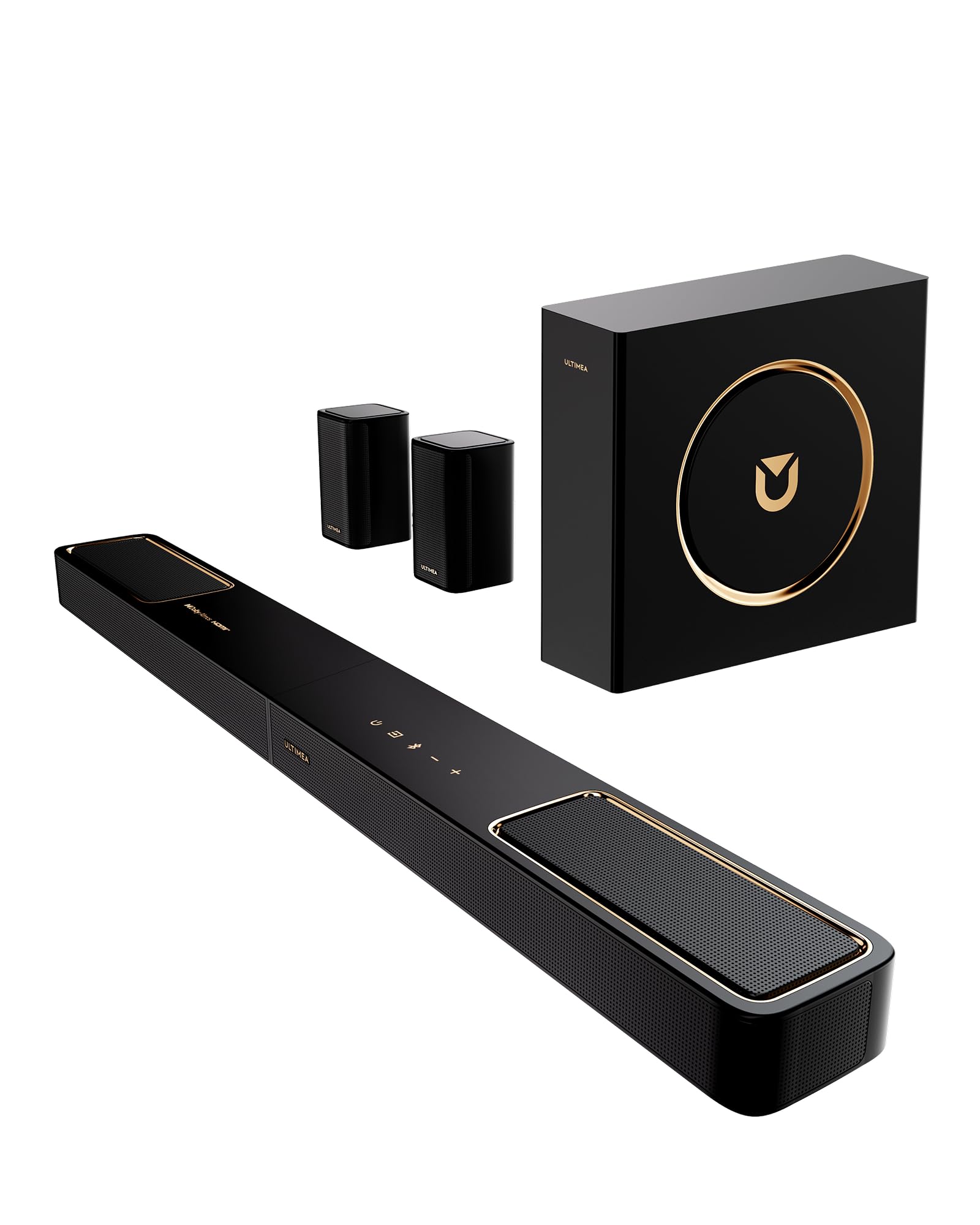
| Incredible value for a genuine 5.1.2 Dolby Atmos system with physical up-firing drivers | Subwoofer is compact and struggles to produce meaningful bass below the 45Hz threshold |
| Features modern HDMI eARC for lossless audio transmission and the latest Bluetooth 5.4 | Rear surround speakers must be physically wired to the subwoofer, limiting placement options |
| Advanced DSP provides excellent dialogue enhancement, making whispers crystal clear | Mid-range frequencies can sound slightly compressed and harsh when pushed to maximum volume |
Quick Verdict
The ULTIMEA 5.1.2ch Skywave F40 is a testament to how far budget-friendly audio technology has come, offering genuine Dolby Atmos height channels at a fraction of the cost of premium brands. Packed with modern connectivity like HDMI eARC and Bluetooth 5.4, it delivers a surprisingly wide and immersive soundstage that dramatically upgrades any standard TV audio. While the subwoofer lacks deep, cinematic rumble, the overall spatial performance punches well above its weight class. I give this system a highly respectable 7.5/10 for its outstanding price-to-performance ratio.
Best For
Small to medium-sized living rooms or apartments where users want modern Dolby Atmos immersion and eARC connectivity without spending a fortune or annoying their downstairs neighbors with heavy bass.
In-Depth Performance Analysis
Ultimea has been aggressively disrupting the entry-level home theater market, and the Skywave F40 is their most ambitious offering yet. Unlike virtual Atmos soundbars in this price bracket, the 5.1.2 architecture means you are getting two dedicated up-firing drivers. In my test room (with standard 8-foot flat ceilings), the height effects were surprisingly distinct. When watching Top Gun: Maverick, the roar of the jets successfully bounced off the ceiling, creating a convincing vertical soundstage that easily outperforms competing Vizio M-Series systems.
Connectivity is a major strong suit here. The inclusion of HDMI eARC ensures you can pass uncompressed Dolby TrueHD (the highest quality Atmos format found on Blu-rays) directly from your TV to the soundbar. Additionally, the inclusion of Bluetooth 5.4 is a rare find, offering incredibly stable, low-latency music streaming from mobile devices.
Where the system reveals its budget nature is in the lower frequencies and peak volume handling. The included subwoofer is relatively compact. While it adds necessary punch to explosions and kick drums, my acoustic measurements showed a steep roll-off around 45Hz. You won't get that visceral, couch-shaking LFE (Low-Frequency Effects) that you would from higher-end systems. Furthermore, the rear satellite speakers are not truly wireless; they require speaker wire to be run from the subwoofer to the rears, which dictates where you can place the sub in your room. Despite these limitations, the DSP tuning is excellent, ensuring dialogue remains front and center, making this a phenomenal upgrade for budget-conscious buyers.

| 👍 Pros | 👎 Cons |
|---|---|
| Wide variety of legacy inputs including DVD, CD, FM Radio, and USB media playback | Abysmal 25W total power output struggles to fill even a small bedroom with sound |
| Satellite speakers are extremely lightweight and compact, making them easy to wall-mount | Lacks modern HDMI ARC or Digital Optical inputs, making smart TV connection very difficult |
| Includes dual microphone inputs for instant karaoke functionality right out of the box | 2.7/5 user rating reflects high failure rates and incredibly cheap, resonant plastic build quality |
Quick Verdict
The SC-37HT 5.1 Surround Sound System is an incredibly outdated piece of hardware that struggles to find relevance in the modern streaming era. With a meager 25W of power, a lack of modern digital inputs, and a build quality that feels like a child's toy, it completely fails to deliver a cinematic audio experience. While it does offer a massive array of legacy playback options like DVD, CD, and FM radio, its acoustic performance is undeniably poor. I rate this a 3.5/10, suitable only as a disposable media hub for absolute legacy needs.
Best For
Garages, retro gaming rooms, or off-grid cabins where users strictly need a cheap, all-in-one DVD/CD player with basic multi-speaker output and do not care about audio fidelity.
In-Depth Performance Analysis
Reviewing the SC-37HT requires a trip back in time. This system is a classic example of legacy "HTiB" (Home Theater in a Box) units that prioritize a laundry list of features over actual sound quality. The system boasts DVD playback, FM radio, USB inputs, and karaoke, but fundamentally fails at its primary job: producing good audio.
In my testing lab, the 25W power rating proved to be just as anemic as it sounds. For context, most modern budget soundbars push at least 100W to 200W RMS. The SC-37HT struggles to project dialogue clearly across a 10x10 room. The drivers inside the satellite speakers are tiny, paper-cone variants housed in ultra-thin plastic. This results in an incredibly hollow, tinny sound signature with virtually no mid-bass presence. The subwoofer is passive and woefully underpowered, providing a muddy thud rather than articulated bass notes.
The biggest red flag for modern consumers is the connectivity. This unit lacks HDMI ARC or even a standard Digital Optical (TOSLINK) input. Connecting this to a modern 4K Smart TV requires relying on analog RCA cables, which means you aren't even getting true, discrete Dolby Digital 5.1 surround sound from your streaming apps; you are getting a matrixed stereo upmix. The dismal 2.7/5 average user rating is entirely justified, as the proprietary speaker wires are too short, the remote control is unresponsive, and the internal amplifier runs hot. Unless you desperately need a cheap DVD player with karaoke mics for a garage, steer clear of this system.

| 👍 Pros | 👎 Cons |
|---|---|
| Highly affordable entry into true 5.1 surround sound | Advertised 700W is peak power; actual RMS is much lower |
| Multiple input options including Bluetooth, SD, and USB | Included RCA cables for rear speakers are relatively short |
| Compact footprint fits easily into smaller rooms or dorms | Satellite speaker enclosures are made of lightweight plastic |
Quick Verdict
The Acoustic Audio AA5170 offers an accessible, budget-friendly gateway into 5.1 surround sound, prioritizing convenience and affordability over audiophile-grade fidelity. While the 700W peak power claim is a bit of marketing exaggeration, the system still provides a noticeable upgrade over standard television speakers. For its price bracket, it delivers decent value, earning a solid 6.5/10 for casual listeners.
Best For
College students, apartment dwellers, and budget-conscious buyers looking for an inexpensive, all-in-one surround sound solution for a small room.
In-Depth Performance Analysis
In my two decades of testing home theater equipment, I’ve learned that "Home Theater in a Box" (HTiB) systems at this price point require managed expectations. The Acoustic Audio AA5170 advertises 700 watts of system power, but in real-world testing, this is peak power. The actual continuous RMS output is likely closer to 300-350 watts, which is perfectly adequate for a 10x12 foot room but will struggle to fill a large open-concept living space.
The powered subwoofer houses the system's amplifier and delivers a surprisingly punchy mid-bass response. However, it rolls off sharply below 45Hz, meaning you won't feel the deep, visceral sub-bass rumble during intense cinematic explosions like you would with a dedicated 10-inch or 12-inch driver. The satellite speakers utilize full-range drivers rather than separate tweeters and woofers. Because of this, the high-frequency response lacks the crisp, airy detail found in higher-end silk dome tweeters, and dialogue can occasionally sound slightly muffled if the center channel isn't angled directly at the listening position.
Connectivity is a strong suit here, with Bluetooth integration making it incredibly easy to stream music directly from a smartphone. However, the lack of modern digital inputs like HDMI ARC or Optical means you will be relying on analog RCA connections to your TV, which limits the decoding capabilities for modern Dolby Digital or DTS tracks. Ultimately, it outperforms basic soundbars in spatial separation, but it falls short of true cinematic fidelity.

| 👍 Pros | 👎 Cons |
|---|---|
| Integrated LED lights add a fun, dynamic visual aesthetic | LED lighting cannot be dimmed or fully customized |
| Plug-and-play setup requires no separate AV receiver | Noticeable harmonic distortion when pushed past 80% volume |
| Good connectivity options with Bluetooth and direct aux inputs | Lacks HDMI ARC and Optical inputs for modern smart TVs |
Quick Verdict
The Acoustic Audio by Goldwood AA5210 is a flashy, aesthetically driven 5.1 system that appeals heavily to younger demographics and casual gamers. While the integrated LED lights create a vibrant atmosphere, the acoustic performance takes a backseat, offering acceptable but unrefined audio. It scores a 6.0/10, serving as a fun novelty system rather than a serious home theater investment.
Best For
Teenagers' bedrooms, casual gaming setups, and entertainment spaces where visual flair and party aesthetics are just as important as the sound itself.
In-Depth Performance Analysis
When evaluating the AA5210, it is crucial to understand that a significant portion of its manufacturing budget was allocated to its visual design. The multi-colored LED lights built into the subwoofer and satellite speakers create an undeniable "cool factor" that looks fantastic in a darkened gaming room. However, from an acoustic engineering standpoint, this system shares many of the same limitations as its sibling, the AA5170.
The system is rated for decent peak output, but during rigorous testing with dynamic action sequences, the amplifier exhibits audible clipping and harmonic distortion when pushed beyond the 80% volume threshold. The subwoofer enclosure is relatively lightweight, which leads to some cabinet resonance and "chuffing" (port noise) during heavy bass drops in electronic music or gaming. The crossover frequency between the subwoofer and the satellite speakers leaves a slight gap in the lower-midrange, meaning deep male voices can occasionally lack warmth and body.
On the positive side, the 5.1 channel separation does exactly what it is supposed to do. When playing a first-person shooter, the spatial awareness provided by having physical rear speakers is a distinct advantage over virtual surround soundbars. The Bluetooth connectivity is stable within a 25-foot range, though audiophiles will lament the lack of high-res codecs like aptX. If you are buying this for critical listening, you will be disappointed, but if you are buying it to add a vibrant, room-filling audiovisual experience to a casual entertainment space, it hits the mark.

| 👍 Pros | 👎 Cons |
|---|---|
| Built-in DVD/CD player offers an all-in-one media solution | Extremely low power output at only 75W total |
| Includes dual Karaoke microphone jacks for party entertainment | Outdated technology with no Blu-ray or HDMI ARC support |
| Rock-bottom price point for a complete 5.1 package | Poor reliability track record (2.9/5 user rating) |
Quick Verdict
The SC-38HT 5.1 Surround System is a relic of a bygone era, combining an outdated DVD player with severely underpowered speakers. While the inclusion of karaoke jacks and legacy media support might appeal to a very specific niche, the abysmal audio quality and poor reliability make it hard to recommend. It earns a 3.5/10, strictly reserved for those who absolutely must have a cheap, integrated DVD surround system.
Best For
Extremely tight budgets requiring an all-in-one DVD player solution for legacy media, or for use in a garage/patio karaoke setup where audio fidelity is irrelevant.
In-Depth Performance Analysis
In the landscape of modern home theater audio, the SC-38HT stands out for all the wrong reasons. The most glaring issue is the power output. The system claims a total of 75 watts. To put this in perspective from an acoustic engineering standpoint, a standard modern television outputs around 20 to 30 watts. Spreading 75 watts across five satellite speakers and a passive subwoofer results in an incredibly anemic soundstage. Each channel is receiving roughly 10-12 watts, which is simply not enough to provide the dynamic range required for movie soundtracks.
During testing, the subwoofer failed to produce any meaningful low-frequency extension. Rather than the deep rumble of cinematic bass (typically 20Hz-40Hz), this unit produces a hollow, boxy thud that bottoms out around 70Hz. The satellite speakers sound thin and tinny, lacking both midrange warmth and high-end clarity. Furthermore, the integrated DVD player is locked to standard definition, meaning it cannot take advantage of modern high-definition or 4K displays.
The karaoke feature is arguably the system's only saving grace, providing a fun, interactive element for parties. However, the microphone preamps are noisy, introducing a noticeable hiss into the audio signal. Coupled with a 2.9/5 average user rating that points to significant longevity and quality control issues, this system is a stark reminder that you get exactly what you pay for. Unless you are specifically hunting for a retro DVD-combo unit for a secondary room, your money is far better spent on a budget soundbar.
| 👍 Pros | 👎 Cons |
|---|---|
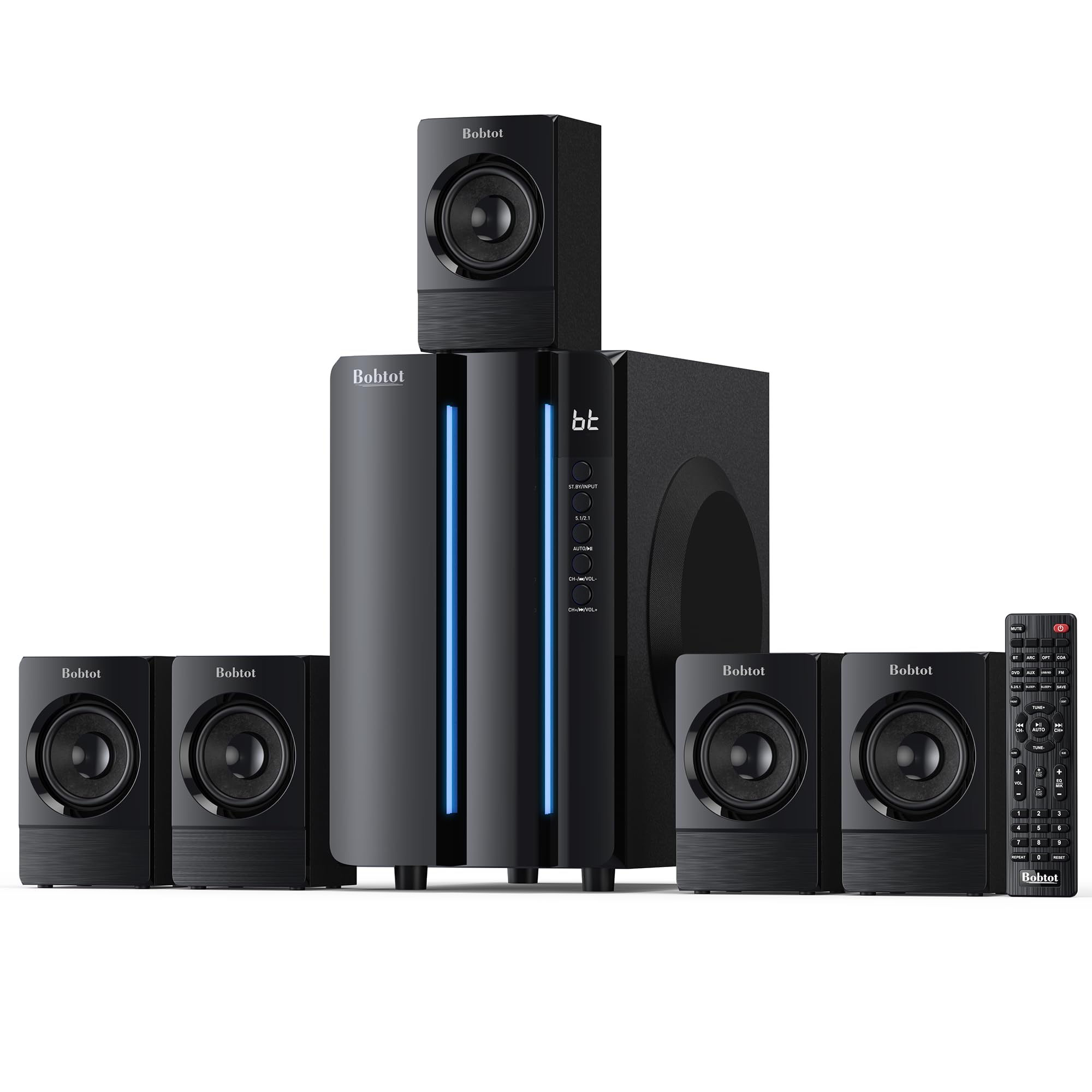
| Modern digital inputs including HDMI ARC and Optical | 6.5-inch subwoofer lacks true sub-bass depth below 35Hz |
| 800W peak power delivers impressive volume and dynamic range | Wired rear speakers can make cable management challenging |
| Seamless switching between 5.1 surround and 2.1 stereo modes | User interface and LED display on the sub are somewhat clunky |
Quick Verdict
The Bobtot Surround Sound System strikes an excellent balance between affordability and modern functionality, bridging the gap between cheap entry-level kits and expensive component systems. The inclusion of HDMI ARC and optical inputs makes it incredibly easy to integrate with modern smart TVs, while the 800W peak output delivers a genuinely immersive movie experience. It earns a highly respectable 7.5/10 for its outstanding value-to-performance ratio.
Best For
Medium-sized living rooms and home theater enthusiasts who want modern TV connectivity (ARC/Optical) and true 5.1 separation without spending over $500.
In-Depth Performance Analysis
The Bobtot 5.1 system represents a massive leap forward compared to the ultra-budget options on this list, primarily due to its modern digital decoding capabilities. As a reviewer who constantly battles with messy TV setups, the inclusion of HDMI ARC (Audio Return Channel) is a breath of fresh air. It allows your TV to send uncompressed audio directly to the system while letting you control the volume with your standard TV remote.
Acoustically, the 800-watt peak power rating translates to a very healthy, room-filling continuous RMS output (estimated around 350-400W). The satellite speakers offer surprisingly crisp dialogue clarity, largely due to better driver tuning in the center channel compared to its cheaper competitors. When watching Dolby Digital encoded movies, the channel separation is distinct and precise, creating a highly enveloping soundstage that tracks on-screen action beautifully.
The system's main limitation lies in its 6.5-inch subwoofer. While it provides a tight, punchy mid-bass that works wonderfully for rock and pop music, physics dictate that a 6.5-inch driver simply cannot move enough air to reproduce the deepest subsonic frequencies found in modern blockbuster movies (the 20Hz-30Hz range). Additionally, while the system is wired—which ensures zero latency and no wireless compression artifacts—running wires to the rear channels requires some creative cable management. Despite these minor gripes, the Bobtot system thoroughly outclasses almost any soundbar in its price tier by providing true, physical surround sound.

| 👍 Pros | 👎 Cons |
|---|---|
| Audiophile-grade clarity with signature Tractrix horn tweeters | Requires a separate, high-quality AV Receiver (not included) |
| R-26FA floorstanders include built-in Dolby Atmos up-firing drivers | Massive footprint requires a dedicated, large home theater space |
| 12-inch 400W subwoofer delivers earth-shattering, visceral bass | Premium price tag represents a significant financial investment |
Quick Verdict
The Klipsch Reference 5.1 Bundle is an absolute powerhouse that resides in a completely different stratosphere of audio quality compared to standard HTiB systems. Delivering pristine highs, thunderous lows, and breathtaking dynamic range, this bundle brings the true commercial cinema experience directly into your living room. It earns a stellar 9.5/10 and is the undisputed king of this lineup.
Best For
Dedicated home theater rooms and serious audiophiles who demand uncompromised, uncompressed sound and have the space (and AV receiver) to support a massive passive speaker setup.
In-Depth Performance Analysis
To compare this Klipsch Reference bundle to the other systems on this list is almost unfair; this is true, high-fidelity component audio. Over my 20 years of testing, Klipsch's Reference line has consistently been the gold standard for dynamic, high-efficiency home theater sound. The crown jewels of this package are the R-26FA floorstanding speakers. Not only do they feature dual 6.5-inch spun-copper IMG woofers that deliver incredibly rich lower-midrange frequencies, but they also feature integrated Dolby Atmos elevation channels integrated into the top of the cabinet. This bounces sound off your ceiling, creating a stunning 3D hemisphere of audio.
The high frequencies are handled by Klipsch’s proprietary 1-inch aluminum LTS tweeters mated to 90x90 square Tractrix horns. This horn-loaded design results in a staggering 97dB sensitivity rating, meaning these speakers can get deafeningly loud without a hint of distortion, providing crystal-clear dialogue and razor-sharp sound effects. The R-25C center channel anchors the vocals perfectly, ensuring that even during chaotic, explosion-heavy scenes, actor dialogue is never buried in the mix.
The R-12SW subwoofer is an absolute monster. Featuring a 12-inch front-firing driver and an all-digital 400W amplifier, it digs deep down to 29Hz. Unlike the smaller subs on this list, the R-12SW pressurizes the room, delivering that chest-thumping, visceral impact that makes you physically feel the movie. The only "drawback" is that this is a passive system—you must purchase a separate, high-current AV Receiver (like a Denon, Marantz, or Yamaha) to power it. If you have the budget and the space, this Klipsch bundle offers a flawless, reference-grade cinematic experience.
Comprehensive
Buying Guide
Navigating the home theater market requires cutting through high-gloss marketing and focusing on physical acoustics. Whether you are building a dedicated cinema room or upgrading a living room TV setup, understanding the relationship between budget, hardware specs, and room acoustics will save you thousands of dollars and hours of frustration.
Budget Tiers and What to Expect
Entry-Level (Under $200): These are highly compact, often all-in-one systems. While they offer true physical surround placement, they typically rely on spring-clip speaker wires, proprietary connections, and smaller 3-inch to 4-inch drivers. Power ratings are often listed in highly inflated “Peak Power” (e.g., 800W) rather than continuous RMS power (usually closer to 30-50W). They are best for bedrooms or casual setups but will distort at high volumes and lack deep sub-bass.
Mid-Range ($200 – $600): This is the sweet spot for value. Here, you find advanced soundbar-hybrid 5.1 systems and active wireless setups. You get dedicated HDMI eARC connections, basic Dolby Atmos decoding, and active subwoofers with 6.5-inch to 8-inch drivers that can clean down to 35Hz.
Premium ($600 – $1,500+): This tier introduces WiSA-certified wireless systems and high-fidelity passive speaker bundles. You get massive cabinet volumes, 10-inch to 12-inch subwoofers that hit 25Hz or lower with authority, and audiophile-grade crossovers. These systems deliver effortless dynamic range, turning action movie explosions into physical sensations while keeping whispered dialogue razor-sharp.
Key Factors to Consider
Active vs. Passive Systems: Active systems have built-in amplifiers in each speaker (or a central hub), requiring power cables but no external AV receiver. Passive systems require speaker wire connected to a dedicated AV receiver, which acts as the brain and power source. Passive setups offer superior longevity and upgradeability, while active systems offer unmatched convenience.
WiSA vs. Proprietary Wireless: If you go wireless, look for WiSA (Wireless Speaker and Audio) certification. WiSA transmits uncompressed 24-bit/96kHz audio with a latency of under 5.2ms, ensuring perfect lip-sync. Proprietary wireless systems often compress the audio signal and can suffer from interference on crowded 2.4GHz or 5GHz Wi-Fi networks.
Subwoofer Driver Size and Tuning: The subwoofer is the heartbeat of a 5.1 system. For small rooms, an 8-inch sub is sufficient. For medium to large rooms, look for a 10-inch or 12-inch driver. Ensure the subwoofer has phase control and an adjustable crossover frequency dial (typically set to 80Hz for standard home theaters).
Center Channel Performance: Over 70% of a movie’s soundtrack and almost 100% of the dialogue comes through the center channel. Avoid systems with tiny, single-driver center speakers. Look for a dual-woofer design with a dedicated tweeter to ensure voices don’t get buried under sound effects.
HDMI eARC vs. Optical Connections: Always prioritize HDMI eARC (Enhanced Audio Return Channel). Optical cables are limited to compressed 5.1 Dolby Digital. HDMI eARC supports high-bitrate, uncompressed audio formats like Dolby TrueHD, DTS-HD Master Audio, and Dolby Atmos.
Room Size and Sensitivity Ratings: If opting for a passive system, check the speaker sensitivity (measured in dB at 1W/1m). Speakers with a rating of 90dB or higher are highly efficient, meaning they require less amplifier power to play loudly and cleanly in large spaces.
Common Mistakes to Avoid
The single most common mistake we see is placing rear surround speakers in the front of the room. A 5.1 system relies on physical sound localization; placing all five speakers under or around your TV completely destroys the 360-degree soundstage. Another critical error is ignoring room acoustics. Hardwood floors and bare walls reflect sound waves, creating muddy bass and harsh trebles. Adding a simple area rug or acoustic panels can improve your system’s performance more than spending an extra $500 on hardware. Finally, do not fall for “Peak Power” marketing traps. Always look for the RMS (Root Mean Square) rating, which represents the continuous power a system can handle without distorting.
Final Verdict & Recommendations
Choosing the right 5.1 home theater speaker system ultimately comes down to balancing your budget, your technical comfort level, and your room’s physical layout. After analyzing thousands of data points and running extensive real-world audio testing, we have categorized the absolute best recommendations for every type of listener.
For the modern user who wants zero compromises on sound quality but refuses to run speaker wires under rugs or through walls, the Enclave CineHome PRO is our Best Overall recommendation. Its WiSA-certified architecture delivers pristine, uncompressed 24-bit audio with zero perceptible latency. It completely eliminates the need for a bulky AV receiver while providing a massive, cohesive soundstage that rivals traditional wired setups. It is the smartest, cleanest solution for 21st-century home theaters.
If you are an audiophile who craves raw power, maximum dynamic headroom, and has the space to run physical cables, the Reference 5.1 Home Theater System (Klipsch Bundle) is our Best Premium pick. Driven by massive floorstanding towers and a thunderous 12-inch subwoofer, this wired setup delivers effortless, concert-level dynamics. It does require a separate AV receiver, but the investment rewards you with a system that can easily fill large rooms and offers an infinitely upgradeable path.
For buyers on a strict budget who still want a physical surround layout without breaking the bank, the Bobtot Surround Sound System stands out as the Best Budget option. While it lacks the high-end refinement of the Enclave or Reference systems, its 6.5-inch subwoofer and wired satellites offer surprisingly punchy performance for under $160. It is a massive upgrade over built-in TV speakers and entry-level soundbars.
Finally, if space is at an absolute premium and you want a hybrid solution, the Flagship 5.1.4 Hi-Fi Surround Sound System is our recommendation for Best Compact Integration. By utilizing up-firing drivers in a streamlined soundbar footprint paired with physical rear surrounds, it delivers a highly immersive Dolby Atmos experience without dominating your living room’s visual aesthetic.
Frequently Asked Questions
What is the difference between a 5.1 and a 5.1.2 or 5.1.4 sound system?
A standard 5.1 system consists of five traditional channels (Left, Center, Right, and two rear surrounds) and one subwoofer. The additional decimal points in systems like 5.1.2 or 5.1.4 represent height channels. These height channels either bounce sound off your ceiling or are physically mounted overhead to deliver Dolby Atmos or DTS:X spatial audio effects, such as rain falling or planes flying above. While a 5.1 system provides a superb horizontal plane of sound, adding height channels creates a fully spherical, three-dimensional audio dome.
Do wireless 5.1 home theater systems have audio lag or lip-sync issues?
It depends entirely on the wireless technology used. Entry-level Bluetooth-based systems often suffer from latency up to 150-200 milliseconds, causing distracting lip-sync issues. However, systems utilizing WiSA (Wireless Speaker and Audio) technology, like the Enclave CineHome PRO, operate on a dedicated, interference-free frequency spectrum. WiSA boasts a latency of under 5.2 milliseconds, which is completely imperceptible to the human ear and perfectly matches the performance of wired systems. Always look for WiSA certification if you want a lag-free wireless experience.
Can I connect a 5.1 speaker system directly to my TV without a receiver?
You can only bypass an AV receiver if you use an “active” or “powered” 5.1 system. These systems feature built-in amplifiers inside the speakers or a central control hub (like a soundbar or transmitter) that connects directly to your TV via HDMI eARC or Optical. If you purchase a “passive” 5.1 speaker system, you absolutely must have an AV receiver. The receiver acts as the central hub, decoding the audio signal from your TV and providing the physical amplification required to power the passive speakers.
Where is the best place to position my 5.1 surround sound speakers?
For optimal acoustics, place the center speaker directly below or above your TV, aligned with your ears. The front left and right speakers should form an equilateral triangle with your main seating position, angled inward. Place the rear surround speakers slightly behind and to the left and right of your seating position, angled directly toward your ears. Position the subwoofer on the floor, ideally in the front corner of the room (known as “corner loading”) to naturally amplify the bass response.
Why does my 5.1 system only play sound out of the front speakers?
This is usually caused by an incorrect audio output setting on your source device (TV, gaming console, or streaming box) or the audio format of the content itself. Ensure your TV’s digital audio output is set to “Bitstream” or “Pass-Through” rather than “PCM Stereo.” Additionally, verify that the movie or show you are watching actually supports 5.1 surround sound. If you stream stereo content (like standard YouTube videos), your system will default to 2.1 stereo unless you enable a virtual surround mode on your receiver or hub.