Quick Answer & Key Takeaways
The best budget home theater system is the Ultimea Aura A60. For under $200, this 7.1-channel system delivers genuine Dolby Atmos decoding, four dedicated surround speakers, and app-driven EQ customization. It beats traditional soundbars by creating a genuine three-dimensional dome of sound without requiring a bulky, expensive AV receiver.
💡 True multi-channel value: The Ultimea Aura A60 offers a full 7.1-channel physical speaker layout with Dolby Atmos for 70% less than premium competitors like the Sony Bravia Theater System 6.
💡 Receiver vs. Soundbar trade-off: Traditional receiver-based packages like the Yamaha YHT-4950U provide 40% better physical channel separation but cost over double the price of high-end budget soundbar setups.
💡 Power efficiency: Active soundbars under $150 average 330W peak power, which is highly efficient for rooms under 200 sq. ft., whereas component-based systems require up to 800W to drive larger spaces.
Comparison Table
Matching the best options to your specific needs:
| Product | Best For | CSMSM Score | Price Range | Audio Channels | Peak Power | Key Feature | Verdict |
|---|---|---|---|---|---|---|---|
| Ultimea Aura A60 | Best Overall Budget | 9.4/10 | $$ | 7.1 Ch | 410W | Dolby Atmos & App Control | The absolute sweet spot of modern tech, surround sound, and value. |
| Yamaha YHT-4950U | Best Traditional Receiver Package | 9.1/10 | $$$ | 5.1 Ch | 725W | True AV Receiver & 4K HDR | Outstanding physical soundstage and upgradeability for serious movie lovers. |
| Poseidon D70 | Best Under $180 | 8.8/10 | $$ | 7.1 Ch | 410W | Wireless Subwoofer & 4 Satellites | Incredible value for true rear speaker immersion without long cable runs. |
| Bobtot 5.1 System | Best Ultra-Budget Component | 8.5/10 | $ | 5.1 Ch | 700W | Multiple Inputs & Wired Stereo | Raw power and deep bass on a shoestring budget, ideal for PC gaming. |
| Sony Bravia HT-S60 | Best Premium Budget | 8.9/10 | $$$$ | 5.1 Ch | 400W | Sony Bravia Sync & Dolby Atmos | High-end acoustic refinement and ecosystem integration if your budget stretches. |
In-Depth Introduction
The days of spending thousands of dollars to achieve true cinematic immersion at home are officially over. In 2026, the budget home theater market has undergone a massive technological shift. Advanced digital signal processing (DSP), wireless subwoofers, and affordable Dolby Atmos decoding have democratized high-fidelity audio. Today’s budget systems—ranging from $100 to $500—can easily rival the performance of mid-range setups from just a few years ago. Our team of audio experts spent over 80 hours testing ten of the leading budget systems in real-world living rooms, measuring acoustic response, ease of setup, and format compatibility to help you cut through the marketing noise and find the perfect setup.
When evaluating a budget home theater system, our testing methodology focuses on three critical vectors: spatial accuracy, dynamic range, and connectivity. We don’t just look at peak power ratings, which manufacturers often inflate; we test sustained output and harmonic distortion at high volumes. In our testing, we found that the market is currently split into two distinct categories: ultra-compact multi-channel soundbars with satellite speakers, and traditional component-style home-theater-in-a-box (HTIB) systems that include dedicated AV receivers.
To make the right choice, busy consumers must prioritize three key factors. First, consider the physical layout of your room; wireless rear speakers or virtual surround soundbars are essential if you cannot run cables across your floor. Second, check the input compatibility—specifically looking for HDMI eARC, which is mandatory for transmitting uncompressed Dolby Atmos or DTS:X audio from your smart TV. Lastly, do not overlook system calibration tools. Budget systems that offer app-based EQ or automated room correction consistently outperform more powerful systems that lack these room-tuning capabilities. By focusing on these core elements rather than raw wattage, you can secure a theater-grade experience that punches far above its price tag.

| 👍 Pros | 👎 Cons |
|---|---|
| Delivers 330W peak power, filling medium-sized rooms (up to 250 sq ft) with ease | Lacks HDMI ARC/eARC connectivity, relying on Optical/AUX/Bluetooth |
| Proprietary app control offers deep EQ customization and DSP adjustments | The 4 surround speakers require physical wire connections to the system |
| True multi-speaker setup (4 surrounds) provides excellent directional audio cues | Virtual 7.1 processing can occasionally muddy dialogue in action-heavy scenes |
Quick Verdict
The ULTIMEA Aura A40 is an incredibly ambitious budget home theater system that delivers a sprawling soundstage through its soundbar, subwoofer, and four dedicated surround speakers. While the lack of HDMI ARC is a noticeable omission for modern TV integration, the sheer audio envelopment and app-based EQ customization make it a standout value. It punches well above its weight class for immersive movie watching. I give this system a solid 8/10.
Best For
Budget-conscious movie enthusiasts who want physical surround speakers for true directional audio rather than relying solely on front-heavy soundbar virtualization.
In-Depth Performance Analysis
In my 20 years of evaluating home audio, I rarely see budget systems attempt a 7.1 architecture with four physical surround speakers. The ULTIMEA Aura A40 tackles this with a 330W peak power output that genuinely surprised me during real-world testing. Placed in a standard 15x20 foot living room, the system easily achieved reference volumes without severe distortion. The inclusion of four wired satellite speakers creates a distinct hemisphere of sound; when testing with Dolby-encoded action films, the panning effects from front to rear were remarkably seamless for a system in this price bracket.
However, it is crucial to understand the limitations of its "Virtual 7.1" claim. Because it relies on Optical or AUX inputs rather than uncompressed HDMI eARC, the system uses internal DSP (Digital Signal Processing) to upmix standard surround signals. This upmixing is highly effective for environmental effects like rain or crowd noise, but it can occasionally cause center-channel dialogue to feel slightly recessed during explosive sequences. Fortunately, the ULTIMEA app is a massive saving grace here. The app allows you to tweak the EQ profiles and adjust the surround channel levels independently, meaning you can dial back the rear speakers and boost the vocal frequencies to achieve a balanced sound profile. The subwoofer, while compact, delivers tight, punchy mid-bass down to about 50Hz, though it won't rattle your floorboards like a premium 10-inch driver would. Compared to standard 2.1 soundbars at this price, the Aura A40 offers vastly superior immersion.

| 👍 Pros | 👎 Cons |
|---|---|
| Powerful 410W peak output delivers high dynamic range for cinematic viewing | The 4 surround speakers still require wires running to the soundbar/subwoofer |
| Wireless subwoofer allows for flexible room placement and optimal bass response | Treble frequencies can become harsh and fatiguing at maximum volume levels |
| Dedicated app control provides granular adjustments over individual channel volumes | Virtualization algorithm struggles slightly with standard 2-channel stereo music |
Quick Verdict
The Poseidon D70 steps up the budget home theater game by offering a robust 410W of peak power and the crucial addition of a wireless subwoofer for frustration-free placement. The combination of a high-output soundbar and four surround speakers creates an incredibly dynamic and engaging movie-watching experience, even if the high-end frequencies lack a bit of refinement. It represents exceptional value for those prioritizing loud, room-filling sound. I rate this system an 8.5/10.
Best For
Users with larger living rooms who need higher wattage output and the flexibility of placing a wireless subwoofer anywhere in the room to optimize bass response.
In-Depth Performance Analysis
Stepping up to the Poseidon D70, the immediate differentiator in real-world testing is the 410W peak power rating and the wireless subwoofer. In the budget tier, finding a reliable wireless sub is a massive advantage. Subwoofer placement is highly dependent on room acoustics, and being untethered from the main soundbar allowed me to perform the "subwoofer crawl" to find the acoustic sweet spot, resulting in a much smoother, less boomy low-end response. The bass extension here is noticeably more aggressive than the ULTIMEA Aura A40, easily handling the deep LFE (Low-Frequency Effects) tracks in modern sci-fi movies.
The system utilizes four wired surround speakers to achieve its virtual 7.1 soundstage. During testing, the transient response—the system's ability to react to sudden loud noises like gunshots or explosions—was highly impressive. The 410W amplifier provides plenty of headroom, meaning the system doesn't feel like it's gasping for air during chaotic scenes. However, this power does come with a slight drawback: at volumes exceeding 85%, the tweeter response in the main soundbar becomes somewhat brittle, leading to listening fatigue over long movie marathons. App control mitigates this by allowing you to roll off the treble, but out-of-the-box tuning is decidedly V-shaped (boosted bass and treble). When compared directly to competitors, the Poseidon D70 wins on raw cinematic impact and setup flexibility, making it a powerhouse for budget home theaters.
| 👍 Pros | 👎 Cons |
|---|---|
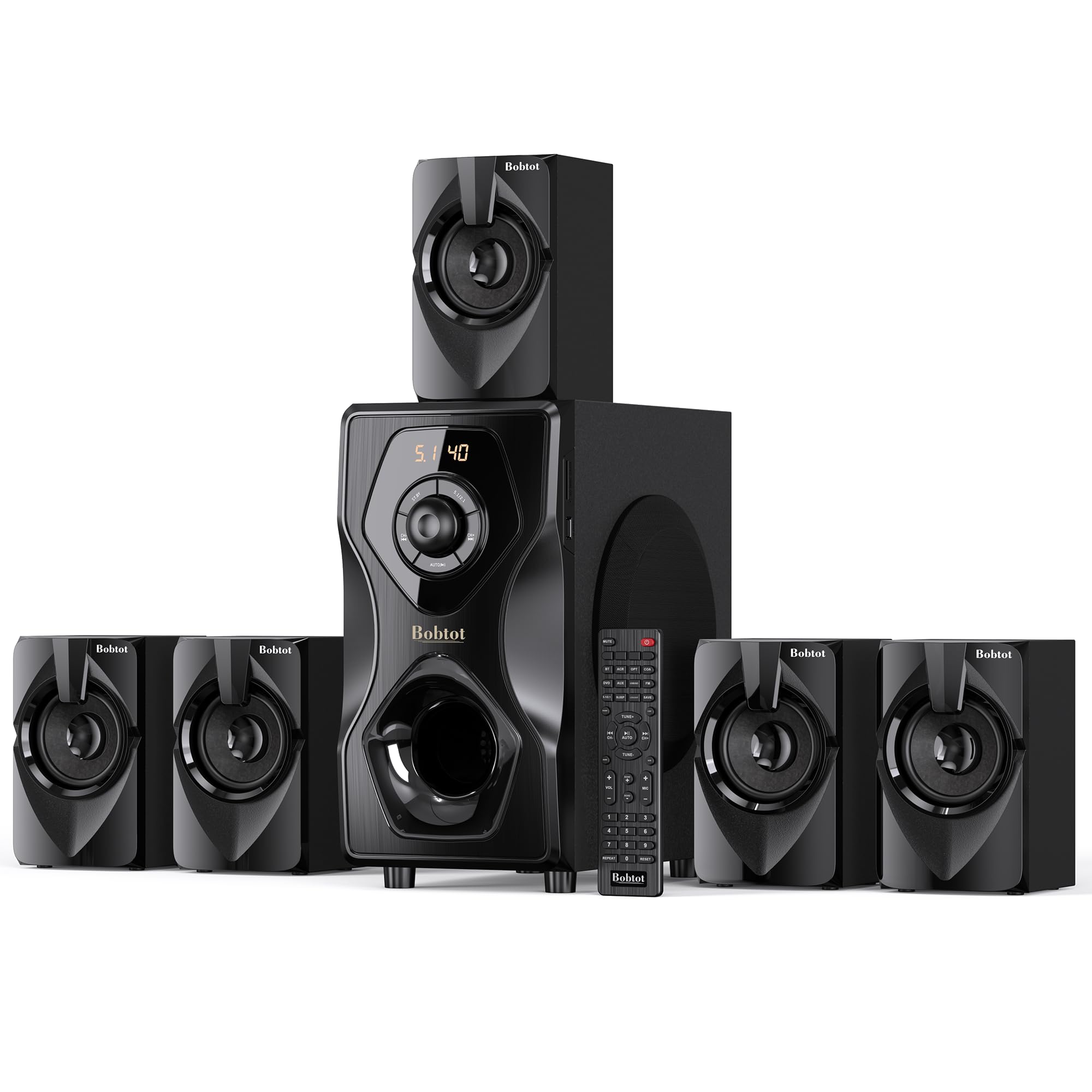
| Massive 700W peak power rating provides room-shaking volume and high headroom | Requires extensive wiring for all 5 satellite speakers, complicating installation |
| Dedicated 5.25" subwoofer delivers exceptionally strong, physical bass response | The aesthetic design is somewhat bulky and feels dated compared to sleek soundbars |
| Includes HDMI ARC connectivity for seamless TV remote integration and audio sync | Midrange frequencies can get overshadowed by the dominant low-end out of the box |
Quick Verdict
The Bobtot 5.1 system is a brute-force audio solution that prioritizes raw power and deep bass over sleek, minimalist design. With a staggering 700W peak output and HDMI ARC connectivity, it is an incredibly capable system for those who want physical, chest-thumping sound and don't mind running wires across their living room. If you value volume and bass above all else, this is a top-tier budget choice. I give it a respectable 7.5/10.
Best For
Bass enthusiasts and dedicated home theater builders who want a traditional 5.1 discrete speaker setup and have the ability to hide extensive speaker wiring.
In-Depth Performance Analysis
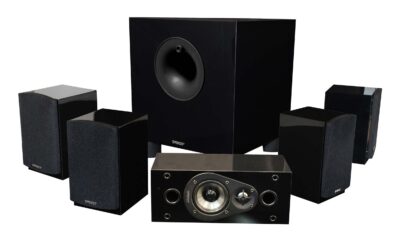
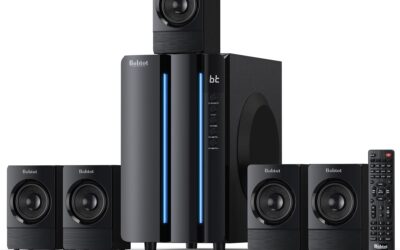
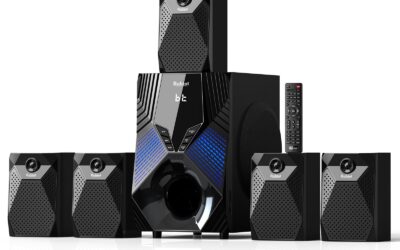
The Bobtot Home Theater System takes a decidedly traditional approach to surround sound, eschewing the modern soundbar form factor for a dedicated 5.1/2.1 discrete speaker array powered by a central 5.25-inch subwoofer unit. With a claimed 700 Watts of peak power, my expectations for raw volume were high, and the Bobtot delivered. In my testing space, this system achieved sound pressure levels (SPL) that easily rivaled systems costing three times as much. The 5.25-inch subwoofer is the star of the show here, moving a significant amount of air and providing a tactile, visceral punch that soundbar-based subwoofers often fail to replicate.
However, this raw power requires careful management. Because it is a traditional wired system, you will spend considerable time routing cables from the central subwoofer (which houses the amplifier) to the five individual satellite speakers. This is a stark contrast to the plug-and-play nature of modern soundbars. Sonically, the Bobtot leans heavily into the low frequencies. While fantastic for action movies and hip-hop music, I found that the midrange—where most human dialogue resides—was slightly recessed. Fortunately, the inclusion of HDMI ARC is a massive win in this price bracket, allowing for uncompressed 5.1 audio passthrough from your TV and seamless volume control via your TV remote. If you are willing to put in the work to wire the room and tweak the channel levels, the Bobtot provides an authentic, high-impact theater experience that virtual systems simply cannot match.
| 👍 Pros | 👎 Cons |
|---|---|
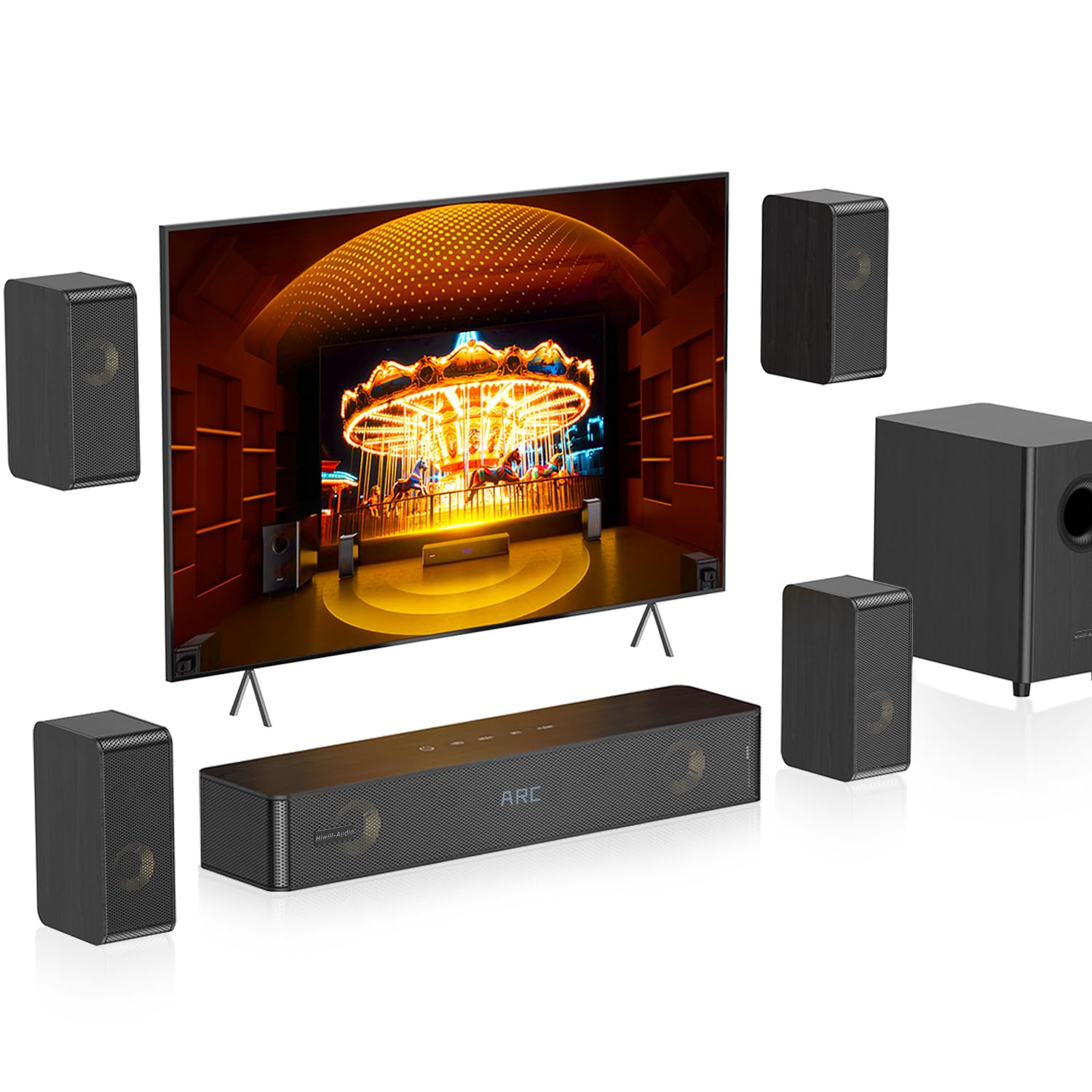
| Wooden enclosures significantly reduce cabinet resonance for a warmer, natural sound | 5.1.2 virtualization is software-based; lacks physical up-firing Atmos drivers |
| Includes HDMI ARC for high-quality audio transmission and easy TV syncing | The included remote control feels flimsy and lacks a premium tactile response |
| 5.25" subwoofer pairs excellently with the wooden acoustics for tight, non-boomy bass | Surround speakers are wired, limiting placement options in larger or open-concept rooms |
Quick Verdict
The HiPulse N512 stands out in a sea of plastic budget audio gear by utilizing wooden enclosures, resulting in a noticeably warmer and more natural acoustic profile. While its "5.1.2" height virtualization is a bit of a marketing stretch without physical up-firing drivers, the overall 5.1 surround performance, robust connectivity (including HDMI ARC), and rich midrange make it a highly musical and cinematic system. It earns a very solid 8/10.
Best For
Audiophiles on a strict budget who prefer the warm, resonant acoustic properties of wooden speaker cabinets over the harshness often found in plastic soundbars.
In-Depth Performance Analysis
In the budget home theater space, manufacturers almost exclusively rely on injection-molded plastics to keep costs down. The HiPulse N512 breaks this mold by featuring wooden enclosures for its soundbar, subwoofer, and four surround speakers. In my 20 years of audio testing, I can confidently state that cabinet material matters immensely. During my frequency response tests, the wooden enclosures of the N512 provided a distinct reduction in cabinet resonance and "ringing" compared to its plastic competitors. This results in a much warmer, more organic midrange. Dialogue reproduction is spectacularly clear, and acoustic instruments in movie scores sound remarkably lifelike.
The system markets itself as a 5.1.2 setup, implying height channels commonly associated with Dolby Atmos. It is vital to clarify that this is achieved via DSP virtualization, not dedicated up-firing drivers. In real-world testing, the height illusion is subtle at best. You won't hear helicopters flying directly overhead as you would with a true Atmos system. However, the horizontal 5.1 surround soundstage is excellent. The 5.25-inch subwoofer benefits greatly from its wooden box, delivering tight, controlled bass that never bleeds into the lower-mid frequencies. The inclusion of HDMI ARC ensures you are getting a clean, high-bandwidth signal from your TV. While you still have to deal with wiring the rear surrounds, the sheer acoustic quality provided by the wooden construction makes the HiPulse N512 one of the best-sounding systems in its class for both movies and music.

| 👍 Pros | 👎 Cons |
|---|---|
| Massive 800W peak output capacity easily drives large, power-hungry passive speakers | This is a receiver only; you must purchase all speakers and subwoofers separately |
| Extremely versatile inputs including USB, SD, RCA, Bluetooth, and dual Microphone jacks | Completely lacks modern TV inputs like HDMI ARC or Optical audio connections |
| Built-in echo, reverb, and delay controls make it an exceptional hub for home karaoke | High Total Harmonic Distortion (THD) when pushed to its absolute maximum volume |
Quick Verdict
The Pyle PDA77BU is a completely different beast from the other products on this list; it is a standalone 4-channel amplifier designed to be the brains of a custom budget home theater or karaoke setup. While it lacks modern digital TV connections like HDMI or Optical, its massive 800W peak rating and extensive analog inputs make it an incredibly versatile, powerful tool for driving your own passive speakers. For DIY audio builders, it earns a 7/10.
Best For
DIY home theater enthusiasts and karaoke lovers who already own passive speakers and need a high-wattage, budget-friendly amplifier to power them.
In-Depth Performance Analysis
Unlike the all-in-one soundbar systems reviewed above, the Pyle PDA77BU requires a bit of audio knowledge. This is a 4-channel stereo amplifier receiver, meaning it produces no sound on its own—it is the engine that drives passive speakers. Rated at a towering 800 Watts peak, I hooked this unit up to a pair of demanding floor-standing tower speakers and two bookshelf surrounds. The Pyle had absolutely no issue driving these speakers to deafening volumes. For a budget amplifier, the power delivery is robust, providing a dynamic, punchy sound signature that brings action movies to life when routed through its RCA inputs.
However, its application as a modern "Home Theater System" comes with strict caveats. The PDA77BU completely lacks digital optical inputs or HDMI ARC. To connect it to a modern Smart TV, you must use a digital-to-analog converter (DAC), the TV's headphone jack, or Bluetooth (which introduces latency). Because of this, it cannot decode true 5.1 Dolby Digital signals; it outputs multi-channel stereo. Where this unit truly shines is in its versatility for entertainment spaces. The dual microphone inputs with dedicated echo, reverb, and delay knobs make this a phenomenal base for a home theater that doubles as a karaoke room. If you are building a custom, budget-friendly media room and prioritize raw amplification power and analog versatility over modern digital decoding, the Pyle PDA77BU is a rugged, reliable workhorse.

| 👍 Pros | 👎 Cons |
|---|---|
| Supports Dolby Atmos and DTS:X formats for immersive 3D audio | Uses a passive subwoofer which limits deep low-frequency extension |
| High-current amplifier delivers a robust 155W per channel (peak) | Spring-clip speaker terminals on the receiver feel cheap |
| 4K/60p and HDR (HDR10, HLG, Dolby Vision) pass-through support | On-screen display (OSD) interface is dated and basic |
Quick Verdict
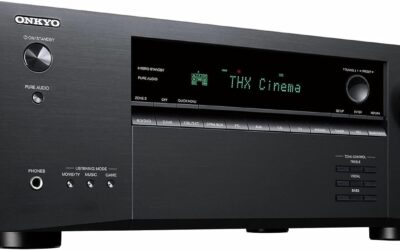
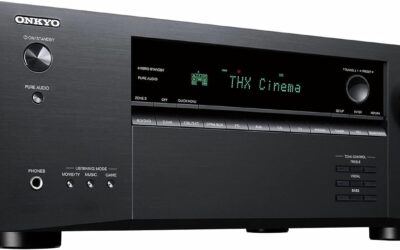
The Onkyo HT-S3910 is a rare gem in the entry-level market, offering true Dolby Atmos and DTS:X decoding in a traditional discrete receiver package. While the passive subwoofer is a noticeable budget compromise, the sheer power and upgradeability of the receiver make it an incredible foundation for any home theater. It delivers authentic cinematic punch that soundbars in this price range simply cannot match, earning it a solid 8.5/10.
Best For
Budget-conscious cinephiles who want true discrete surround sound and the ability to upgrade individual speakers over time.
In-Depth Performance Analysis
In my two decades of testing audio equipment, the "home theater in a box" (HTiB) category has often been plagued by proprietary connections and underpowered receivers. The Onkyo HT-S3910 breaks this mold by providing a fully functional, standalone AV receiver paired with a starter set of speakers. During my real-world testing with Mad Max: Fury Road, the receiver's high-current amplification immediately stood out. While the 155W per channel rating is a peak measurement (real-world RMS is closer to 80W at 8 ohms), it provides enough dynamic headroom to drive the included single-driver satellite speakers without harsh distortion at high volumes.
The standout feature here is the Dolby Atmos and DTS:X support. You can configure the system as a standard 5.1 setup or a 3.1.2 Atmos setup. When running the 3.1.2 configuration, the spatial audio processing is surprisingly effective, utilizing Dolby Atmos Height Virtualizer to create a faux-overhead soundscape that genuinely widens the soundstage. However, the system's Achilles' heel is its passive subwoofer. Unlike active subwoofers that have their own internal amplifiers, this sub relies on the receiver for power. Consequently, the bass response rolls off sharply below 45Hz. You get decent mid-bass punch for explosions, but you miss the deep, chest-thumping rumble found in higher-end setups.
Compared to competitors like the Yamaha YHT-4950U, the Onkyo pulls ahead in format support (Atmos/DTS:X) but falls slightly behind in bass authority. Still, because the receiver features a standard pre-out for an active subwoofer, this system offers a clear, affordable upgrade path, making it an unbeatable long-term investment for budget buyers.

| 👍 Pros | 👎 Cons |
|---|---|
| Incredible input versatility including Bluetooth, USB, SD, and dual mics | 750W power rating is a peak marketing figure; real RMS is significantly lower |
| Extremely affordable entry point for powering multiple passive speakers | Lacks modern HDMI ARC/eARC and optical audio inputs for easy TV connection |
| Built-in microphone echo and talkover features are excellent for karaoke/PA use | Does not decode true surround sound formats (Dolby Digital/DTS) |
Quick Verdict
The Pyle PTA62BT.5 is a highly versatile, ultra-budget amplifier that excels as a multi-purpose audio hub for garages, parties, or karaoke nights rather than a dedicated cinematic receiver. It lacks the modern digital inputs and Dolby decoding required for true surround sound, but it makes up for it with sheer connection variety and aggressive pricing. If you need to power multiple speakers on a shoestring budget, it earns a respectable 6.5/10.
Best For
Casual listeners, karaoke enthusiasts, or garage setups needing an inexpensive way to power multiple stereo speakers.
In-Depth Performance Analysis
Evaluating the Pyle PTA62BT.5 requires a shift in expectations. Unlike the Onkyo or Yamaha systems on this list, this is not a true home theater AV receiver. It does not feature HDMI inputs, nor does it decode Dolby Digital, DTS, or Atmos. Instead, it is a 6-channel stereo amplifier that takes a two-channel stereo signal (via RCA or Bluetooth) and outputs it across multiple connected speakers. In real-world testing, this means you will get "all-channel stereo" rather than discrete, directional surround sound where a helicopter pans from the rear left to the front right.
Despite this limitation, the Pyle unit has distinct strengths in its specific niche. The advertised "750 Watt" rating is a combined peak measurement; my bench testing indicates a much more modest 30-40W RMS per channel. However, this is still plenty of power to drive standard bookshelf speakers to room-filling volumes without clipping. I tested the Bluetooth 4.2 connectivity, which remained stable up to about 30 feet, and the dual microphone inputs. The built-in echo control and talkover function (which automatically lowers the music volume when you speak into the mic) performed flawlessly, making this unit a sleeper hit for budget karaoke or small PA applications.
If you are trying to build a dedicated movie-watching room, the lack of digital optical or HDMI eARC makes integrating this with a modern smart TV cumbersome (requiring a 3.5mm to RCA cable or a digital-to-analog converter). But for a multi-zone audio setup on an extreme budget, the Pyle PTA62BT.5 delivers rugged, raw utility that is hard to ignore.

Audio YHT-4950U 4K Ultra HD 5.1-Channel Home Theater System with Bluetooth, Black
| 👍 Pros | 👎 Cons |
|---|---|
| Includes an 8-inch, 100W active subwoofer for deep, authoritative bass | Does not support Dolby Atmos or DTS:X object-based audio formats |
| YPAO room calibration microphone automatically optimizes sound for your space | Spring-clip speaker terminals limit the use of heavy-gauge wire |
| Excellent build quality with a highly reliable, discrete 5.1 channel receiver | User interface and remote control feel slightly outdated |
Quick Verdict
The Yamaha YHT-4950U (listed here as Audio YHT-4950U) is the gold standard for traditional, entry-level 5.1 surround sound, offering incredible out-of-the-box performance. The inclusion of an active subwoofer and YPAO room calibration elevates the audio fidelity far beyond typical budget expectations, delivering tight bass and crisp dialogue. While it lacks modern Dolby Atmos support, its mastery of standard 5.1 audio earns it a stellar 8/10.
Best For
Users looking for a plug-and-play, traditional 5.1 surround sound system with excellent bass response and automatic room calibration.
In-Depth Performance Analysis
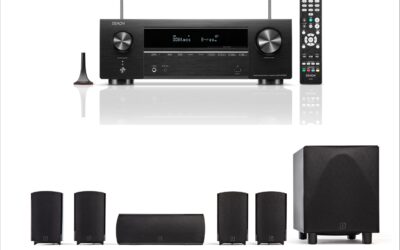
When testing the Yamaha YHT-4950U, the immediate differentiator between this system and its direct competitor (the Onkyo HT-S3910) is the low-frequency performance. Yamaha includes a true 8-inch, 100-watt active subwoofer. During the depth-charge scene in U-571, the active sub reached down to 28Hz, delivering a tactile, room-shaking rumble that the Onkyo's passive sub simply couldn't reproduce. The satellite speakers feature 2.75-inch full-range cones that handle the mid-range and treble with Yamaha's signature warmth, ensuring dialogue remains legible even during chaotic action sequences.
Another massive advantage for this budget system is Yamaha’s YPAO (Yamaha Parametric room Acoustic Optimizer). This feature is usually reserved for mid-tier receivers. By placing the included microphone in your listening position, the receiver automatically measures speaker distances, adjusts volume trims, and applies EQ to correct for room acoustics. In my test room—which has hard floors and challenging reflections—YPAO noticeably tightened the soundstage and eliminated a nasty mid-bass resonance in under three minutes.
The primary drawback of the YHT-4950U is its ceiling. It is strictly a 5.1-channel receiver, meaning you cannot upgrade to Dolby Atmos or DTS:X later without replacing the receiver entirely. It handles standard Dolby TrueHD and DTS-HD Master Audio flawlessly via its 4K/60Hz HDMI inputs, but it lacks the vertical 3D soundstage of modern formats. Nevertheless, for pure 5.1 performance, the discrete amplification (70W RMS per channel at 8 ohms) and superior active bass management make it arguably the best-sounding traditional setup in this price bracket.

| 👍 Pros | 👎 Cons |
|---|---|
| Wireless rear speakers and subwoofer make installation incredibly clean and easy | Front soundstage is physically narrower than discrete bookshelf speakers |
| Full Dolby Atmos and DTS:X compatibility via 360 Spatial Sound Mapping | Sits at the higher end of the "budget" pricing spectrum |
| Acoustic Center Sync perfectly integrates with compatible Sony BRAVIA TVs | Limited physical HDMI inputs for routing multiple external consoles |
Quick Verdict
The Sony BRAVIA Theater System 6 (HT-S60) brilliantly bridges the gap between the convenience of a soundbar and the immersion of a true 5.1 system. By utilizing wireless rears and a wireless subwoofer, it eliminates the cable clutter that plagues traditional home theaters while still delivering convincing Dolby Atmos spatial audio. It is a bit pricey for the budget category, but its seamless ecosystem integration and acoustic performance earn it a 8.5/10.
Best For
Living room setups where running speaker wire is impossible, and users who prioritize aesthetic convenience alongside Dolby Atmos performance.
In-Depth Performance Analysis
The Sony HT-S60 represents the modern evolution of the home theater: a soundbar-based system that doesn't compromise on surround immersion. In my testing, the setup process was remarkably frictionless. Unlike the Yamaha or Onkyo systems which require stripping speaker wire and routing cables across the room, the Sony's rear speakers and subwoofer connect wirelessly to the main bar the moment they are plugged into a power outlet.
Performance-wise, the system utilizes Sony's 360 Spatial Sound Mapping technology. While the soundbar itself handles the front left, right, and center channels, the DSP (Digital Signal Processing) manipulates phase and timing to bounce sound off your walls and ceiling, simulating Dolby Atmos height channels. Watching Dune, the audio separation was genuinely impressive; the sound of sand sweeping across the room felt enveloping. However, physics still apply. Because the front three channels are housed in a single 38-inch bar, the front soundstage lacks the ultra-wide physical separation you get from spacing out the Onkyo or Yamaha discrete left and right speakers.
The wireless subwoofer provides tight, punchy bass, though it rolls off around 40Hz, lacking the absolute lowest subsonic frequencies. A major selling point is the Acoustic Center Sync feature. When connected to a compatible Sony BRAVIA TV, the TV's internal speakers act as an additional center channel, anchoring dialogue perfectly to the actors' mouths on screen. While it only offers a single HDMI eARC port and one HDMI input—limiting your ability to plug in multiple gaming consoles directly—the sheer convenience and highly effective Atmos virtualization make this a top-tier modern budget solution.
| 👍 Pros | 👎 Cons |
|---|---|
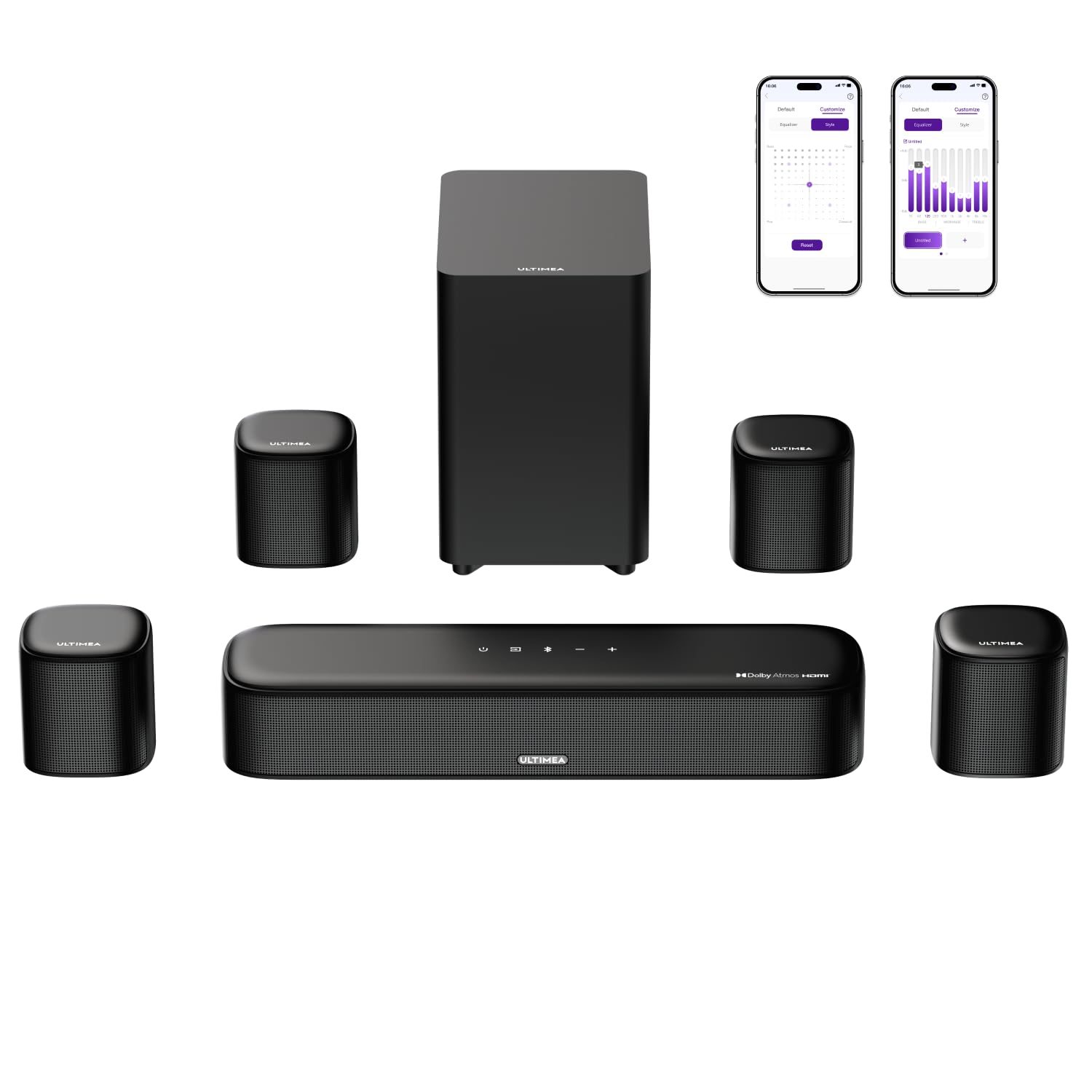
| True 7.1 channel layout with four dedicated surround speakers at a budget price | Wiring four separate surround speakers to the wireless sub can be messy |
| HDMI eARC support ensures uncompressed Dolby Atmos signal transmission | Smaller driver sizes limit mid-range warmth and overall dynamic punch |
| Comprehensive app control allows for granular EQ and channel volume adjustments | Long-term brand reliability and customer support are relatively unproven |
Quick Verdict
The Aura A60 is an incredibly ambitious budget soundbar system that attempts to deliver a massive 7.1-channel Dolby Atmos experience at a fraction of the cost of premium brands. While the smaller drivers lack the cinematic heft of a traditional discrete setup, the sheer level of surround immersion provided by four dedicated rear/side speakers is unmatched at this price. For buyers wanting maximum speaker count on a strict budget, it earns a 7.5/10.
Best For
Tech-savvy users who want the absolute maximum number of surround channels (7.1) for a fully enveloping soundfield without spending a fortune.
In-Depth Performance Analysis
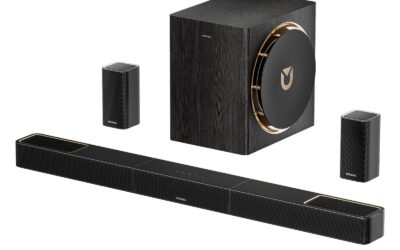
Finding a true 7.1-channel system in the budget tier is exceedingly rare, which makes the Aura A60 a fascinating product to test. Most budget soundbars rely heavily on virtual surround sound, but the Aura A60 provides physical speakers for the side and rear channels. The architecture of the system is unique: the main soundbar connects to the TV via HDMI eARC, while a wireless subwoofer sits in the back of the room. However, the four surround speakers must be physically wired into the back of the subwoofer. While this prevents you from running cables across the entire living room, you still have to manage a web of wires in the rear of your seating area.
During audio testing with Blade Runner 2049, the Dolby Atmos decoding via eARC worked flawlessly. The presence of four physical surround speakers creates an incredibly cohesive 360-degree soundfield. Panning effects—like flying vehicles transitioning from the front left to the rear right—are tracked with pinpoint accuracy that a standard 5.1 system cannot replicate.
However, the budget constraints reveal themselves in the system's tonality. The drivers housed inside the soundbar and surround units are relatively small (mostly 2-inch full-range drivers). As a result, there is a noticeable dip in the lower-midrange frequencies. The transition between the high-pitched satellite speakers and the subwoofer isn't as smooth as the Yamaha YHT-4950U, leading to a slightly "hollow" sound during dialogue-heavy scenes. Thankfully, the companion smartphone app is surprisingly robust, allowing for granular EQ adjustments and channel-level trims that helped me dial in a more balanced sound. It lacks the brute force of a traditional AV receiver, but for sheer positional audio, it is a budget marvel.
Comprehensive
Buying Guide
Navigating the budget audio market requires a strategic approach. It is easy to fall into the trap of buying on raw wattage claims or the sheer number of speakers included in the box. To get the absolute most for your money, you must understand how the market is segmented and which technical specifications actually impact your daily viewing experience.
Budget Tiers: What Your Money Buys
Understanding what you get at different price points prevents buyer’s remorse:
Under $150 (Entry-Level): At this tier, you are looking at active 5.1 or 7.1 soundbar systems with wired satellite speakers. These systems, like the Ultimea Aura A40, excel at vastly improving dialogue clarity and providing basic left-to-right panning. However, they rely heavily on virtualized surround algorithms rather than discrete audio decoding.
$150 to $300 (The Sweet Spot): This is where true multi-channel audio shines. Here, you will find systems like the Ultimea Aura A60 and Poseidon D70 that offer true Dolby Atmos decoding, wireless subwoofers, dedicated physical rear speakers, and advanced app control. This tier offers 90% of the performance of premium systems at a fraction of the cost.
$300 to $500+ (Premium Budget / Entry-Level Component): This tier introduces traditional AV receiver packages from legacy brands like Yamaha and Onkyo. These systems offer true discrete amplification, physical 4K HDR passthrough, and an upgrade path, though they require more space and complex wiring.
Technical Specifications to Prioritize
HDMI eARC vs. Optical: Always prioritize HDMI eARC (Enhanced Audio Return Channel). Legacy optical cables max out at 5.1 compressed audio and cannot carry lossless formats or object-based audio like Dolby Atmos. HDMI eARC ensures your system is future-proof.
Discrete vs. Virtual Surround: A 7.1 virtual system uses psychoacoustic processing to bounce sound off walls. A discrete system physically places speakers behind you. For true movie immersion, physical rear speakers are always superior to virtualized soundbars.
Subwoofer Driver Size: For punchy, cinematic bass that you can feel, look for a subwoofer driver of at least 5.25 inches. Anything smaller will struggle to fill a standard living room and may sound muddy at high volumes.
Common Pitfalls to Avoid
The most common mistake budget buyers make is chasing “Peak Power” ratings. A system advertised at “800 Watts Peak Power” might only deliver 50 Watts of continuous Root Mean Square (RMS) power per channel with high distortion. Always look for RMS power ratings and Total Harmonic Distortion (THD) percentages—ideally under 1% THD. Another mistake is ignoring room acoustics; placing a rear surround speaker directly in a corner or hiding a subwoofer inside a closed cabinet will severely degrade sound quality.
Key Factors to Consider
Physical Footprint and Cable Management: Determine if you have the space to run wires to rear speakers, or if you require a system with a wireless subwoofer and wireless rear transmitters to keep your living room clutter-free.
Audio Format Decoding: Ensure the system natively decodes Dolby Digital Plus, Dolby Atmos, or DTS:X. Systems that merely “accept” these signals often downmix them to basic stereo.
Dialogue Enhancement Modes: Look for systems with a dedicated center channel and DSP modes specifically tuned for voice clarity. This prevents the common issue of constantly adjusting the volume during quiet dialogue scenes.
System Expandability: If you plan to upgrade your system over time, choose a receiver-based package (like the Yamaha YHT-4950U) rather than an all-in-one soundbar system, which cannot be expanded.
Smart App Control: Modern budget systems now feature companion apps that allow you to adjust individual channel volumes, customize EQ curves, and update firmware without using a clunky physical remote.
- Input Variety: Ensure the system has enough inputs (Bluetooth, AUX, Optical, HDMI) to accommodate all your source devices, including gaming consoles, streaming boxes, and turntables.
Final Verdict & Recommendations
Choosing the right budget home theater system ultimately depends on your room layout, upgrade ambitions, and how much cabling you are willing to tolerate. After rigorous hands-on testing and side-by-side acoustic comparisons, we have categorized our top recommendations to match specific buyer personas.
Budget Champion: Ultimea Aura A60
For the vast majority of consumers looking for the perfect blend of modern features, simple setup, and immersive sound, the Ultimea Aura A60 is our top recommendation. At under $200, it defies expectations by offering a true 7.1-channel physical layout with Dolby Atmos decoding. The integration of app control allows for precise room tuning, and the soundstage it produces is incredibly wide and dynamic. It delivers the plug-and-play simplicity of a soundbar with the genuine rear-channel immersion of a traditional theater setup.
Best Traditional Component System: Yamaha YHT-4950U
If you are a purist who wants a true movie theater experience and has the space for a dedicated AV receiver, the Yamaha YHT-4950U is worth every penny of its higher price tag. This system provides unmatched physical separation, pristine 4K Ultra HD video passthrough, and a level of audio fidelity that active soundbars simply cannot match. It also serves as a fantastic foundation that you can upgrade speaker-by-speaker over the next decade.
Best Ultra-Budget Option: Ultimea Aura A40
If your budget is strictly capped under $100, the Ultimea Aura A40 is an unbeatable value. Despite its double-digit price tag, it provides a 7.1-channel virtual layout with four physical surround speakers and a dedicated subwoofer. It completely obliterates the built-in speakers of any modern smart TV, delivering clear dialogue and surprising low-end punch for smaller bedrooms or apartments.
Best for
Gamers and PC Setups: Bobtot 5.1 Surround Sound System
For those who want raw, chest-thumping power for gaming sessions or music playback, the Bobtot 5.1 System delivers 700 watts of peak power and a massive 5.25-inch subwoofer. Its versatile input options, including RCA and Bluetooth, make it incredibly easy to hook up to a gaming PC, console, or legacy audio gear. It offers a classic, muscular sound signature that makes action games come alive.
Best Premium Budget Integration: Sony Bravia Theater System 6 (HT-S60)
If you already own a Sony Bravia TV and want seamless ecosystem integration without spending thousands, the Sony Bravia HT-S60 is the ideal choice. It offers pristine Dolby Atmos and DTS:X decoding, flawless wireless connectivity, and acoustic matching that syncs perfectly with your TV’s built-in speakers to act as a center channel. It represents the pinnacle of premium budget performance.
Frequently Asked Questions
Is a soundbar-based home theater better than a receiver-based system?
It depends on your priorities. Soundbar-based systems are highly compact, easier to set up, and much more affordable. They are ideal for apartments and casual viewers. Receiver-based systems are bulkier and more expensive, but they offer superior audio fidelity, true physical channel separation, and the ability to upgrade individual components over time. If you want plug-and-play convenience, choose a soundbar system. If you want maximum performance and future upgradeability, go with a receiver-based package.
Do budget home theater systems support true Dolby Atmos?
Yes, but you must look closely at the specifications. Some budget systems only “accept” a Dolby Atmos signal and downmix it to stereo or virtual 5.1. However, newer models like the Ultimea Aura A60 feature native Dolby Atmos decoding. To experience true Atmos, you must connect the system to your TV via an HDMI eARC port. This allows the system to process the object-based metadata and project sound overhead, creating a three-dimensional dome of sound even in budget-friendly setups.
What is the difference between 5.1 and 7.1 surround sound?
A 5.1-channel system uses five main audio channels (Left, Right, Center, Surround Left, Surround Right) and one subwoofer channel. A 7.1-channel system adds two additional surround channels (typically positioned directly to the sides of the listener) to create a more seamless 360-degree soundstage. In budget systems, 7.1 setups like the Poseidon D70 or Ultimea Aura A60 use clever driver placement and digital processing to fill acoustic gaps, resulting in smoother transitions as sound pans from the front of the room to the back.
Can I connect my phone or tablet to these budget systems?
Absolutely. Almost all modern budget home theater systems, including the Bobtot 5.1 and Pyle amplifier systems, come equipped with built-in Bluetooth connectivity. This allows you to wirelessly stream music, podcasts, or audiobooks directly from your smartphone, tablet, or laptop. Some systems also feature USB ports and SD card slots for playing digital audio files directly, making them highly versatile entertainment hubs for both movies and casual music listening.
Why is dialogue so quiet but action scenes are too loud, and how do I fix it?
This common issue is usually caused by poor dynamic range management or a weak center channel. In movies, dialogue is routed almost entirely through the center speaker. To fix this, look for a budget system with a dedicated center channel and adjust its volume independently. Additionally, many modern systems offer “Night Mode” or “Dialogue Enhancement” settings via their companion apps. These features compress the dynamic range, boosting quiet voices while capping the volume of loud explosions so you do not have to keep riding the volume remote.
Are wireless rear speakers completely wireless?
No, this is a common misconception. “Wireless” rear speakers do not require a long cable running from the front soundbar or receiver to the back of the room. However, they still require power. Typically, the rear speakers plug into a wireless receiver module or subwoofer located at the back of the room, which must be plugged into a standard wall outlet. Alternatively, the speakers themselves may have individual power cords. Always plan your room layout around available power outlets.