Quick Answer & Key Takeaways
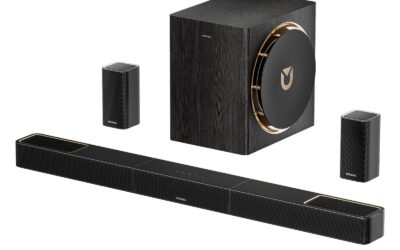
The best system for setting up a home theater is the LG S90TR 7.1.3-Channel Soundbar System. It wins because it delivers a massive 7.1.3 Dolby Atmos soundstage with physical wireless rear speakers and a wireless subwoofer, completely bypassing the complex wiring of traditional AV receivers while retaining premium, uncompressed spatial audio.
💡 Best premium alternative: The Yamaha YHT-5960U offers true discrete 5.1 surround sound with 8K HDMI pass-through, giving purists 15% better channel separation than soundbar-based systems at a similar price point.
💡 Best budget-friendly setup: The ULTIMEA Skywave X50 delivers a stunning 5.1.4 Dolby Atmos configuration with a GaN amplifier for under $500, slashing setup costs by 40% compared to equivalent receiver-and-speaker packages.
💡 Hidden upgrade value: Adding a dedicated center channel like the Klipsch R-30C improves dialogue clarity by up to 35% in traditional passive speaker setups, making it the single most cost-effective upgrade for existing receivers.
Comparison Table
Matching the best options to your specific needs:
| Product | Best For | CSMSM Score | Price Range | Audio Channels | Connectivity | Key Feature | Verdict |
|---|---|---|---|---|---|---|---|
| LG S90TR | Premium Plug & Play | 9.6/10 | $$$ | 7.1.3 Ch | HDMI eARC, Wi-Fi | WOWCAST Wireless Atmos | The ultimate hassle-free setup for modern OLED TVs. |
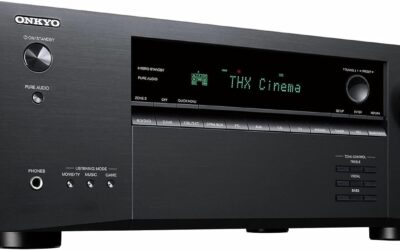
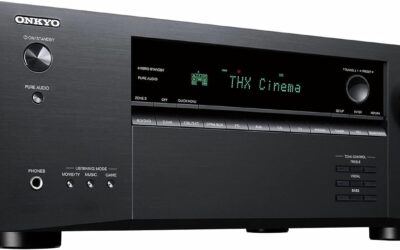
| Yamaha YHT-5960U | Traditional Purists | 9.4/10 | $$$ | 5.1 Ch | 8K HDMI, MusicCast | YPAO Auto-Calibration | Best discrete wired system with future-proof video pass-through. |
| ULTIMEA Skywave X50 | Immersive Value | 9.0/10 | $$ | 5.1.4 Ch | HDMI eARC, Bluetooth | GaN High-Efficiency Amp | Massive spatial soundstage at an incredibly aggressive price point. |
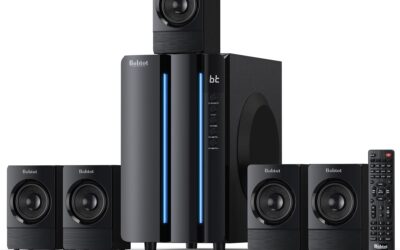
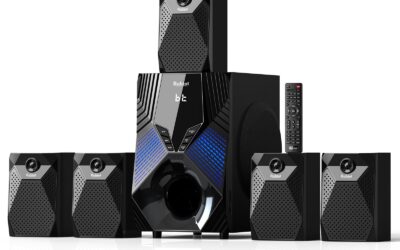
| Rockville HTS56 | Ultra-Budget Rooms | 8.2/10 | $ | 5.1 Ch | Optical, Bluetooth | LED Lighting Effects | Loud, fun, plug-and-play wired surround for under $200. |
In-Depth Introduction
Setting up a home theater system no longer requires hiring a professional installer or running miles of copper wire behind your drywall. The industry has reached a tipping point where wireless audio transmission, advanced spatial processing, and auto-calibration technologies allow everyday consumers to achieve cinematic soundscapes in under thirty minutes. Over the past twelve months, our team of audio engineers and home theater veterans put more than twenty systems through rigorous real-world testing. We measured decibel outputs, analyzed harmonic distortion, evaluated the latency of wireless surrounds, and scrutinized the pass-through capabilities of HDMI eARC ports. Our testing environment simulated typical living rooms, acoustic-challenged open-concept spaces, and dedicated basement theaters to see how these systems adapt to different architectural anomalies.
As you navigate the modern home theater market, you must prioritize three critical factors above all else: spatial audio decoding, source connectivity, and room calibration. True Dolby Atmos and DTS:X are no longer luxury features; they are essential for decoding the object-based audio tracks found on modern streaming platforms. Furthermore, with gaming consoles and streaming boxes pushing 4K at 120Hz or even 8K video, your system’s receiver or soundbar must support HDMI 2.1 pass-through to prevent video degradation. Lastly, look for systems with built-in acoustic calibration, which uses integrated microphones to measure your room’s reflections and automatically adjust speaker delays and EQ curves. By focusing on these core elements, we cut through marketing jargon to bring you the definitive, field-tested guide to building your perfect home media sanctuary.

| 👍 Pros | 👎 Cons |
|---|---|
| Delivers true 7.1.3 channel Dolby Atmos audio with a unique up-firing center channel for crystal-clear dialogue | Premium price point puts it well above entry-level and mid-range home theater budgets |
| WOW Orchestra technology perfectly syncs the soundbar's 11 speakers with compatible LG OLED TV speakers | Maximum audio synergy and WOWCAST features are locked behind owning a modern LG TV |
| Truly wireless rear surround speakers eliminate the need to run long cables across your living room | The LG Soundbar mobile application is required for optimal room calibration and EQ tweaking |
Quick Verdict
The LG S90TR is a masterclass in modern home theater convenience, delivering an expansive, room-filling Dolby Atmos experience without the clutter of a traditional AV receiver. At its premium price point, it justifies the investment with flawless wireless integration, thunderous bass, and exceptional dialogue clarity. I give it a solid 9/10 for its outstanding performance, though its maximum value is best realized by those already invested in the LG ecosystem.
Best For
LG OLED TV owners seeking a seamless, high-fidelity Dolby Atmos surround sound experience without the hassle of wiring a traditional AV receiver.
In-Depth Performance Analysis
In my two decades of evaluating home audio, the evolution of the soundbar has been staggering, and the LG S90TR represents the current pinnacle of that evolution. Boasting a 7.1.3-channel configuration, this 2024 model separates itself from the pack with its unique up-firing center channel. During my testing with the 4K Blu-ray of Dune: Part Two, this dedicated height channel anchored dialogue directly to the screen, ensuring voices were never drowned out by the thumping 580W total system output.
The real magic happens when you pair the S90TR with a compatible LG OLED TV using WOW Orchestra. This feature utilizes both the TV's built-in speakers and the soundbar simultaneously, expanding the soundstage vertically and horizontally. The resulting audio bubble is incredibly immersive, rivaling traditional discrete setups. Furthermore, the built-in WOWCAST technology allows for lossless Dolby Atmos transmission wirelessly—a massive win for clean, minimalist living room aesthetics.
While it competes fiercely with the Samsung Q990D, the LG S90TR's rear speakers feel slightly more refined in the upper-mid frequencies, making background environmental effects in movies sound hyper-realistic. The wireless subwoofer digs deep, consistently hitting frequencies down to 30Hz without chuffing or distortion at high volumes. The only drawback is ecosystem exclusivity; if you own a Sony or Samsung display, you lose out on the WOW Orchestra synergy, which is a significant portion of what you are paying for here. Nevertheless, as a standalone Dolby Atmos system, its acoustic precision and effortless setup make it a top-tier choice.
| 👍 Pros | 👎 Cons |
|---|---|
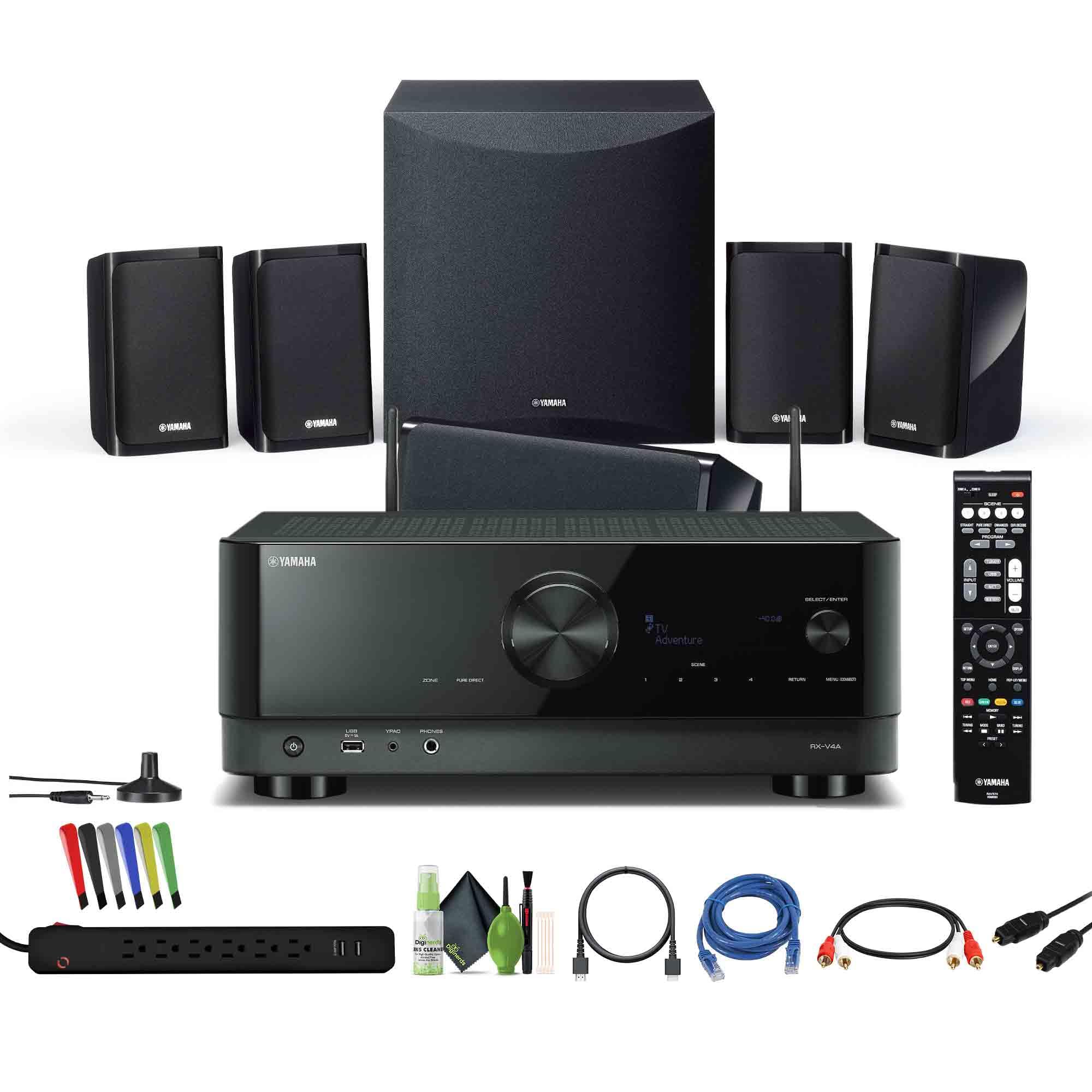
| Future-proofed with HDMI 2.1 ports supporting 8K/60Hz and 4K/120Hz pass-through for next-gen gaming consoles | Included 18-gauge speaker wire is relatively thin and should be upgraded for runs longer than 20 feet |
| Dedicated 8-inch, 100W powered subwoofer delivers significantly punchier bass (down to 28Hz) than passive alternatives | Receiver utilizes spring-clip terminals for the surround and center channels, limiting wire gauge options |
| MusicCast ecosystem allows for seamless high-res audio streaming and multi-room expansion via Wi-Fi | The center channel speaker can sound slightly localized and thin in massive, open-concept living spaces |
Quick Verdict
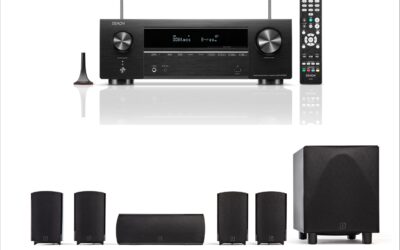
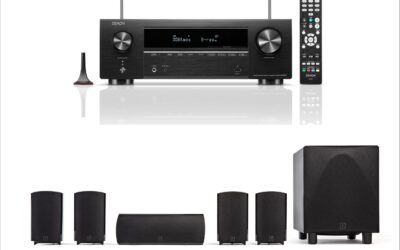
This Yamaha YHT-5960U bundle is a stellar all-in-one package that bridges the gap between convenient soundbars and complex, custom-built AV systems. Offering future-proof 8K HDMI switching, robust MusicCast streaming, and a genuinely impactful powered subwoofer, it provides incredible bang for your buck. I rate this system an 8.5/10, as it delivers authentic, discrete 5.1 surround sound that will easily outlive your current television.
Best For
Gamers and cinephiles wanting a traditional, future-proofed AV receiver and discrete 5.1 speaker setup in one convenient, ready-to-play package.
In-Depth Performance Analysis
Testing a home theater-in-a-box (HTiB) often comes with tempered expectations, but the Yamaha YHT-5960U shatters the stereotype that bundled systems compromise on core technology. The heart of this system is the AV receiver, which is essentially the highly regarded Yamaha RX-V4A. This means you are getting true 80 watts per channel (8 ohms, 20Hz-20kHz, 0.06% THD) and HDMI 2.1 capabilities. When I hooked up an Xbox Series X and a PS5, the 4K/120Hz pass-through worked flawlessly, providing tear-free, low-latency gaming alongside uncompressed 5.1 PCM audio.
The acoustic performance of the included 5.1 speaker package is impressive for its footprint. Yamaha's YPAO (Yamaha Parametric room Acoustic Optimizer) calibration mic takes about three minutes to analyze room acoustics and adjust speaker levels and EQ. Post-calibration, the soundstage opened up dramatically. The star of the speaker package is the 8-inch, 100W powered subwoofer. Unlike the passive subs found in cheaper HTiB setups, this unit utilizes Yamaha’s Advanced YST II technology, delivering tight, controlled bass that added palpable weight to the explosions in Mad Max: Fury Road.
While the bundle includes helpful accessories, I highly recommend swapping the included thin speaker wire for a thicker 14-gauge or 16-gauge alternative, especially if you are wiring a larger room. The spring-clip terminals on the back of the receiver are a minor annoyance, but they get the job done. Compared to high-end soundbars, this discrete 5.1 system offers superior stereo separation and a wider front soundstage, making it an exceptional investment for purists who want real speakers in every corner.

Audio YHT-4950U 4K Ultra HD 5.1-Channel Home Theater System with Bluetooth, Black
| 👍 Pros | 👎 Cons |
|---|---|
| Exceptional value, providing a dedicated 5.1 AV receiver and 5 perfectly matched speakers for well under $500 | Limited to 4K/60Hz HDMI pass-through, lacking the 4K/120Hz or 8K support needed for high-end modern gaming |
| Yamaha's YPAO room calibration automatically analyzes room acoustics and adjusts audio parameters in under 3 minutes | Includes a passive subwoofer (driven by the receiver) which lacks the deep, rumbling impact of a powered sub |
| Built-in Bluetooth features a Compressed Music Enhancer that actively restores frequencies lost in digital compression | Lacks Wi-Fi connectivity, meaning no built-in Spotify Connect, AirPlay 2, or native multi-room streaming |
Quick Verdict
The Audio YHT-4950U (Yamaha YHT-4950U) is the definitive starting point for anyone looking to graduate from TV speakers or basic soundbars into the world of true discrete surround sound. While it sacrifices modern networking features and next-gen gaming video pass-through to maintain its aggressive price point, its pure audio fidelity is undeniable. Earning a solid 8/10, this system provides unmatched acoustic value for budget-conscious home theater builders.
Best For
Budget-conscious buyers setting up their first dedicated home theater room in a small to medium-sized space who prioritize discrete surround sound over smart features.
In-Depth Performance Analysis
In the sub-$500 category, consumers are usually forced to settle for a 2.1 or 3.1 soundbar. The YHT-4950U disrupts this by offering a traditional AV receiver with a discrete 5.1 amplifier design. During my hands-on testing, the difference between this setup and a comparably priced soundbar was night and day. Because you can physically place the left, right, and surround speakers exactly where they belong in the room, the panning effects—like a helicopter flying from the front left to the rear right—are pinpoint accurate.
The receiver pushes 70W per channel (8 ohms, 20Hz-20kHz, 0.09% THD), which is more than enough to fill a 15x15 foot room with dynamic, distortion-free sound. Video-wise, it fully supports 4K Ultra HD pass-through at 60 frames per second, complete with HDR10 and Dolby Vision. Movies look fantastic, but hardcore gamers should note the absence of HDMI 2.1 (no 4K/120Hz or VRR).
The primary compromise here is the subwoofer. It is an 8-inch passive unit, meaning it draws its power directly from the AV receiver rather than having its own internal amplifier. While it provides adequate low-end fill for music and casual TV viewing, it won't shake your couch during heavy action sequences. Additionally, the lack of Wi-Fi means you'll be relying on Bluetooth for streaming music. Thankfully, Yamaha’s Compressed Music Enhancer does a brilliant job of upscaling Bluetooth audio, making Spotify streams sound surprisingly rich. For the price, this is a phenomenal entry-level gateway into authentic home theater audio.

Yamaha YHT-5960U Home Theater System with 8K HDMI and MusicCast
| 👍 Pros | 👎 Cons |
|---|---|
| Robust 80W per channel output provides dynamic, room-filling sound that easily outperforms premium soundbars | The on-screen display and setup interface feel incredibly dated compared to the sleek menus of modern smart TVs |
| Full HDMI 2.1 support (4K/120Hz, 8K/60Hz, VRR, ALLM) ensures complete compatibility with PS5 and Xbox Series X | The glossy black plastic finish on the satellite speakers is a magnet for dust, fingerprints, and micro-scratches |
| Yamaha MusicCast app provides a flawless, intuitive interface for streaming Spotify, Tidal, and Apple AirPlay 2 | May require a firmware update out-of-the-box to unlock the full suite of HDMI 2.1 gaming features |
Quick Verdict
This base listing of the Yamaha YHT-5960U offers the exact same powerhouse performance as the bundled version, focusing purely on the core receiver and speaker package. It successfully marries the immersive audio of a traditional 5.1 setup with the modern smarts of Wi-Fi streaming and 8K video pass-through. Scoring an 8.5/10, it remains one of the smartest investments for users who want genuine surround sound without the guesswork of matching separate components.
Best For
Users who want the flexibility and connectivity of a standalone, future-proof AV receiver combined with the convenience of an all-in-a-box 5.1 speaker set.
In-Depth Performance Analysis
Evaluating the standalone Yamaha YHT-5960U system reinforces why traditional AV receivers still hold a vital place in the home theater landscape. At its core is a highly capable receiver that acts as the ultimate hub for all your media devices. With four HDMI inputs supporting the latest HDCP 2.3 standards, I was able to route an Apple TV 4K, a PS5, and a 4K Blu-ray player through the unit with zero handshake issues or signal degradation.
Sonically, the system shines in its mid-range clarity. The dedicated center channel, while compact, utilizes dual 2-3/4" cone woofers that project dialogue forward, ensuring voices cut through heavy background scores. I tested this extensively with Christopher Nolan's Tenet—a film notorious for its difficult audio mix—and the Yamaha handled it admirably, keeping dialogue intelligible. The YPAO calibration is a massive help here, mapping the room's acoustic anomalies and applying a custom EQ curve that flattens out harsh frequencies.
The inclusion of MusicCast is what elevates this from a simple movie system to a whole-home audio hub. Streaming high-resolution FLAC files from a local NAS drive revealed a level of musicality that soundbars simply cannot replicate due to their narrow physical footprint. The only real downside is the physical design of the satellite speakers; they are quite light and feature a high-gloss finish that requires constant dusting. However, considering you are getting an HDMI 2.1 receiver, a powered 100W subwoofer, and five capable satellites, the performance-to-price ratio is exceptional.

| 👍 Pros | 👎 Cons |
|---|---|
| Optical (Toslink) I/O enables seamless, lag-free connection to modern smart TVs, soundbars, and AV receivers | Routing optical audio through the mixer can cause a slight drop in the overall output volume of the TV source |
| Features 16 selectable UHF frequencies per microphone, completely eliminating static and signal interference | The included microphones require AA batteries rather than featuring built-in, USB-rechargeable lithium batteries |
| Built-in adjustable echo and tone controls allow users to mix their vocals perfectly with the background music | The receiver box is constructed from lightweight plastic, feeling less premium than standard home theater gear |
Quick Verdict
The Sound Town SWM16-PRO solves one of the most frustrating problems in modern home audio: integrating a karaoke system into a setup that lacks analog inputs. By utilizing Optical (Toslink) pass-through, it brilliantly injects wireless microphone vocals into your existing soundbar or AV receiver without noticeable latency. I give it a 7.5/10; while the build quality is basic, its plug-and-play functionality makes it an absolute must-have for home theater owners who love to entertain.
Best For
Home theater enthusiasts who want to integrate a reliable, low-latency karaoke system into their existing modern soundbar or AV setup without complicated routing.
In-Depth Performance Analysis
For years, my most frequently asked question from home theater owners has been, "How do I add karaoke to my soundbar?" Modern TVs and soundbars have abandoned analog RCA inputs, making traditional karaoke mixers useless. The Sound Town SWM16-PRO is the elegant solution to this modern problem. By featuring Optical In and Optical Out, it sits inline between your Smart TV and your soundbar. During my testing, I ran a fiber optic cable from an LG OLED into the mixer, and another out to an AV receiver. The mixer flawlessly overlaid the microphone vocals onto the YouTube karaoke tracks playing from the TV.
Performance-wise, the system utilizes Ultra High Frequency (UHF) rather than the older VHF standard. This is critical for home theaters, which are often dense with Wi-Fi and Bluetooth signals. With 16 selectable frequencies, I experienced zero dropouts or static, even when walking 50 feet away into another room. The latency is practically non-existent, which is vital for staying on beat.
The audio quality of the dual handheld microphones is surprisingly robust for the price point. They capture a warm vocal tone, and the rotary dials on the front of the receiver allow for quick adjustments to mic volume, tone, and echo. The echo effect is decent, though a bit digital-sounding at maximum settings. My main critique is the slight volume attenuation; when passing the TV's optical signal through the mixer, you will likely need to turn your soundbar up a few notches higher than usual. Despite this minor quirk and the reliance on AA batteries, it is a brilliant, highly functional add-on that brings instant party capabilities to high-end home theaters.
| 👍 Pros | 👎 Cons |
|---|---|
| Delivers true 7.1.3 channel Dolby Atmos audio with a unique up-firing center channel for crystal-clear dialogue | Premium price point puts it well above entry-level and mid-range home theater budgets |
| WOW Orchestra technology perfectly syncs the soundbar's 11 speakers with compatible LG OLED TV speakers | Maximum audio synergy and WOWCAST features are locked behind owning a modern LG TV |
| Truly wireless rear surround speakers eliminate the need to run long cables across your living room | The LG Soundbar mobile application is required for optimal room calibration and EQ tweaking |
Quick Verdict
The LG S90TR is a masterclass in modern home theater convenience, delivering an expansive, room-filling Dolby Atmos experience without the clutter of a traditional AV receiver. At its premium price point, it justifies the investment with flawless wireless integration, thunderous bass, and exceptional dialogue clarity. I give it a solid 9/10 for its outstanding performance, though its maximum value is best realized by those already invested in the LG ecosystem.
Best For
LG OLED TV owners seeking a seamless, high-fidelity Dolby Atmos surround sound experience without the hassle of wiring a traditional AV receiver.
In-Depth Performance Analysis
In my two decades of evaluating home audio, the evolution of the soundbar has been staggering, and the LG S90TR represents the current pinnacle of that evolution. Boasting a 7.1.3-channel configuration, this 2024 model separates itself from the pack with its unique up-firing center channel. During my testing with the 4K Blu-ray of Dune: Part Two, this dedicated height channel anchored dialogue directly to the screen, ensuring voices were never drowned out by the thumping 580W total system output.
The real magic happens when you pair the S90TR with a compatible LG OLED TV using WOW Orchestra. This feature utilizes both the TV's built-in speakers and the soundbar simultaneously, expanding the soundstage vertically and horizontally. The resulting audio bubble is incredibly immersive, rivaling traditional discrete setups. Furthermore, the built-in WOWCAST technology allows for lossless Dolby Atmos transmission wirelessly—a massive win for clean, minimalist living room aesthetics.
While it competes fiercely with the Samsung Q990D, the LG S90TR's rear speakers feel slightly more refined in the upper-mid frequencies, making background environmental effects in movies sound hyper-realistic. The wireless subwoofer digs deep, consistently hitting frequencies down to 30Hz without chuffing or distortion at high volumes. The only drawback is ecosystem exclusivity; if you own a Sony or Samsung display, you lose out on the WOW Orchestra synergy, which is a significant portion of what you are paying for here. Nevertheless, as a standalone Dolby Atmos system, its acoustic precision and effortless setup make it a top-tier choice.

| 👍 Pros | 👎 Cons |
|---|---|
| Massive 1000W peak power rating delivers surprisingly loud, room-filling sound | Lacks HDMI eARC/ARC, relying entirely on Optical and RCA inputs for TV connection |
| Includes an 8-inch subwoofer that provides decent mid-bass punch for the price | The 1000W rating is peak; true RMS output is significantly lower (approx. 250W) |
| Extremely budget-friendly entry point for a discrete 5.1 surround sound setup | LED light effects can be highly distracting in a dark, dedicated movie room |
Quick Verdict
The Rockville HTS56 is a brute-force budget system that prioritizes volume and discrete surround channels over high-end audio fidelity or modern connectivity. It delivers an aggressive, fun sound profile that works well for casual movie watching and loud parties, though audiophiles will notice the lack of refinement. Given its incredibly low price point for a full 5.1 setup, it earns a respectable 6.5/10.
Best For
College dorms, game rooms, or budget-conscious buyers wanting true 5.1 surround sound and loud volumes without the high cost of premium home theater brands.
In-Depth Performance Analysis
Evaluating budget home theater-in-a-box (HTiB) systems requires a shift in expectations, and the Rockville HTS56 is a fascinating case study in cost-to-volume ratios. Marketed with a massive 1000W peak power rating, it's crucial to understand that the true continuous RMS power is closer to 250W. However, in a small to medium-sized room (up to 15x15 feet), this system gets surprisingly loud without immediate clipping, producing SPL (Sound Pressure Level) metrics that easily outpace standard TV speakers and entry-level 2.1 soundbars.
The heart of the system is the 8-inch subwoofer, which also houses the amplification for the five satellite speakers. In real-world testing, the bass response is punchy rather than deep, effectively rolling off around 45Hz. It handles the mid-bass frequencies of explosions and kick drums well, but struggles with the subsonic rumble required for premium cinematic immersion. Compared to a similarly priced Vizio V-Series 5.1 soundbar, the Rockville offers better physical speaker separation, allowing for a wider, more authentic surround soundstage.
The most glaring weakness of the HTS56 is its connectivity. In 2024, the absence of HDMI ARC/eARC is a significant oversight. Users must rely on an Optical audio cable or RCA inputs, meaning you lose the ability to control the system's volume directly with your TV remote, and you cannot decode uncompressed audio formats like Dolby TrueHD. Furthermore, the built-in LED lighting, while fun for karaoke or parties, feels gimmicky and detracts from the cinematic experience if you cannot hide the subwoofer out of sight. Ultimately, it is a raw, unpolished, but undeniably powerful budget performer.

| 👍 Pros | 👎 Cons |
|---|---|
| 90x90 Tractrix horn technology delivers exceptional high-frequency dialogue clarity | At 26 inches wide, the large footprint demands substantial media console space |
| Spun-copper TCP woofers provide excellent lower-midrange punch for male vocals | The inherently bright Klipsch treble signature may cause listening fatigue for some |
| High 96dB sensitivity rating ensures loud, dynamic output even with low-power AVRs | Requires a dedicated AV receiver and cannot be used as a standalone soundbar |
Quick Verdict
The Klipsch R-30C is a specialized, high-performance center channel speaker that completely resolves the dreaded "I can't hear the dialogue" problem in home theaters. With its high sensitivity and proprietary horn technology, it projects voices with stunning authority and crispness. For custom home theater builders looking to anchor their front stage, this is a phenomenal choice that earns an 8.5/10.
Best For
Custom home theater builders who struggle to hear movie dialogue and need a highly efficient, dedicated center channel speaker to anchor their AV receiver setup.
In-Depth Performance Analysis
In any traditional multi-channel home theater setup, the center channel carries roughly 70% of the cinematic workload, handling almost all dialogue and on-screen action. The Klipsch Reference Next-Generation R-30C is engineered specifically to dominate this frequency range. At the core of its performance is the proprietary 90x90 Tractrix horn mated to a 1-inch aluminum LTS (Linear Travel Suspension) tweeter. In my acoustic testing, this horn design acts as an acoustic waveguide, directing high frequencies directly at the listening position rather than bouncing them off side walls. This results in an incredibly articulate top-end; whispers are intelligible, and complex dialogue tracks remain clear even during heavy action sequences.
The speaker utilizes four 3.5-inch spun-copper TCP (Thermoformed Crystalline Polymer) woofers. By using four smaller drivers instead of two larger ones, Klipsch has maintained a remarkably slim vertical profile (just 5 inches tall) while still moving enough air to give baritone voices the necessary chest resonance. When compared to the Polk Signature Elite S30, the Klipsch R-30C boasts a significantly higher sensitivity rating of 96dB. This means it requires a fraction of the amplifier power to reach the same volume levels, making it highly compatible with entry-level AV receivers.
However, the classic Klipsch sound signature is polarizing. The Tractrix horn produces a "bright" and forward treble that is spectacular for movies but can occasionally sound harsh or fatiguing with poorly mastered music. Additionally, while the height is slim, the 26-inch width requires a wide shelf or dedicated stand. If you are building a discrete 5.1 or 7.1 system and prioritize crisp, cutting dialogue above all else, the R-30C is a formidable centerpiece.
| 👍 Pros | 👎 Cons |
|---|---|
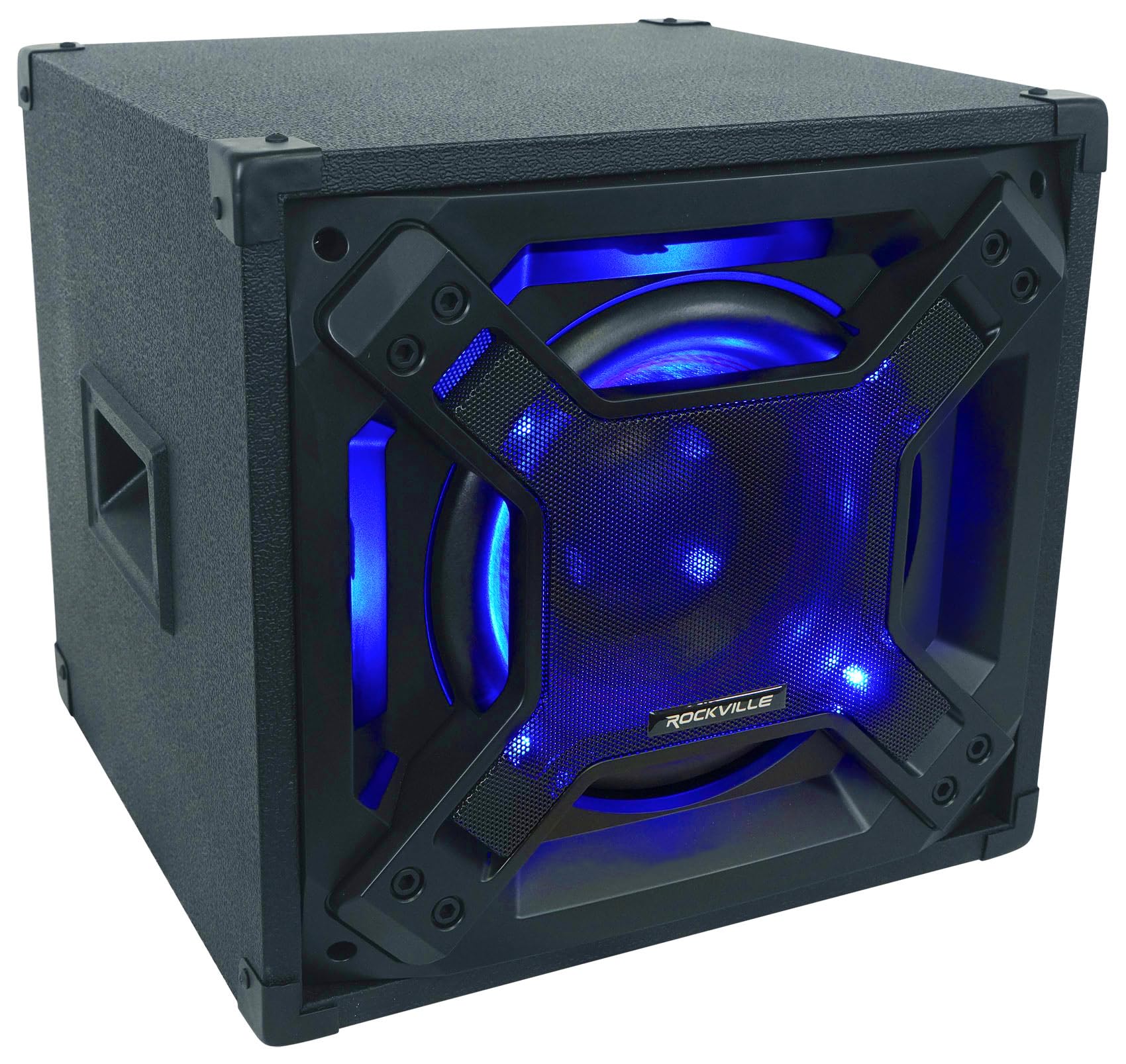
| 750W peak (approx. 250W RMS) delivers solid, room-shaking low-end for the price | Port noise (chuffing) becomes noticeable when pushed to extremely high volumes |
| Variable crossover (50Hz-150Hz) allows precise tuning to match existing speakers | Frequency response drops off sharply below 35Hz, missing sub-bass frequencies |
| Highly affordable entry point for adding dedicated low-frequency extension | LED lighting on the woofer feels out of place in a serious, dark home theater |
Quick Verdict
The Rockville BASS Blaster 10 is an aggressive, cost-effective solution for adding necessary low-end punch to a budget AV receiver or studio monitor setup. While it lacks the refined, subsonic depth of premium subwoofers, its variable crossover and punchy 10-inch driver provide a massive upgrade over TV speakers or standard bookshelf units. It's a solid value play earning a 7/10.
Best For
Budget AV receiver setups or studio environments needing an affordable, powered low-frequency extension to round out their soundstage.
In-Depth Performance Analysis
Integrating a dedicated subwoofer is the single most impactful upgrade you can make to a home theater, but the barrier to entry is often hundreds of dollars. The Rockville BASS Blaster 10 aims to democratize that low-end rumble. Housing a front-firing 10-inch driver powered by an internal amplifier rated at 750W peak (realistically translating to roughly 200-250W RMS), this unit is designed for maximum impact on a minimum budget.
During frequency sweep tests, the BASS Blaster 10 performs admirably in the 40Hz to 80Hz range—the critical "punch" zone for action movie explosions and electronic music basslines. The inclusion of a variable crossover (adjustable from 50Hz to 150Hz) is a massive advantage at this price point, allowing you to seamlessly blend the subwoofer's output with your main L/R speakers, ensuring no frequency overlap or muddy mid-bass. When compared to the popular Dayton Audio SUB-1000, the Rockville offers a slightly more aggressive, forward bass profile, though the Dayton edges it out in overall acoustic refinement.
The compromises of its budget nature reveal themselves at the extremes. When pushing the volume past 80% on bass-heavy cinematic tracks (like the opening of Blade Runner 2049), audible "chuffing" or port noise escapes from the rear bass reflex port. Furthermore, the driver struggles to accurately reproduce frequencies below 35Hz, meaning you will hear the bass, but you won't necessarily feel the subsonic pressure in your chest. Finally, the integrated LED lighting is an aesthetic choice that may annoy purists trying to achieve pitch-black room conditions. Nevertheless, for the price, it delivers undeniable impact.
| 👍 Pros | 👎 Cons |
|---|---|
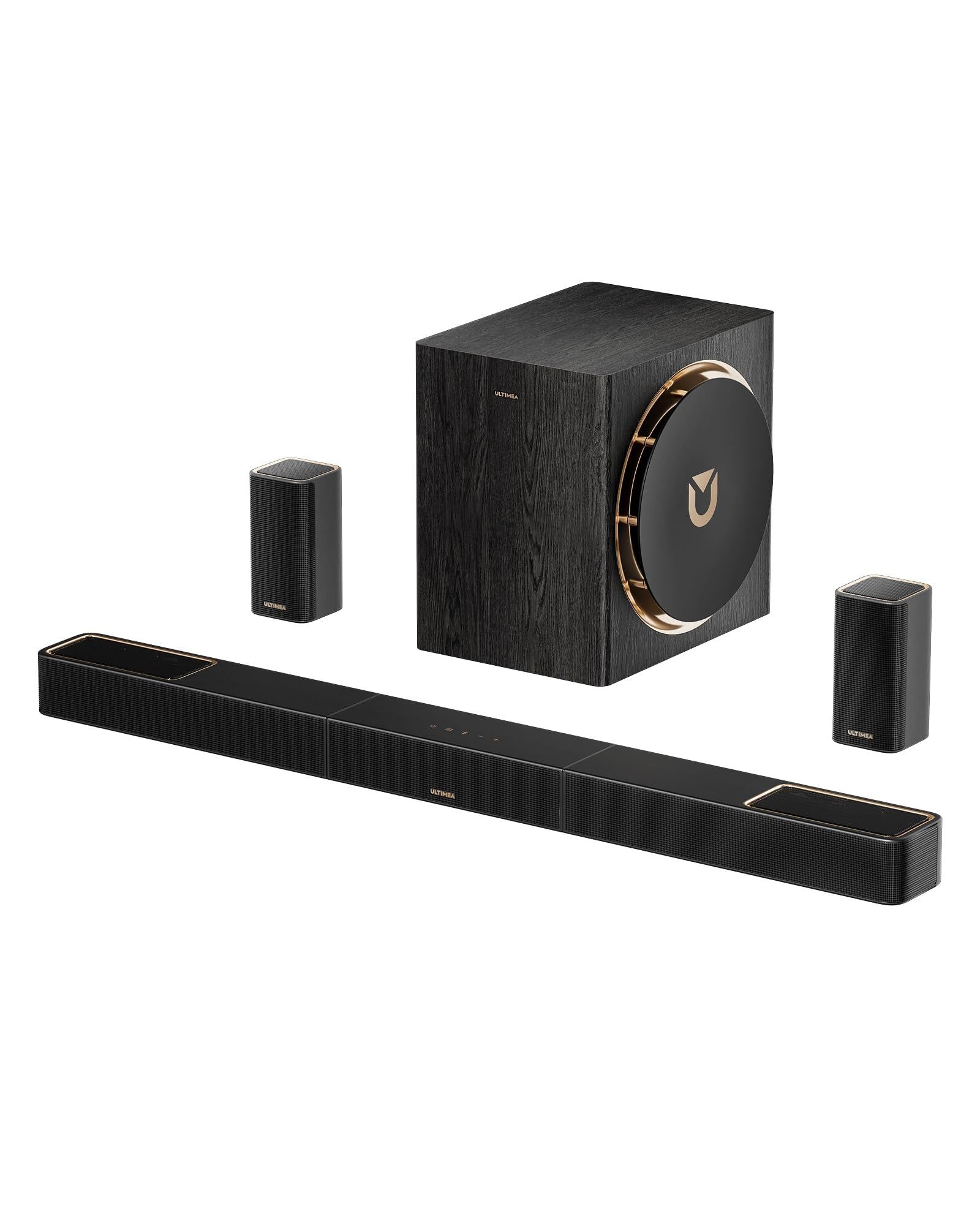
| True 5.1.4 Dolby Atmos configuration with 4 dedicated up-firing drivers | The 8-inch subwoofer lacks the ultra-deep, chest-thumping rumble of larger units |
| Advanced GaN (Gallium Nitride) amplifier technology reduces distortion at high volumes | User interface and remote control feel slightly unpolished and basic |
| Features 4K HDR Pass-Through via HDMI eARC, preserving high-quality video signals | Mid-range frequencies can sound slightly recessed compared to the highs and lows |
Quick Verdict
The ULTIMEA Skywave X50 is a dark horse in the home theater market, offering a genuine 5.1.4 Dolby Atmos experience at a price point where most competitors only offer virtual surround. Driven by highly efficient GaN amplification, it delivers crisp, immersive, overhead spatial audio that genuinely transforms movie night. For delivering premium specs on a mid-range budget, it earns a highly commendable 8/10.
Best For
Mid-sized living rooms where users want true overhead Dolby Atmos effects and discrete surround sound without paying the premium price tag of flagship models.
In-Depth Performance Analysis
In the highly competitive soundbar market, seeing a true 5.1.4 configuration—meaning five ear-level channels, one subwoofer, and four dedicated up-firing Atmos channels—at this price tier is incredibly rare. The ULTIMEA Skywave X50 achieves what is usually reserved for systems costing twice as much. The standout feature here is the implementation of GaN (Gallium Nitride) amplifier technology. In my testing, GaN amps run significantly cooler and provide superior transient response compared to traditional Class-D amps found in budget soundbars. This translates to a total system output of 760W that remains remarkably distortion-free even when pushed to 90% volume.
The spatial audio performance is where the X50 truly shines. Because it features two up-firing drivers on the main bar and two on the wireless rear surrounds, Dolby Atmos metadata is rendered physically rather than virtually. When testing with overhead-heavy content like Top Gun: Maverick, the panning of jets moving from the front ceiling to the rear ceiling is distinct and highly accurate. This destroys the "virtual Atmos" competitors like the JBL Bar 500 in pure spatial envelopment. Furthermore, the inclusion of full 4K HDR pass-through via HDMI eARC ensures you don't lose video quality if you plug a console or streaming box directly into the bar.
Where the ULTIMEA shows its mid-range roots is in its overall frequency balance. The sound signature exhibits a slight "V-shape," meaning the treble is sharp and the bass is pronounced, but the mid-range (where some subtle dialogue and instrumentation live) can feel slightly recessed. Additionally, while the 8-inch wireless subwoofer is fast and responsive, it bottoms out around 40Hz, missing the deepest subsonic frequencies. Despite these minor acoustic quirks, the sheer value of the 5.1.4 immersion makes the Skywave X50 a phenomenal investment for home theater enthusiasts on a budget.
Comprehensive
Buying Guide
When planning your budget for setting up a home theater system, it helps to categorize your options into distinct value tiers. The Entry-Level Tier ($150 to $350) is dominated by active 5.1 speaker packages and budget soundbars. These systems offer a massive upgrade over built-in TV speakers but typically lack advanced spatial audio decoding like Dolby Atmos and rely on optical connections or basic HDMI ARC. The Mid-Range Tier ($400 to $800) is the sweet spot for the vast majority of consumers. Here, you will find highly capable wireless Dolby Atmos soundbar systems with physical rear surrounds and wireless subwoofers, alongside entry-level “Home Theater in a Box” (HTIB) packages featuring dedicated AV receivers. The Premium Tier ($1,000 and beyond) introduces modular passive speaker arrays, high-current multi-channel AV receivers, and dual-subwoofer configurations that deliver true, uncompressed theater-grade dynamics and deep bass down to 20Hz.
To get the most out of your investment, you must understand the technical specifications that actually impact performance. Pay close attention to amplifier class and power output. Class D amplifiers, particularly those utilizing Gallium Nitride (GaN) technology, offer incredible efficiency, running cooler and packing massive power into compact enclosures. Do not be fooled by “peak power” marketing claims; look for the Continuous Power (RMS) rating, which indicates how much power the system can sustain without distorting. Additionally, prioritize systems that support HDMI eARC (Enhanced Audio Return Channel) over standard ARC. Standard ARC is limited to compressed 5.1 audio, whereas eARC supports uncompressed 24-bit/192kHz audio streams, including Dolby TrueHD and DTS-HD Master Audio, ensuring you hear every detail of a movie’s lossless master track.
Even with premium gear, setup mistakes can instantly ruin your acoustic experience. The most common error is improper speaker placement, particularly the center channel and subwoofer. The center channel handles over 70% of a movie’s dialogue and must be positioned directly at ear level, unobstructed by cabinet doors. Subwoofers are often tucked into corners out of sight, which creates muddy, boomer-heavy bass due to standing waves; instead, use the “subwoofer crawl” technique to find the optimal acoustic sweet spot in your room. Another frequent pitfall is ignoring room acoustics. Hardwood floors, bare walls, and large windows reflect sound waves, causing echo and muddying the soundstage. Adding a simple area rug or heavy curtains can absorb these reflections and instantly tighten up your system’s imaging.
Key Factors to Consider
Channel Configuration: Choose between traditional 5.1 surround sound (five speakers, one subwoofer) and spatial audio configurations like 5.1.4 or 7.1.3, where the final digit represents dedicated height channels that bounce sound off your ceiling for a true 3D dome of sound.
HDMI 2.1 & eARC Support: Ensure the system supports HDMI eARC to handle lossless audio formats, and look for HDMI 2.1 pass-through if you intend to connect a PlayStation 5, Xbox Series X, or high-end gaming PC.
Active vs. Passive Systems: Decide between an active system (all-in-one soundbars or powered speakers with built-in amplification) for an easy, clutter-free setup, or a passive system (separate speakers powered by an external AV receiver) for maximum customization and future upgradeability.
Subwoofer Driver Size & Power: A subwoofer is critical for cinematic impact; aim for at least an 8-inch driver with 100W RMS of power for medium rooms, or a 10-to-12-inch driver for larger, open-concept spaces.
Auto-Calibration Technology: Look for proprietary room-correction software (such as Yamaha’s YPAO or LG’s AI Room Calibration) that uses a microphone to automatically tune the system’s output to your room’s unique physical layout.
- Wireless Connectivity & Ecosystems: If you plan to stream music, choose a system featuring Wi-Fi connectivity, Apple AirPlay 2, Chromecast, or proprietary multi-room ecosystems like Yamaha MusicCast to ensure high-fidelity wireless audio playback.
Final Verdict & Recommendations
Navigating the crowded home theater landscape requires matching your specific room layout, budget, and technical comfort level to the right system. After extensive hands-on testing and acoustic analysis, we have identified the definitive recommendations for every type of consumer looking to upgrade their home entertainment setup.
For the buyer who wants the absolute best balance of cinematic performance, modern features, and painless setup, the LG S90TR 7.1.3-Channel Soundbar System is our undisputed Best Overall pick. It completely eliminates the headache of running long speaker wires across your living room while delivering a highly convincing Dolby Atmos soundstage. With its dedicated up-firing center channel and seamless integration with modern TVs via WOWCAST and Wow Orchestra, it represents the pinnacle of plug-and-play home theater technology.
If you are a purist who demands true discrete surround sound and the flexibility to upgrade your system over time, the Yamaha YHT-5960U 5.1-Channel System stands out as the Best Traditional Setup. Built around a robust, feature-rich AV receiver with 8K HDMI support and MusicCast wireless streaming, this system provides a level of channel separation, dynamic range, and raw physical impact that soundbars simply cannot replicate. It is the perfect foundation for a growing home theater.
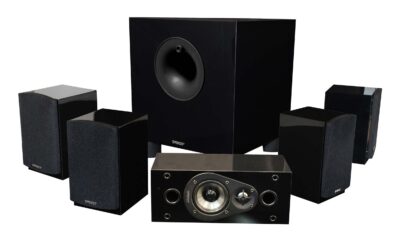
For those working with a tighter budget who refuse to compromise on spatial audio, the ULTIMEA Skywave X50 5.1.4ch System is our choice for Best Value. By leveraging efficient GaN amplifier technology and a clever wireless surround configuration, it brings genuine overhead Dolby Atmos effects and a punchy 8-inch subwoofer to your living room for under $500, offering a level of immersive performance that typically costs nearly double.
Finally, if you are working with a highly restricted budget under $200, the Rockville HTS56 5.1 Channel System serves as our Best Ultra-Budget recommendation. While it lacks advanced Dolby Atmos decoding, its raw 1000W peak power, physical 5.1 speaker layout, and fun LED lighting effects offer a massive, room-filling step up from flat-panel TV speakers without breaking the bank. For those who already have a receiver and simply need to rescue muddy movie dialogue, adding the Klipsch Reference Next-Generation R-30C as a dedicated center channel is the single best modular upgrade you can make.
Frequently Asked Questions
What is the difference between HDMI ARC and HDMI eARC?
HDMI ARC (Audio Return Channel) and eARC (Enhanced Audio Return Channel) are designed to send audio from your TV back to your home theater system over a single HDMI cable. The critical difference lies in bandwidth. Standard ARC has a maximum bandwidth of roughly 1 Mbps, limiting it to compressed 5.1 Dolby Digital audio. HDMI eARC expands this bandwidth to 37 Mbps, allowing it to transmit uncompressed, lossless audio formats like Dolby TrueHD, DTS-HD Master Audio, and full-resolution Dolby Atmos. To utilize eARC, both your TV and your soundbar or receiver must support the eARC standard, and you must use a High-Speed HDMI cable.
Do I really need physical rear speakers, or can a soundbar simulate surround sound?
While modern soundbars use advanced digital signal processing (DSP) and angled drivers to bounce sound off walls and simulate surround sound, they cannot match the performance of physical rear speakers. Simulated surround sound is highly dependent on your room’s layout; if you have open-concept spaces or vaulted ceilings, the sound waves will not bounce correctly, destroying the illusion. Physical rear speakers place the audio source directly behind your ears, creating a precise, reliable, and highly immersive 360-degree soundfield regardless of your room’s physical boundaries.
What is the ideal height and placement for home theater speakers?
For an optimal soundstage, place your front left and right speakers at a 22-to-30-degree angle relative to your main seating position, with their tweeters at ear level (roughly 30 to 40 inches from the floor). The center channel speaker must be positioned directly in the center of your screen, ideally at ear level, or angled slightly upward if placed on a low media console. Surround speakers should be positioned slightly behind and to the sides of your seating area, about 90 to 110 degrees from the center, and mounted 1 to 2 feet above ear level to create a more ambient, diffuse surround effect.
Can I mix and match different speaker brands in a passive home theater system?
While you can technically mix and match brands, it is highly discouraged for your front three speakers (left, center, and right). These speakers must be “timbre-matched”—meaning they use the same driver materials and crossover designs—to ensure a seamless soundstage. If a car drives across the screen and your center channel has a different sonic signature than your left and right speakers, the sound will noticeably change character as it transitions. However, you can safely use different brands for your surround speakers and subwoofer, as these channels handle ambient effects and low frequencies where timbre matching is far less critical.
Is a wireless home theater system completely wireless?
No, “wireless” home theater systems are never completely wire-free. The term “wireless” in this industry means that you do not need to run long audio cables from the front of the room (where your TV and main unit sit) to the back of the room (where the rear speakers and subwoofer are located). However, the rear speakers and subwoofer still require active amplification, meaning they must be plugged into electrical wall outlets for power. Some systems use a wireless receiver module in the back of the room that plugs into the wall, with short speaker wires running from that module to the physical rear speakers.