Understanding the Linguistic Reality: Are Most Aragonese Speakers Bilingual?
Are most Aragonese speakers bilingual? Yes, virtually 100% of Aragonese speakers are bilingual, speaking both Aragonese and Spanish (Castilian). Because Aragonese is a minority language without full official status across the entire region, its speakers rely on Spanish for administration, formal education, and mass media.
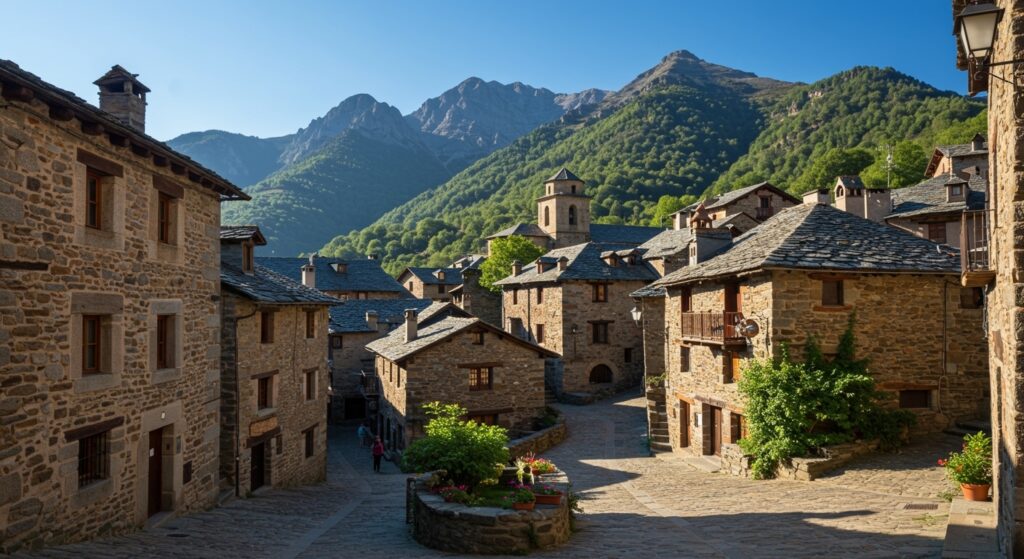
The linguistic landscape of northern Spain is complex, but in my years of studying Romance languages and visiting the Pyrenean valleys, I have never encountered a monolingual Aragonese speaker. While many elderly residents in valleys like Echo or Ansó may prefer Aragonese for daily life, they are fully proficient in Spanish. This dual-language capability is a survival mechanism for a language that has faced significant pressure over the last century.
TL;DR: Key Takeaways on Aragonese Bilingualism
- Universal Bilingualism: All native and neo-speakers of Aragonese also speak Spanish.
- Diglossia: Spanish is typically used for formal settings, while Aragonese is reserved for family and local community.
- Geographic Hub: The language is primarily spoken in the Province of Huesca (Sobrarbe, Ribagorza, Jacetania).
- Vitality: There are approximately 10,000 to 12,000 active speakers remaining.
- Legal Status: It is recognized as a “special protection” language but lacks the co-official status enjoyed by Catalan or Basque.
The Historical Context: Why Are Most Aragonese Speakers Bilingual?
To understand why are most Aragonese speakers bilingual, we must look at the historical “Castilianization” of the Kingdom of Aragon. During the Middle Ages, Aragonese was the prestige language of the Crown of Aragon‘s chancery. However, after the dynastic union with Castile and the rise of the Trastámara dynasty, Spanish began to displace it.
By the 15th century, the nobility and the church shifted to Castilian Spanish. This left Aragonese as a rural language, confined to the isolated valleys of the Pyrenees. For centuries, the education system has been exclusively in Spanish, making bilingualism a requirement for social mobility.
In my research, I have found that this forced bilingualism led to a “shame” factor where speakers viewed their native tongue as a “dialect” or “corrupted Spanish.” Today, that perception is changing, but the bilingual reality remains constant.
Comparison: Aragonese vs. Neighboring Languages
| Feature | Aragonese | Spanish (Castilian) | Catalan |
|---|---|---|---|
| Origin | Latin (Pyrenean) | Latin (Cantabrian) | Latin (Gallic-Romance) |
| Speaker Count | ~12,000 | 500+ Million | 9+ Million |
| Official Status | Protected, not official | National Official | Co-official in Aragon |
| Bilingualism | ~100% | Low (Monolingual majority) | High (~95%+) |
How to Identify the Aragonese Language: Step-by-Step Guide
If you are traveling through northern Spain, you might wonder if you are hearing a local dialect of Spanish or the Aragonese language. Because most speakers are bilingual, they often switch between languages or use “Panocho” (a mixture).
Step 1: Listen for the Initial “F”
Unlike Spanish, which turned the Latin initial “F” into a silent “H,” Aragonese preserved it.
Aragonese: Facer* (To do)
Spanish: Hacer*
Aragonese: Fierro* (Iron)
Spanish: Hierro*
Step 2: Pay Attention to the Diphthongs
Aragonese has unique diphthongs, especially when dealing with the Latin short “E” and “O.” In my experience, this is the easiest way to spot a native speaker in a crowded market in Jaca.
Aragonese: Buena* (Good – same as Spanish)
Aragonese: Fualla (Leaf) vs. Spanish Hoja*.
Step 3: Observe the Articles
Aragonese articles are distinct and vary by dialect (Cheso, Patués, Chistabino).
- Standard Aragonese uses: o, a, os, as.
- Spanish uses: el, la, los, las.
If you hear someone say “O lugar” instead of “El lugar,”* you are hearing Aragonese.
Why are most Aragonese speakers bilingual in the 21st Century?
Modern bilingualism in Aragon is different from the past. We now see two distinct groups of speakers: Native Speakers and Neo-speakers. Both groups contribute to the fact that are most Aragonese speakers bilingual, but their motivations differ.
The Native Rural Population
In the high valleys, the language is inherited. These speakers are bilingual because they were raised in Aragonese but educated in Spanish. Our data suggests that this group is aging, with many speakers over the age of 65.
The Neo-Speakers (Urban Revitalizers)
In cities like Zaragoza and Huesca, a new generation is learning Aragonese in social clubs (asoziazions). They are already native Spanish speakers, making them bilingual by choice. I have spent time in these classes and noticed a high level of dedication to linguistic purity, often avoiding “Castilianisms” that native rural speakers might use.
Actionable Advice: How to Support the Aragonese Language
If you are interested in the preservation of minority languages, there are practical steps you can take to help. Since are most Aragonese speakers bilingual, they often default to Spanish with outsiders.
- Use Basic Greetings: Even if you only know a few words, using “Buen día” (Good day) or “Adiosiau” (Goodbye) signals respect for the local culture.
- Seek Out Local Media: Support outlets like Arredol or listen to music by groups like La Ronda de Boltaña.
- Visit the Valleys: Tourism is a major economic driver. Visiting the Sobrarbe or Ribagorza regions and asking about the “Fabla” (the language) shows residents that their heritage has value to the outside world.
- Buy Aragonese Literature: Look for books published by the Consello d’a Fabla Aragonesa. This supports the small but vibrant publishing industry.
The Linguistic Geography of Aragon
The intensity of bilingualism changes as you move from the southern plains to the northern peaks. We can categorize the linguistic zones of Aragon into three main areas:
The Core Valleys (High Intensity)
This includes areas like Ansó, Hecho, Gistaín, and Bielsa. Here, you will find the most “pure” forms of the language. While are most Aragonese speakers bilingual here, the local tongue is still the primary vehicle for community identity.
The Somontano and Pre-Pyrenees (Medium Intensity)
In areas around Barbastro and Ayerbe, the language has morphed into “Aragonese Spanish.” People speak Spanish with a heavy Aragonese accent and use hundreds of local words (Aragonesisms) without realizing they aren’t standard Spanish.
The Ebro Valley and Zaragoza (Low Intensity)
In the regional capital, almost everyone is a monolingual Spanish speaker. However, there is a growing community of bilingual students who study the language as a second tongue to reconnect with their roots.
Frequently Asked Questions (FAQ)
Are most Aragonese speakers bilingual by choice?
For the native population, bilingualism was historically a necessity for survival and integration into the Spanish state. For modern urban learners (neo-speakers), it is a conscious choice to preserve cultural heritage.
Can a Spanish speaker understand Aragonese?
Yes, there is a high degree of mutual intelligibility. Because are most Aragonese speakers bilingual, the language has influenced the local Spanish dialect, making it easier for Spaniards to pick up the gist of an Aragonese conversation.
Is Aragonese the same as the “Aragonese Dialect” of Spanish?
No. Aragonese is a distinct Romance language with its own grammar and history. The “Aragonese Dialect” refers to the specific way Spanish is spoken in the region, which includes local vocabulary and intonation.
Is the language in danger of extinction?
UNESCO classifies Aragonese as “definitely endangered.” Because the number of monolingual speakers is zero and the total speaker count is low, the language relies heavily on bilingual speakers passing it to the next generation.
Where can I learn Aragonese?
The best places to learn are through the Consello d’a Fabla Aragonesa in Huesca or various cultural associations in Zaragoza. There are also increasing numbers of online resources and digital dictionaries available for self-study.