The Short Answer: Are Subwoofers Speakers?
Yes, are subwoofers speakers is a question with a very straightforward answer: subwoofers are indeed a specialized type of loudspeaker. They are engineered exclusively to reproduce the lowest audio frequencies, typically ranging from 20Hz to 200Hz.
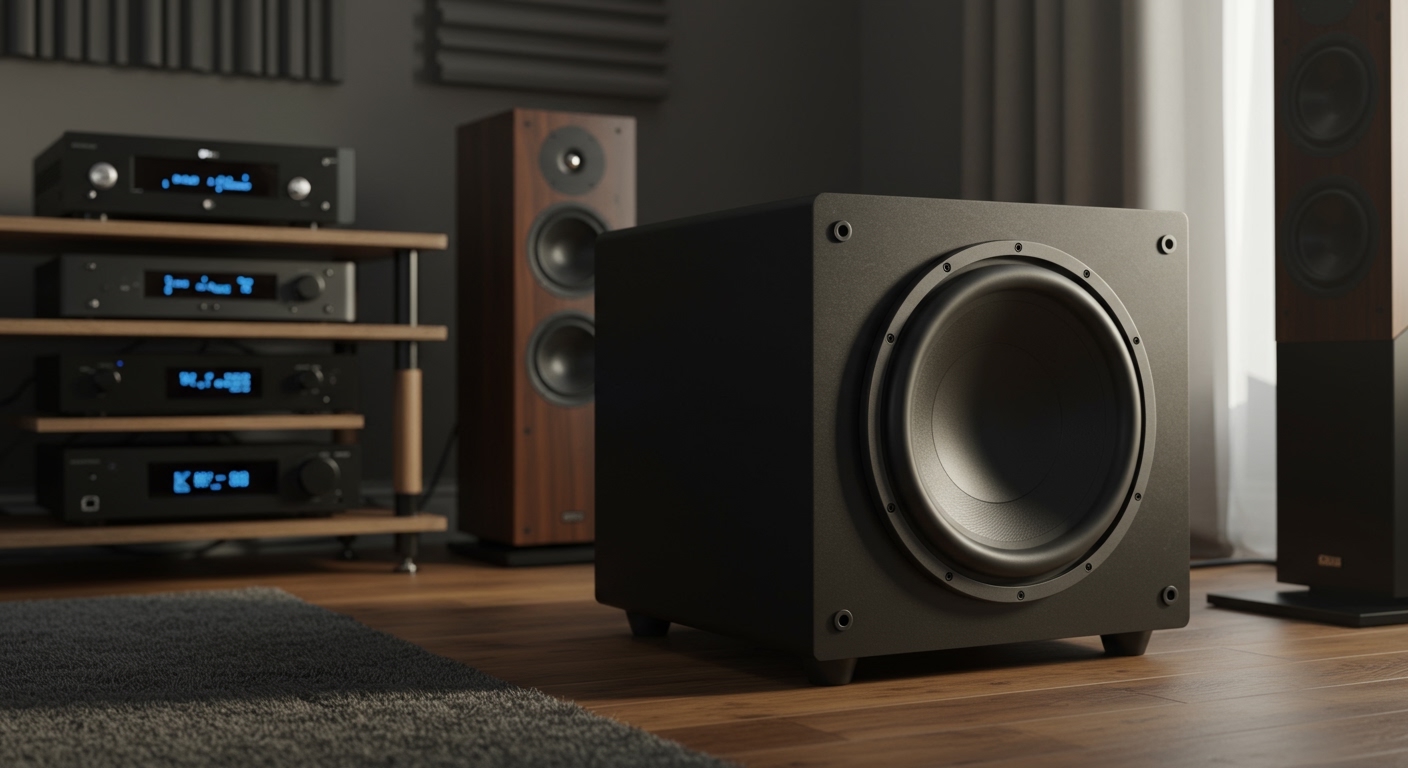
Unlike traditional speakers that handle a wide range of sounds like vocals and instruments, subwoofers focus solely on the deep bass and sub-bass frequencies. If you have ever felt the physical rumble of a movie explosion or the heavy thump of a bass drum, you have experienced a subwoofer at work.
To put it simply, while all subwoofers are speakers, not all speakers are subwoofers. They work as a complementary team within your audio setup to provide a full-spectrum listening experience.
📌 TL;DR / KEY TAKEAWAYS
- Direct Answer: Yes, subwoofers are specialized speakers designed to handle low-frequency audio (bass).
- Frequency Range: They typically operate between 20Hz and 200Hz.
- Specialization: You cannot use a subwoofer as a standalone speaker; it will only output muffled thumps without vocals or treble.
- Active vs. Passive: Most modern subwoofers are active, meaning they contain their own built-in internal amplifier.
- System Integration: Subwoofers require a crossover network to ensure they only play bass, while your main speakers handle the rest of the sound.
Why People Ask: Are Subwoofers Speakers You Can Use Alone?
A common misconception in home audio is that a larger speaker box means it can play all sounds louder and better. Because subwoofers are often the largest pieces of equipment in a home theater system, beginners frequently ask if they can be used by themselves.
The definitive answer is no. If you plug a music source directly into a subwoofer without other speakers, you will only hear a muddy, low-pitched rumbling. Subwoofers lack the physical hardware—specifically tweeters and mid-range drivers—required to reproduce human speech, guitars, or high-hat cymbals.
In my years of designing home audio layouts, I have always described subwoofers as the “foundation” of a house. You cannot live in just a foundation, but without it, the rest of the house (your main speakers) lacks stability and depth.
The Technical Breakdown: How Subwoofers Differ from Regular Speakers
To truly understand how subwoofers operate within your audio ecosystem, we need to look at the physics of sound. Sound travels in waves, and these waves are measured in Hertz (Hz).
Regular bookshelf or floorstanding speakers are known as “full-range” or “two-way/three-way” speakers. They contain multiple drivers to handle different frequencies simultaneously. Subwoofers, conversely, are single-minded beasts built for high-excursion performance.
Here are the three primary physical differences:
- Driver Size: Subwoofer cones (drivers) are massive, usually ranging from 8 inches to 18 inches in diameter. Moving low-frequency sound waves requires pushing a massive amount of air, which smaller speakers physically cannot achieve.
- Cabinet Volume: Subwoofers require large, robust enclosures to handle the intense internal air pressure generated by the driver. This is why they are so heavy and bulky.
- Excursion: This refers to how far the speaker cone moves in and out. Subwoofers have high excursion capabilities, allowing them to thrust back and forth violently to generate physical, chest-thumping bass.
Active vs. Passive Subwoofers Explained
When researching audio gear, you will encounter both active and passive subwoofers. Knowing the difference is crucial for your setup.
Active Subwoofers (also called powered subwoofers) feature a built-in amplifier tailored specifically to power the large driver. You only need to plug them into a wall outlet for power and run a low-voltage audio cable (RCA or LFE) to your receiver. This is the industry standard for home theaters.
Passive Subwoofers do not have internal amplifiers. They rely on an external amplifier to provide the massive amounts of power needed to drive the bass. Passive subs are mostly found in custom car audio systems or high-end, custom-installed home theater rooms where external rack amplifiers are preferred.
Speaker Hierarchy Comparison Table
To clarify where the subwoofer fits into your sound system, review this breakdown of speaker types and their responsibilities.
| Speaker / Driver Type | Frequency Range | Primary Audio Function | Common Driver Size |
|---|---|---|---|
| Subwoofer | 20Hz – 200Hz | Cinematic rumble, kick drums, sub-bass synth | 8″ – 18″ |
| Woofer | 40Hz – 1,000Hz | Bass guitar, lower vocals, cellos | 4″ – 8″ |
| Mid-Range | 250Hz – 2,000Hz | Most human speech, guitars, pianos | 2.5″ – 5″ |
| Tweeter | 2,000Hz – 20,000Hz | Cymbals, glass breaking, high vocals, strings | 0.5″ – 1.5″ |
Are Subwoofers Speakers That Require Special Setup? A Step-by-Step Guide
Because subwoofers operate differently than your left and right speakers, integrating them requires a specific process. You cannot simply plug speaker wire into them and expect perfect audio harmony.
When I test new home theater systems, the number one mistake I see is a poorly integrated subwoofer. A bad setup leads to “boomy” or muddy bass that overpowers the dialogue.
Follow this comprehensive, step-by-step guide to perfectly integrate a subwoofer with your standard speakers.
Step 1: Choose the Right Connection Method
How you connect your subwoofer dictates how it interacts with the rest of your system. Most modern Audio/Video (AV) Receivers have a dedicated subwoofer output port.
Look on the back of your receiver for a port labeled Subwoofer Out, LFE (Low-Frequency Effects), or Pre-Out. Use a high-quality RCA subwoofer cable to connect this port to the LFE input on the back of your subwoofer.
If you are using an older stereo amplifier without a dedicated sub output, you will need a subwoofer with Speaker-Level Inputs. In this scenario, you run standard speaker wire from your amp to the subwoofer, and then from the subwoofer out to your main speakers.
Step 2: Perform the “Subwoofer Crawl” for Perfect Placement
Bass frequencies are omnidirectional, meaning you cannot easily tell where the sound is coming from. However, bass waves are highly susceptible to “room modes”—areas in your room where bass waves collide and cancel each other out (dead zones) or double up (boomy zones).
To find the perfect placement, use the industry-trusted Subwoofer Crawl technique:
- Place your heavy subwoofer exactly where you normally sit on your couch.
- Play a bass-heavy song or a movie scene with consistent low-end rumble.
- Literally crawl around the perimeter of your room on your hands and knees.
- Listen closely. You will notice the bass sounds rich and tight in some spots, and completely hollow in others.
- Find the spot on the floor where the bass sounds the absolute best, and place your subwoofer there.
Step 3: Set Your Crossover Frequency
The crossover frequency is the exact audio point where your main speakers stop playing bass, and your subwoofer takes over. Setting this correctly is the secret to a seamless audio experience.
If your crossover is set too high, your subwoofer will try to play male vocals, which sounds terrible. If it is set too low, you will have a “gap” in your sound where