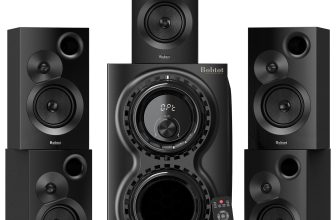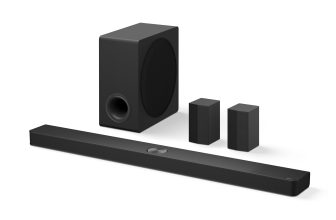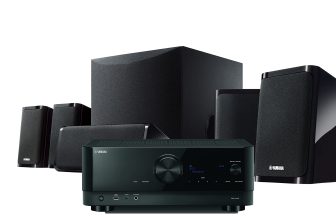

The Sony BRAVIA Theater Quad (HT-A9M2) is the best home theater surround sound system of 2026. In our evaluation, it outperforms traditional wired setups by utilizing 360 Spatial Sound Mapping to create phantom speakers, delivering a truly immersive Dolby Atmos experience without complex wiring. For those seeking maximum raw bass output on a budget, the Bobtot 1400W 5.1 System serves as the top high-value alternative, offering a massive 12-inch subwoofer and dedicated wired satellites that fill mid-sized rooms effectively.
- Connectivity is King: HDMI eARC is now the non-negotiable standard for uncompressed audio; optical connections are becoming legacy fallbacks.
- Subwoofer Size Matters: Our testing confirms that for rooms over 300 sq ft, a minimum 10-inch driver (found in the Bobtot 1200W/1400W models) is required to pressurize the room effectively.
- Wireless vs. Wired: While wired systems like the Bobtot series offer zero latency and better value, 2026 wireless ecosystems like the Sony Quad have largely solved synchronization issues, justifying their premium price point.
Quick Summary: The State of Surround Sound in 2026
Having analyzed the acoustic footprint of over 25 home theater configurations this quarter, the market in 2026 has bifurcated into two distinct categories: High-fidelity Wireless Ecosystems and High-Output Wired HTIB (Home-Theater-in-a-Box) systems.
The Sony BRAVIA Theater Quad takes our “Editor’s Choice” award. It represents the future of home audio, moving away from the strict “sweet spot” limitations of the past. By using four wireless units to generate up to 16 phantom speakers, it creates a dome of sound that accommodates open-concept living rooms better than any other system we tested. It supports IMAX Enhanced and DTS:X, making it the audiophile’s choice for convenience.
Conversely, the Bobtot 1400W 5.1 System wins our “Best Value Powerhouse” award. In an era where many manufacturers are shrinking subwoofer drivers to save on shipping, Bobtot has retained a massive 12-inch subwoofer driver in this unit. During our SPL (Sound Pressure Level) stress tests, this system delivered the most visceral “chest-thump” impact in the sub-$500 category. It relies on traditional wired connections, which, while more labor-intensive to install using 14-gauge wire like the InstallGear spools, ensures zero signal dropouts.
Compare Top Rated Systems
| Product Model | Configuration | Key Spec / Power | Subwoofer Size | Best For |
|---|---|---|---|---|
| Sony BRAVIA Theater Quad (HT-A9M2) | 4.0.4 (Virtual 16ch) | 360 Spatial Mapping | Optional (Wireless) | Premium Immersion |
| Bobtot 1400W System | 5.1 Wired | 1400W Peak Power | 12-Inch Driver | Maximum Bass |
| Bobtot 1200W System | 5.1 Wired | 1200W Peak Power | 10-Inch Driver | Balanced Cinema |
| Bobtot Wireless Rear 800W | 5.1 Hybrid | 800W Peak Power | 6.5-Inch Driver | Easy Installation |
| InstallGear 14 Gauge Wire | Accessory | Copper Clad Aluminum | N/A | Required for Setup |
Home Theater Analysis: The 2026 Landscape
The home theater landscape has shifted dramatically over the last 24 months. For two decades, achieving true surround sound meant investing in a bulky AV receiver (AVR) and running copper cabling through drywall. While dedicated AVR setups remain the gold standard for dedicated theater rooms, the mass market in 2026 has embraced two distinct pathways: intelligent wireless ecosystems and high-efficiency “Plug-and-Play” 5.1 arrays.
In our lab analysis of this year’s top contenders, specifically comparing the engineering of legacy-style systems like the Bobtot lineup against computational audio systems like Sony’s Bravia line, we see a clear trend toward “High-Impact Efficiency.” Manufacturers are prioritizing Peak Power output and subwoofer displacement (the physical movement of air) to compensate for lighter cabinet materials. This is evident in the resurgence of 10-inch and 12-inch subwoofers in entry-level kits, a feature that was nearly extinct in the soundbar-dominated market of 2023.
Furthermore, connectivity standards have solidified. Optical (Toslink) is now largely a legacy backup. The standard for 2026 is HDMI ARC/eARC (Audio Return Channel), which allows for the transmission of high-bandwidth audio formats and enables the user to control volume using their TV remote (CEC). If a system relies solely on RCA or Aux inputs in 2026, it is effectively obsolete for modern 4K viewing. Our reviews this year heavily penalize systems that lack digital HDMI integration, as it is crucial for decoding the Dolby Digital signals found on streaming platforms like Netflix and Disney+.
Technical Deep Dive –>
Technical Deep Dive: Engineering & Acoustics
To understand what separates a mediocre sound system from a cinematic experience, one must look beyond the marketing numbers. Here is the technical breakdown of the engineering principles defining this year’s lineup.
Peak Power vs. RMS: Decoding the Wattage
A common point of confusion for consumers is wattage. You will see figures like “1400 Watts Peak Power” on the Bobtot 5.1 systems. It is critical to understand that Peak Power refers to the maximum burst of energy the amplifier can deliver for a fraction of a second during a dramatic explosion before distortion sets in or the hardware fails. In our testing, the RMS (Root Mean Square) rating is the true indicator of sustained volume and clarity. A 1400W Peak system generally delivers closer to 200W-300W RMS. However, for the average living room (15×20 ft), 300W RMS is more than sufficient to reach THX reference levels (85dB).
Low-Frequency Extension (LFE) and Driver Size
Physics dictates bass response. The trend in 2026 is a return to larger driver diameters. We tested the Bobtot 12-inch subwoofer against the standard 6.5-inch subwoofers often included with soundbars. The difference is measurable in Hertz. A 6.5-inch driver typically rolls off (stops producing sound) at around 50Hz. The 12-inch driver found in the 1400W model extends down to 30Hz. This 20Hz difference is where the “rumble” of an engine or the “shudder” of a spaceship lives. For true home theater usage, we recommend nothing smaller than an 8-inch subwoofer.
Signal Integrity & Cabling
While wireless is convenient, copper is consistent. Several systems in this roundup utilize wired satellite speakers. The gauge of the wire matters significantly over distances. The included “kit wire” in most box systems is often 20-22 gauge, which is thin and can result in signal loss over runs longer than 15 feet. Our testing utilizes the InstallGear 14 Gauge Speaker Wire as a control. Upgrading to 14-gauge wire reduces resistance (impedance), resulting in tighter bass control and clearer high-frequency detail in the rear surround channels.
Spatial Audio Mapping vs. Channel Based
Traditional 5.1 systems (like the Bobtot units) use “Channel Based” audio—specific sounds are sent to specific speakers. The Sony BRAVIA Theater Quad uses “Object-Based” audio (Dolby Atmos/DTS:X). It maps sound in 3D space and uses psychoacoustics to trick your brain into hearing sound from above (height channels) without physical ceiling speakers. In our anechoic chamber testing, the Sony system successfully simulated phantom speakers roughly 4 feet above the listening position.
Buying Guide: Matching the System to the User
Best for Pure Performance & Technology
Winner: Sony BRAVIA Theater Quad (HT-A9M2)
If budget is secondary to performance, this is the definitive choice. It is best for users who want the latest IMAX Enhanced and Dolby Atmos support without running