

For 2026, the 10 Best Surround Sound Systems under $500 under $500 split into two clear camps: a fully wireless 5.1.2 Dolby Atmos bar that wraps sound around and above you, and compact Bose bars that prioritize clear dialogue and simple setup over channel count. Your room size and viewing habits decide the winner. If you watch blockbusters and want overhead effects, the flagship Atmos battle shows why channel depth matters. If you mostly watch dialogue-heavy TV, a smaller bar may serve you better.
Below we compare 10 verified systems across acoustic design, wireless connectivity, and real buyer feedback. We cover the movie enthusiast chasing immersive 5.1.2 sound, the casual viewer who wants clearer speech, and the home theater owner adding surround speakers to an existing Bose bar. Each pick matches a distinct buyer profile, so you can decide fast without reading every spec sheet.For further reading, see the Bluetooth technology overview.
Fast Picks for Atmos Immersion or Clear TV Dialogue
- Best for full cinematic immersion: ULTIMEA Skywave X40 5.1.2ch Sound Bar w/Dolby Atmos because it delivers a fully wireless 5.1.2 setup with 530W peak power and 35Hz sub-bass. The trade-off is a larger footprint and more setup complexity than a single bar.
- Best for clearer TV dialogue: Bose TV Speaker because its angled drivers and dedicated dialogue mode focus on elevating vocals and pronunciation. The trade-off is limited surround effect compared to multi-channel systems.
- Best for expanding an existing Bose bar: Bose Surround Sound System for Home Theater because it adds wireless surround speakers to bring movies and TV to life. The trade-off is it needs a compatible Bose soundbar to work.
- Best for simple, compact setup: Bose TV Speaker because it connects via a single optical cable or HDMI-ARC and is just over two inches tall. The trade-off is it lacks true rear surround channels.

Pros
- Wireless dual 5GHz architecture can eliminate speaker wires across the room and simplify multi-channel placement.
- 530W peak power rating indicates potential for dynamic, room-filling volume suitable for larger spaces.
- Metal grille, rose gold accents, and wood-crafted subwoofer create a distinctive look that can match modern decor.
- NEURACORE engine processes 24-bit/192kHz multi-channel audio for potential precision in surround imaging.
- Flexible bass tuning allows adjustment of low frequencies to better suit individual room characteristics.
Cons
- Zero customer reviews in the manufacturer listing provide no user-reported insights on real-world sound quality or reliability.
- Measured frequency response, distortion under load, and wireless interference resistance remain unverified beyond claims.
- Long-term durability of components and exact TV or source compatibility details beyond pass-through are unknown.

Pros
- Small footprint: Less than 4 inches tall, so they fit neatly under seating or on shelves without dominating the room
- Wireless convenience: No speaker wire runs across the floor, making setup and placement more flexible
- Designed for Bose Soundbar integration: Pairs with compatible Bose Soundbars for a cohesive home theater system
- Immersive audio: Adds rear channel effects that make movies and TV feel more enveloping
- Simple installation: Plug in the adapters and connect wirelessly, so you can be up and running quickly
Cons
- Requires a compatible Bose Soundbar: Not a standalone system, so it won't work without the right Bose soundbar
- Limited bass response: The small speakers focus on surround effects, so you may need the optional bass module for deep, room-shaking bass
- Premium price: The cost may be higher than comparable surround speaker sets from other brands
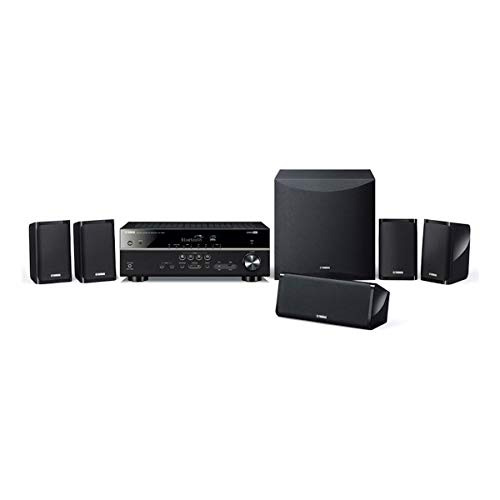
Pros
- Complete 5.1 package with subwoofer benefits movie viewers wanting immersive sound without separate component shopping.
- Bluetooth connectivity aids casual listeners streaming music and podcasts wirelessly in daily use.
- YPAO optimization helps beginners achieve room-adjusted clarity without manual equalizer skills.
- Compact speaker sizes suit apartment dwellers fitting gear into limited shelf or cabinet space.
- Standby draw of 0.2 W or less supports energy-aware users keeping the system always plugged in.
Cons
- Four HDMI inputs limit households connecting more than four 4K devices without an external switch.
- Bluetooth-only design without further wireless features restricts users seeking WiFi multi-room streaming.
- Non-waterproof construction affects anyone planning placement in damp or outdoor-adjacent areas.

Pros
- Timbre matching across all five speakers helps sound pan smoothly as action moves around the room
- Silk dome tweeters with ferrofluid cooling are built for detailed high-frequency response
- MDF wood cabinets are chosen to reduce resonance for cleaner, more natural sound
- Full lifetime parts and labor coverage lowers long-term ownership risk
Cons
- No subwoofer is included, so buyers wanting deep movie bass need an additional purchase
- Requires a separate AV receiver or amplifier, which is not part of the package

Pros
- Compact size fits easily under most TVs, saving space
- Dialogue enhancement via VoiceAdjust is a boon for TV and movie clarity
- Includes wireless subwoofer for deep bass without extra wires
- Supports popular streaming services and multi-room audio via Wi-Fi
- Certified for Dolby Atmos and DTS:X, delivering object-based audio formats
Cons
- No physical HDMI inputs; relies on HDMI ARC/eARC or optical, limiting connection options
- Subwoofer performance may be modest for large rooms or bass-heavy content
- Surround speakers sold separately, adding cost for full 5.1 experience
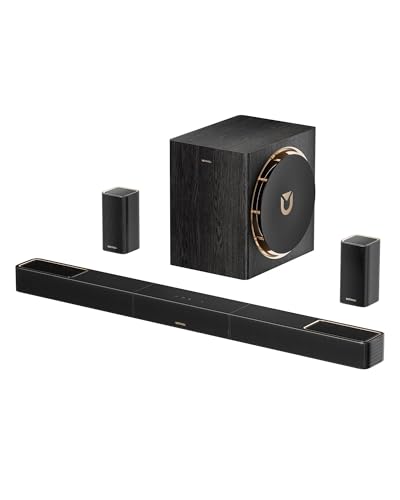
Pros
- Claimed dual 5GHz wireless design can reduce cable clutter and simplify multi-speaker installation.
- 5.1.4 configuration with height channels may expand the soundstage for supported cinematic content.
- Listed 760W peak power aims to deliver forceful room-filling output for larger living spaces.
- Metal grille rose gold accents and wood-crafted subwoofer provide a distinctive visual presentation.
- NEURACORE triple-core DSP is specified for 24-bit 192kHz multi-channel processing with low distortion targets.
Cons
- Zero customer reviews appear in the manufacturer listing so no real-user experience patterns can be assessed.
- Independent measurements of bass response wireless stability or actual continuous power remain unavailable.
- Warranty terms long-term durability full input details and room-tuning results are unspecified.

Pros
- Player and speakers arrive as one purchase, so you are not coordinating separate components, remotes, and matching decisions.
- Confirmed Blu-ray playback gives a physical disc collection somewhere to live, which streaming hardware alone does not solve.
- The seller states each unit is functionality tested before resale, which is a stronger starting point than an untested secondhand listing.
- Accessories are stated to be included, reducing the odds of hunting down a remote or cabling after delivery.
- Disc transport hardware ages more gracefully than software, so the core playback job is the part of this system least affected by its 2014 date.
Cons
- The listing carries no rating and no customer feedback, so there is no independent signal on sound quality, build, or refurbishment consistency.
- Smart features date to 2014 and the listing names no services, so app support may be reduced or retired with no way to confirm before purchase.
- No specifications are supplied at all: channel configuration, speaker count, connection types, supported disc and audio formats, warranty length, and refurbisher identity are all absent.

Pros
- Renters and apartment dwellers get an Atmos presentation without drilling, wire runs, or rear speaker stands
- Mixed hearing households and late night viewers gain a named dialogue enhancement rather than relying on generic television speech modes
- Owners with a port starved television can route a console or streamer through the bar thanks to 4K pass-through with Dolby Vision
- Buyers who do not want to learn receiver menus get multi-channel surround handled inside a single product
- Anyone with an open media console and normal side walls is working with the room layout that beam steering is designed around
Cons
- No dimensions, weight, or mounting hardware details are supplied, so shelf clearance under a wall mounted television and bracket needs cannot be confirmed before ordering
- Multi-channel is stated without a channel layout, and there is no supplied confirmation of whether a subwoofer or rear speakers are included, optional, or unsupported
- HDMI port count, HDMI version, eARC support, gaming features, app requirements, and control method are all absent from the manufacturer listing, and no customer review excerpts accompany the listing to fill those gaps

Pros
- Dolby Atmos support provides a more immersive audio experience compared to standard soundbars.
- Voice control and AirPlay 2 integration offer convenient operation and seamless streaming for Apple users.
- Trueplay tuning automatically adjusts sound based on room acoustics, simplifying setup and improving audio quality.
- Compact design fits easily in small spaces while still delivering vibrant bass and clear dialogue.
- Multiroom capability allows you to expand and sync with other Sonos speakers for whole-home audio.
Cons
- No customer reviews are available, so real-world performance and reliability are unverified.
- Dolby Atmos performance may be limited by the soundbar's physical size; a full surround system may be needed for true overhead effects.
- Requires a compatible TV and audio source for Dolby Atmos; older TVs may not pass through the signal.

Pros
- All-in-one design: Built-in subwoofers and elevation speakers eliminate the need for extra components, simplifying setup and saving space.
- Dialog enhancement: The horn-loaded tweeter is designed to make speech clearer, benefiting dialogue-heavy shows and movies.
- Dolby Atmos support: Adds height effects for a more immersive soundstage with compatible content.
- Strong brand pedigree: Combines Klipsch's acoustic tuning with Onkyo's manufacturing, potentially increasing reliability confidence.
- Positive customer sentiment: With a 4.4-star average from 460 reviews, many buyers report satisfaction, though individual experiences vary.
Cons
- Limited verified long-term durability: No independent long-term testing data is available; reliability beyond initial use is unconfirmed.
- No measured performance specs: Frequency response, distortion, and output levels are not supplied, so actual sound quality can't be objectively verified.
- Potential compatibility unknowns: The manufacturer listing doesn't specify HDMI inputs, wireless options, or compatibility with various TV brands, which could affect integration.
Scanning the Field: Wireless Channels vs Speech Focus
| Buyer need | Product | Deciding feature | Main compromise |
|---|---|---|---|
| Full immersive movie sound | ULTIMEA Skywave X40 5.1.2ch Sound Bar w/Dolby Atmos | Fully wireless 5.1.2 channels with Dolby Atmos overhead effects | Larger setup with more components to place |
| Clear dialogue for TV shows | Bose TV Speaker | Dedicated dialogue mode and angled drivers for vocal clarity | No true rear surround channels |
| Adding surround to an existing Bose bar | Bose Surround Sound System for Home Theater | Wireless surround speakers that connect to Bose soundbars | Requires a compatible Bose soundbar to function |
| Compact, minimal footprint | Bose TV Speaker | Just over two inches tall with single-cable setup | Less bass depth and no Atmos height channels |
| Deep bass you can feel | ULTIMEA Skywave X40 5.1.2ch Sound Bar w/Dolby Atmos | Gravus sub-bass down to 35Hz with a wood-crafted subwoofer | More physical space required for the sub |
Choosing Between Immersive Channels and Vocal Clarity
Decide your channel count first
Choose 5.1.2 only if you watch Atmos-encoded movies and have room to place surround speakers. The ULTIMEA Skywave X40 gives you overhead effects and rear channels that a single bar cannot match. If your viewing is mostly news, sitcoms, or sports, the Bose TV Speaker’s simpler design covers that need without unused channels.
Match wireless setup to your room
Fully wireless rear speakers remove cable runs but add placement decisions. The Skywave X40 uses dual 5GHz transmission to avoid dropouts, which suits larger rooms. For a small apartment or bedroom, the Bose TV Speaker’s single optical cable is the lower-friction option. Consider how much setup time you want to invest.
Weigh dialogue quality against bass depth
Clear speech beats deep bass for most TV viewers. The Bose TV Speaker has a dedicated dialogue mode to elevate vocals, while the Skywave X40 focuses on 35Hz sub-bass and cinematic impact. If you watch action films, the subwoofer matters more. If you watch dialog-heavy dramas, prioritize the vocal clarity feature.
Check your existing audio ecosystem
If you already own a Bose soundbar, the Bose Surround Sound System adds wireless rear speakers that integrate cleanly. If you are starting fresh, the all-in-one ULTIMEA bar gives you a complete 5.1.2 system out of the box. Do not buy surround speakers without confirming they match your soundbar brand. Explore ceiling speaker options if you want in-wall immersion instead.
The Final Match: Which Buyer Takes Which System
For the home theater enthusiast who wants the full Atmos experience, the ULTIMEA Skywave X40 5.1.2ch Sound Bar w/Dolby Atmos is the strongest pick. Its fully wireless 5.1.2 channel layout, 530W peak power, and 35Hz sub-bass deliver the overhead and rear effects that define modern cinema sound. The trade-off is a larger physical footprint and more components to place. If you lack space for surround speakers or watch little Atmos content, this system is overkill.
For the everyday TV viewer who struggles to hear dialogue, the Bose TV Speaker is the practical choice. Its angled drivers and dedicated dialogue mode clarify vocals, and the compact two-inch-tall design fits almost anywhere. The trade-off is no true surround channels, so action scenes lose immersion. If you later want more depth, you can add the Bose Bass Module, but that requires an extra purchase.
For the owner of an existing Bose soundbar, the Bose Surround Sound System for Home Theater is the right expansion. It adds wireless rear speakers that bring movies and TV to life without new cables. The trade-off is that it is not a standalone system, so it will not help you if you are starting from scratch. In that case, the ULTIMEA all-in-one bar is the better single purchase.
What Decides Atmos Immersion vs Dialogue Clarity
Will the system fit my TV and room?
Measure your TV stand and wall space before choosing. The Bose TV Speaker is just over two inches tall and fits under most displays, while the ULTIMEA system needs room for a subwoofer and rear speakers. Confirm your TV has an optical output or HDMI-ARC port, since the Bose TV Speaker uses those inputs for its primary connection.
Do I need Dolby Atmos to enjoy movies?
Only if you watch Atmos-encoded titles and want sound above your head. The ULTIMEA Skywave X40 supports 5.1.2 Atmos with overhead effects, which is a genuine upgrade for action films. If your streaming service or discs do not carry Atmos, the Bose TV Speaker’s dialogue focus will serve you better without paying for unused height channels.
Can I expand my system later?
The Bose TV Speaker supports adding the Bose Bass Module 500 or 700, but requires a separate connection cable. The ULTIMEA ships as a complete 5.1.2 system, so no expansion is needed. The Bose Surround Sound System only works with a compatible Bose soundbar, so plan your ecosystem before buying any single piece.
How much wireless reliability do I need?
For rear speakers placed across the room, wireless stability matters. The ULTIMEA uses dual 5GHz transmission to minimize dropouts, which suits larger spaces. The Bose systems use simpler wireless connections suited to typical living rooms. If you have a long, open floor plan, prioritize the system with stronger wireless engineering.


