Can You Bring Speakers Through TSA? The Definitive Guide
Yes, you can bring speakers through TSA in both your carry-on and checked luggage. According to official TSA (Transportation Security Administration) guidelines, portable speakers, Bluetooth speakers, and even large professional audio equipment are generally permitted. However, because most modern portable speakers contain lithium-ion batteries, there are strict safety protocols you must follow regarding where they are stored and how they are screened.
In my years of traveling as a professional audio consultant, I have carried everything from pocket-sized JBL Go units to studio-grade monitors through security. The process is straightforward, but failing to handle the lithium-ion battery requirements correctly can lead to your gear being confiscated or delayed at the checkpoint.
✈️ TL;DR: Key Takeaways for Traveling with Speakers
- Carry-on is Best: Most speakers have lithium-ion batteries, which are safer in the cabin than in the cargo hold.
- Size Matters: If your speaker is larger than a standard smartphone, you will likely need to remove it from your bag for X-ray screening.
- Battery Limits: Portable speakers are fine, but massive “party” speakers with batteries exceeding 100 Watt-hours (Wh) may require airline approval.
- Checked Luggage Risks: While allowed, checked bags are subject to rough handling and potential theft; always use a hard-shell case.
TSA Rules for Portable and Bluetooth Speakers
The most common question travelers ask is, “can we bring speakers through tsa if they are wireless?” The answer is a resounding yes. Whether it is a Bose SoundLink, a Sonos Roam, or a JBL Flip, these devices fall under the category of “portable electronic devices.”
The “Electronics Larger Than a Cell Phone” Rule
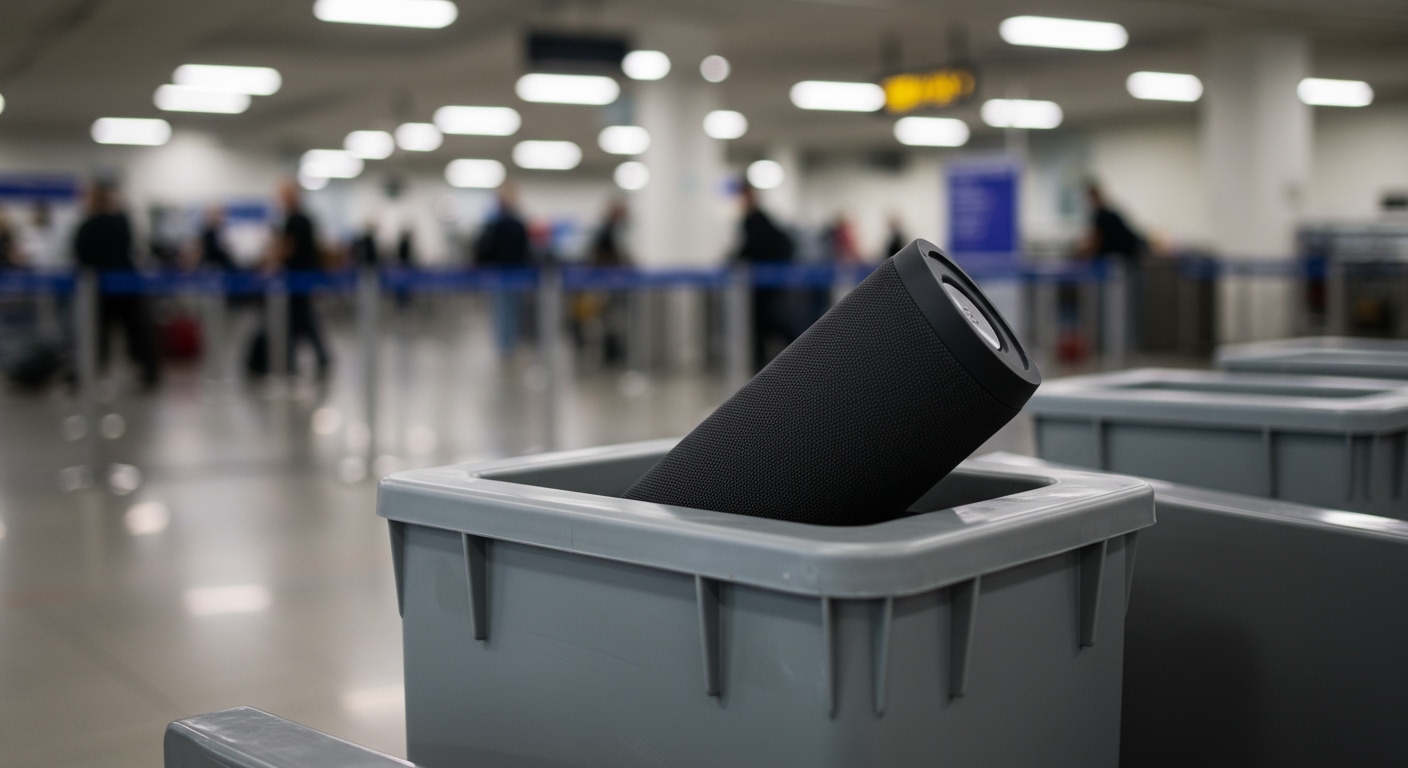
When you approach the TSA checkpoint, the general rule is that any electronic device larger than a standard cell phone must be placed in a separate bin for X-ray screening. This includes most Bluetooth speakers.
- Small Speakers: If it fits in your pocket (like a JBL Clip), you might be able to leave it in your bag depending on the specific airport’s technology (like new CT scanners).
- Medium to Large Speakers: These must be removed from your carry-on and placed in a bin with nothing covering them.
Speaker Types and TSA Compliance
| Speaker Type | Carry-on Allowed? | Checked Allowed? | Special Instructions |
|---|---|---|---|
| Bluetooth / Portable | Yes | Yes (See Battery Rules) | Remove from bag for X-ray if larger than a phone. |
| Smart Speakers (Echo/HomePod) | Yes | Yes | No internal battery; safe for both, but better in carry-on. |
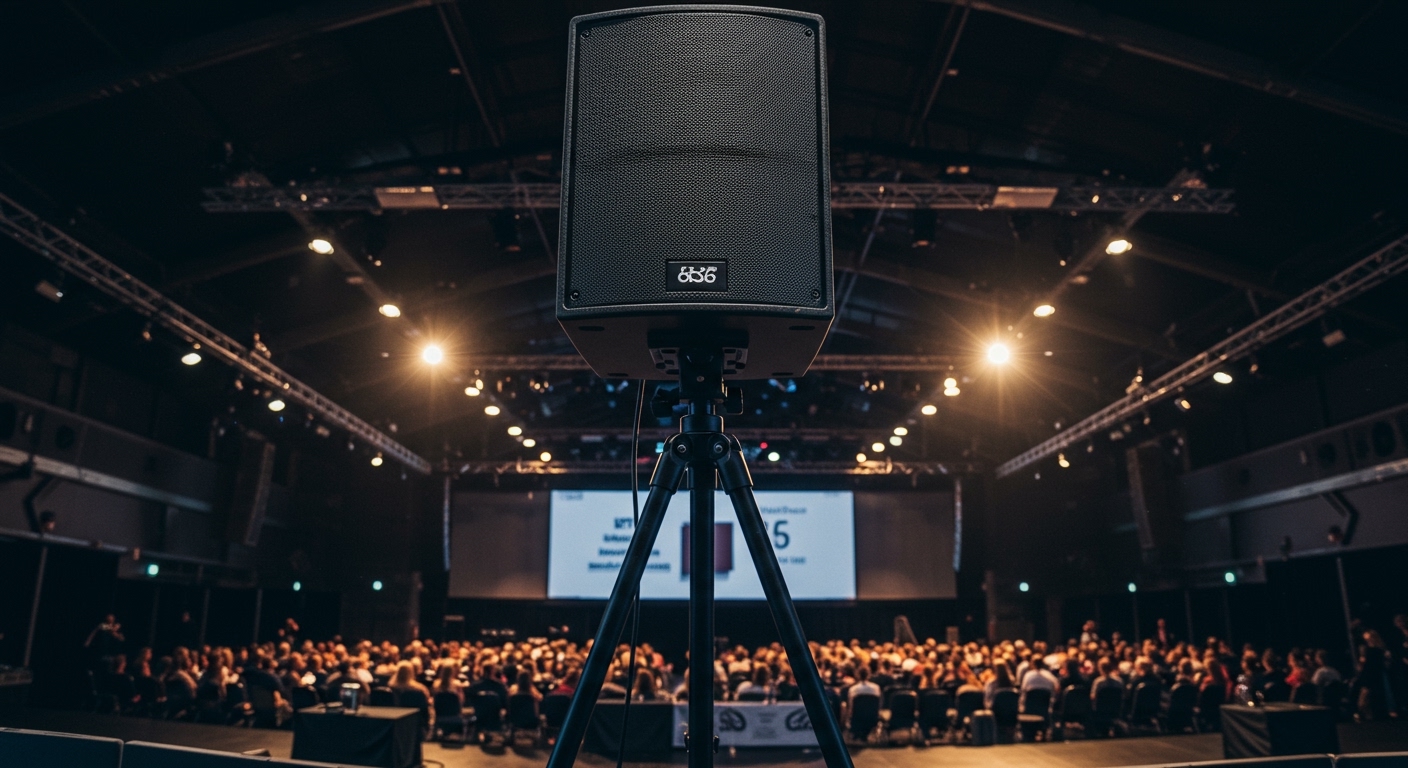
| Professional PA Systems | Yes | Yes | May require additional manual inspection due to magnets. |
| Computer Speakers (Wired) | Yes | Yes | Generally treated as standard electronics. |
The Lithium-Ion Battery Factor (Crucial Safety Info)
The biggest hurdle when asking “can you bring speakers through tsa” isn’t the speaker itself—it’s the lithium-ion battery inside it. The FAA (Federal Aviation Administration) and TSA have strict regulations because these batteries can potentially catch fire (thermal runaway) if damaged or short-circuited.
Carrying Batteries in Checked vs. Carry-on
- Carry-on Bags: This is the preferred method. If a battery malfunctions in the cabin, the flight crew can respond immediately with a fire extinguisher.
- Checked Bags: You can put speakers with built-in batteries in checked luggage, but it is highly discouraged. If the battery is removable, you must remove it and take it into the cabin.
Watt-Hour (Wh) Limits
Most portable speakers stay well under the 100 Watt-hour limit set by the FAA. To calculate your speaker’s Watt-hours, use this formula:
(Amp-hours x Voltage) = Watt-hours
If your speaker (like a massive JBL PartyBox 310) exceeds 100 Wh but is under 160 Wh, you may need explicit permission from your airline before flying. Any battery over 160 Wh is generally prohibited on passenger aircraft.
Step-by-Step: How to Get Your Speakers Through Security
In my experience, being organized is the fastest way to get through the TSA line. Follow these steps to ensure a “zero-stress” experience with your audio gear.
Step 1: Check the Battery Specs
Before you leave for the airport, look at the bottom or back of your speaker for the Wh rating. If it isn’t listed, look for the mAh (milliamp hours) and Voltage. Knowing this info can save you if a TSA officer questions the device’s power capacity.
Step 2: Pack for Accessibility
Do not bury your speaker at the bottom of your backpack. Place it near the top so you can easily pull it out when you reach the X-ray belt. I recommend using a dedicated neoprene sleeve or a hard-shell case to prevent the “power on” button from being pressed accidentally during transit.
Step 3: The Screening Process
- As you approach the bin area, take your speaker out of your bag.
- Place it in a bin by itself or with other electronics (like your laptop or tablet).
- Ensure no cables are tangled around it, as this can obscure the X-ray image, leading to a manual bag search.
Step 4: Re-packing Safely
Once through the magnetometer, wait for your bin. Inspect the speaker for any visible damage. Ensure it didn’t accidentally turn on—Bluetooth speakers searching for a signal can drain their battery rapidly during a long flight.
Carry-On vs. Checked Bags: Which Should You Choose?
While the answer to “can we bring speakers through tsa” is “yes” for both types of luggage, one is objectively better than the other.
Why Carry-on is the Winner
- Security: High-end speakers from brands like Bang & Olufsen or Bose are frequent targets for theft in checked luggage.
- Climate Control: The pressurized, temperature-controlled cabin is much better for sensitive audio components than the freezing cargo hold.
- Safety: As mentioned, lithium-ion batteries are a fire risk. Keeping them with you is the responsible way to fly.
When to Use Checked Luggage
If you are traveling with large studio monitors (like Yamaha HS5s) or a subwoofer that doesn’t have a battery, checking them might be your only option due to size and weight.
- Pro Tip: Use a “Flight Case” (like a Pelican Case) with foam inserts. Standard suitcases do not provide enough shock absorption for the magnets and cones inside a speaker.
Special Considerations: Magnets and Professional Gear
One thing many travelers forget is that speakers contain permanent magnets. While modern digital storage (like your phone or laptop SSD) is generally immune to the magnetic fields of small speakers, very large professional speakers can occasionally interfere with sensitive equipment.
Will the X-Ray Damage My Speaker?
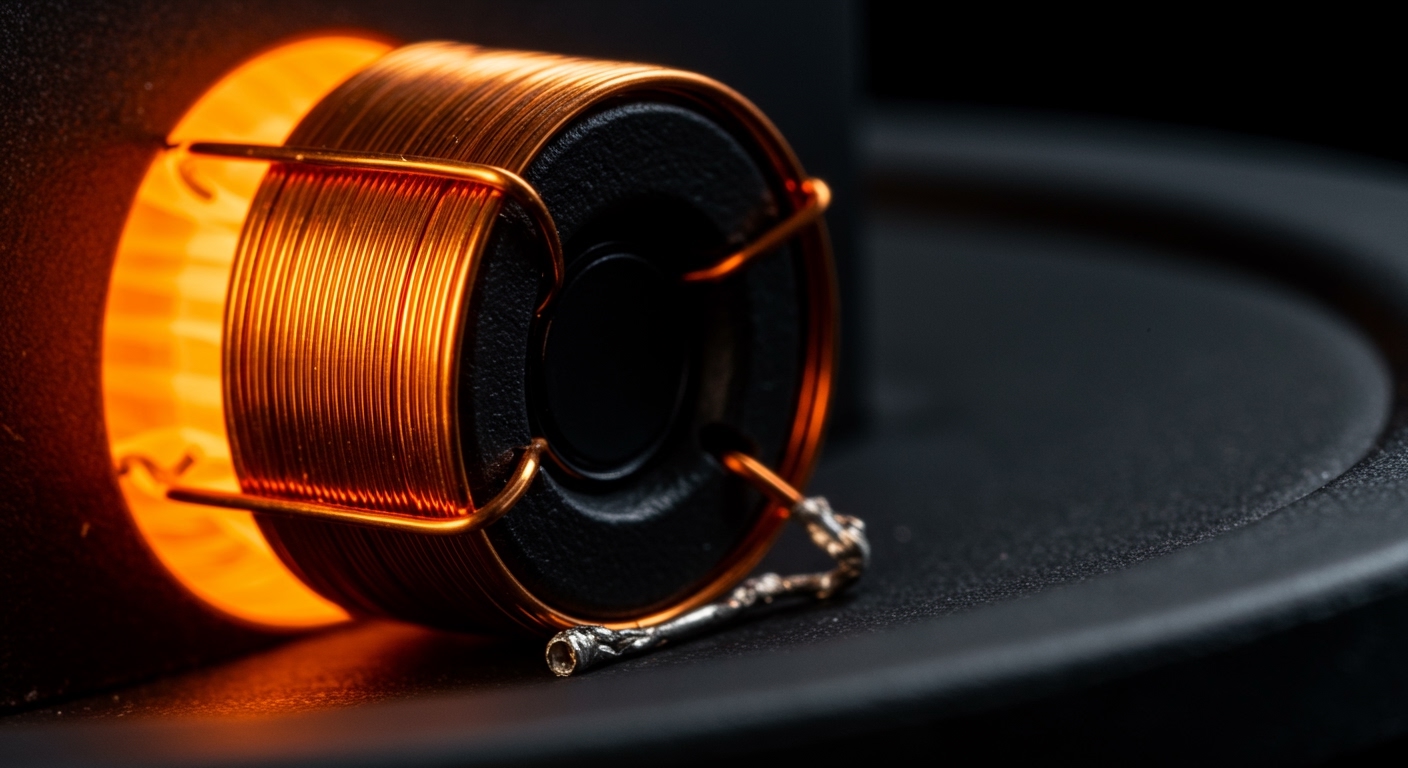
No. X-ray machines used at airports do not use magnetism and will not harm the voice coils or the magnets in your speakers. I have passed my Genelec monitors through industrial X-rays dozens of times with zero loss in audio fidelity.
Professional Audio and TSA PreCheck
If you have TSA PreCheck, you generally do not have to remove electronics from your bag. However, if you are carrying a particularly dense speaker with a massive magnet, the TSA officer may still pull your bag aside for a “secondary screening” because the magnet appears as an opaque mass on their screen.
International Travel Nuances
While TSA rules apply to the United States, if you are flying internationally, you will encounter ICAO (International Civil Aviation Organization) standards.
- Europe (EASA): Rules are very similar to the US, but they can be stricter about the number of spare batteries you carry.
- Asia: Many airports in China and Southeast Asia are extremely strict about lithium battery markings. If the Watt-hour (Wh) or mAh rating is rubbed off or unreadable on your speaker, they may confiscate it. Always ensure your speaker’s labels are clear.
Frequently Asked Questions (FAQ)
Can you bring speakers through TSA in a checked bag?
Yes, you can. However, if the speaker has a built-in lithium-ion battery, it is highly recommended to pack it in your carry-on for safety. If the battery is removable, it must go in your carry-on.
Do Bluetooth speakers count as a “personal item”?
No, the speaker itself is not a “bag.” It must fit inside your carry-on bag or your personal item (like a backpack or purse). It does not count as a separate piece of luggage.
Can I use my Bluetooth speaker on the plane?
You can generally have it turned on to connect to your headphones, but you cannot play music through the speaker during the flight. This is a matter of airline policy and passenger etiquette, not a TSA security rule.
What happens if my speaker doesn’t have a battery label?
If the TSA or airline staff cannot verify the battery’s capacity and it looks unusually large, they have the right to deny the item. For standard-sized portable speakers, this is rarely an issue.
Are there any speakers that are completely banned?
The only speakers banned are those that are damaged, have swollen batteries, or were part of a specific safety recall (similar to the Samsung Galaxy Note 7 incident). If your speaker’s casing is bulging, do not attempt to bring it on a plane.