Can I Put Speakers in My Luggage? The Quick Answer
You are packing for a trip and suddenly wondering, “can I put speakers in my luggage?” The short answer is yes, you can bring speakers on a plane. However, where you pack them depends entirely on their power source.

If your device contains a built-in lithium-ion battery (like most portable Bluetooth speakers), the Transportation Security Administration (TSA) strictly requires it to be packed in your carry-on bag. Conversely, traditional wired speakers without batteries can safely travel in either your carry-on or your checked luggage.
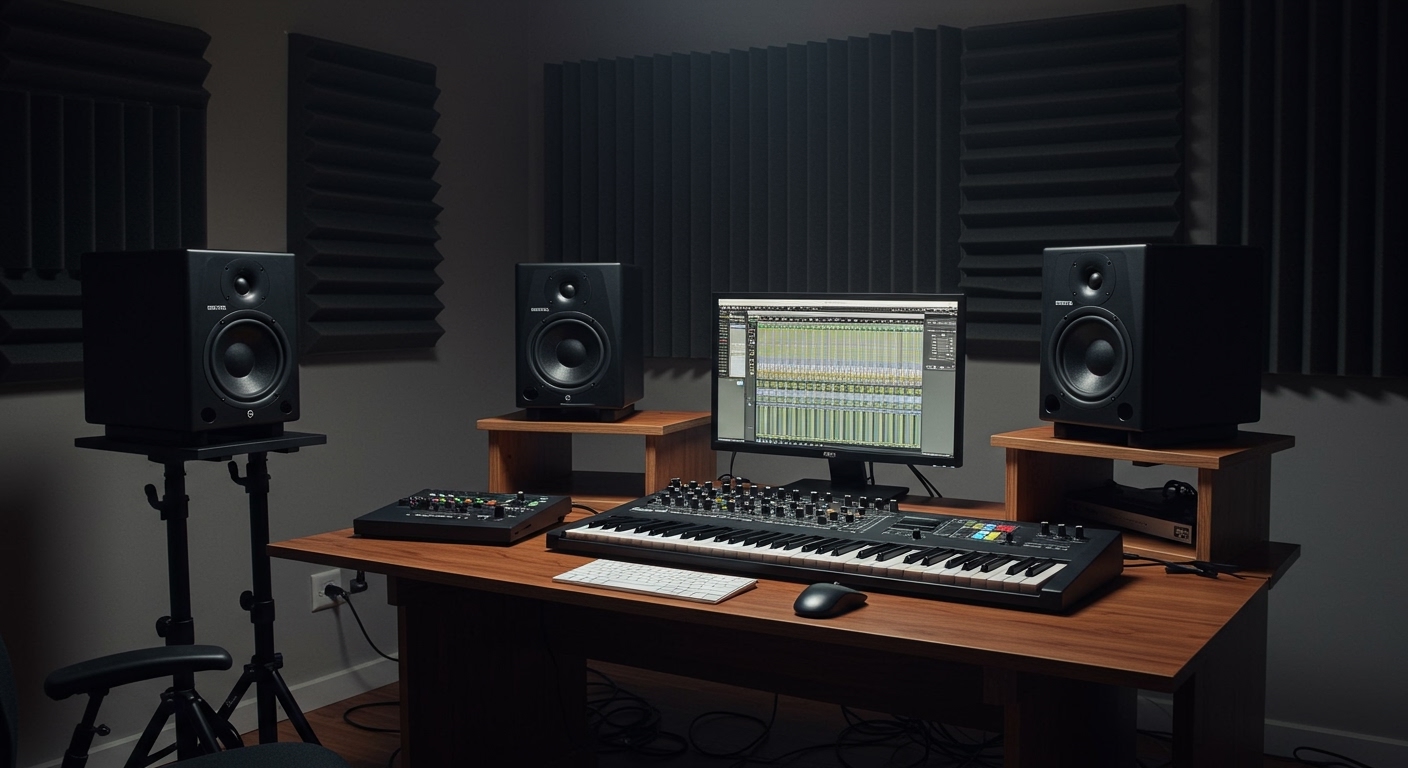
I have flown with everything from tiny JBL Clip travel speakers to massive Yamaha studio monitors. Knowing the exact airline rules ahead of time will save you from confiscation at the airport security checkpoint.
TL;DR / Key Takeaways
- Battery-Powered Speakers: Must go in carry-on luggage to comply with fire safety regulations.
- Wired/Passive Speakers: Can be safely packed in checked baggage or carry-on bags.
- TSA Battery Limits: Lithium-ion batteries must be under 100 Watt-hours (Wh). Larger batteries up to 160 Wh require special airline approval.
- Security Screenings: The heavy magnets inside audio drivers look dense on X-ray machines. Expect TSA to perform a manual bag swab.
- Damage Prevention: Always pack delicate audio equipment surrounded by dense clothing or in a custom hard-shell case.
Understanding the TSA Rules for Audio Equipment
When travelers ask, “can you have speakers in your luggage,” the confusion usually stems from battery anxiety. The Federal Aviation Administration (FAA) and the TSA do not care about the speakers themselves; they care about the lithium-ion batteries powering them.
Why Are Lithium-Ion Batteries Restricted?
Lithium-ion batteries are prone to a phenomenon called thermal runaway. If a battery gets crushed, punctured, or overheated in the cargo hold of an airplane, it can catch fire.
Because the cargo hold is inaccessible during flight, a fire there is catastrophic. If a battery begins to smoke in the passenger cabin (your carry-on), flight attendants have specialized fire-suppression bags to handle the emergency immediately.
Carry-On vs. Checked Bags: The Definitive Rules
- Carry-On Luggage: This is the safest and most compliant place for all consumer electronics. Bluetooth speakers, smart speakers, and battery banks must remain with you in the cabin.
- Checked Luggage: You may only put speakers in your checked bag if they do not contain lithium batteries. Examples include wired home theater speakers, passive bookshelf speakers, and soundbars.
If you accidentally leave a battery-powered device in your checked bag, baggage handlers will likely open your suitcase and remove it, leaving a “Notice of Baggage Inspection” in its place.
How to Calculate Your Speaker’s Watt-Hours (Wh)
Before heading to the airport, you must ensure your device falls under the FAA’s 100 Watt-hour (Wh) limit. Most popular consumer electronics easily pass this test, but large party systems might cross the line.
If your device only lists Milliampere-hours (mAh) and Voltage (V), you can calculate the Watt-hours using this simple formula:
(mAh ÷ 1000) × V = Wh
Popular Speaker Battery Sizes Comparison
| Speaker Model | Battery Capacity | Estimated Watt-Hours (Wh) | TSA Approved for Carry-On? |
|---|---|---|---|
| JBL Flip 6 | 4800 mAh | 17.28 Wh | Yes (Standard limit) |
| Ultimate Ears BOOM 3 | 3200 mAh | 11.84 Wh | Yes (Standard limit) |
| Bose SoundLink Flex | Custom pack | ~15.00 Wh | Yes (Standard limit) |
| Sony SRS-XG300 | Custom pack | ~35.00 Wh | Yes (Standard limit) |
| JBL PartyBox 310 | 10400 mAh | 74.88 Wh | Yes (Approaching limit) |
| SOUNDBOKS Gen 3 | Custom Battery | 99.84 Wh | Yes (Just under limit) |
As you can see, even a massive portable system like the SOUNDBOKS Gen 3 is explicitly engineered to sit right below the 100 Wh threshold, making it legally compliant for air travel.
Step-by-Step Guide: How to Pack Speakers Safely
Through my years of traveling as an audio professional, I have learned that airline baggage handlers are rarely gentle. If you are packing expensive audio gear, you must take proactive steps to prevent crushed cones, scuffed enclosures, and broken tweeters.
Step 1: Identify Your Speaker Type and Battery Status
First, determine if your equipment is active (contains an internal amplifier/battery) or passive (requires external power). If it is a smart device like an Amazon Echo or Apple HomePod, it relies on wall power and contains no battery.
These corded devices can go in your checked luggage safely. However, because they contain delicate internal microphones, I still recommend keeping them in your carry-on to avoid heavy impacts.
Step 2: Power Down and Prevent Accidental Activation
If your device is wireless, turn it off completely. Do not leave it in “sleep” or “standby” mode.
Tape over the power button using a piece of painter’s tape or place the device inside a rigid case. If the unit accidentally turns on inside your bag, it will drain the battery and potentially overheat in an enclosed space.
Step 3: Protect the Speaker Cones and Grilles
The front grille is the most vulnerable part of your audio equipment. A direct impact can dent the metal grille or, worse, tear the delicate paper or Kevlar speaker cone inside.
- For small devices: Slide the unit into a rigid, custom-molded EVA (Ethylene Vinyl Acetate) hard case.
- For bookshelf monitors: Cut a piece of sturdy cardboard to the exact dimensions of the front face. Tape the cardboard directly over the grille using residue-free gaffer tape.
- The Face-to-Face Method: If traveling with a pair of monitors, place the front grilles facing each other with a thick towel sandwiched between them. Bind them tightly together with plastic stretch wrap.
Step 4: Pad with Dense Clothing
If you are skipping the custom hard case, you must utilize your wardrobe. Do not use thin t-shirts for padding; they compress too easily.
Instead, wrap the hardware in thick sweaters, denim jeans, or winter jackets. Place the wrapped bundle perfectly in the center of your suitcase, ensuring there is a buffer of clothing on the top, bottom, and all four sides.
Step 5: Isolate Cables and Accessories
Never pack heavy AC power cables or metal brackets in the same compartment as your audio gear. During a turbulent flight, a heavy metal power brick can bounce around and deeply scratch your equipment’s casing.
Coil all USB cables, Aux cords, and power bricks neatly and place them in a separate zippered packing cube.
Navigating Airport Security with Audio Equipment
When you place your carry-on bag onto the X-ray conveyor belt, prepare for a slight delay. Because I frequently travel with heavy studio monitors, my bag gets flagged almost every time.
Why the X-Ray Machine Flags Your Bag
Audio drivers rely on massive, dense neodymium or ferrite magnets to produce sound. On an airport X-ray screen, these dense metal magnets show up as opaque black voids.
Because the X-ray cannot see through the magnet, the TSA agent cannot easily verify what is hidden behind it. Consequently, the agent will almost always pull your bag aside for secondary screening.
How to Handle Secondary Screening
Do not panic if your bag is pulled. Simply inform the TSA agent, “I have heavy audio equipment in there.”
The agent will likely open the bag, visually inspect the device, and use a small cotton swab to test the surface for explosive residues. To make this process painless, pack your device near the top of your carry-on bag so it is instantly accessible without unpacking your folded clothes.
International Travel: Do Rules Change Abroad?
While the TSA governs American airspace, you might be wondering if you can have speakers in your luggage when flying internationally. Generally, international aviation authorities align closely with FAA standards, but there are slight nuances.
European Aviation Safety Agency (EASA)
EASA follows almost identical guidelines regarding lithium-ion batteries. Devices under 100 Wh are perfectly fine in the cabin.
However, European budget airlines like Ryanair and EasyJet are notoriously strict about carry-on weight limits. A dense Bluetooth device might push your cabin bag over the 10 kg (22 lbs) limit, forcing you to check it. If forced to check the bag at the gate, you must remove the battery-powered device and hold it in your hands during the flight.
Asian and Middle Eastern Airlines
Airlines such as Emirates, Qatar Airways, and Singapore Airlines conduct rigorous security checks specifically for battery-powered electronics. Ensure your device has clearly legible manufacturing labels showing the Watt-hour (Wh) or **Voltage/