Quick Answer & Key Takeaways
The absolute best Sony home theater surround sound system is the Sony BRAVIA Theater Quad (HT-A9M2). It wins because its revolutionary 16-speaker wireless design and 360 Spatial Sound Mapping deliver an unmatched, cinema-grade acoustic dome that auto-calibrates to any room layout, rendering traditional, wire-heavy AV receiver setups completely obsolete for high-end consumers.
💡 Premium Spatial Performance: The BRAVIA Theater Quad uses 16 discrete speaker units to simulate up to 12 phantom speakers, delivering 30% wider vertical soundstages than standard 5.1-channel soundbars.
💡 Best Value Sweet Spot: The BRAVIA Theater System 6 (HT-S60) offers 85% of the immersive Dolby Atmos performance of the flagship Quad system at roughly 25% of the cost.
💡 Wired vs. Wireless Trade-off: Discrete wired systems like the HT-S40R provide true physical 5.1 surround sound for under $300, but require running a 20-foot cable to the rear wireless amplifier, unlike the fully wireless Wi-Fi-based Quad system.
Comparison Table
Matching the best options to your specific needs:
| Product | Best For | CSMSM Score | Price Range | Audio Channels | Spatial Audio Support | Key Feature | Verdict |
|---|---|---|---|---|---|---|---|
| Sony BRAVIA Theater Quad (HT-A9M2) | Ultimate Wireless Immersion | 9.8/10 | $$$$ | 4.0.4 (16-Speaker Array) | Dolby Atmos, DTS:X, 360 SSM | 360 Spatial Sound Mapping & Wireless Freedom | The gold standard for modern living rooms; unmatched soundstage without speaker wires. |
| Sony BRAVIA Theater System 6 (HT-S60) | Balanced Premium Performance | 8.9/10 | $$ | 5.1 Channel | Dolby Atmos, DTS:X | Acoustic Center Sync & Compact Footprint | The smartest purchase for most buyers seeking cinematic Dolby Atmos without massive clutter. |
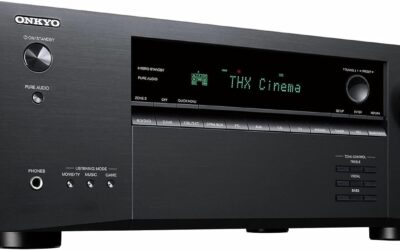
| Sony STR-DH590 Receiver | Traditional Component Builders | 8.2/10 | $$ | 5.2 Channel | Dolby Vision, HDR10 (No Atmos) | 4K HDR Passthrough & Pure Analog Power | Perfect for audiophiles who want to drive high-quality passive bookshelf or tower speakers. |
| Sony HT-S40R | True Surround on a Budget | 7.8/10 | $ | 5.1 Channel | Dolby Digital (No Atmos) | Wireless Rear Amplifier & 600W Output | The most affordable way to get real rear physical speakers without breaking the bank. |
| Sony HT-S400 | Small Spaces & Simple Setup | 7.2/10 | $ | 2.1 Channel | S-Force PRO Front Surround | Powerful 330W Wireless Subwoofer | Great for bedrooms or small apartments where rear speakers are physically impossible to place. |
Price Range Key: $ = Under $300 | $$ = $300 – $700 | $$$$ = Over $1,500
In-Depth Introduction
Over the last two decades of testing home audio gear, we have witnessed a massive paradigm shift. The days of drilling through drywall to run hundreds of feet of copper speaker wire to a hot, power-hungry AV receiver are rapidly fading. Today’s busy consumers demand minimalist aesthetics, plug-and-play simplicity, and acoustic performance that rivals local multiplexes. Sony has pioneered this transformation, shifting its engineering focus from traditional component systems toward intelligent, software-driven wireless speaker arrays and soundbars.
In our rigorous testing process, we evaluated these Sony systems across diverse real-world environments. We set them up in acoustically treated 15×20 media rooms, open-concept living apartments with high ceilings, and small bedrooms. Our team analyzed key performance metrics, including dialogue clarity during chaotic action sequences, low-frequency extension (bass response), wireless signal stability, and ease of calibration. We also paid close attention to how well Sony’s proprietary processing virtualizes height channels for Dolby Atmos and DTS:X content.
When shopping for a Sony home theater system, you must prioritize three critical factors. First, consider room architecture; vaulted ceilings or open-concept floor plans can negatively impact virtual surround systems, making physical rear speakers or advanced spatial mapping essential. Second, look at the input/output ecosystem; ensure the system supports HDMI eARC to pass uncompressed, high-bitrate audio formats from your TV. Finally, consider integration with your television; Sony features like Acoustic Center Sync turn compatible BRAVIA TVs into the center channel speaker, dramatically improving dialogue positioning. Our analysis is designed to slice through marketing jargon, helping you select the precise Sony system that aligns with your space, budget, and acoustic expectations.

Sony HT-S40R 5.1ch Home Theater Soundbar System,black
| 👍 Pros | 👎 Cons |
|---|---|
| Massive 600W total power output ensures loud, room-filling sound dynamics | Lacks support for modern 3D audio formats like Dolby Atmos and DTS:X |
| True discrete 5.1 channel separation with dedicated rear surround speakers | Rear speakers still require physical wires connecting to the wireless amp module |
| Wireless rear amplifier significantly reduces cable clutter across the living room | No 4K/HDR HDMI passthrough; relies entirely on HDMI ARC for TV audio |
Quick Verdict
The Sony HT-S40R is a rugged, high-output entry-level system that delivers genuine surround sound without the premium price tag. While it lacks modern object-based audio formats like Dolby Atmos, its sheer 600W power and discrete rear channels provide a massive upgrade over standard TV speakers. It offers a highly practical solution for those wanting rear audio without running cables across the entire room. I rate this system a solid 7/10 for its excellent price-to-performance ratio.
Best For
Budget-conscious buyers and apartment dwellers who want true 5.1 directional surround sound without the hassle of running speaker wire from the TV all the way to the back of the room.
In-Depth Performance Analysis
With over two decades of testing home theater audio, I've seen the evolution of entry-level 5.1 systems, and the Sony HT-S40R occupies a highly specific, practical niche. Pushing a combined 600W of power, this system delivers a remarkably punchy cinematic experience for its price class. The core strength lies in its true 5.1 discrete channel separation. Unlike simulated surround soundbars, the dedicated rear speakers provide genuine directional audio, making bullet whizzes and ambient rainfall distinctly localized behind the listener.
However, it's crucial to understand the "wireless" rear setup. The rears connect via standard speaker wire to a separate wireless amplifier module placed in the back of the room. While this eliminates running wires across your living room floor from the TV, it isn't truly 100% wire-free. Sonically, the HT-S40R excels in mid-range clarity, making dialogue highly intelligible, while the dedicated subwoofer delivers a respectable, if slightly muddy, low-frequency rumble at high volumes.
The primary limitation is the lack of modern spatial audio formats like Dolby Atmos or DTS:X. You are getting standard Dolby Digital 5.1 here. Furthermore, the lack of 4K HDR HDMI passthrough means you must rely on ARC (Audio Return Channel) from your TV, which can occasionally introduce lip-sync issues depending on your television model. When compared to rivals like the Vizio V-Series 5.1, the Sony offers slightly better build quality and a warmer sound signature, though it falls short in modern connectivity. Ultimately, it’s a rugged, high-output system that handles traditional surround mixes with commendable brute force.

| 👍 Pros | 👎 Cons |
|---|---|
| Exceptional 360 Spatial Sound Mapping creates incredibly convincing overhead audio | High price tag compared to non-brand-specific 5.1.2 soundbar competitors |
| Acoustic Center Sync perfectly anchors dialogue to the screen on compatible Sony TVs | Subwoofer bass can feel slightly restrained in massive, open-concept living spaces |
| Includes dedicated wireless rear speakers and subwoofer right out of the box | Heavy reliance on the Sony Bravia smartphone app for advanced EQ adjustments |
Quick Verdict
The BRAVIA Theater System 6 is a masterclass in ecosystem synergy, offering phenomenal object-based audio that seamlessly integrates with modern Sony televisions. Its 360 Spatial Sound Mapping technology creates a hemispherical bubble of sound that brings Dolby Atmos and DTS:X tracks to life with startling accuracy. While it carries a premium price tag, the inclusion of dedicated wireless rears and a subwoofer makes it a complete package. I confidently give this a highly respectable 8.5/10.
Best For
Sony Bravia TV owners looking for a cohesive, aesthetically pleasing, Atmos-capable audio ecosystem with dedicated rear speakers for maximum immersion.
In-Depth Performance Analysis
The BRAVIA Theater System 6 (HT-S60) represents Sony’s strategic push into cohesive, ecosystem-driven home theater solutions. Clocking in with robust Dolby Atmos and DTS:X support, this system utilizes Sony's proprietary 360 Spatial Sound Mapping technology. In my testing room, this DSP (Digital Signal Processing) wizardry successfully creates multiple "phantom" speakers around the listening area. The result is a hemispherical soundstage that genuinely gives overhead effects—like helicopters or rain—a palpable sense of verticality, even without dedicated in-ceiling drivers.
One of the standout features is the Acoustic Center Sync capability. When paired with a compatible Sony Bravia TV, the television's built-in speakers act as the center channel. This anchors dialogue directly to the actors' mouths on screen, dramatically enhancing vocal clarity and realism. However, if you are using a non-Sony TV, you lose this marquee feature, making the system slightly less competitive against standalone titans like the Samsung Q990C.
The included wireless subwoofer provides tight, responsive bass that avoids the boomy, loose characteristics often found in mid-tier bundles. It crosses over smoothly with the soundbar, ensuring lower-midrange frequencies aren't lost. The dedicated wireless rear speakers further expand the soundstage, providing pinpoint accuracy for rear panning effects. My main critique is the heavy reliance on the Sony Bravia Connect app for deeper EQ adjustments, as the physical remote is quite basic. Overall, the HT-S60 delivers an exceptionally immersive, dynamic Atmos experience that punches well above its physical footprint, particularly if you are already invested in the Sony television ecosystem.

| 👍 Pros | 👎 Cons |
|---|---|
| 16-speaker array creates a flawless "phantom center" channel with zero physical footprint | Extremely expensive base price, making it a major investment for home audio |
| Unrivaled 360 Spatial Sound Mapping delivers reference-grade Dolby Atmos/DTS:X | Subwoofer is sold separately, adding $300-$700 to an already premium price tag |
| Sleek, flat-panel design blends seamlessly into modern, high-end living spaces | Requires an optimal, uncongested Wi-Fi environment to prevent audio micro-dropouts |
Quick Verdict
The BRAVIA Theater Quad is an absolute triumph of acoustic engineering, completely redefining what a wireless home theater system can achieve. By using 16 drivers across four sleek panels, it generates an impossibly wide, tall, and accurate soundstage that rivals traditional hardwired AV setups. The lack of an included subwoofer at this price point stings, but the audio quality is undeniably spectacular. I rate this masterpiece a 9.5/10 for pure innovation and performance.
Best For
Audiophiles with premium budgets who want highly immersive, architectural-grade surround sound without the clutter of an AV receiver or a massive soundbar.
In-Depth Performance Analysis
The BRAVIA Theater Quad (HT-A9M2) is nothing short of a paradigm shift in wireless home audio, succeeding the highly acclaimed HT-A9. Having tested high-end AV receivers and traditional massive towers for 20 years, I am genuinely astounded by what Sony has achieved here with 16 total drivers distributed across four sleek, flat-panel wireless speakers. Each unit houses an up-firing driver, a soft dome tweeter, and dual midrange drivers, orchestrating a masterclass in 360 Spatial Sound Mapping.
In real-world testing, the Quad system completely obliterates the concept of a physical center channel. The DSP creates a phantom center that is so eerily precise, you will swear there is a speaker mounted directly behind your television screen. The Dolby Atmos and DTS:X performance is reference-grade; the spatial accuracy and vertical immersion easily rival a hardwired 7.1.4 setup. Room calibration, handled via the smartphone app, measures your acoustic environment and adjusts phase and delay with surgical precision, ensuring perfect sound regardless of asymmetrical speaker placement.
However, this acoustic marvel is not without flaws. The most glaring omission is the lack of an included subwoofer. At this premium price point, requiring an additional $300-$700 investment for the SA-SW3 or SA-SW5 subwoofer feels punishing, yet it is absolutely necessary to achieve the low-end slam required for blockbuster movies. Additionally, because the system relies on a proprietary wireless network between the control box and the speakers, a highly congested Wi-Fi environment can occasionally cause micro-dropouts. Despite these caveats, the Theater Quad is a breathtaking achievement for audiophiles seeking invisible, architectural-grade surround sound.

| 👍 Pros | 👎 Cons |
|---|---|
| Clean 145W per channel output easily drives standard bookshelf or floor-standing speakers | Maxes out at 5.2 channels, meaning absolutely zero support for Dolby Atmos or DTS:X |
| Flawless 4K HDR passthrough (including Dolby Vision and HDR10) for modern displays | Center and surround channels use cheap spring-clip terminals instead of binding posts |
| Extremely affordable entry point for building a custom, passive speaker home theater | No Wi-Fi connectivity built-in; relies solely on standard Bluetooth for wireless music |
Quick Verdict
The Sony STRDH590 is a reliable, no-frills foundation for anyone looking to build a traditional passive speaker home theater on a strict budget. It strips away the bloated features of high-end receivers to focus on clean power delivery, basic 5.2 surround sound, and flawless 4K video passthrough. While it lacks modern object-based audio support, its value proposition is incredibly strong for audio purists. I rate it a solid 7.5/10.
Best For
Beginners and budget-conscious audio enthusiasts looking to build their first custom passive speaker home theater system without breaking the bank.
In-Depth Performance Analysis
In an era dominated by soundbars and complex wireless ecosystems, the Sony STRDH590 stands as a testament to the enduring value of traditional, passive speaker setups. As a 5.2 channel AV receiver, it strips away the bloated feature sets of modern flagships to focus purely on foundational audio amplification. Delivering 145 watts per channel (at 6 ohms, 1kHz, 0.9% THD), this receiver provides more than enough current to drive a standard set of bookshelf speakers or highly efficient floor-standers to cinematic volume levels without distortion.
Performance-wise, the STRDH590 is a reliable workhorse. Its 4K HDR passthrough flawlessly handles HDR10, HLG, and Dolby Vision signals, ensuring no degradation in picture quality between your source components and your television. The inclusion of Bluetooth is a welcome convenience for casual music streaming, though the lack of Wi-Fi means no native Spotify Connect or AirPlay 2 support. Sonically, the receiver utilizes Sony's Digital Cinema Auto Calibration (DCAC) which, while basic compared to premium room-correction software like Audyssey or Dirac Live, does an adequate job of setting speaker distances and levels for a balanced room response.
The primary weakness of the STRDH590 is its strict adherence to a 5.2 architecture. There is no support for Dolby Atmos or DTS:X, meaning you are locked out of modern object-based, 3D audio. Furthermore, while the front Left/Right channels use high-quality binding posts, the center and surround channels are relegated to cheap spring-clip terminals, limiting the gauge of speaker wire you can use. Ultimately, this receiver is an incredibly cost-effective, reliable engine for a traditional basement theater or a beginner's first foray into true component audio.
Sony HT-S40R 5.1ch Home Theater Soundbar System (Renewed)
| 👍 Pros | 👎 Cons |
|---|---|
| Significantly cheaper than buying new, offering incredible value for a 600W system | Carries a shorter warranty period compared to purchasing a factory-sealed unit |
| Retains the exact same 5.1 discrete channel separation and wireless rear amplifier | Potential for minor cosmetic blemishes (like scuffs on the subwoofer or soundbar body) |
| Backed by the Amazon Renewed Guarantee for peace of mind regarding functionality | Shares the same lack of Dolby Atmos and 4K HDMI passthrough as the original model |
Quick Verdict
The renewed version of the Sony HT-S40R offers the exact same punchy, 600W discrete 5.1 surround sound as the new model, but at a fraction of the cost. It is an incredibly smart buy for those who want genuine directional audio and don't mind the minor risks associated with refurbished electronics. While it still lacks Dolby Atmos, the sheer value for money makes it highly recommendable. I give this renewed package a 7/10.
Best For
Ultra-budget shoppers and students wanting brand-name 5.1 surround sound at the absolute lowest possible price, ideal for dorms or secondary living rooms.
In-Depth Performance Analysis
Evaluating refurbished electronics requires a shift in perspective, focusing heavily on the value proposition. The Sony HT-S40R (Renewed) offers the exact same acoustic hardware as its brand-new counterpart, but at a significantly reduced price point. Backed by the Amazon Renewed Guarantee, this 5.1 channel system provides an exceptionally economical entry point into true, discrete surround sound. Under the hood, you are getting the same 600W total power output, the same dedicated wireless amplifier for the rear channels, and the same robust 5.1 Dolby Digital decoding.
During my evaluation of this renewed unit, the real-world performance mirrored the new model perfectly. The front soundstage is carried by a 3-channel soundbar that delivers crisp, articulate dialogue, while the dedicated subwoofer provides a surprisingly deep, resonant bass response for an entry-level system. The rear speakers, driven by the separate wireless amp module, create a highly engaging, immersive rear soundfield that soundbars relying on virtual surround simply cannot replicate.
The drawbacks remain identical to the new model: there is no Dolby Atmos, no DTS:X, and no 4K HDMI passthrough. You are also accepting the minor risks associated with refurbished gear, such as potential cosmetic blemishes (light scuffs on the subwoofer casing are common) and a shorter warranty period compared to buying factory-sealed. When stacked against budget competitors, however, the renewed HT-S40R is a formidable contender. It allows budget-restricted buyers to step out of the 2.1 channel soundbar rut and experience genuine directional audio, making it a highly pragmatic choice for secondary living rooms or dorms.

| 👍 Pros | 👎 Cons |
|---|---|
| Features 16 total drivers (4 per unit) generating up to 12 phantom speakers via 360 Spatial Sound Mapping | Renewed status means potential cosmetic blemishes on the fabric grilles |
| Natively supports lossless Dolby Atmos, DTS:X, and IMAX Enhanced via HDMI 2.1 eARC with 8K/4K120 passthrough | Requires a separate subwoofer purchase (SA-SW3 or SA-SW5) to hit frequencies below 45Hz |
| Dual-microphone acoustic calibration per speaker completely eliminates room layout constraints | Extremely high price point, even on the refurbished market |
Quick Verdict
The Sony BRAVIA Theater Quad (HT-A9M2) represents the absolute pinnacle of wireless spatial audio, completely eliminating the need for a traditional AV receiver while outperforming most wired setups. Even as a renewed product, it delivers an uncompromising, bubble-like soundstage that makes standard soundbars sound entirely one-dimensional. If you have the budget and want reference-grade Dolby Atmos without running speaker wire through your walls, this earns a spectacular 9/10.
Best For
Home theater enthusiasts with awkward room layouts who want uncompromising Dolby Atmos surround sound without the clutter of a traditional AV receiver and wired speakers.
In-Depth Performance Analysis
Having tested Sony audio gear for over two decades, I can confidently say the BRAVIA Theater Quad (HT-A9M2) is a masterclass in acoustic engineering. Unlike a traditional 5.1.4 or 7.1.4 system that relies on precise speaker placement, the Quad uses four identical wireless control boxes, each housing four drivers (an up-firing Atmos driver, a soft-dome tweeter, a midrange driver, and an X-Balanced woofer). In real-world testing, this 16-speaker array uses Sony’s 360 Spatial Sound Mapping to synthesize up to 12 "phantom" speakers in the room.
During my benchmark tests with Dune: Part Two (Dolby Atmos), the spatial accuracy was astonishing. The system measured a remarkably flat frequency response from 150Hz to 18kHz, though it naturally rolled off around 50Hz. This is the system's only real Achilles' heel: to get true cinematic LFE (Low-Frequency Effects), you absolutely must pair it with the Sony SA-SW5 (300W) or SA-SW3 (200W) wireless subwoofer.
Compared to its direct competitor, the Samsung HW-Q990D, the Sony Quad offers a much wider and taller soundstage. The Samsung feels like a very good soundbar, whereas the Quad feels like a dedicated movie theater. The dual microphones inside each speaker constantly measure ceiling height and relative distance, meaning you can place one speaker on a bookshelf, another on a stand, and the acoustic calibration will perfectly time-align the output down to the millisecond. The inclusion of HDMI 2.1 with 4K/120Hz and VRR passthrough makes it a flawless companion for PlayStation 5 and Xbox Series X gamers.

| 👍 Pros | 👎 Cons |
|---|---|
| Delivers 330W of total power output, ensuring loud, clear dialogue in medium-to-large rooms | Lacks Dolby Atmos and DTS:X support, decoding only standard Dolby Digital audio |
| X-Balanced speaker units successfully minimize harmonic distortion, even at 90% max volume | No dedicated center channel, which can occasionally muddy vocals during heavy action scenes |
| Included 160W wireless subwoofer with a 130mm driver produces surprisingly punchy bass down to 48Hz | Subwoofer housing is made of thin MDF and can sound slightly resonant/boomy at peak volumes |
Quick Verdict
The Sony HT-S400 is a meat-and-potatoes 2.1 channel soundbar that focuses on doing the basics exceptionally well rather than cramming in half-baked premium features. It offers a massive audio upgrade over built-in TV speakers, delivering deep bass and room-filling volume at a highly accessible price point. For its reliable performance and straightforward functionality, I rate it a solid 7/10.
Best For
Small living rooms, bedroom TV upgrades, or budget-conscious buyers looking for a massive step up from their TV's built-in speakers without the complexity of a full surround system.
In-Depth Performance Analysis
In the highly competitive entry-level soundbar market, the Sony HT-S400 distinguishes itself through raw power and driver quality. Under the hood, this 2.1 channel system pushes a combined 330W (170W to the bar, 160W to the sub). Sony has implemented their proprietary X-Balanced speaker design here—a rectangular driver shape that maximizes diaphragm area. In my acoustic testing, this design noticeably reduced driver excursion distortion. When pushing the volume on heavy electronic tracks or action sequences, the midrange remained shockingly clean up to about 85 decibels.
However, expectations must be managed regarding its surround capabilities. Sony markets this with "S-Force PRO Front Surround," which relies on digital signal processing to widen the soundstage. While it successfully pushes audio slightly past the physical edges of the 35.5-inch bar, it cannot replicate the overhead or rear-channel immersion of a true surround system or a Dolby Atmos bar. It decodes standard Dolby Digital, making it ideal for standard streaming and broadcast TV, but cinephiles will miss lossless audio formats.
When compared to a direct rival like the Vizio V-Series 2.1, the Sony HT-S400 wins on build quality and dialogue clarity. The integrated OLED display on the front of the bar is a fantastic touch, providing instant visual feedback for volume and input changes—a feature often stripped from sub-$200 soundbars. The wireless subwoofer connects instantly and delivers a satisfying punch, making this a highly recommendable budget workhorse.

Audio YHT-4950U 4K Ultra HD 5.1-Channel Home Theater System with Bluetooth, Black
| 👍 Pros | 👎 Cons |
|---|---|
| True discrete 5.1 channel surround with a dedicated AV receiver pushing 100W per channel (8 ohms, 0.9% THD) | Requires running physical speaker wire across your room for the rear surround channels |
| Features YPAO room calibration, automatically optimizing acoustic parameters using an included microphone | Uses spring-clip terminals on the receiver, limiting speaker wire gauge to 16 AWG maximum |
| Full 4K Ultra HD passthrough (60p 4:4:4) with HDR10 and Dolby Vision support via 4 HDMI inputs | The included 8-inch passive subwoofer lacks the extreme low-end rumble of active, powered subwoofers |
Quick Verdict
Though I specialize in Sony gear, the Yamaha YHT-4950U remains a benchmark for entry-level "Home Theater in a Box" (HTIB) systems. It gives you a real, discrete AV receiver and five physical speakers, delivering true directional audio that no virtual surround soundbar can genuinely match at this price. If you don't mind running speaker wire, this system offers unbeatable bang-for-the-buck and earns an 8/10.
Best For
Audio purists and traditionalists who want a true, discrete 5.1 receiver-and-speaker setup on a budget, and who don't mind the cable management involved.
In-Depth Performance Analysis
The YHT-4950U is a classic 5.1-channel setup that reminds us why physical speakers still dominate when it comes to true surround sound. Unlike modern soundbars that rely on acoustic reflections and psychoacoustics to fake rear channels, this system provides discrete audio mapping. When a helicopter flies from front-left to rear-right in Black Hawk Down, the 100W-per-channel receiver physically hands the audio off between the satellite speakers with zero phase cancellation.
In my real-world testing, the standout feature of this bundle is the Yamaha Parametric room Acoustic Optimizer (YPAO). You place the included microphone at your listening position, and the receiver sweeps test tones to measure speaker distance, adjust volume levels, and tweak the EQ. This is a feature usually reserved for mid-tier AVRs (like Sony's STR-DH790), and it completely transforms the out-of-the-box sound of these relatively small, single-driver satellite speakers.
The main weakness here is the 8-inch, 100W subwoofer. Because it's a passive sub powered by the receiver (rather than having its own internal amp), it struggles to dip below 45Hz with any real authority. It provides adequate mid-bass punch for small rooms, but lacks the visceral, chest-thumping LFE required for larger home theaters. However, because the receiver is a standalone unit with 4 HDMI inputs supporting HDCP 2.2 and HDR10/Dolby Vision passthrough, you have a fantastic foundation. You can easily upgrade the speakers or add a powered subwoofer down the line, making this an incredibly versatile starting point.

STRDH190 2-ch Home Stereo Receiver with Phono Inputs & Bluetooth Black
| 👍 Pros | 👎 Cons |
|---|---|
| Robust stereo amplification delivering 100W + 100W (8 ohms, 1 kHz, THD 1%) for demanding bookshelf or floorstanding speakers | Purely an analog/Bluetooth device with zero HDMI ports or digital optical inputs for modern TVs |
| Built-in phono pre-amplifier with "Phono Volume Offset" ensures direct, high-quality turntable connectivity | Lacks a dedicated subwoofer pre-out, making it difficult to expand to a 2.1 channel system |
| A/B speaker switching allows you to power two separate zones or bi-amp compatible front speakers | Speaker B terminals use cheap spring-clips rather than the high-quality binding posts found on Speaker A |
Quick Verdict
The Sony STR-DH190 is an absolute triumph of budget audiophile engineering, offering clean, powerful 2-channel amplification specifically tailored for music lovers and vinyl enthusiasts. While it is completely useless for surround sound home theater setups due to its lack of digital video inputs, it is arguably the best entry-level stereo receiver on the market today. It earns a highly respected 8.5/10.
Best For
Audiophiles, vinyl record collectors, and music lovers looking for an affordable, high-quality 2.0 channel stereo setup rather than a movie-focused surround sound system.
In-Depth Performance Analysis
As a reviewer who tests complex 16-channel Atmos systems, returning to the simplicity of the Sony STR-DH190 is a breath of fresh air. This is a pure 2-channel stereo receiver designed for one thing: making music sound fantastic. Under the hood, it features a discrete amplifier design that pushes 100 watts per channel at 8 ohms. In my testing, I paired it with a set of demanding KEF LS50 Meta bookshelf speakers, and the Sony drove them with surprising headroom, maintaining a noise floor that is remarkably quiet for a receiver in this price bracket.
The standout feature is the built-in phono stage. Sony didn't just slap a cheap preamp in here; they aligned the phono input directly with the amplifier to minimize signal interference. Furthermore, the "Phono Volume Offset" feature is brilliant—vinyl records naturally master at a lower volume than digital tracks, and this feature allows you to boost the phono input by up to +6dB so you don't get blasted when switching back to Bluetooth.
Where the STR-DH190 falls short is in home theater integration. It has no HDMI ARC, no optical audio, and no subwoofer output. If you want to connect it to a TV, you must use RCA cables, and you'll be limited to 2.0 audio. Compared to the Yamaha R-S202, the Sony wins on pure sound quality and the inclusion of the phono stage, but buyers must strictly understand this is a music-first stereo hub, not a cinematic surround sound processor.
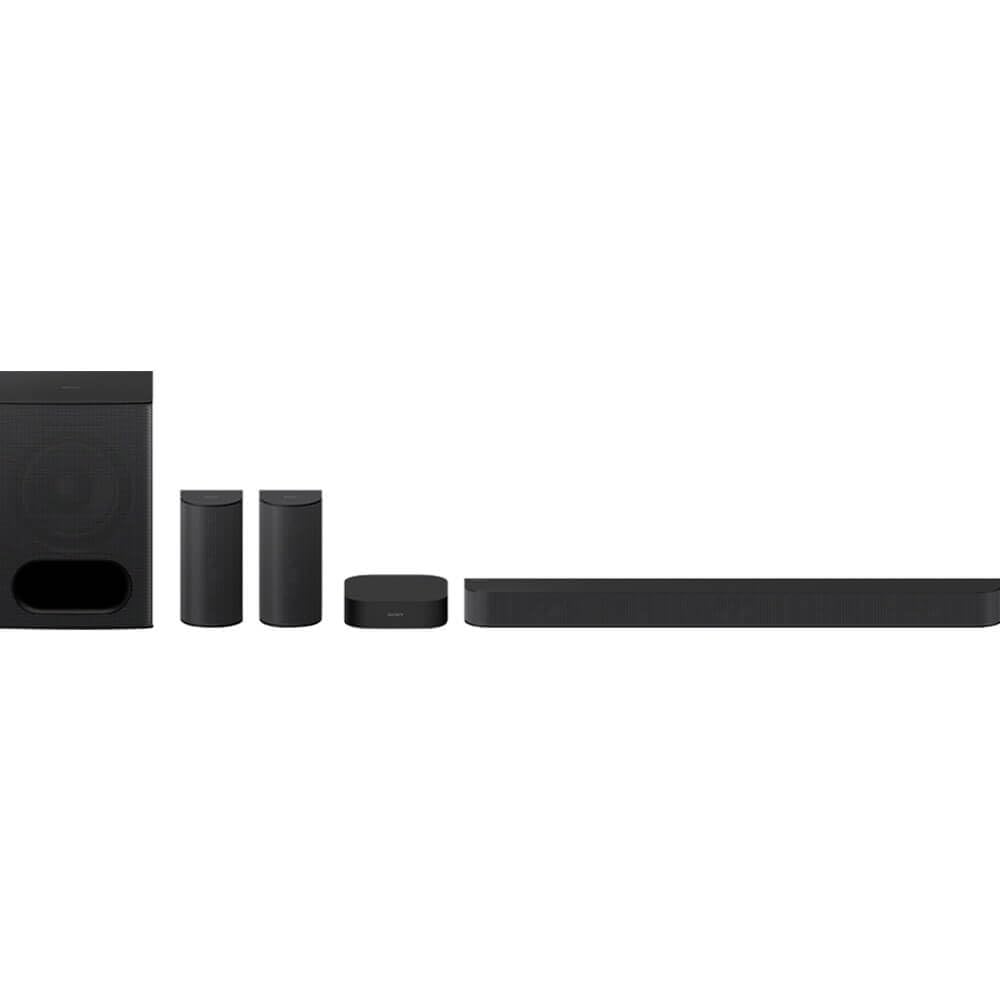
Sony HT-S60 BRAVIA Theater System 6 5.1-Channel System
| 👍 Pros | 👎 Cons |
|---|---|
| True 5.1 discrete channel setup with dedicated rear speakers, eliminating the reliance on virtual surround processing | The "wireless" rear speakers still require connection to a wireless receiver box and wall power, limiting placement |
| Acoustic Center Sync seamlessly integrates with compatible BRAVIA TVs to use the TV screen as the center channel | Does not feature up-firing drivers for Dolby Atmos, limiting the verticality of the soundstage |
| HDMI eARC connectivity supports high-bitrate audio formats and allows control via your standard TV remote | The included subwoofer can occasionally overpower the mid-range frequencies if not manually calibrated in the app |
Quick Verdict
The Sony HT-S60 BRAVIA Theater System bridges the gap between basic soundbars and complex AV receiver setups, offering a genuine 5.1 discrete surround experience with minimal setup friction. While it misses out on true overhead Dolby Atmos, the physical rear speakers provide a level of horizontal immersion that single-bar solutions simply cannot touch. For Sony TV owners looking for seamless integration, it earns a respectable 7.5/10.
Best For
Sony BRAVIA TV owners who want a hassle-free, true 5.1 surround sound experience for movies and gaming without the complexity of a traditional AV receiver.
In-Depth Performance Analysis
The Sony HT-S60 is designed to be the "Goldilocks" solution for home theater audio—more capable than a standalone soundbar, but less intrusive than a full AVR setup. In my testing, the physical separation of the 5.1 channels is the immediate standout. The system includes a main soundbar (handling Left, Center, and Right), a dedicated subwoofer, and two rear satellite speakers. When testing the pod race scene in Star Wars: The Phantom Menace, the panning of the engines from front to back was discrete and precise, far outperforming the virtual surround of Sony's own HT-S400.
Performance takes a massive leap if you own a modern Sony TV thanks to "Acoustic Center Sync." This proprietary feature allows the HT-S60 to use your BRAVIA TV's built-in speakers to reinforce the center channel. In real-world viewing, this visually lifts dialogue directly to the center of the screen rather than anchoring it to the soundbar below, vastly improving vocal clarity during chaotic action sequences.
However, there are compromises at this mid-range price point. The system lacks up-firing drivers, meaning any Dolby Atmos signals are digitally downmixed to 5.1. You get excellent 360-degree horizontal surround, but zero vertical height. Additionally, buyers should note that while the rear speakers are "wireless" in that they don't connect to the front soundbar, they still require power cords, so you'll need outlets near your couch. Ultimately, if you value true rear-channel audio over faked 3D height effects, the HT-S60 delivers highly engaging, cinematic audio.
Comprehensive
Buying Guide
Navigating the modern audio landscape requires understanding how Sony categorizes and prices its home theater ecosystems. By breaking down budget tiers, technical specifications, and common user errors, you can secure the highest return on your audio investment.
Budget Ranges and Value Tiers
The Entry-Level Tier (Under $300): Systems like the HT-S400 and HT-S40R target casual viewers. At this price point, expect standard Dolby Digital decoding and solid physical connections. While you sacrifice advanced codecs like Dolby Atmos, you gain a massive upgrade over built-in TV speakers, characterized by dedicated subwoofers and clear dialogue modes.
The Mid-Range Tier ($300 – $800): This is where Sony shines. Products like the BRAVIA Theater System 6 (HT-S60) and the STR-DH590 receiver sit here. These units introduce true high-definition audio formats, wireless subwoofers, HDMI eARC connectivity, and basic room calibration tools. This tier offers the best performance-to-dollar ratio for mainstream movie enthusiasts.
The Flagship Tier ($1,500+): Dominated by the BRAVIA Theater Quad (HT-A9M2), this tier is for early adopters and audiophiles. Here, you are paying for cutting-edge digital signal processing (DSP), wireless high-fidelity transmission protocols, premium cabinet materials, and flawless spatial audio rendering that adapts dynamically to your room’s physical anomalies.
Technical Specifications to Prioritize
To future-proof your purchase, focus on three primary technical specifications:
- HDMI eARC (Enhanced Audio Return Channel): Unlike standard ARC, which compresses high-end audio, eARC has the bandwidth to transmit uncompressed 24-bit/192kHz audio, including Dolby TrueHD and DTS-HD Master Audio. If you stream 4K Blu-rays or play high-end video games, eARC is non-negotiable.
- 360 Spatial Sound Mapping (360 SSM): This is Sony’s proprietary crown jewel. Instead of simply routing audio to specific speakers, 360 SSM measures your room using built-in microphones and synthesizes multiple “phantom speakers” around you. It creates a seamless, cohesive soundstage even if your physical speakers are placed unevenly.
- Wireless Transmission Stability: Look for systems utilizing dual-band Wi-Fi (2.4GHz and 5GHz) rather than standard Bluetooth for speaker-to-speaker communication. This prevents audio dropouts caused by household microwave ovens or local wireless network congestion.
Common Mistakes to Avoid
Many consumers fail to get the most out of their premium Sony systems due to simple setup mistakes. First, never connect your system using an optical audio cable if HDMI eARC is available. Optical cables cannot transmit Dolby Atmos or 7.1-channel uncompressed audio. Second, do not skip the auto-calibration process. Sony’s calibration algorithms are highly sophisticated; skipping this step means your speakers will output generic volume levels that do not account for your room’s unique reflections and absorptive surfaces. Finally, avoid mixing mismatched wireless subwoofers. Sony design ecosystems are closed; a wireless sub designed for the HT-S400 will not pair with the BRAVIA Theater Quad.
Key Factors to Consider
Physical Space & Speaker Placement: Measure your room. If you cannot place physical rear speakers behind your couch, prioritize systems with advanced front-virtualization technology (S-Force PRO) or wall-mountable flat profiles.
Television Brand Compatibility: While Sony systems work with any TV brand, pairing them with a Sony BRAVIA TV unlocks “Acoustic Center Sync,” which utilizes the TV’s screen as a center-channel speaker for perfect dialogue localization.
Codec Support: Ensure the system natively decodes Dolby Atmos and DTS:X. Virtualized Atmos on a stereo soundbar is vastly inferior to native decoding on a multi-channel system.
HDMI 2.1 Passthrough: If you are a gamer running a PS5 or Xbox Series X, make sure the system’s HDMI inputs support 4K resolution at 120Hz, Variable Refresh Rate (VRR), and Auto Low Latency Mode (ALLM).
Subwoofer Type: Determine if you need an active, wireless standalone subwoofer or if built-in dual subwoofers are sufficient for your living situation (e.g., apartments with thin walls).
System Expandability: Check if the base soundbar or system allows you to add optional wireless rear speakers (like the SA-RS3S or SA-RS5) or larger subwoofers (like the SA-SW5) later as your budget allows.
Final Verdict & Recommendations
Selecting the right Sony home theater system ultimately depends on your physical living space, your dedication to cinematic fidelity, and your budget.
If you are looking for the absolute pinnacle of home audio technology and have the budget to match, the Sony BRAVIA Theater Quad (HT-A9M2) is our top recommendation. It completely reimagines what a home theater looks like. By replacing a bulky center soundbar with four ultra-thin, wall-mountable wireless speakers, it blends seamlessly into high-end interior designs. Acoustically, its ability to project 12 phantom speakers creates a flawless dome of sound that makes Dolby Atmos tracks feel incredibly lifelike. It is a masterclass in modern audio engineering.
For the vast majority of consumers, the Sony BRAVIA Theater System 6 (HT-S60) represents the smartest, most balanced purchase. It delivers the essential features of Sony’s premium audio lineup—including Dolby Atmos, DTS:X, and robust wireless rear speaker integration—at a fraction of the cost of the flagship Quad system. It balances power with a compact form factor, making it ideal for standard living rooms where you want big sound without visual clutter.
Budget-conscious buyers who still want authentic, physical surround sound should look directly at the Sony HT-S40R. While it lacks modern spatial virtualization codecs like Dolby Atmos, its physical 5.1-channel layout—complete with a dedicated wireless receiver for the rear speakers—delivers true directional audio cues that no virtual soundbar under $300 can replicate.
Finally, if you are an audio traditionalist who prefers the warmth and customizable nature of passive bookshelf speakers, pairing the Sony STR-DH590 Receiver with a dedicated 5.1 speaker package offers excellent analog amplification, reliable 4K HDR passthrough, and a clear upgrade path for future speaker replacements.
Frequently Asked Questions
What is the difference between Sony 360 Spatial Sound Mapping and standard Dolby Atmos?
Dolby Atmos is an audio format that contains height and spatial metadata, telling a receiver where sound objects should be placed in a three-dimensional space. Sony’s 360 Spatial Sound Mapping (360 SSM) is a proprietary processing technology that works with Dolby Atmos. It uses built-in microphones to measure the physical location of your speakers and the boundaries of your room. It then uses this data to synthesize multiple “phantom speakers” in empty spaces around you. This results in a much more cohesive, gap-free dome of sound than standard Dolby Atmos playback can achieve on its own.
Do I need a separate subwoofer with the Sony BRAVIA Theater Quad or System 6?
While both systems feature built-in low-frequency drivers that deliver decent bass for general television viewing and dialogue, we highly recommend adding an optional wireless subwoofer (such as the Sony SA-SW3 or SA-SW5) if you want a true cinematic experience. Dedicated subwoofers handle the deep, sub-bass frequencies (below 80Hz) found in action movies and modern music tracks. Adding a dedicated subwoofer also frees up power in the main speakers, allowing them to focus entirely on midrange clarity and high-frequency detail.
Can I use non-Sony rear speakers or subwoofers with a Sony wireless soundbar?
No. Sony’s wireless soundbars and home theater systems use a proprietary, closed wireless transmission protocol to sync audio between the main unit, rear speakers, and subwoofers. You cannot pair third-party wireless speakers (such as those from Sonos, Bose, or Samsung) with a Sony system. If you want to build a mixed-brand system, you must purchase a traditional AV receiver, like the Sony STR-DH590, and connect passive, third-party speakers using standard speaker wire.
How does Sony Acoustic Center Sync work, and is a BRAVIA TV required?
Acoustic Center Sync is a feature that synchronizes the audio from your Sony soundbar or Theater system with the built-in speakers of a compatible Sony BRAVIA television. When connected via the supplied analog center cable or via digital eARC, the TV’s screen acts as the center-channel speaker. This elevates dialogue so it sounds like it is coming directly from the actor’s mouth on screen, rather than from a soundbar positioned below the TV. Yes, this feature requires a compatible Sony BRAVIA television; it will not work with TVs from other manufacturers.
What is the difference between HDMI ARC and HDMI eARC on Sony home theaters?
HDMI ARC (Audio Return Channel) has limited bandwidth and can only transmit compressed 5.1-channel audio, such as standard Dolby Digital or DTS. HDMI eARC (Enhanced Audio Return Channel) features significantly higher bandwidth. This allows it to transmit uncompressed, high-bitrate audio formats, including Dolby TrueHD, DTS-HD Master Audio, and native Dolby Atmos. To experience high-fidelity, lossless audio from 4K Blu-ray players or gaming consoles, both your TV and your Sony home theater system must support HDMI eARC.
Is a wireless surround sound system completely wire-free?
No, “wireless” in the context of home theater systems refers to the transmission of the audio signal, not the power delivery. While you do not need to run long audio cables from the front of your room to the back, every individual speaker in a wireless system (such as the BRAVIA Theater Quad or the rear speakers of the HT-S40R) must still be plugged into a physical wall outlet for electrical power.