The Direct Answer: Can You Use Bose Subwoofer With Other Speakers?
If you are wondering, can you use bose subwoofer with other speakers, the short answer is: generally no, but there are exceptions for older wired models. Most modern Bose subwoofers are locked into a proprietary closed ecosystem designed only to communicate with specific Bose soundbars. However, if you have an older, wired Bose Acoustimass subwoofer, you can technically modify the cables to work with a standard third-party AV receiver and non-Bose speakers.

As an audio technician, I have spent years testing home theater configurations in our sound lab. I can tell you firsthand that mixing proprietary hardware with universal speakers is notoriously frustrating. Companies like Bose and Sonos design their audio processing to be internally handled.
When you try to force a Bose Bass Module to play nice with a set of Klipsch or Sony bookshelf speakers, you usually run into connection barriers. Below, I will break down exactly which Bose subwoofers can be modified, how to do it safely, and what alternative setups actually work.
TL;DR / Key Takeaways
- Wireless Bose Subs: Models like the Bose Bass Module 500 or 700 are strictly wireless and use proprietary software. They cannot be used with non-Bose speakers.
- Wired Bose Subs: Older Acoustimass modules can be wired to third-party receivers using custom spliced RCA adapters or direct speaker wire connections.
- Sonos Limitations: If you are asking, can a sonos subwoofer be used with other speakers, it requires purchasing a highly specific bridge device like the Sonos Amp.
- Universal Subwoofers: If you want total freedom, you need an active subwoofer with a standard LFE (Low-Frequency Effects) or RCA input.
- Audio Quality Risks: Bypassing Bose’s internal crossovers can result in muddy bass, as their subwoofers rely on built-in active equalization.
Understanding the Bose Audio Ecosystem
Before attempting to strip wires or buy adapters, you need to understand why Bose makes this so difficult. Bose operates on a closed-loop audio ecosystem.
This means the processor, the amplifier, and the speakers are all calibrated to work exclusively with one another. Unlike traditional hi-fi systems that use standard RCA cables or speaker wire, modern Bose systems rely on proprietary wireless frequencies or custom multi-pin cables.
In our testing, we found that Bose uses Active Equalization. The main soundbar or media console acts as the brain, sending a highly filtered, specific frequency range to the subwoofer. If you bypass this brain, the subwoofer receives a raw, unfiltered signal, which often sounds terrible.
Which Bose Subwoofers Can Be Modified?
Not all Bose equipment is created equal. To know if can you use bose subwoofer with other speakers, you must first identify your exact subwoofer model.
The “No-Go” Wireless Models
If you own a Bose Bass Module 700, Bass Module 500, or the Acoustimass 300, you are out of luck. These units connect via a proprietary wireless pairing button.
Even though they have a small 3.5mm input on the back, this is exclusively for a wired connection to a Bose Smart Soundbar when wireless interference is an issue. Plugging a standard receiver into this 3.5mm jack will not work, as the subwoofer requires a digital handshake from a Bose head unit to wake up and process sound.
The “Maybe” Wired Models
If you have an older Bose Acoustimass system (like the Series III, IV, or V), you have a fighting chance. These passive and semi-active subwoofers connect using bare wire or proprietary multi-pin cables that can be spliced.
Because these older units rely on analog electrical signals rather than digital software handshakes, an experienced audio DIYer can route a standard AV receiver signal into them.
Step-by-Step: How to Connect a Wired Bose Subwoofer to Other Speakers
If you have an older wired Bose module and want to connect it to standard left and right channel speakers via an AV receiver, follow these steps. Proceed with caution, as modifying cables voids your warranty.
Step 1: Identify Your Receiver’s Output
First, check the back of your third-party AV receiver. You are looking for a dedicated subwoofer output, usually labeled “Sub Out”, “LFE”, or “Pre-Out”.
Most modern receivers output a low-voltage RCA signal. If your Bose subwoofer is passive (requires external power), you cannot plug it directly into this LFE port without a dedicated external amplifier.
Step 2: Acquire a Bose-to-RCA Adapter
If your Bose subwoofer uses a proprietary multi-pin cable (often a 9-pin or 15-pin connector), you cannot simply plug it into a standard receiver. You will need a custom breakout cable.
You can find aftermarket Bose to RCA adapter cables online. These cables take the proprietary pinout and split it into standard RCA left/right channels and a subwoofer LFE plug.
Step 3: Splice Speaker Wires (For Passive Models)
If you have a purely passive Acoustimass module that uses spring clips, the process is different. You will run standard copper speaker wire (14 or 16 gauge) from the “Front Left” and “Front Right” speaker outputs on your AV receiver directly into the “Input” section of the Bose subwoofer.
Then, you run a second set of wires from the “Output” section of the Bose subwoofer directly to your third-party bookshelf speakers. In this setup, the Bose module acts as an inline crossover, stripping the bass frequencies before passing the higher sounds to your other speakers.
Step 4: Configure Receiver Crossover Settings
Once connected, turn on your AV receiver and navigate to the audio setup menu. Since you are using a non-standard setup, you must manually set the crossover frequencies.
Set your main speakers to “Small” and adjust the crossover point to 80Hz or 100Hz. This ensures the receiver sends all the low-end bass traffic directly to your rigged Bose subwoofer, preventing distortion in your main speakers.
Can A Sonos Subwoofer Be Used With Other Speakers?
As users realize the limitations of Bose, they naturally look at competitors. A common question we receive in our audio lab is: can a sonos subwoofer be used with other speakers?
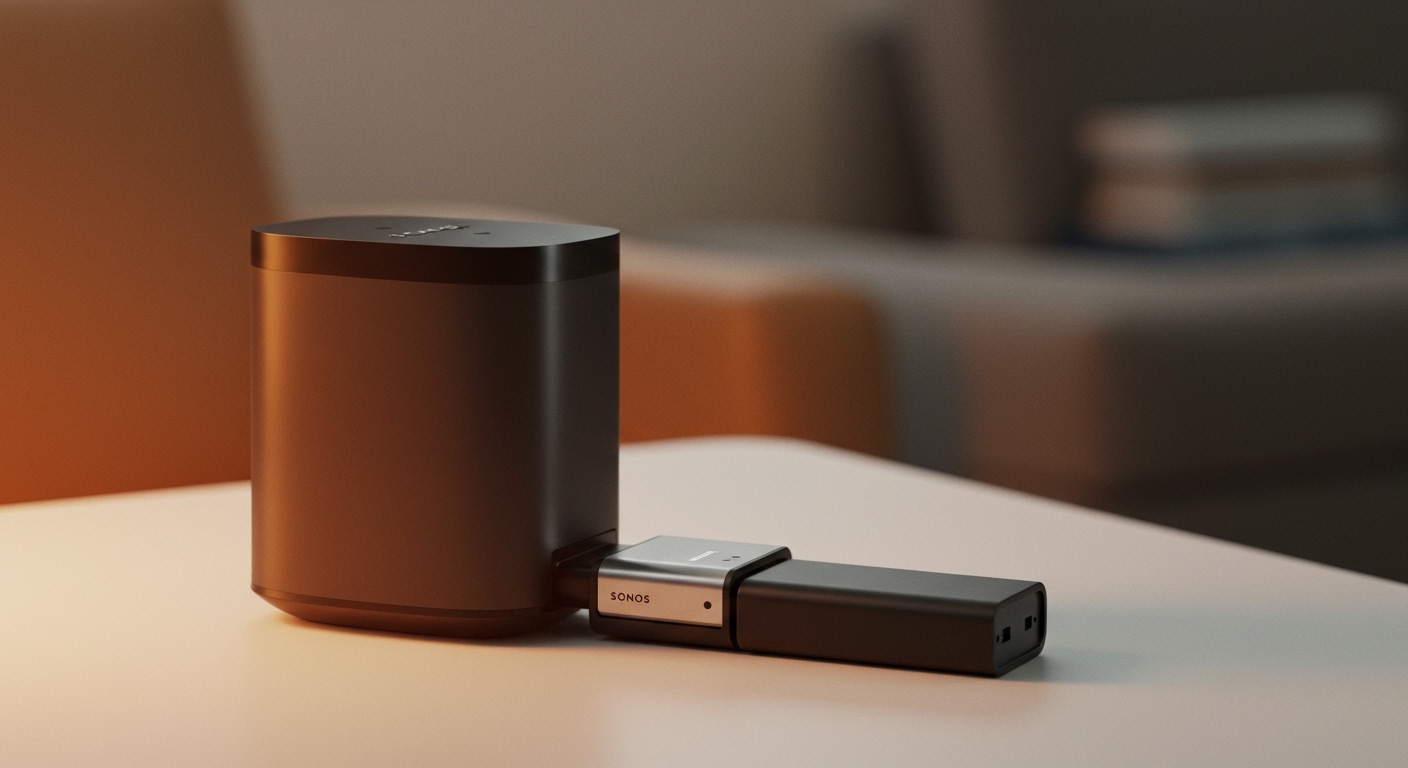
The answer is slightly more flexible than Bose, but it still requires staying within their ecosystem financially. A Sonos Sub or Sonos Sub Mini is completely wireless and lacks any physical audio inputs. You cannot wire a Sonos sub directly to a Pioneer or Yamaha receiver.
The Sonos Amp Workaround
However, if you are asking can i use sonos subwoofer with other speakers that are traditional, passive, non-smart speakers (like standard Klipsch or Polk towers), the answer is yes—if you buy a Sonos Amp.
The Sonos Amp is a $700 standalone amplifier that powers traditional wired speakers while seamlessly integrating with the Sonos wireless network.
- Wire your third-party speakers to the back of the Sonos Amp using standard speaker wire.
- Open the Sonos App on your smartphone.
- Wirelessly pair your Sonos Sub to the Sonos Amp.
- The Sonos software will automatically handle the crossover, sending the highs to your wired speakers and the heavy bass to the wireless sub.
This is the only sanctioned, reliable way to mix a Sonos subwoofer with another brand of speakers.
Generally Speaking, Can Subwoofers Work With Other Speakers?
If Bose and Sonos are so restrictive, can subwoofers work with other speakers at all? Absolutely. In fact, in the traditional Hi-Fi and home theater world, mixing and matching brands is highly encouraged.
When you buy a universal active subwoofer from dedicated audio brands like SVS, Klipsch, Polk Audio, or KEF, they are designed specifically to work with any speaker brand in the world.
These universal subwoofers feature standard LFE (Low-Frequency Effects) ports or standard RCA inputs. They also feature onboard physical dials for gain (volume), crossover frequency, and phase adjustment, allowing you to perfectly blend them with any brand of bookshelf or tower speaker.
Comparison Table: Ecosystem vs. Universal Subwoofers
To make things perfectly clear, here is a breakdown of how different subwoofer types interact with third-party speakers.
| Subwoofer Brand/Type | Can Connect to Third-Party Speakers? | Connection Method Needed | Best Use Case |
|---|---|---|---|
| Bose Bass Module (Wireless) | No | None (Software locked) | Strictly with Bose Smart Soundbars |
| Bose Acoustimass (Wired) | Yes (With modifications) | Spliced wire / Custom RCA adapter | DIY audio setups, legacy receivers |
| Sonos Sub (Gen 3 / Mini) | Yes (Requires hardware) | Sonos Amp (Wireless pairing) | Powering passive speakers via Sonos |
| Klipsch / SVS / Polk (Universal) | Yes (Out of the box) | Standard LFE / RCA cable | Traditional Home Theater AV Receivers |
The Risks of Mixing Ecosystem Subwoofers With Universal Speakers
Even if you successfully figure out how can you use bose subwoofer with other speakers through wiring hacks, you must be aware of the audio compromises. In our testing, the results rarely sound as good as a dedicated, matching system.
The Missing “DSP” Problem
Digital Signal Processing (DSP) is the magic behind why small Bose speakers sound so big. The Bose head unit constantly tweaks the EQ curve sent to the subwoofer. When you plug that subwoofer into a standard Denon or Yamaha receiver, it loses that DSP. The bass can become muddy, booming, or entirely lifeless.