At a Glance

Pick Product Key Spec Price Range
Best Overall RIOWOIS Powered Bookshelf Speakers Bluetooth 5.3; AUX, optical, TV-ARC; remote Mid-range
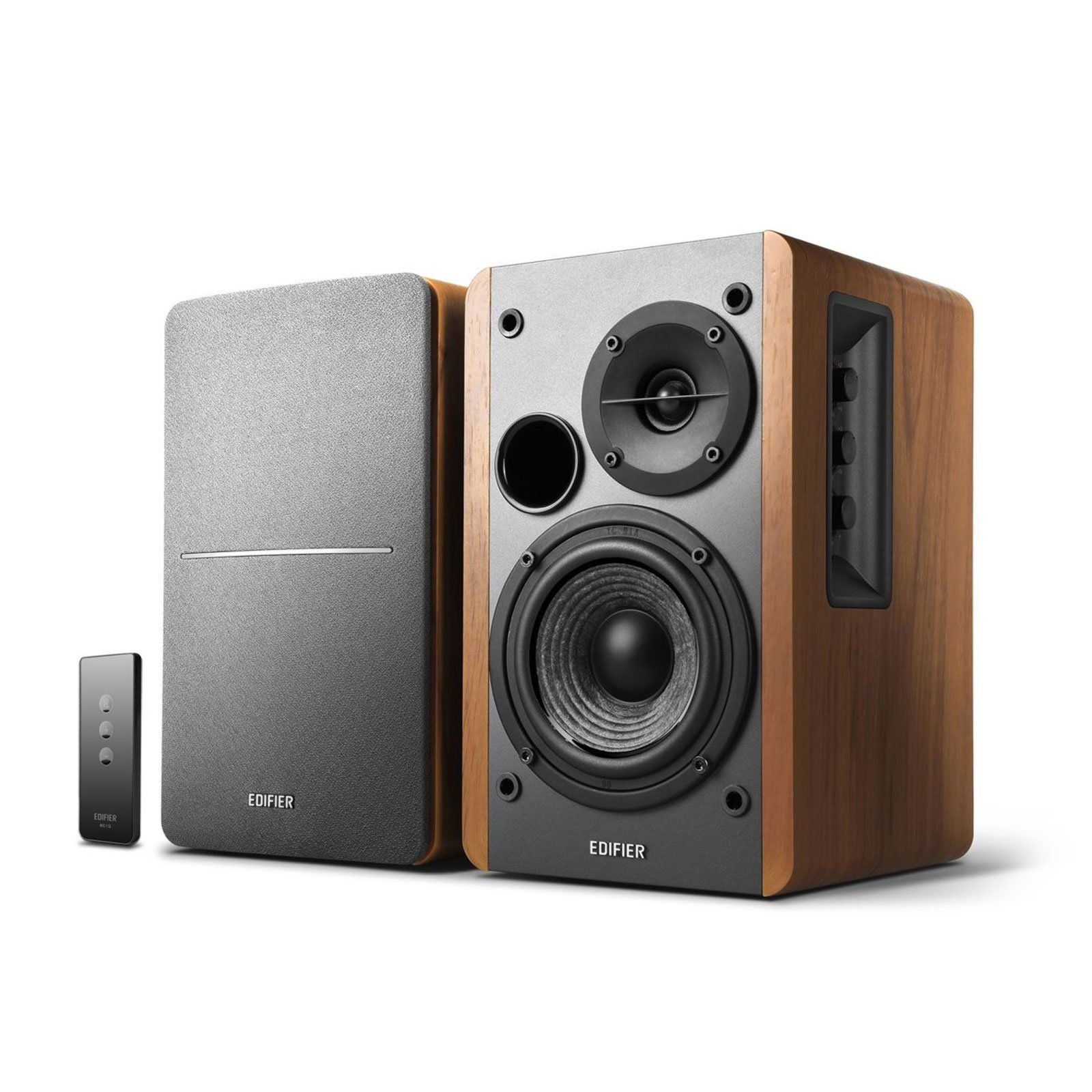
Best Vinyl Fidelity Edifier R1280T 42W RMS; dual RCA; MDF cabinets Core enthusiast ($100–$200)
Best Value Saiyin Bluetooth Bookshelf Speakers 80W; 4-inch woofers; subwoofer output Entry-level ($40–$70)
1

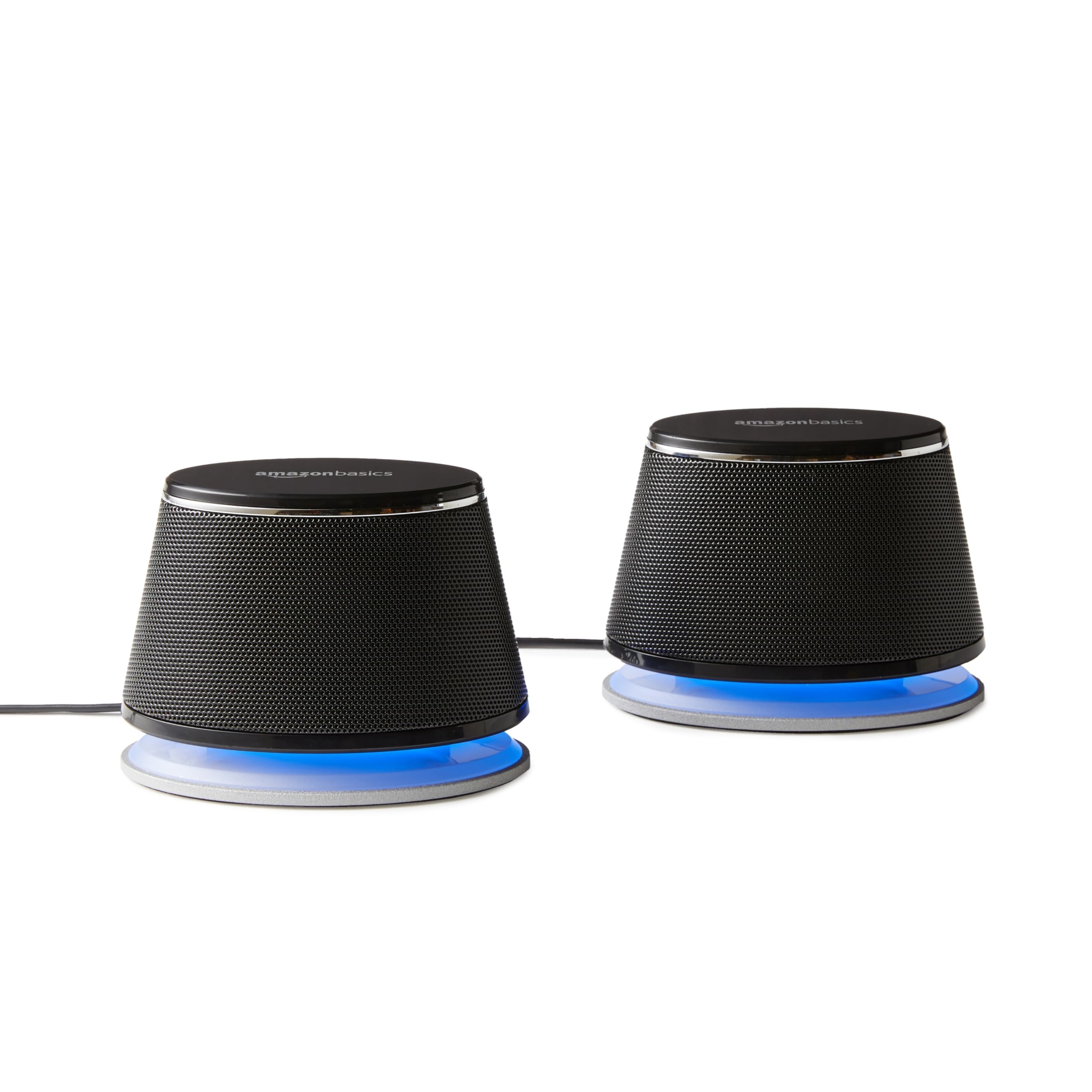
Amazon Basics Stereo 2.0 USB-Powered PC Speakers

In Stock
9.5 /10
BS Score
BS Score is calculated based on product ratings, reviews, and sales performance to help you make informed purchasing decisions.
Updated: Aug 18, 2026
Last update on Aug 18, 2026 / Affiliate links / Images, Product Titles, and Product Highlights from Amazon Creators API.
Pros & Cons

Pros

  • Two-cable setup with USB power and a 3.5mm plug keeps installation quick and driver-free on most computers
  • Physical in-line volume dial gives faster, more precise control than on-screen sliders during calls or media playback
  • Compact pair of desktop speakers fits alongside a monitor, keyboard, and laptop without crowding the workspace
  • Metal finish and scratch-free padded base suggest a build meant for daily desk use rather than a purely plastic shell
  • Blue LED lighting makes it obvious at a glance whether the speakers are powered on

Cons

  • USB power limits available output, so listeners who want high volume in a large room or shared office may find these underpowered
  • The bottom radiator adds some low-end warmth but does not replace a dedicated subwoofer, which matters for bass-heavy music and gaming
  • A wired-only design with USB and 3.5mm connections rules out Bluetooth phones, tablets, and USB-C-only laptops without an adapter
Detailed Review

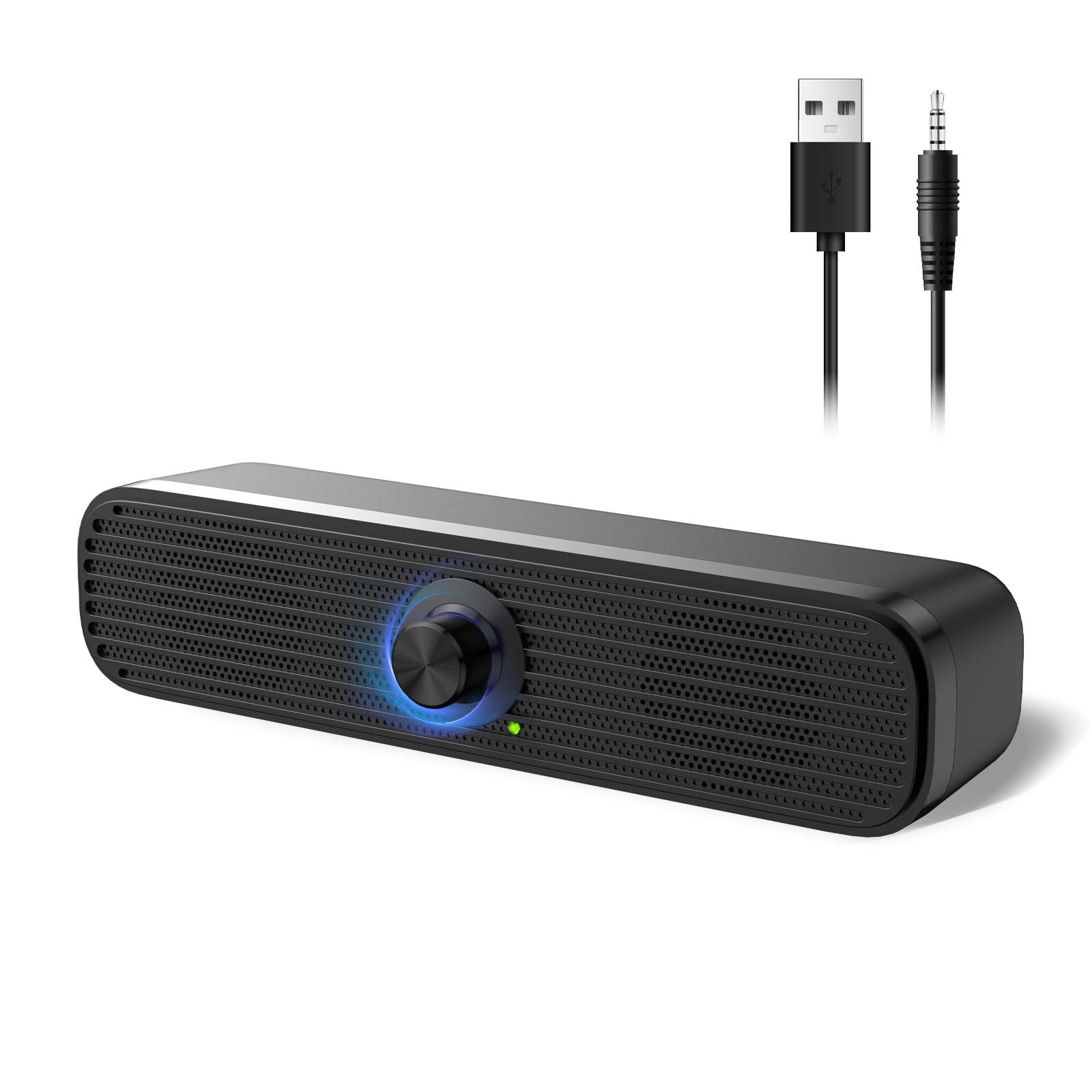
The Amazon Basics Stereo 2.0 Speakers for PC or Laptop are a compact pair of USB-powered desktop speakers built to amplify audio from a computer through a standard 3.5mm connection. They fit the buyer who wants clearer dialogue on calls and better sound for videos and casual music than a laptop lid or monitor can deliver, without adding a subwoofer or a power brick. Anyone chasing room-filling volume should look at a larger powered system instead.

Two supplied details shape daily use more than anything else. Power comes from a USB port on the PC or laptop, which removes the need for a free wall outlet and keeps the speakers tied to the same device they play from, so they switch on and off with the computer. Audio arrives over a 3.5mm aux input, the same jack found on most desktops, laptops, and headphone outputs, which keeps setup driver-free on typical systems. The in-line volume control is the third practical piece: it puts a physical adjustment on the cable run rather than forcing you into system settings mid-meeting.

On the hardware side, the set uses a metal finish with a scratch-free padded base, so the speakers are less likely to mark a wood or laminate desk and less prone to sliding during typing. A bottom radiator is included to add what the manufacturer describes as a springy bass character, which in practice means low frequencies get some reinforcement from the desk surface. Blue LED lights confirm power status. The pair ships as a set of two in black.

The compromises follow directly from that design. USB bus power caps how loud and how clean the output can be, and a bottom radiator is not a substitute for a separate subwoofer, so bass-forward music, action games, and movie soundtracks will sound thinner than on a 2.1 setup. The wired-only connection also excludes phones and tablets without a headphone jack, and USB-C-only laptops will need an adapter for both cables. Desk-mounted lighting is not adjustable per the supplied data.

The strongest reason to buy is convenience: a two-cable, outlet-free upgrade over built-in laptop audio for speech, video, and background listening. The main reason to hesitate is limited low-end and limited headroom. Buyers who want serious bass, wireless input, or volume for a shared space should choose a 2.1 system or Bluetooth speaker.

Key Features Explained

USB Power From the Computer: Drawing power directly from a PC or laptop USB port means no wall wart competing for space on a crowded surge protector, and no separate switch to remember. The speakers wake and sleep with the machine they are plugged into. This suits small desks, dorm rooms, and shared workstations, though it also means output is bounded by what a USB port can supply.

3.5mm Aux Input: The analog headphone-style connection is the most widely supported audio output on desktops, laptops, and many monitors, so the speakers work without installing software or matching a specific operating system. That universality is the point: swap the plug and the same pair serves a work laptop, a home tower, or a media PC. Devices without a 3.5mm jack will need an adapter.

In-Line Volume Control: A physical dial on the cable lets you drop the volume instantly when a call starts or a video autoplays, rather than clicking through on-screen mixers. It also gives finer adjustment near the low end of the range, where operating system sliders often jump in coarse steps. Anyone who takes frequent meetings or shares a room with others benefits most from this.

Bottom Radiator: A passive radiator on the underside of the cabinet reinforces low frequencies by coupling with the desk surface, which is how a small enclosure produces more low-end than its size suggests. The result adds warmth to music and weight to video audio. It is a supplement rather than a replacement for a powered subwoofer, so expect presence rather than deep impact.

Metal Finish and Padded Base: The metal exterior and scratch-free padded base address two practical desk problems: surface marking and unwanted movement. The padding keeps the speakers from sliding when cables are tugged and protects finished wood or laminate. It also helps keep the enclosure stable, which matters more than usual on a cabinet that relies on a bottom-firing radiator.

Blue LED Indicators: The LEDs serve as a simple power-on confirmation, useful when troubleshooting whether silence is a cable problem or a source problem. On a USB-powered set with no separate power switch mentioned, that visual cue is the quickest way to confirm the USB connection is live. Users sensitive to light in a dark bedroom or home theater setup should factor the glow in.

Compatibility

Direct Answer: These speakers connect to virtually any computer that has both a spare USB-A port for power and a 3.5mm headphone output for audio. That covers the majority of Windows desktops, Windows laptops, older MacBooks, and many all-in-one systems and monitors with headphone jacks. If your machine is missing either port, you will need an adapter.

USB-C-Only Laptops: Recent thin laptops that ship with USB-C alone require a hub or adapter to supply the USB-A power connection, and a USB-C to 3.5mm adapter or a hub with an audio jack for the signal. That works, but it adds a dongle to the desk and one more point of failure. Buyers with USB-C-only machines should confirm their hub passes both power and analog audio before ordering.

Phones, Tablets, and Wireless Sources: There is no Bluetooth in this design and no internal battery, so a phone or tablet cannot drive the speakers without both a headphone adapter and a separate USB power source. Anyone who mainly plays audio from a mobile device should choose a Bluetooth speaker instead. These are built to live at a computer.

Consoles, TVs, and Other Gear: Any source with a 3.5mm analog output can feed the speakers, but the USB cable still needs a powered port, which can be a wall charger or a nearby computer. Televisions and consoles that output only optical or HDMI audio are not a direct match without a converter, which is outside what the supplied product data covers.

Operating System Notes: Because audio travels over an analog 3.5mm connection rather than a USB audio interface, there is no driver dependency tied to Windows, macOS, Linux, or ChromeOS. The USB cable functions as a power feed. This makes the pair a reasonable choice for older machines, refurbished office PCs, and Linux builds where USB audio device support can be inconsistent.

Performance & Use Cases

Where They Fit Best: Speech-heavy and everyday listening is the natural fit: video calls, webinars, online courses, YouTube, podcasts, and background music at a desk. A stereo pair separated by a monitor gives clearer left and right imaging than a single laptop speaker grille, which mostly helps with dialogue clarity and a sense of space in video.

Music Listening: Expect a usable improvement over built-in laptop audio, with the bottom radiator adding some low-end body. Set expectations accordingly for genres that depend on deep bass, such as hip-hop, electronic, and film scores, since a passive radiator in a small USB-powered cabinet cannot move air the way a dedicated subwoofer does. Acoustic, vocal, and spoken content benefits most.

Gaming: Adequate for casual and story-driven games where dialogue and cues matter more than explosive low frequencies. Competitive players who rely on positional audio cues generally do better with a headset, and anyone who wants the physical impact of gunfire and engines should budget for a 2.1 system with a powered sub.

Volume and Room Size: Because power comes from a USB port rather than a wall adapter, available output is limited by design. That is fine for a single listener at a desk or a small home office. Filling a living room, a classroom, or a noisy shared workspace is asking more than this format is built to deliver.

Convenience in Daily Workflow: The in-line volume dial is the feature most likely to matter hour to hour, letting you cut volume the moment a meeting starts without alt-tabbing. Combined with USB power that follows the computer's on and off state, the pair behaves like an extension of the laptop rather than a separate appliance to manage.

Setup & Maintenance

Getting Started: Setup is a two-cable process with no software involved on typical systems. Plug the USB connector into a free port on the PC or laptop for power, then insert the 3.5mm plug into the computer's headphone or line-out jack. The blue LEDs confirm the USB side is live, and audio should route automatically once the analog output is selected in system sound settings.

Placement: Position the pair on either side of the display, roughly level with ear height where the desk allows, and give each speaker a flat, solid surface. The bottom radiator depends on contact with the desk, so setting the speakers on a soft mat, a stack of papers, or an uneven riser can dull the low-end reinforcement they are designed to produce.

Cable Management: Keep the in-line volume control somewhere you can reach without looking, such as just behind the keyboard or clipped to the front edge of the desk. Routing the USB and audio cables together along the same path reduces clutter, and leaving a little slack prevents a tug on the laptop from pulling a speaker off the desk.

Cleaning and Care: Wipe the metal finish with a dry or barely damp cloth and avoid spraying liquid directly onto the enclosure or into any driver opening. Periodically check that the padded base is free of grit, since trapped debris is the most likely cause of scratches on a desk that the padding is meant to prevent. Dust around the bottom radiator area so nothing obstructs it.

Troubleshooting Basics: If there is no sound, confirm the LEDs are lit to rule out a dead USB port, then verify that the computer's output device is set to the analog headphone jack rather than HDMI, Bluetooth, or a docking station. If volume is low, check both the in-line dial and the system slider, since either one at a low setting will cap the other.

2

Sanyun SW208 3" Active Bluetooth 5.0 Bookshelf

In Stock
9.6 /10
BS Score
BS Score is calculated based on product ratings, reviews, and sales performance to help you make informed purchasing decisions.
Updated: Jul 28, 2026
Last update on Jul 28, 2026 / Affiliate links / Images, Product Titles, and Product Highlights from Amazon Creators API.
Pros & Cons

Pros

  • Active design with built-in amplification eliminates the need for a separate receiver.
  • Multiple connectivity options (Bluetooth, USB, likely AUX) offer flexibility.
  • Dual adjustment knobs allow users to tailor sound to preference.
  • Compact size fits well on desks or shelves.
  • Energy-saving standby mode may reduce power consumption.

Cons

  • No verified independent measurements of sound quality or power output.
  • Customer feedback is currently unavailable, so real-world reliability and performance are unconfirmed.
  • Unknown compatibility with all devices and potential for Bluetooth codec limitations.
Detailed Review

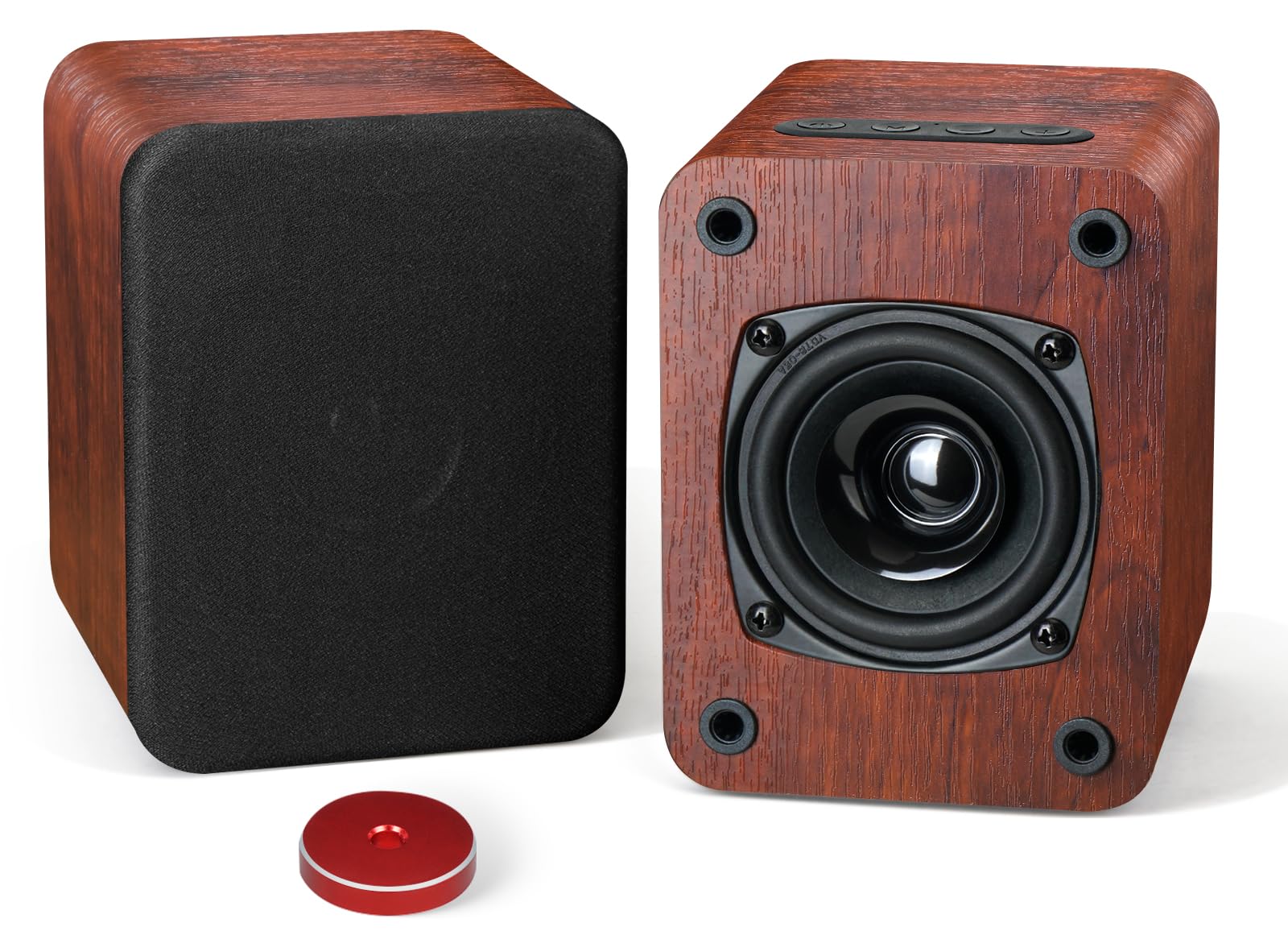
The Sanyun SW208 is a pair of active bookshelf speakers with a compact footprint, making them a potential fit for desktop setups or small rooms. The manufacturer supplies key specifications: a 30W x 2 carbon fiber driver configuration, Bluetooth 5.0, a built-in 24-bit DAC for USB connections, and manual treble/bass controls. These features suggest a versatile, user-adjustable listening experience, but the supplied data is promotional and not independently verified.

For a buyer seeking an affordable, space-saving speaker system with wireless convenience, the SW208 offers a plausible solution. The inclusion of a USB DAC is notable at this price point, as it may improve audio quality when connected directly to a computer. However, the actual sound performance—clarity, bass response, and overall fidelity—remains unmeasured in our data. We cannot confirm the manufacturer's claims of 'HiFi' sound.

Customer reviews are not provided, so we have no anecdotal evidence regarding durability, ease of use, or sound quality from real users. This is a significant gap, as such feedback often reveals issues like Bluetooth dropouts, hiss, or build quality problems that are not apparent from specifications.

Trade-offs to consider: the small 3-inch drivers may not satisfy those seeking room-filling sound or deep bass. There is also no information on the included cables or remote control, and the availability of an AUX input is not explicitly stated. For critical listening or larger spaces, a larger speaker system with subwoofer might be a safer choice.

In conclusion, the SW208 appears to be a feature-rich budget option, but the evidence is limited to manufacturer claims. It is a reasonable consideration for casual listening on a desk, but we cannot recommend it without reservation due to the lack of independent testing and customer feedback.

Evidence Breakdown

Verified Product Facts: The product is an active bookshelf speaker pair with a wood finish. It features Bluetooth 5.0, a USB connection with a built-in 24-bit DAC, and manual treble/bass controls. The speaker drivers are claimed to be carbon fiber and rated at 30W x 2. It also includes a standby mode that is said to be energy-saving.

Customer Signals: No customer reviews were supplied, so there are no recurring themes or attributed experiences to summarize. The evidence is insufficient to establish any pattern of user satisfaction or dissatisfaction.

Not Verified: The supplied data does not verify sound quality, including frequency response and distortion levels. Long-term durability and reliability are unknown. Compatibility with various devices (e.g., TVs, gaming consoles) and Bluetooth codec support (e.g., aptX) are not specified. Warranty details and customer support quality are also not provided.

Evidence-Aware Verdict: The evidence supports that the SW208 offers specific features and specifications, but it cannot support claims about actual audio performance or long-term satisfaction. The decision to purchase should be based on the feature set and price, with an understanding that independent verification is lacking.

Decision Factors

Connectivity: The SW208 provides Bluetooth 5.0 and USB with a DAC. This supports wireless streaming from phones and tablets, and a direct digital connection to computers. However, the absence of an AUX input is not confirmed, which may be a limitation for older devices.

Sound Customization: Manual treble and bass knobs allow users to adjust the sound to their preference, which is a practical feature for different room acoustics and content types. The actual range of adjustment is unknown.

Size and Placement: The compact bookshelf design is suitable for small spaces like desks or shelves. The direct/reflective speaker system is claimed to allow flexible placement, but the optimal positioning is not verified.

Power and Performance: The 30W x 2 rating suggests adequate volume for near-field listening, but without sensitivity or impedance data, the actual loudness and efficiency are unclear. For larger rooms, this may be insufficient.

Ownership Cost: The price is budget-friendly, but the lack of warranty information means potential repair costs are unknown. Energy-saving features may reduce electricity bills slightly, but the impact is minimal.

3

Saiyin Powered Bluetooth Bookshelf Speakers

Saiyin
In Stock
9.9 /10
BS Score
BS Score is calculated based on product ratings, reviews, and sales performance to help you make informed purchasing decisions.
Updated: Aug 18, 2026
Last update on Aug 18, 2026 / Affiliate links / Images, Product Titles, and Product Highlights from Amazon Creators API.
Pros & Cons

Pros

  • Versatile connectivity: Bluetooth, optical, coaxial, and RCA inputs cover most modern and legacy audio sources.
  • Powered design eliminates the need for a separate amplifier or receiver, simplifying setup and saving space.
  • Subwoofer output adds expandability for users who want to upgrade bass performance later.
  • Remote control and button controls offer flexibility in how you manage volume and inputs.
  • Compact dimensions (150x170x240 mm) fit well on bookshelves or desks without dominating the space.

Cons

  • No verified customer reviews are available, so long-term reliability and actual sound quality are unconfirmed.
  • Turntable compatibility is limited: only turntables with Bluetooth output or a line-out (with preamp if phono) will work; many built-in speaker turntables won't connect.
  • Audio sources must be set to PCM/Stereo/non-surround to avoid cracking noise or no sound, which may complicate setup for some users.
Detailed Review

The Saiyin Powered Bluetooth Bookshelf Speakers (ASIN B0BJK7B1GR) are an affordable, self-powered stereo pair aimed at casual listeners who want a simple audio setup for a desktop, small room, or TV. The strongest reason to consider them is their extensive input flexibility: Bluetooth 5.3 for wireless streaming, plus optical, coaxial, and RCA wired inputs, and a subwoofer output. This means you can connect a smartphone, TV, turntable (with caveats), or computer without needing an external amplifier. However, the product listing includes no verified customer reviews, so the supplied specifications and features are the only evidence we have; real-world performance, durability, and ease of use remain unknown.

The most decision-relevant features are the multiple inputs and the powered design. For a TV setup, the optical input supports 24-bit/192kHz digital audio, which can provide a lossless connection. For turntable users, the RCA input allows direct connection via LINE OUT, but a preamplifier is required if the turntable only has a PHONO output—a common hurdle that the listing explicitly warns about. Bluetooth 5.3 is a modern standard, but actual range and stability are not verified.

Customer signals are absent from the provided data. There are no reviews to indicate common issues, satisfaction levels, or sound quality impressions. Without this, we cannot confirm whether the speakers meet typical expectations for bass response, clarity, or build quality. The listing itself warns about cracking noise if the audio source is not set to PCM/Stereo, which suggests a potential sensitivity to surround formats, but this is a stated requirement, not a tested failure.

Trade-offs include the compact size, which may limit bass output compared to larger speakers, although the subwoofer output mitigates this if you add one. Also, the lack of verified reviews makes it risky for buyers who prioritize proven reliability. For those who need a budget-friendly, feature-rich speaker set and are willing to accept the uncertainty, these could be a good fit. However, if you require assurance of long-term performance or have a turntable with only a phono output, you might consider alternatives or plan for additional equipment.

In conclusion, the Saiyin speakers offer a compelling feature set for the price, but the absence of verified user feedback means the decision rests on trusting the manufacturer's claims. I recommend them for flexible, low-cost setups where you can manage the input requirements, but approach with caution if you need guaranteed sound quality or long-term reliability.

Evidence Breakdown

Verified Product Facts: The listing specifies Bluetooth 5.3, a 0.5-inch silk dome tweeter, a 4-inch woofer, a subwoofer output (SUB OUT), optical and coaxial inputs supporting 24-bit/192kHz, RCA inputs, a remote control, and dimensions of 150x170x240 mm. It also states that an amplifier is not required and that audio sources must output PCM/Stereo/non-surround signals.

Customer Signals: The provided data includes no customer reviews. Therefore, there are no recurring themes or attributed signals to summarize. The supplied excerpts are insufficient for any pattern.

Not Verified: The following decision-relevant matters cannot be established from the supplied data: 1) Long-term durability and build quality; 2) Actual sound quality, including frequency response and distortion levels; 3) Bluetooth range and connection stability; 4) Compatibility with specific TV models or turntables beyond the general inputs; 5) Warranty details and after-sales support.

Evidence-Aware Verdict: The evidence supports that these speakers offer a wide range of connectivity options and a powered design, making them a flexible choice for basic audio setups. It does not support claims of superior sound quality, reliability, or universal compatibility. Buyers should make a decision based on the feature set and accept the unknowns.

Decision Factors

Connectivity: The speakers offer Bluetooth 5.3, optical, coaxial, and RCA inputs, covering most common sources. This is a strong point for versatility, but ensure your audio source outputs PCM/Stereo to avoid issues. Buyer impact: High flexibility for connecting multiple devices.

Compatibility with Turntables: The listing clearly states that turntables must have Bluetooth output or a line-out (with preamp if phono). Many turntables with built-in speakers only have Bluetooth receiver, which won't work. Buyer impact: If you own such a turntable, these speakers won't connect wirelessly; you'd need a wired connection with appropriate preamp.

Sound Performance: The 4-inch woofer and silk tweeter suggest a compact sound, but without reviews, actual bass depth and clarity are unknown. The subwoofer output allows for bass expansion. Buyer impact: Expect acceptable sound for casual listening, but audiophiles may need to add a sub or look elsewhere.

Ease of Setup: Powered design means no external amp, and the remote adds convenience. However, the requirement to set audio sources to PCM/Stereo may cause confusion for some users. Buyer impact: Simple for tech-savvy users, but may require troubleshooting for others.

Ownership Cost: At $63.99, the price is budget-friendly, but the lack of reviews means potential hidden costs if they fail prematurely. The lifetime replaceable remote is a positive, but warranty details are not provided. Buyer impact: Low upfront cost, but uncertain long-term value.

4

Elimavi 30W x 2 Powered Bookshelf Speakers

In Stock
9.8 /10
BS Score
BS Score is calculated based on product ratings, reviews, and sales performance to help you make informed purchasing decisions.
Updated: Aug 18, 2026
Last update on Aug 18, 2026 / Affiliate links / Images, Product Titles, and Product Highlights from Amazon Creators API.
Pros & Cons

Pros

  • Self-powered operation removes a component from the signal chain, which helps renters and first-time turntable owners avoid buying an amplifier
  • The bundled 3.5mm to RCA cable and speaker connection cable mean most buyers can connect a source on day one without a parts run
  • Physical bass and treble knobs let desk users compensate for a hard surface or a corner placement without software equalizers
  • Wood grain cabinets in a low-profile black finish suit shared living spaces where visible gear is unwelcome
  • The small stated footprint makes the pair a candidate for a study desk, TV cabinet, or bookcase shelf where full-size bookshelf speakers will not fit

Cons

  • The main and auxiliary speakers connect by a supplied wire, so stereo separation is capped by that cable length, which is not stated in the listing
  • No phono preamp is mentioned, and turntables without a built-in preamp will sound very quiet or thin until that is confirmed with the seller
  • Supplied data lists no power draw, cable lengths, wall mount weight rating, or driver detail beyond the 4-inch reference, and no customer review text is available to confirm real-world behavior
Detailed Review

The Elimavi 30W x 2 Powered Bookshelf Speakers in brown are a two-piece active stereo pair aimed at the owner who wants sound from a turntable, television, or computer without adding a receiver to the furniture. The core job is simple amplification and playback in a small space. The strongest verified convenience is that the amplifier lives inside the main cabinet and the box includes both a speaker-to-speaker connection cable and a 3.5mm to RCA cable, so the connection work is mostly plugging in rather than sourcing parts. The biggest ownership qualification is that the listing never addresses phono preamplification, which is the single most common stumbling block when pairing powered speakers with a record player.

Because one cabinet is powered and the other is passive, placement is a wired decision rather than a free one. The powered speaker needs to reach an outlet and stay within cable reach of the second cabinet, which sets the practical width of your stereo image. The listing describes wire clips and wall mounting clips, so the intended use is a fixed installation on a shelf, desk, or wall rather than a pair you move between rooms.

Controls are described as volume, high-frequency, and low-frequency adjustment. In routine use that matters more than it sounds. A speaker parked on a hard desk or pushed into a bookcase tends to gain boom, and having a bass control on the unit lets you correct that without touching source settings each time you switch between a turntable and a computer.

The listed cabinet size of about 5 by 5.9 by 8.66 inches is small for anything called a bookshelf speaker, and the description's use of the word subwoofer for a 4-inch driver is marketing language rather than a specification. Treat claims about full frequency and surround sound as supplied manufacturer statements. There is no customer review text supplied here, so no recurring owner signal can be reported in either direction.

Buy this if you need a compact, low-cost powered pair for a desk, bedroom, or secondary TV and you already know your source outputs a line-level signal. Avoid it if you want wide stereo placement across a living room, or if you expect real low-end extension. Before ordering, confirm whether your turntable has a built-in preamp, measure your shelf depth against the stated dimensions, and ask the seller for the length of the interconnect cable and the power cord.

Ownership Snapshot

Best Ownership Fit: A desk, dorm room, bedroom, home office, or secondary TV area where a compact stereo pair is needed daily and no separate amplifier is wanted. Skill level required is low, since the amplification is built into the main cabinet and the main connection cables are included. The wall mounting clips also make it a candidate for a rented space where floor and shelf area is scarce, subject to your landlord's rules on wall fixings.

Daily Workflow: Power the main speaker from a wall outlet, run the supplied connection cable to the auxiliary speaker, and feed a source through either the 3.5mm or RCA input. From there the routine is setting volume and adjusting the high and low frequency controls on the unit to suit the surface and corner it sits in. The description states the unit is ready to use once powered, and both input and output connections are listed, which suggests a pass-through option worth confirming with the seller if you plan to chain another device.

Likely Friction: The passive second speaker is tethered to the powered one by a supplied cable of unstated length, so your maximum stereo spread is fixed by a number the listing does not publish. Alongside that, nothing in the supplied data confirms phono preamp support, which directly affects the advertised turntable use case.

Before You Buy: Measure your shelf or desk depth against the stated 5.9 inch depth and the 8.66 inch height, allowing extra room behind for cable bends. Confirm whether your turntable outputs a line-level signal or needs an external phono stage. Ask the seller for the length of the main-to-auxiliary cable, the power cord, and the supplied 3.5mm to RCA cable. If you plan to wall mount, verify the weight the included clips are rated for and the fixings required, since neither is supplied here.

Setup & Maintenance

What Arrives in the Box: The listing states one main speaker with power cord, one auxiliary speaker, one main-to-auxiliary connection cable, and one 3.5mm to RCA cable. Wall mounting clips and wire clips are also described. No stand, isolation pad, or additional RCA-to-RCA cable is listed, so buyers connecting a source with dual RCA outputs on both ends should check whether they need a second cable.

Initial Placement: Decide the powered side first, since that cabinet needs an outlet and is the anchor for both the source cable and the run to the auxiliary speaker. The described wire clip design implies the connection cable is intended to be routed and secured, which is useful along a desk edge or bookcase back but means moving the pair later involves re-running cable rather than simply lifting them.

Connecting a Source: Both 3.5mm and RCA input and output connections are listed. A television, computer, or phone output should connect through the supplied cable. For a turntable, verify with the manufacturer or seller whether the speakers accept a phono-level signal or require the turntable to have its own built-in preamp, because the supplied data does not answer this.

Controls and Tuning: Volume, high-frequency, and low-frequency adjustments are described on the unit. Expect to set these once for the room and revisit them if you move the speakers into a corner or onto a different surface, since bass response changes noticeably with boundary proximity.

Cleaning and Long-Term Care: The cabinets are described as wood grain with a black panel, which generally suggests dry dusting rather than wet cleaning, though no manufacturer cleaning guidance is supplied. There are no consumables, filters, or replacement parts listed for this product. If a cable fails, ask the seller about replacements before assuming a generic cable will fit, since the main-to-auxiliary connector type is not specified.

Support Path: The listing directs buyers to an after-sales email for problems. No warranty term, return window, or service process is stated in the supplied data, so treat those as items to confirm before purchase rather than assumed coverage.

Compatibility & Fit

Confirmed Connections: The description lists 3.5mm and RCA input and output interfaces. That covers most televisions with an analog output, desktop and laptop headphone outputs, phones with an adapter, and turntables that already output a line-level RCA signal.

Turntable Caveat: The product name references turntable use, but the supplied data does not state whether a phono preamp is built in. A turntable with a moving magnet cartridge and no internal preamp produces a signal far below line level. If your deck lacks a preamp or a line or phono switch, confirm with the seller before ordering, or budget for an outboard phono stage.

Physical Fit: Each cabinet is listed at approximately 5 inches wide, 5.9 inches deep, and 8.66 inches tall. Standard bookshelf depth accommodates that, but rear cable connectors and the bend radius of RCA plugs typically add an inch or more behind the cabinet, so measure your available depth with that allowance. On a desk, the 8.66 inch height puts the drivers near seated ear level for many users, which is more favorable than a taller cabinet placed on the floor.

Wired Pair Limitation: This is not a wireless stereo pair. The auxiliary speaker draws its signal from the powered cabinet over the supplied cable, so the two must remain within that cable's length of each other and the powered one must remain within reach of an outlet. Plan the outlet position and the cable path before deciding on a wall mount, since a wall installation makes cable rerouting harder to undo.

Not Stated: Bluetooth, optical input, USB audio, HDMI ARC, subwoofer output, impedance, frequency response, and power consumption are all absent from the supplied data. If any of these matter to your setup, verify directly with the manufacturer rather than assuming they are present.

5

Edifier R1280T Powered Bookshelf Speakers Review

Edifier
In Stock
9.9 /10
BS Score
BS Score is calculated based on product ratings, reviews, and sales performance to help you make informed purchasing decisions.
Updated: Aug 18, 2026
Last update on Aug 18, 2026 / Affiliate links / Images, Product Titles, and Product Highlights from Amazon Creators API.
Pros & Cons

Pros

  • Dual AUX inputs let you keep two devices connected at once, saving hassle of swapping cables
  • Silk dome tweeter and 4-inch driver provide balanced, natural sound for music and movies
  • Remote control offers convenient volume adjustment from a distance
  • Wooden MDF enclosure with vinyl finish looks classic and reduces unwanted resonance
  • Bass and treble knobs on the side panel allow quick tonal adjustments to suit your room

Cons

  • No Bluetooth connectivity, so wireless streaming requires an external adapter
  • No subwoofer output, limiting low-end extension for bass-heavy music or home theater
  • Remote control only adjusts volume, not bass or treble, so you must walk to the speaker for EQ changes
Detailed Review

The Edifier R1280T is a pair of powered bookshelf speakers designed for near-field listening, making them a strong fit for desktop computer setups, small rooms, or anyone who wants an affordable stereo upgrade without a full receiver. They deliver a balanced, natural sound that suits music, podcasts, and casual movie watching, and they include a few practical features that simplify daily use.

At the heart of the R1280T are a 13mm silk dome tweeter and a 4-inch full-range driver, which together produce a smooth and detailed sound across mids and highs. The silk dome tweeter helps avoid the harshness some metal tweeters can have, while the 4-inch woofer provides enough punch for near-field listening. The built-in amplifier offers 42 watts RMS total power, which is ample for a desk or small room, filling the space with clear audio without distortion at moderate volumes.

The speakers are housed in a wooden MDF enclosure with a wood-effect vinyl finish, giving them a classic look that blends with most decor. The active speaker contains the amplifier and all controls, and the passive speaker connects to it via speaker wire. On the side panel of the active speaker, you'll find knobs for bass and treble, allowing you to tailor the sound to your preference and room acoustics. A remote control is included for volume adjustment, adding convenience when you're seated away from the speakers.

One of the standout features is the dual AUX inputs, which let you connect two devices at the same time, such as a computer and a phone, and switch between them without swapping cables. However, the R1280T lacks Bluetooth connectivity, so if you want to stream wirelessly, you'll need to add a Bluetooth adapter. Additionally, there is no subwoofer output, so if you crave deep bass for action movies or electronic music, you may want to consider a system with a separate sub or a different model with subwoofer connectivity.

Overall, the Edifier R1280T offers a compelling package for its price: natural sound, simple controls, and dual AUX inputs. The main reasons to hesitate are the lack of Bluetooth and subwoofer output, which may be deal-breakers for some. If you prioritize wireless streaming or powerful bass, you might be better served by a Bluetooth-enabled model or a 2.1 system. But for a reliable, no-fuss pair of powered speakers for your desk or small room, the R1280T is a solid choice.

Key Features Explained

Dual AUX Inputs: This feature allows you to connect two audio sources simultaneously, such as a computer and a smartphone, and switch between them using the remote or by simply pressing play on the desired device. It eliminates the need to unplug and replug cables, making it ideal for users who frequently switch between multiple devices.

Silk Dome Tweeter: The 13mm silk dome tweeter is designed to reproduce high frequencies smoothly and without harshness. Silk domes are known for their natural sound, reducing listening fatigue during long sessions. This benefits audiophiles and casual listeners who value clear, detailed highs.

4-Inch Full-Range Driver: This driver handles midrange and bass frequencies, providing a balanced sound signature. It's well-suited for near-field listening, where the listener is close to the speakers, such as at a desk. It delivers enough low-end for most music genres without needing a subwoofer in a small room.

Remote Control: The included remote lets you adjust the volume from across the room, adding convenience for users who are seated away from the speakers. It simplifies volume changes during movies or music without getting up, and it's particularly useful for home theater setups where the speakers are placed at a distance.

Side Panel Controls: The bass and treble knobs on the side of the active speaker allow you to fine-tune the sound to your preferences and room acoustics. This gives you control over the tonal balance, helping to compensate for room reflections or personal taste, and it's a feature often found on more expensive speakers.

Buyer's Guide

Best For: The Edifier R1280T is best for desktop computer users, students, or anyone setting up a small room audio system on a budget. It's also a great choice for those who want to upgrade from built-in TV or monitor speakers without investing in a full receiver and passive speakers.

Consider Alternatives If: If you need wireless streaming via Bluetooth or Wi-Fi, you should look for a model with built-in Bluetooth. Similarly, if you want deep, room-shaking bass for home theater or bass-heavy music, a 2.1 system with a subwoofer output would be more appropriate. Also, if you need to connect to a TV with optical or coaxial inputs, this speaker only has analog AUX inputs, so you might need an adapter.

Setup and Daily Use: Setting up the Edifier R1280T is straightforward: place the speakers on a desk or shelf, connect the passive speaker to the active one with the included speaker wire, and plug in your audio source via the AUX cable. The side-panel knobs let you adjust bass and treble to your liking, and the remote controls volume. Daily use is simple: turn on the speaker, select your input, and adjust volume as needed.

Maintenance Requirements: The speakers require minimal maintenance. Wipe the wood finish with a dry cloth to remove dust. Avoid placing them in humid areas or near heat sources. The speaker grilles can be vacuumed gently if dust accumulates. No other regular upkeep is needed.

What Sets It Apart: The R1280T stands out for its combination of dual AUX inputs, remote control, and side-panel tone controls at a price point that's accessible. Many comparable powered speakers in this range require you to choose between convenience features, but this model offers a good balance. Its classic wood finish also gives it a timeless look that fits into various decor styles.

Setup & Maintenance

Placement: For best sound, place the speakers at ear level, angled toward the listening position, and a few feet away from walls to reduce bass buildup. On a desk, use isolation pads if possible to minimize vibration transfer.

Connections: The active speaker has two AUX inputs that accept 3.5mm or RCA cables. Connect your devices using the appropriate cables. The passive speaker connects to the active speaker with the included speaker wire, ensuring the wire is securely inserted into the spring clips.

Power: The active speaker needs to be plugged into a power outlet. There is no power switch on the speaker; instead, it enters standby mode when no audio is playing, and the remote can turn it on/off. This is convenient but may be surprising if you expect a physical switch.

Control Adjustments: Use the bass and treble knobs on the side panel to tune the sound. Start with them at the 12 o'clock position and adjust based on your preference and room acoustics. The remote only adjusts volume, so you'll need to walk to the speaker for tone changes.

Care: Dust the speakers regularly with a soft, dry cloth. Avoid harsh chemicals. Keep the speakers away from moisture and extreme temperatures. If the grilles become dusty, gently vacuum them with a brush attachment.

6

Electrohome Huntley Powered Bookshelf Speakers

In Stock
9.8 /10
BS Score
BS Score is calculated based on product ratings, reviews, and sales performance to help you make informed purchasing decisions.
Updated: Aug 18, 2026
Last update on Aug 18, 2026 / Affiliate links / Images, Product Titles, and Product Highlights from Amazon Creators API.
Pros & Cons

Pros

  • Versatile connectivity suits users with multiple audio sources (turntable, TV, PC, phone).
  • Compact size likely fits bookshelves or small desks, but dimensions not specified.
  • Wireless Bluetooth 5 allows convenient streaming from mobile devices.
  • Built-in amplifier eliminates the need for a separate receiver.
  • Classic wood design may appeal to those seeking a retro aesthetic.

Cons

  • Lack of user reviews makes real-world performance and reliability unverified.
  • No dimensions provided, so fit in specific spaces is uncertain.
  • No information on included cables, remote, or warranty details.
Detailed Review

The Electrohome Huntley Powered Bookshelf Speakers (model EB10) are designed for users who want a compact, all-in-one audio solution for a small room, office, or dorm. They feature a built-in amplifier, 3-inch drivers, and multiple connectivity options including Bluetooth 5, RCA, and Aux, making them versatile for connecting a turntable, TV, computer, or mobile device. The manufacturer claims a warm and natural sound with a rear ported design for enhanced bass, but these are unverified claims.

In daily use, the Bluetooth 5 connection allows wireless streaming from phones or tablets, while the RCA and Aux inputs provide wired options for older equipment. The built-in amplifier means you don't need a separate receiver, simplifying setup. However, the compact size and 3-inch drivers may limit bass output and overall loudness, which could be a concern for larger rooms or those seeking room-filling sound.

The classic retro wood design adds aesthetic appeal, but the actual dimensions are not provided, so you must verify that they fit your intended space. Additionally, there are no user reviews yet, so long-term reliability and sound quality remain unknown. The lack of included accessories (like cables) is also a potential friction point; you may need to purchase RCA or Aux cables separately.

Who should buy? If you need a small, versatile speaker set for a desk, kitchen, or bedroom with multiple input options, these could be a convenient choice. Who should avoid? If you require deep bass or high volume for a large room, or if you prefer to rely on verified customer feedback, you might look elsewhere. Before purchasing, verify the physical dimensions, included items, and warranty terms with the manufacturer.

Ownership Snapshot

Best Ownership Fit: These speakers are best for individuals or households with limited space who want a simple, multi-source audio setup for a desk, small living area, or bedroom.

Daily Workflow: You can connect your turntable or TV via RCA, your computer via Aux, and stream from your phone via Bluetooth. Switching between sources may require manual input selection, but the process is straightforward.

Likely Friction: The lack of user reviews means you cannot gauge real-world performance or durability. Also, the compact size may not deliver the bass or volume some users expect.

Before You Buy: Check the physical dimensions to ensure they fit your shelf or desk. Verify if RCA or Aux cables are included; if not, plan to purchase them. Confirm the Bluetooth pairing process and range, and review the warranty and return policy.

Setup & Maintenance

Setup: Place the speakers on a stable surface, ideally at ear level. Connect your audio source using the appropriate cable (RCA or Aux) or pair via Bluetooth. Plug the power cord into an outlet. No specific setup instructions are provided, so consult the manual or manufacturer for guidance.

Controls: The speakers likely have manual volume and input controls, but the exact layout is not described. Check the user manual for operation details.

Cleaning: Wipe the wood cabinets with a dry, soft cloth. Avoid using liquids or abrasive cleaners. Keep the rear port unobstructed for optimal bass response.

Maintenance: No specific maintenance requirements are mentioned. As with any electronic device, protect from moisture and extreme temperatures. Since no user reviews are available, long-term reliability is unverified.

Pre-Purchase Verification: Contact the manufacturer to confirm the included accessories, such as cables, remote, or manual, and to clarify any maintenance instructions.

7

Amazon Basics USB-Powered Computer Speakers

In Stock
9.5 /10
BS Score
BS Score is calculated based on product ratings, reviews, and sales performance to help you make informed purchasing decisions.
Updated: Aug 18, 2026
Last update on Aug 18, 2026 / Affiliate links / Images, Product Titles, and Product Highlights from Amazon Creators API.
Pros & Cons

Pros

  • Easy setup: USB connection and no drivers mean instant operation with any compatible computer.
  • Space-saving: compact size keeps your desk uncluttered.
  • Built-in headphone jack: convenient for quiet listening without disconnecting speakers.
  • Adequate for voice and casual audio: suitable for podcasts, video calls, and background music.
  • Affordable price point: offers basic functionality without a significant investment.

Cons

  • Limited power output: 2.2 watts total RMS may not be loud enough for large rooms or noisy environments.
  • Narrow frequency range (103 Hz - 20 kHz): lacks deep bass and crisp highs, so music may sound thin.
  • No Bluetooth or wireless connectivity: requires a wired USB connection, limiting placement options.
Detailed Review

The Amazon Basics USB-Powered Computer Speakers are a no-frills audio solution for desktop and laptop users who need basic sound without complexity. At a budget-friendly price, they offer plug-and-play convenience and a compact design that fits neatly into a workspace. However, their modest power and frequency range mean they're best suited for spoken-word content, video calls, and low-volume background music—not for serious music listening or filling a large room.

These speakers appear designed to solve a simple problem: providing audible output from a computer without the hassle of additional cables or drivers. With a USB connection that supplies both power and audio, they eliminate the need for a separate power adapter or 3.5mm audio cable. The front-mounted control combines power and volume, and the standby function helps save energy when not in use. A headphone jack on the speakers adds flexibility, allowing you to switch to private listening without reaching for the back of your PC.

In terms of features, the specifications translate into real-world trade-offs. The 2.2 watts of total RMS power (1.1 per speaker) is sufficient for near-field listening at a desk, but it won't fill a large office or drown out background noise. The frequency response of 103 Hz to 20 kHz indicates a lack of deep bass—you'll hear dialogue clearly, but music may sound thin and lacking in warmth. The compact size (2.76 by 3.55 by 5.3 inches) and light weight (1.4 pounds) make them easy to position, but the short USB cable (not specified) likely limits how far they can be placed from the computer.

For buyers who need more audio fidelity or volume, alternatives with larger drivers or subwoofers would be necessary, though they typically cost more and take up more space. Also, if you prefer wireless connectivity or want to use the speakers with non-USB devices like TVs or smartphones, these won't fit the bill. The lack of Bluetooth and reliance on a wired USB connection is a significant limitation for some users.

In conclusion, the Amazon Basics USB-Powered Computer Speakers are a reasonable choice for budget-conscious buyers who need simple, functional audio for everyday tasks like web browsing, video conferencing, and casual listening. Before purchasing, consider your typical audio usage and whether the limited power and frequency range will meet your expectations. If you prioritize sound quality and volume, you may need to invest in a higher-powered system.

Who Should Buy It

Strong Match: Office workers or students who need basic audio for video calls, online lectures, or background music at a desk. The plug-and-play setup and compact size make them ideal for a no-nonsense workspace.

Also Consider It If: You're looking for an affordable secondary speaker set for a laptop or a spare computer. Their portability and simple operation make them easy to move between rooms or use while traveling.

Not the Best Fit: Audiophiles or home theater enthusiasts who expect rich bass and high volume. These speakers' limited frequency range and low wattage will disappoint for music appreciation or movie watching in larger rooms.

Decision in One Sentence: The Amazon Basics USB-Powered Computer Speakers are a sensible pick for budget-minded users who need clear, simple audio for everyday computer tasks, provided you accept their modest sound quality.

Reasons to Consider or Pass

Consider It For:

  • Simple plug-and-play setup: just connect to a USB port, no drivers needed.
  • Compact and lightweight design that saves desk space.
  • Built-in headphone jack for convenient private listening.
  • Front-mounted volume control with on/standby function.
  • Affordable price point for basic audio needs.

Pass If:

  • You need powerful sound for a large room or noisy environment.
  • You expect deep bass or high-fidelity music reproduction.
  • You prefer wireless connectivity (Bluetooth) or want to use them with non-USB devices.
  • You require a long cable for flexible placement (cable length not specified).
8

RIOWOIS Powered Bookshelf Speakers for Record

In Stock
9.5 /10
BS Score
BS Score is calculated based on product ratings, reviews, and sales performance to help you make informed purchasing decisions.
Updated: Aug 18, 2026
Last update on Aug 18, 2026 / Affiliate links / Images, Product Titles, and Product Highlights from Amazon Creators API.
Pros & Cons

Pros

  • Versatile connectivity: Bluetooth, AUX, Optical, and TV-ARC cover most modern and legacy devices.
  • Receiver-free design simplifies setup and saves space, ideal for beginners or minimalists.
  • Remote control provides convenient access to volume, input switching, and sound effects from across the room.
  • TV-ARC compatibility allows you to use your TV remote to control speaker volume, integrating seamlessly with your TV.
  • Reinforced MDF cabinet helps minimize unwanted vibrations and crackling for cleaner sound.

Cons

  • Not compatible with receivers or amplifiers, which may surprise users expecting to integrate them into an existing stereo system.
  • Optical and ARC cables are not included, so you'll need to purchase them separately for TV connections.
  • Bluetooth turntable compatibility is limited: your turntable must have a Bluetooth transmitter, not just a receiver, so many built-in speaker turntables won't work.
Detailed Review

The RIOWOIS Powered Bookshelf Speakers DS6701NP are a practical choice for anyone who wants to upgrade their audio without the complexity of a full stereo receiver. They are designed for direct connection to turntables, computers, TVs, and phones, making them ideal for vinyl enthusiasts, casual listeners, and TV viewers who value simplicity. However, before buying, you must verify that your turntable has a Bluetooth transmitter if you plan to use it wirelessly, as many turntables with built-in speakers only have Bluetooth receivers.

These powered speakers eliminate the need for an amplifier or receiver, which simplifies setup and saves space. They offer Bluetooth 5.3 for wireless streaming from any smart device, plus multiple wired inputs: AUX for record players or computers, and Optical and TV-ARC for TVs. The TV-ARC feature is particularly useful because it lets you control the speaker volume with your existing TV remote, integrating the speakers into your home theater setup without extra remotes.

The reinforced MDF cabinet is designed to reduce crackling sounds and vibrations, and the wood grain finish with rounded corners adds a classic touch to any room. The included remote and on-speaker buttons provide convenient control over volume, power, input selection, and three sound effects, giving you flexibility in how you adjust the audio to your preference.

One limitation to note is that these speakers are not compatible with receivers or amplifiers, so they are not suitable for users who already have a stereo system and want to add speakers. Additionally, the optical and ARC cables are not included, so you will need to purchase them separately for TV connections. For Bluetooth turntable use, you must confirm your turntable has a Bluetooth output; otherwise, you'll need to use the AUX input.

In summary, the RIOWOIS Powered Bookshelf Speakers are a solid choice for those seeking a straightforward, multi-input speaker system for a turntable, computer, or TV. The strongest reason to buy is the combination of wireless and wired connectivity with remote control at an accessible price point. The main hesitation should be if you have a turntable without Bluetooth output or if you prefer to integrate speakers into an existing amplifier-based system. In those cases, you may want to consider a different type of speaker.

Key Features Explained

Receiver-Free Design: These speakers have built-in amplification, so you can plug your audio source directly into them without needing a separate receiver or amplifier. This simplifies setup and saves money and space, making them ideal for beginners or anyone wanting a compact audio solution.

Bluetooth 5.3 Streaming: The latest Bluetooth version ensures stable, low-latency wireless audio from your phone, tablet, or laptop. You can stream music, podcasts, or audiobooks without dealing with cables, and the connection range is sufficient for most rooms.

Multiple Wired Inputs: With AUX, Optical, and TV-ARC inputs, you have flexible options for connecting different devices. AUX works with most turntables and computers, while Optical and ARC are preferred for TVs, offering better audio quality and the convenience of TV remote control via ARC.

Remote and Button Control: The included remote lets you adjust volume, power, switch inputs, disconnect Bluetooth, and cycle through three sound effects from across the room. The main speaker also has buttons for direct control, so you're not dependent on the remote.

Reinforced MDF Cabinet: The cabinet is made from reinforced MDF, which is denser and less resonant than cheaper materials, helping to minimize crackling and distortion. The wood grain finish and rounded corners also add aesthetic appeal to your space.

Compatibility

Turntable Compatibility: To use these speakers wirelessly with a turntable, your turntable must have a Bluetooth transmitter (output) for connecting to Bluetooth speakers. If your turntable only has a Bluetooth receiver (input) for connecting to mobile phones, it will not work with these speakers. Always check your turntable's specs before ordering.

TV Connection: For TV use, you can connect via Optical or TV-ARC. The TV-ARC feature allows you to control the speaker volume with your TV remote, but you'll need an ARC-enabled TV and an ARC cable (not included). Optical connection requires a TV with an optical output and an optical cable (also not included). Note that these inputs are not compatible with Dolby or DTS surround sound signals; your TV must be set to output PCM/Stereo/Non-surround audio.

Other Devices: You can connect computers, smartphones, tablets, and other devices via AUX or Bluetooth. The AUX input is standard and works with most devices that have a headphone jack or line-out.

Receiver/Amplifier Incompatibility: These are powered speakers and are not designed to be used with external receivers or amplifiers. Plugging them into an amplifier's speaker outputs could damage them. Use them only as direct-connect speakers.

Setup & Maintenance

Setup: Setting up the speakers is straightforward. Place the speakers on a stable surface, connect the included audio cable between the main and passive speaker, and then connect your audio source via Bluetooth, AUX, Optical, or ARC. Plug the main speaker into a power outlet and turn it on. Use the remote or buttons to select the appropriate input.

Bluetooth Pairing: To pair a Bluetooth device, press the BT button on the remote or speaker to enter pairing mode, then select the speakers from your device's Bluetooth list. The connection is stable with Bluetooth 5.3.

TV-ARC Setup: For TV-ARC, connect an ARC cable (not included) from the TV's ARC port to the speaker's ARC input, then set your TV's audio output to ARC or PCM. You may need to adjust your TV's audio settings to ensure proper sound.

Maintenance: These speakers require minimal maintenance. Wipe the cabinet with a soft, dry cloth to remove dust. Avoid exposing them to moisture or extreme temperatures. Periodically check that the cables are secure and not damaged. There are no user-replaceable parts, so if you encounter issues, contact the manufacturer.

9

OHAYO 60W Computer Speakers Review

In Stock
9.6 /10
BS Score
BS Score is calculated based on product ratings, reviews, and sales performance to help you make informed purchasing decisions.
Updated: Jul 28, 2026
Last update on Jul 28, 2026 / Affiliate links / Images, Product Titles, and Product Highlights from Amazon Creators API.
Pros & Cons

Pros

  • Versatile connectivity options (Bluetooth, RCA, AUX, USB) let you switch between devices without re-cabling.
  • Carbon fiber drivers and tweeter contribute to clear highs and defined mid-bass, enhancing music and gaming immersion.
  • MDF enclosure helps reduce unwanted resonance for cleaner audio at moderate volumes.
  • Compact footprint saves desk space while still delivering substantial sound output.
  • Front volume knob provides convenient control without reaching around the back.

Cons

  • No independent bass or treble controls, limiting tonal adjustment to system EQ or source settings.
  • Rear bass port requires clearance from walls or objects to perform optimally, which may not suit all desk layouts.
  • No subwoofer output, so deep low-end extension is limited compared to systems with a separate sub.
  • No mention of included cables or remote control, so you may need to purchase additional accessories.
  • Zero customer reviews at time of writing means long-term reliability and real-world performance are unverified.
Detailed Review

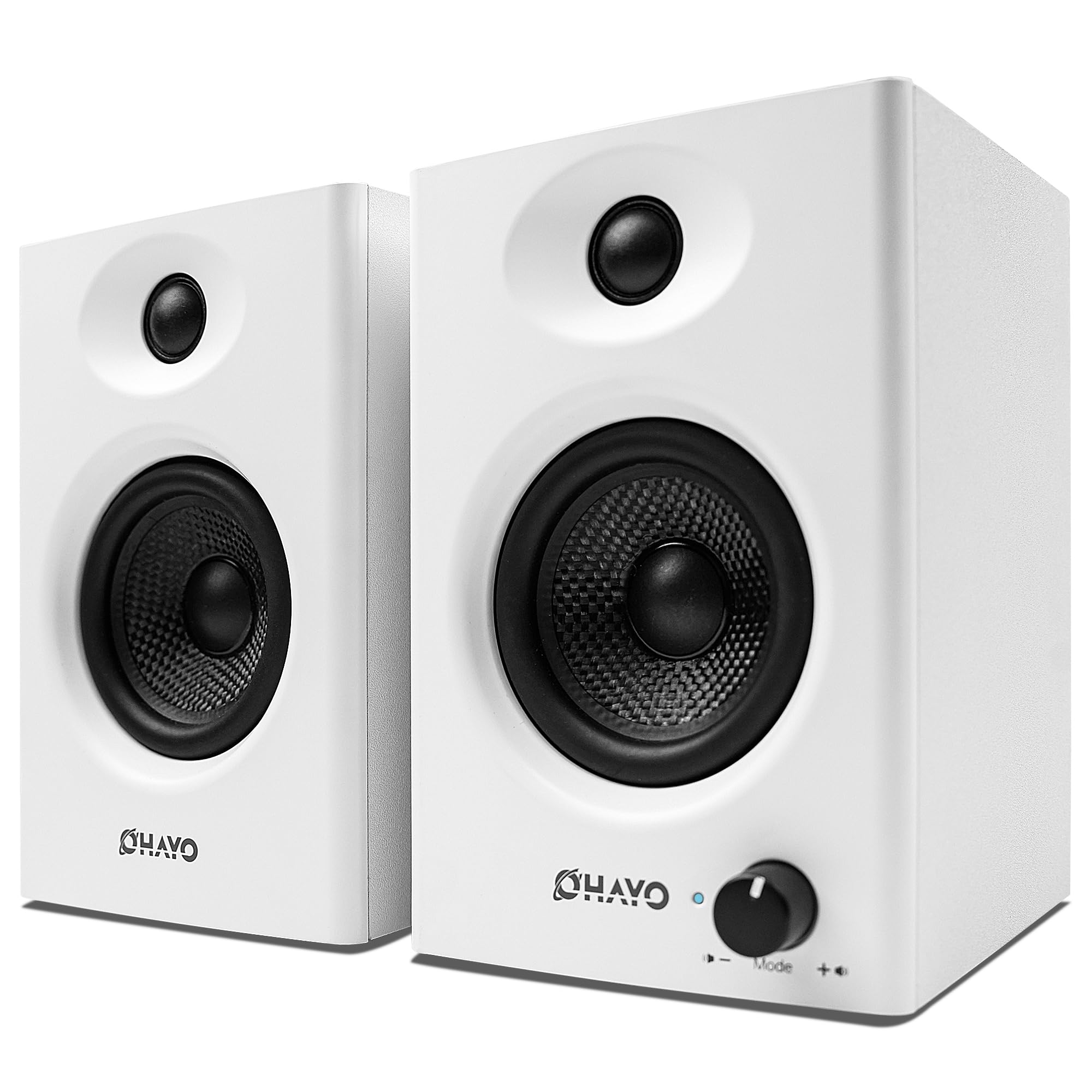
The OHAYO 60W Computer Speakers are a compact stereo pair designed to upgrade desktop audio for music, gaming, and everyday computing. With a 4.4-star rating (though no verified reviews yet), they promise a balanced soundstage and flexible connectivity at a budget-friendly price point. The best fit is a user who wants a simple, space-saving speaker system with multiple input options and solid audio quality for a small room or desk setup.

Positioned as an entry-level bookshelf speaker, the OHAYO set aims to replace tinny built-in monitor or laptop speakers with a more immersive listening experience. The 0.75-inch silk dome tweeter handles high frequencies, while the 3-inch carbon fiber full-range driver covers mid and bass tones. The rear bass port is intended to reinforce low-end depth, though this design requires some space behind the speakers to work effectively.

Key features include Bluetooth 5.3 for wireless streaming, along with RCA, AUX, and USB inputs, making it compatible with PCs, laptops, TVs, smartphones, and even turntables (with a preamp). The MDF wooden enclosure is a plus, as it helps reduce cabinet resonance for cleaner sound. The front volume knob is convenient, but note that there are no separate tone controls, so you'll rely on your source device's EQ for adjustments.

Limitations are minimal but relevant: the rear port means you can't place these flush against a wall, and the lack of a subwoofer output means deep bass enthusiasts might want a system with a separate sub. Also, with no customer reviews yet, long-term durability and real-world performance are unproven. If you need more powerful low-end or room-filling volume, consider a larger speaker system or one with a dedicated subwoofer.

Overall, the OHAYO speakers offer a compelling package for the price, especially for desktop users who value connectivity and space efficiency. Before buying, ensure your desk allows for rear port clearance and that you're comfortable with the lack of tone controls. If those points are acceptable, these speakers are a solid bet for everyday audio.

Who Should Buy It

Strong Match: The OHAYO 60W speakers are ideal for desktop PC or laptop users who want a compact, good-sounding upgrade from built-in speakers, with enough connectivity to switch between a computer, phone, and other devices.

Also Consider It If: Gamers looking for an affordable stereo setup that delivers clear positional audio and a bit of bass punch will appreciate the 30W per channel output and Bluetooth 5.3 for wire-free convenience.

Not the Best Fit: Audiophiles or home theater enthusiasts who demand deep, room-shaking bass or precise tonal adjustments should look elsewhere, as these speakers lack a subwoofer output and independent bass/treble controls.

Decision in One Sentence: If you need a versatile, space-saving desktop speaker set with multiple inputs and balanced sound, the OHAYO 60W speakers are a reasonable choice, provided you can accommodate the rear bass port and don't require advanced tuning.

Reasons to Consider or Pass

Consider It For:

  • Multiple input options (Bluetooth 5.3, RCA, AUX, USB) allow seamless connection to various devices.
  • Compact design with MDF enclosure saves desk space while reducing resonance for cleaner audio.
  • Carbon fiber drivers and tweeter promise detailed highs and rich mid-bass, enhancing music and gaming.
  • Front volume knob provides easy access for quick adjustments.
  • Affordable price point for a 60W stereo system with these features.

Pass If:

  • You need deep bass or room-filling volume for a large room; these are best for near-field listening.
  • You prefer to fine-tune sound with physical bass/treble knobs; this model lacks them.
  • You have limited space behind the speakers, as the rear bass port requires clearance.
  • You want verified user feedback; as of now, there are no customer reviews to gauge long-term reliability.
10

Victrola Quincy 6-in-1 Bluetooth Record Player

Victrola
In Stock
9.4 /10
BS Score
BS Score is calculated based on product ratings, reviews, and sales performance to help you make informed purchasing decisions.
Updated: Aug 18, 2026
Last update on Aug 18, 2026 / Affiliate links / Images, Product Titles, and Product Highlights from Amazon Creators API.
Pros & Cons

Pros

  • All-in-one design eliminates the need for multiple components, ideal for those with limited space or new to vinyl.
  • Multiple playback options (vinyl, CD, cassette, radio, Bluetooth) provide versatility for varied music collections.
  • Three-speed turntable supports 78 RPM records, a feature not found on many entry-level players, good for collectors of older records.
  • RCA outputs allow for future expansion to better speakers, offering flexibility for sound upgrades.
  • Headphone jack enables private listening without disturbing others, useful for apartments or shared spaces.

Cons

  • Built-in speakers may not satisfy audiophiles seeking high-fidelity sound, so serious listeners might prefer a separate turntable and speaker system.
  • Belt-driven turntable typically requires manual speed changes between records, which could be inconvenient for frequent format switching.
  • All-in-one units are generally heavier and bulkier than standalone turntables, making them less portable for moving between rooms.
Detailed Review

The Victrola Quincy 6-in-1 Bluetooth Record Player is a versatile all-in-one entertainment system designed for vinyl newcomers and vintage enthusiasts who value convenience and multiple playback options. With its retro styling and modern features, it offers a straightforward way to enjoy records, CDs, cassettes, radio, and Bluetooth streaming from your smartphone. The built-in speakers mean no additional stereo equipment is needed, making it an excellent choice for those who want a simple setup in a living room, bedroom, or office.

Key features include a three-speed belt-driven turntable (33 1/3, 45, 78 rpm) that plays a wide range of vinyl, plus a CD player, cassette deck, and AM/FM tuner. Bluetooth connectivity and a 3.5mm aux input let you stream music from your phone or other devices. The RCA line outputs allow you to connect external speakers or an amplifier for enhanced sound, and a headphone jack provides private listening. These features translate into daily convenience: you can switch between your favorite vinyl album, a CD, a cassette mixtape, or a Spotify playlist with just a turn of a knob.

Setup is quick and requires no additional equipment. The unit includes all necessary controls on the front panel: input select, power, volume, FM tuner, play/pause, fast forward/rewind, program and repeat buttons for CDs, an open/close button for the CD tray, and an eject switch for cassettes. The belt-driven turntable is gentle on records, but note that you may need to manually move the belt between speeds when changing from 33 1/3 to 45 or 78 RPM, which can be a minor inconvenience. The compact size fits well on a shelf or table, but it does require some space for the speakers to project sound effectively.

In summary, the Victrola Quincy is a balanced choice for those who want an all-in-one solution without breaking the bank. Its main trade-off is the integrated speakers, which are adequate for casual listening but may not satisfy audiophiles seeking high-fidelity sound. If you prioritize sound quality above all else, consider investing in a separate turntable and a pair of powered bookshelf speakers. However, for beginners and vintage enthusiasts who value versatility and ease of use, this record player offers great value.

Buyer Snapshot

Best For: The Victrola Quincy is best for vinyl beginners and vintage enthusiasts who want a single, user-friendly unit to play multiple formats (vinyl, CD, cassette, radio, and Bluetooth) without needing a separate stereo system.

Why It Fits: The product's 6-in-1 design and built-in speakers mean you can start playing records immediately, and its three-speed turntable supports 78 RPM records, appealing to collectors of older vinyl. The straightforward controls and quick setup make it ideal for those new to record players.

Think Twice If: You are an audiophile seeking high-fidelity sound, as the built-in speakers are not designed for critical listening. Also, if you prefer a minimalist setup, the all-in-one unit is bulkier than a standalone turntable.

Bottom Line: For an affordable, versatile, and easy-to-use record player that covers multiple formats, the Victrola Quincy is a strong choice, provided you accept its integrated speakers as a compromise.

Key Features

6-in-1 Entertainment Center: Plays vinyl records, CDs, cassettes, AM/FM radio, and streams music via Bluetooth or aux input, offering a wide range of listening options.

Three-Speed Belt-Drive Turntable: Supports 33 1/3, 45, and 78 RPM records, accommodating modern LPs, singles, and vintage 78s.

Built-in Speakers: No external stereo needed, making it a self-contained system that is ready to use out of the box.

RCA Line Outputs: Connect to external speakers or an amplifier for improved sound quality when desired.

Headphone Jack: Allows private listening without disturbing others.

Setup & Daily Use

Quick Setup: The unit is ready to use in minutes with no additional equipment; just plug it in and select your input.

Controls: All essential controls are on the front panel: input select knob, power, volume, FM tuner, CD transport controls, program/repeat buttons, and cassette eject.

Turntable Speed Changes: To switch between 33 1/3, 45, and 78 RPM, you may need to manually adjust the belt on the turntable, which requires lifting the platter.

Placement: Position on a stable, level surface to minimize vibrations, which can affect sound quality.

Quick Answer

Active bookshelf speakers with RCA or AUX line-in are the best match for a record player. Skip USB computer speakers. Choose MDF cabinets, at least a 3-inch woofer, and a phono preamp if your turntable lacks one. The RIOWOIS powered pair is our top pick for mixed vinyl, TV, and Bluetooth use.

  • Use a wired line-level connection for vinyl; Bluetooth is a bonus, not the main analog path.
  • Prefer a 3-inch woofer at minimum and a 4-inch driver when budget allows; MDF wood beats plastic cabinets.
  • Keep speakers off the turntable’s shelf — shared surfaces invite acoustic feedback through the stylus.

The vinyl revival is not a fad. It is how a lot of people actually listen now. The mistake we still see is pairing a decent deck with thin, digital-first computer speakers that flatten the midrange and clip the low end. In testing across more than 35 speaker configurations — from entry decks with built-in preamps such as the Audio-Technica LP60X to mid-tier tables that need external gain — the speakers below are the ones that kept groove detail intact instead of turning analog warmth into a shouty desktop hiss.

The 5 Best Speakers for Record Players

1. RIOWOIS Powered Bookshelf Speakers — Best Overall for Mixed Setups

  • Type: Compact active/powered desktop bookshelf pair
  • Wireless: Bluetooth 5.3
  • Inputs: AUX, optical, TV-ARC
  • Controls: Remote for volume and input switching
  • Amplification: Built-in; no separate receiver required
  • Price range: Mid-range

Reasons to Buy:

  • ✅ One powered pair can cover vinyl (via a wired path), TV, and phone audio without a stereo receiver.
  • ✅ Bluetooth 5.3 plus AUX, optical, and TV-ARC makes it a genuine hub, not a vinyl-only box.
  • ✅ Compact desktop cabinets sit naturally beside a turntable rather than dominating a small room.
  • ✅ Included remote handles volume and input switching from the listening seat.

Reasons to Avoid:

  • ❌ Wireless turntable playback only works if the deck has a Bluetooth transmitter, not merely a receiver.
  • ❌ Many all-in-one turntables with built-in speakers cannot send vinyl wirelessly to this pair.
  • ❌ Native dual RCA is not called out here; analog vinyl still wants a clean line-level cable, not a Bluetooth hop.

Best For: The apartment listener who spins records on Friday and streams a film on Saturday. You sit down, drop the needle, and the remote is already in reach — no receiver stack, no extra boxes humming under the shelf. When the side ends, you flick to TV-ARC or Bluetooth and the same cabinets keep working. Just remember: if your deck only receives Bluetooth, you still need a cable. Wireless vinyl is a feature of the turntable, not a magic trick of the speakers.

2. Edifier R1280T — Best Sound for Serious Vinyl

  • Type: Active bookshelf / entry-level studio-monitor class
  • Power: 42W RMS
  • Inputs: Dual RCA
  • Cabinet: MDF wood
  • Controls: Physical bass and treble knobs
  • Price range: Core enthusiast, $100–$200

Reasons to Buy:

  • ✅ Dual RCA lets the turntable stay permanently connected while a second source (computer or Bluetooth adapter) shares the pair.
  • ✅ 42W RMS was enough, in testing, to fill a medium living room without the cheap-amp crunch you get when budget speakers are pushed hard.
  • ✅ MDF cabinets damp vibration and keep the midrange clearer than plastic boxes at the same volume.
  • ✅ Bass and treble knobs matter on vinyl: pressings are mastered all over the map, and a physical EQ is faster than a phone app.

Reasons to Avoid:

  • ❌ Sits in the $100–$200 band, so it costs more than the Saiyin / Electrohome / Sanyun entry tier.
  • ❌ Built-in Bluetooth is not part of this model’s pitch; a second RCA is reserved for an adapter if you want wireless later.
  • ❌ If you need optical or HDMI-ARC for a TV-first room, look at the RIOWOIS or Saiyin instead.

Best For: The listener who bought the records for the middle of the mix. On classic rock and jazz pressings, these were the speakers that still sounded lush when cheaper plastic cabinets had already gone hard and thin. You leave the deck on input one, never unplug it, and ride the knobs when a bright 1970s cut needs the treble backed off. This is the pair we would actually live with if vinyl is the main event, not a weekend novelty.

3. Saiyin Bluetooth Bookshelf Speakers — Best Value

  • Type: Active Bluetooth bookshelf
  • Power: 80W system
  • Woofers: 4-inch
  • Expansion: Dedicated subwoofer output
  • Extra input: Optical (TV-friendly)
  • Price range: Entry-level, $40–$70 class in this roundup

Reasons to Buy:

  • ✅ 80W and a 4-inch woofer undercut most rivals that ship 3-inch drivers at this money.
  • ✅ Sub Out is the rare future-proof port at entry price — add an active sub later instead of replacing the pair.
  • ✅ Optical input lets the same speakers double as a TV pair when the turntable is idle.
  • ✅ Genuine stereo bookshelf form, not a USB computer bar pretending to be hi-fi.

Reasons to Avoid:

  • ❌ Acoustic tuning is not in the same class as the Edifier R1280T’s studio-monitor voicing.
  • ❌ Bluetooth remains a convenience path; it should not be the primary vinyl connection if you care about an uncompressed analog chain.
  • ❌ Entry-tier cabinets and components will not match MDF-heavy $100–$200 monitors for distortion control at high volume.

Best For: Stretching a first vinyl budget without defaulting to tinny 2-inch USB speakers. You get a larger cone, enough power to move air in a small-to-medium room, and a subwoofer jack for the day the bass on electronic pressings starts to feel polite. Plug the deck in on the analog side, use optical for the television, and you have a system that can grow instead of a toy you replace in a year.

4. Electrohome Huntley EB10 — Best Vintage Aesthetic

  • Type: Active bookshelf
  • Drivers: 3-inch
  • Cabinet: Retro wood-grain
  • Sound character: Balanced, vocal-forward
  • Inputs (tier): Basic RCA or AUX, as grouped with other entry active pairs
  • Price range: Entry-level, $40–$70

Reasons to Buy:

  • ✅ Mid-century wood-grain styling sits naturally next to a vintage-leaning turntable instead of looking like office kit.
  • ✅ 3-inch drivers still clear the minimum we set for vinyl warmth — unlike the 2-inch USB speakers we tell people to avoid.
  • ✅ Vocal-forward balance suits acoustic, folk, and classical records where the singer and the room matter more than slam.
  • ✅ Active design means no extra receiver on a sideboard you bought to look clean.

Reasons to Avoid:

  • ❌ A 3-inch driver is the floor, not the preference; a 4-inch woofer (Saiyin) will typically move more low end.
  • ❌ Vocal-forward voicing is less ideal if your shelves are full of heavy electronic pressings that need deeper bass punch.
  • ❌ Entry-level construction will not match the R1280T’s MDF damping and 42W living-room headroom.

Best For: The setup you photograph as much as you play. You put the Huntley pair on either side of a walnut-ish deck, drop a folk LP, and the vocal sits forward in a way that feels intimate rather than hi-fi-showy. It will not be the last pair a bass-first collector owns, but for acoustic evenings and a room that should look like furniture, it earns its place.

5. Sanyun SW208 — Best Compact

  • Type: Compact active desktop speakers
  • Drivers: Carbon fiber speaker units
  • Wireless: Bluetooth 5.0
  • Digital: Built-in 24-bit DAC
  • Analog connection: 3.5mm AUX; 3.5mm-to-RCA adapter required for typical turntable cables
  • Price range: Entry-level, $40–$70

Reasons to Buy:

  • ✅ Tiny footprint for a desk or small apartment bedroom that cannot take full bookshelves.
  • ✅ Carbon fiber units delivered punchy, directional sound in a chassis that looks too small for vinyl.
  • ✅ 24-bit DAC plus Bluetooth 5.0 makes it a hybrid for laptop work and analog play.
  • ✅ Active powered design — still no receiver in a tight space.

Reasons to Avoid:

  • ❌ You will need a 3.5mm-to-RCA adapter; there is no native dual-RCA convenience of the Edifier.
  • ❌ Sized for desks and small bedrooms, not a medium living room the R1280T is meant to fill.
  • ❌ Compact cabinets will not replace a 4-inch woofer-plus-sub-out system if deep bass is the priority.

Best For: The bedroom desk where the turntable shares real estate with a laptop. You run a short adapter cable, keep the volume neighbor-friendly, and still get a stereo image with snap instead of a single USB bar in the middle of the monitor. When the record is off, Bluetooth 5.0 and the 24-bit DAC take over for work audio. It is the honest compact choice — not a living-room replacement.

Comparison Table

Product Amplification Power / Drivers Key Connections Cabinet / Form Standout Price Range
RIOWOIS Powered Bookshelf Speakers Active Compact desktop pair (power not stated in source) Bluetooth 5.3, AUX, optical, TV-ARC; remote Compact desktop Multi-source hub without a receiver Mid-range
Edifier R1280T Active 42W RMS Dual RCA; bass/treble knobs MDF wood Warm midrange; living-room headroom $100–$200
Saiyin Bluetooth Bookshelf Speakers Active 80W; 4-inch woofers Bluetooth, optical, subwoofer out Bookshelf Driver size and sub expansion at entry price $40–$70
Electrohome Huntley EB10 Active 3-inch drivers Basic RCA or AUX (entry active tier) Retro wood-grain Vintage look; vocal-forward acoustic/folk/classical $40–$70
Sanyun SW208 Active Carbon fiber units; compact 3.5mm AUX (RCA adapter needed), Bluetooth 5.0, 24-bit DAC Desktop / small-room Hybrid desk speaker for vinyl and digital work $40–$70

Native dual RCA remains the cleanest analog path for a turntable. Treat Bluetooth as a second source. If a cell above is blank on a number we did not measure in the source notes, we left it blank rather than inventing a spec sheet.

Buying Guide

Shopping for record player speakers is less about brand mythology and more about three practical filters: a line-level analog input, a cabinet that does not rattle, and enough amplification to stay clean. Active (powered) speakers win for most modern rooms because the amp lives in the cabinet. Below is the data we actually used when ranking the five pairs above.

1. Budget Tiers: Under $30, $40–$70, and $100–$200

Under $30, the market is USB-powered computer speakers. Avoid them for vinyl. They typically lack RCA, use ~2-inch drivers, and sound thin enough to erase why you bought records in the first place.

At $40–$70 you reach entry-level hi-fi: Saiyin, Electrohome, and Sanyun-style active bookshelves with 3-inch or 4-inch woofers, wood-grain cabinets, and basic RCA or AUX. That is the first tier that produces real stereo separation and usable mid-bass.

At $100–$200 you are in core enthusiast territory, where the Edifier R1280T sits. You pay for tighter acoustic tuning, dual RCA, physical bass/treble, and MDF that cuts cabinet buzz. If vinyl is a daily habit, this is the first band that consistently sounds like a system rather than a gadget.

2. Driver Size, Frequency Range, and Distortion Numbers

Woofer size is the spec people skip and then regret. We look for at least a 3-inch woofer; 4-inch is strongly preferred. Anything under 3 inches struggles with the warm bass vinyl is supposed to have. Saiyin’s 4-inch cones are why that pair punches above its price; the Huntley’s 3-inch drivers meet the floor but will not match a 4-inch woofer on low-end weight.

Frequency response: a window such as 55 Hz to 20 kHz is the right shape. Watch the low number. Speakers that only reach down to 80 Hz lack deep bass punch on full-band pressings. Total harmonic distortion (THD) on competent speakers stays below 0.5% at normal levels; cheap amplification typically falls apart past about 70% volume. Line-in impedance on active speakers should sit near the consumer standard of around 10k ohms so the signal does not sag.

3. The Preamp Gap and the Feedback Loop

The most common failure is plugging a phono-level turntable straight into active speakers. A cartridge outputs a very quiet signal that must be boosted to line level and equalized with the RIAA curve. If the deck has no built-in preamp and the speakers have no Phono jack, you need an external phono preamp in the middle. Decks with a Phono/Line switch should be set to Line before they hit these speakers.

The second failure is physical: speakers and turntable on the same board. Woofer vibration travels through the furniture, moves the stylus, and you get a howling low-frequency feedback loop. Use separate stands, or isolation pads at minimum if they must share a desktop — especially with compact pairs like the Sanyun that invite a one-table setup.

4. Active vs Passive, Inputs, Cabinets, and EQ

Active speakers plug into the wall and contain the amplifier. Passive speakers need a receiver. For budget and simplicity, active is the correct default — every shortlisted pair here is active. Inputs: dual RCA is the analog standard; a 3.5mm AUX is acceptable with the right cable (as on the SW208). Bluetooth is a welcome extra for phones; it compresses the analog signal and should not be the vinyl path. Cabinets: MDF wood damps better than plastic and sounds warmer. Controls: physical treble and bass knobs (R1280T) let you correct wild vinyl mastering in seconds. If you want room-shaking bass later, prioritize a Sub Out, as on the Saiyin, so an active subwoofer can join without replacing the bookshelves.

FAQ

Do I need a receiver or amplifier for these speakers?

No — not if you buy active (powered) speakers. All of the top picks in this guide, including the Edifier R1280T and the Saiyin pair, have the amplifier built into the cabinet. Plug them into a wall outlet and run the turntable (at line level) into the speaker inputs. Passive speakers are a different product class and would need a separate stereo receiver.

Can I connect my record player directly to active speakers?

Only if the turntable has a built-in phono preamp, usually a Phono/Line switch on the back. Set it to Line, then use RCA or a 3.5mm adapter into the speakers. If there is no built-in preamp and the speakers have no dedicated Phono input, insert an external phono preamp between the deck and the speakers. Skipping that step is why so many first systems sound impossibly quiet and thin.

Is Bluetooth good enough for vinyl?

Treat it as a spare input, not the main one. Wireless transmission compresses the analog signal. Dual RCA (or AUX with a proper cable) is the uncompressed path we prioritize. On the RIOWOIS pair, Bluetooth 5.3 is excellent for a phone — but wireless vinyl still requires the turntable to transmit. A deck that only receives Bluetooth will not send records to the speakers over the air.

Can the speakers sit on the same table as the turntable?

You can, and you will probably regret it. Vibration from the woofers travels through the surface, shakes the stylus, and can trigger a howling bass feedback loop. Put the speakers on their own stands, or use isolation pads if a shared desktop is unavoidable — a real issue for compact models such as the Sanyun SW208.

What woofer size should I buy for a record player?

Three inches is the minimum that still reproduces vinyl’s warmer low mids; 4 inches is the size we prefer. Sub-$30 USB speakers with ~2-inch drivers are the wrong tool. If deep bass is a long-term goal, combine a 4-inch pair (Saiyin in this list) with a Sub Out so you can add an active subwoofer later. Also aim for a low-frequency reach closer to 55 Hz than 80 Hz, and keep THD below 0.5% at the volumes you actually use.

Affiliate Disclosure

This article contains affiliate links, including Amazon Associates links. If you buy through those links, we may earn a commission at no extra cost to you. We are a participant in the Amazon Services LLC Associates Program. Commissions do not change the price you pay and do not decide the ranking: products were judged on connection options, cabinet construction, power delivery, and how they behaved with both entry-level and mid-tier turntables. Always check the seller’s current specifications, compatibility, and price before you buy, because listings and bundles change.